


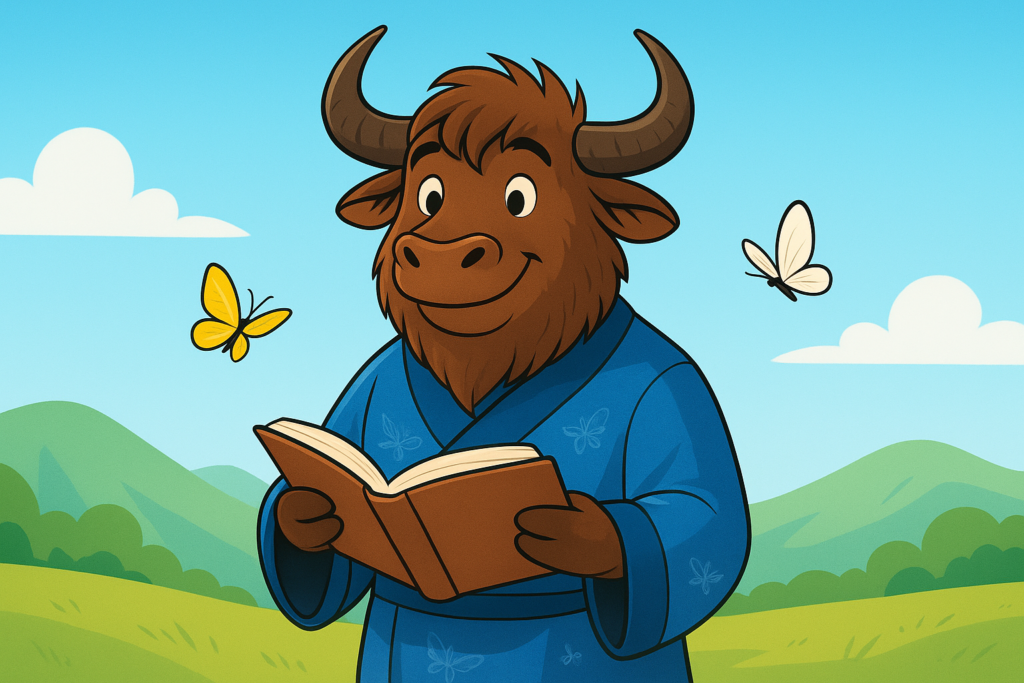
This B1 Intermediate retelling of 梁山伯与祝英台 keeps the plot clear for learners while still giving the story some atmosphere and momentum.
This version teaches Simplified Chinese through English and includes clickable word help inside the story, full story audio, and lesson notes after the reading. It is free to use on Yak Yacker and is designed to feel natural, readable, and manageable for learners.
很久以前,有一个女孩叫祝英台。
她非常想,可是那时候女孩不能去学校。
英台对父母说:"我一定要去!我可以男孩子,没有人会知道的。"
父母终于,英台高兴地开始准备。
她穿上男孩子的衣服,看起来就像一个少年。
在去学校的路上,英台梁山伯,一个年轻书生。
山伯问她:"你也是去杭州的吗?"
英台回答:"是的,我们。"
他们很快就成了最好的朋友,,,像兄弟一样。
英台爱上了山伯,可是山伯完全没有她是女孩子。
有一天,英台说:"山伯,如果我是女孩子,你会我吗?"
山伯笑着说:"别了,我们是好兄弟!"
三年过去了,英台回家,她非常山伯。
临走之前,英台说:"我有一个妹妹,长得和我,你以后可以来我家。"
山伯,却不知道英台说的"妹妹"就是她自己。
英台回家后,父母已经把她富人马家的儿子,英台心里只有山伯。
山伯后来终于知道了,他立刻去祝家,可是已经太晚了。
山伯,生病去世了,他被安葬在南山脚下。
英台出嫁那天,花轿经过山伯的坟墓,突然,天昏地暗。
英台冲到墓前,大声:"山伯,我来了!"
坟墓,英台跳了进去,墓立刻合上,风也停了。
雨过天晴,一对美丽的蝴蝶从墓中飞出,。
人们说,那是梁山伯和祝英台,他们终于了。
Once upon a time, there was a clever girl named Zhu Yingtai.
She desperately wanted to go to school, but at that time girls couldn't attend school.
Yingtai said to her parents, "I must go to school! I can dress up as a boy; no one will know."
Her parents finally agreed, and Yingtai happily began to prepare her luggage.
She put on boys' clothes and looked just like a handsome young man.
On the way to school, Yingtai met Liang Shanbo, a kind-hearted young scholar.
Shanbo asked her, "Are you also going to the academy in Hangzhou?"
Yingtai replied, "Yes, let's go together."
They quickly became best friends, studying and living together like brothers.
Yingtai secretly fell in love with Shanbo, but he never realized she was a girl.
One day, Yingtai said, "Shanbo, if I were a girl, would you like me?"
Shanbo laughed and said, "Don't joke around, we're good brothers!"
Three years passed, and Yingtai had to return home; she couldn't bear to leave Shanbo.
Before leaving, Yingtai said, "I have a younger sister who looks exactly like me; you can come to my home to propose later."
Shanbo agreed, not knowing that the "sister" Yingtai mentioned was herself.
After Yingtai returned home, her parents had already betrothed her to the son of the wealthy Ma family. Yingtai's heart was only with Shanbo.
Shanbo eventually learned the truth and immediately went to the Zhu family to propose, but it was too late.
Shanbo was so heartbroken that he fell ill and died. He was buried at the foot of the Southern Mountain.
On the day of Yingtai's wedding, as the bridal sedan passed Shanbo's grave, a sudden fierce wind arose, and the sky grew dark.
Yingtai rushed to the grave and cried out loudly, "Shanbo, I'm coming!"
The grave split open; Yingtai jumped in without hesitation. The grave immediately closed, and the wind stopped.
The rain stopped and the sky cleared; a pair of beautiful butterflies flew out from the grave, dancing gracefully.
People say that they are Liang Shanbo and Zhu Yingtai, finally together forever.
This story is built around secrecy, longing, and a big reveal. Zhu Yingtai hides her identity so she can study, and that choice drives the whole plot forward.
When you read stories like this, watch for the moment when one character knows something the other does not. That gap creates suspense and makes the ending feel powerful.
- Hidden identity = pretending to be someone else
- A story reveal often changes how earlier scenes feel
- Look for clues that the audience knows, but the characters do not
A few words in this story carry a lot of emotional weight. "舍不得" means you are reluctant to leave someone or something, and it is stronger than just "not wanting to go."
"提亲" is a formal way to say someone goes to ask for marriage. "许配" means to arrange a marriage for someone, often by the parents. These are old-fashioned words, but they are very useful for understanding classic Chinese stories.
- 舍不得 = reluctant to part with someone
- 提亲 = to ask for marriage formally
- 许配 = to arrange a marriage
- 书生 = a scholar or student, often in older stories
The story uses repeated patterns to show a close relationship: "一起学习,一起生活". Repeating "一起" makes the friendship feel warm and steady.
You also see contrast words like "可是" and "却". These are very common in Chinese storytelling because they quickly show a turn in the situation: hope becomes trouble, or expectation becomes surprise.
- 一起 + verb = doing something together
- 可是 / 却 = but, however, with a story-like contrast
- 很快就成了 = became very quickly
- If you want a smoother narrative, use short linked actions
The ending is not just sad; it is symbolic. The butterflies stand for love that cannot be stopped by ordinary life, even death. In Chinese stories, nature often reacts to strong emotion.
If you retell the story, try to keep the emotional arc clear: hope, separation, heartbreak, and transformation. That structure is what makes the legend memorable.
- Butterflies = a symbol of lasting love
- Storms and darkness often signal emotional crisis in stories
- A good retelling follows the emotional journey, not just the events
梁山伯与祝英台 comes from the Chinese / folklore/literature tradition and is best known as a romantic tragedy. This Yak Yacker article is an original learner retelling based on Traditional Chinese legend; public-domain folk material, so the wording here is simplified for modern learners rather than copied from one old edition.
Older printings, translations, and retellings of this story can vary quite a bit. The original audience was usually general/adult, but this version is adapted for B1 Intermediate learners studying Simplified Chinese. Sad romance; simplify names and family conflict.
If you want to look into the source tradition, start with Wikipedia.
If you want to keep going, browse more in our Simplified Chinese section and review the HSK Level 3 Vocabulary List. After that, try Essential Grammar Words for another useful next step.