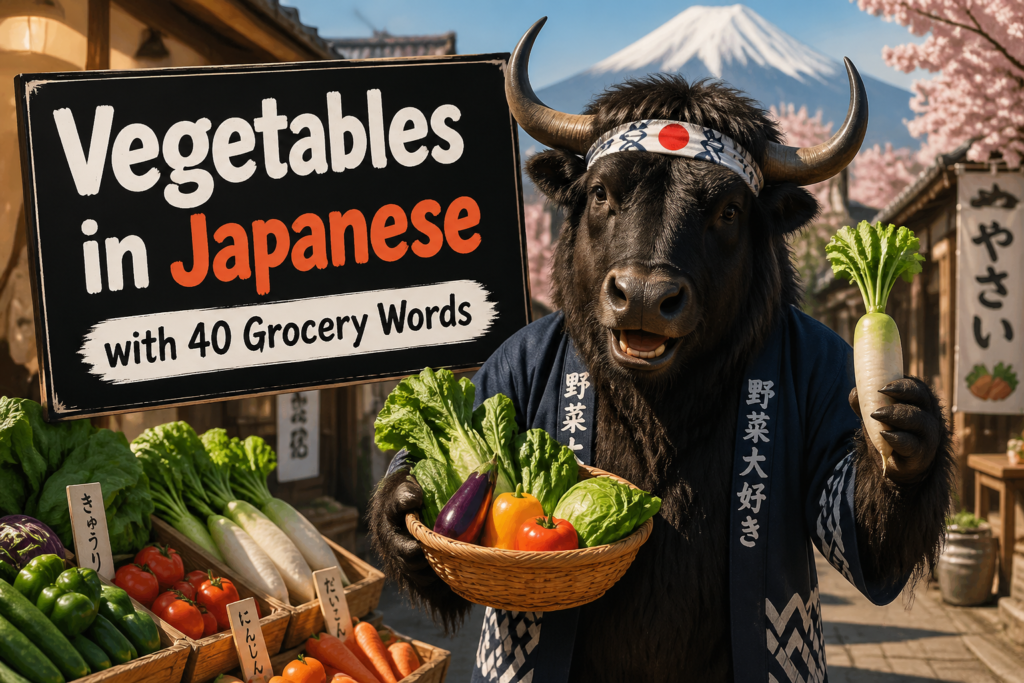
Vegetables in Japanese are a great place to start if you want real-life vocabulary that actually shows up in shops, kitchens, and menus. Because yes, at some point you will need to point at a carrot and hope for the best. Better to know the word first.
For the broader learning path, visit our parent guide.
Japanese grocery language is wonderfully practical. A single trip to the supermarket can teach you food words, counters, polite requests, and a little bit of survival-level confidence. And if you can recognize the vegetables, you can also start noticing how Japanese labels and recipes are built. Sneaky learning. Very efficient.
If you want a broad beginner path after this, the Learn Japanese page is a handy next stop. For a simple dictionary-style reference, this Japanese learning guide is also useful.
Everyday Vegetable Words
| Kanji | Rōmaji | Meaning | Example | Rōmaji | Translation |
|---|---|---|---|---|---|
| 野菜 | yasai | vegetables | 野菜が好きです。 | Yasai ga suki desu. | I like vegetables. |
| 人参 | ninjin | carrot | 人参を買います。 | Ninjin o kaimasu. | I buy carrots. |
| 玉ねぎ | tamanegi | onion | 玉ねぎを切ります。 | Tamanegi o kirimasu. | I cut an onion. |
| じゃがいも | jagaimo | potato | じゃがいもを食べます。 | Jagaimo o tabemasu. | I eat potatoes. |
| キャベツ | kyabetsu | cabbage | キャベツが安いです。 | Kyabetsu ga yasui desu. | Cabbage is cheap. |
| レタス | retasu | lettuce | レタスをサラダに入れます。 | Retasu o sarada ni iremasu. | I put lettuce in the salad. |
| きゅうり | kyūri | cucumber | きゅうりを一本買います。 | Kyūri o ippon kaimasu. | I buy one cucumber. |
| トマト | tomato | tomato | トマトは赤いです。 | Tomato wa akai desu. | Tomatoes are red. |
| なす | nasu | eggplant | なすを焼きます。 | Nasu o yakimasu. | I grill eggplant. |
| 大根 | daikon | Japanese radish | 大根をおろします。 | Daikon o oroshimasu. | I grate daikon. |
More Useful Grocery Words
| Kanji | Rōmaji | Meaning | Example | Rōmaji | Translation |
|---|---|---|---|---|---|
| ピーマン | pīman | green pepper / bell pepper | ピーマンが苦手です。 | Pīman ga nigate desu. | I am not good with peppers. |
| ほうれん草 | hōrensō | spinach | ほうれん草をゆでます。 | Hōrensō o yudemasu. | I boil spinach. |
| もやし | moyashi | bean sprouts | もやしを炒めます。 | Moyashi o itamemasu. | I stir-fry bean sprouts. |
| かぼちゃ | kabocha | pumpkin / squash | かぼちゃを煮ます。 | Kabocha o nimasu. | I simmer pumpkin. |
| ブロッコリー | burokkorī | broccoli | ブロッコリーを食べます。 | Burokkorī o tabemasu. | I eat broccoli. |
| とうもろこし | tōmorokoshi | corn | とうもろこしが甘いです。 | Tōmorokoshi ga amai desu. | The corn is sweet. |
| セロリ | serori | celery | セロリをスープに入れます。 | Serori o sūpu ni iremasu. | I put celery in the soup. |
| ねぎ | negi | green onion / scallion | ねぎをのせます。 | Negi o nosemasu. | I add green onion on top. |
| 白菜 | hakusai | Chinese cabbage | 白菜を鍋に入れます。 | Hakusai o nabe ni iremasu. | I put Chinese cabbage into hot pot. |
| 枝豆 | edamame | young soybeans | 枝豆を注文します。 | Edamame o chūmon shimasu. | I order edamame. |
Common Market And Kitchen Words
| Kanji | Rōmaji | Meaning | Example | Rōmaji | Translation |
|---|---|---|---|---|---|
| 新鮮 | shinsen | fresh | この野菜は新鮮です。 | Kono yasai wa shinsen desu. | These vegetables are fresh. |
| 安い | yasui | cheap | 今日は野菜が安いです。 | Kyou wa yasai ga yasui desu. | Vegetables are cheap today. |
| 高い | takai | expensive | トマトが高いです。 | Tomato ga takai desu. | Tomatoes are expensive. |
| 買う | kau | to buy | 野菜を買います。 | Yasai o kaimasu. | I buy vegetables. |
| 切る | kiru | to cut | 人参を切ります。 | Ninjin o kirimasu. | I cut the carrots. |
| 洗う | arau | to wash | 野菜を洗います。 | Yasai o araimasu. | I wash the vegetables. |
| ゆでる | yuderu | to boil | ほうれん草をゆでます。 | Hōrensō o yudemasu. | I boil spinach. |
| 炒める | itameru | to stir-fry | もやしを炒めます。 | Moyashi o itamemasu. | I stir-fry bean sprouts. |
| 煮る | niru | to simmer | かぼちゃを煮ます。 | Kabocha o nimasu. | I simmer pumpkin. |
| サラダ | sarada | salad | サラダを作ります。 | Sarada o tsukurimasu. | I make a salad. |
Useful Phrases For Shopping And Eating
| Kanji | Rōmaji | Meaning | Example | Rōmaji | Translation |
|---|---|---|---|---|---|
| これは何ですか。 | Kore wa nan desu ka. | What is this? | これは何ですか。 | Kore wa nan desu ka. | What is this? |
| 野菜をください。 | Yasai o kudasai. | Vegetables, please. | 野菜をください。 | Yasai o kudasai. | Vegetables, please. |
| これを二つください。 | Kore o futatsu kudasai. | Please give me two of these. | これを二つください。 | Kore o futatsu kudasai. | Please give me two of these. |
| もっとありますか。 | Motto arimasu ka. | Do you have more? | もっとありますか。 | Motto arimasu ka. | Do you have more? |
| おすすめは何ですか。 | Osusume wa nan desu ka. | What do you recommend? | おすすめは何ですか。 | Osusume wa nan desu ka. | What do you recommend? |
| サラダに入れます。 | Sarada ni iremasu. | I put it in salad. | きゅうりをサラダに入れます。 | Kyūri o sarada ni iremasu. | I put cucumber in the salad. |
| この野菜は新鮮ですか。 | Kono yasai wa shinsen desu ka. | Are these vegetables fresh? | この野菜は新鮮ですか。 | Kono yasai wa shinsen desu ka. | Are these vegetables fresh? |
| 少し高いですね。 | Sukoshi takai desu ne. | It’s a little expensive, isn’t it? | 少し高いですね。 | Sukoshi takai desu ne. | It’s a little expensive, isn’t it? |
| 野菜が好きです。 | Yasai ga suki desu. | I like vegetables. | 野菜が好きです。 | Yasai ga suki desu. | I like vegetables. |
| 野菜は苦手です。 | Yasai wa nigate desu. | I’m not good with vegetables. | 野菜は苦手です。 | Yasai wa nigate desu. | I’m not good with vegetables. |
Quick Nuance: What Counts As A Vegetable?
Japanese grocery words can be a little messy in a very normal, very human way. Some foods that English speakers call vegetables are treated differently in Japanese depending on how they are used. For example, とうもろこし (tōmorokoshi, corn) is often grouped with vegetables in stores, even though it can feel more like a grain or side dish in English. Language does not care about your tidy little labels. Rude, but honest.
Also, some food words are usually written in hiragana or katakana instead of kanji. That is not a mistake. It is just how everyday Japanese likes to show up: practical, a bit mixed, and occasionally annoying in a charming way.
野菜 (yasai) is the general word for vegetables, but many specific vegetables are just everyday household words. Learn the common ones first, and the supermarket stops feeling like a puzzle with fluorescent lighting.
Useful Pattern: Asking For Vegetables
| Pattern | Meaning | Example | Rōmaji | English |
|---|---|---|---|---|
| 〜をください | Please give me ~ | 人参をください。 | Ninjin o kudasai. | Please give me carrots. |
| 〜はありますか | Do you have ~? | きゅうりはありますか。 | Kyūri wa arimasu ka. | Do you have cucumbers? |
| 〜を二つください | Please give me two ~ | トマトを二つください。 | Tomato o futatsu kudasai. | Please give me two tomatoes. |
| 〜は安いです | ~ is cheap | キャベツは安いです。 | Kyabetsu wa yasui desu. | Cabbage is cheap. |
Practice
- Say “carrot” in Japanese: 人参 — ninjin
- Say “vegetables” in Japanese: 野菜 — yasai
- Say “Please give me vegetables.” → 野菜をください。 — Yasai o kudasai.
- Say “I buy onions.” → 玉ねぎを買います。 — Tamanegi o kaimasu.
- Say “This cabbage is fresh.” → このキャベツは新鮮です。 — Kono kyabetsu wa shinsen desu.
- Say “I cut the daikon.” → 大根を切ります。 — Daikon o kirimasu.
- Say “I like spinach.” → ほうれん草が好きです。 — Hōrensō ga suki desu.
- Say “Do you have tomatoes?” → トマトはありますか。 — Tomato wa arimasu ka.
Common Mistakes
- 野菜 (yasai) means vegetables in general, not a single vegetable.
- Do not forget the particle を in shopping phrases like 人参をください.
- Many vegetable names are written in hiragana or katakana, so do not panic if the script looks mixed.
- 好きです means “like,” while 苦手です means “not good at” or “not comfortable with.” That is a useful pair, and yes, Japanese likes these polite little emotional traps.
Quick Reference Summary
- 野菜 — yasai — vegetables
- 人参 — ninjin — carrot
- 玉ねぎ — tamanegi — onion
- じゃがいも — jagaimo — potato
- キャベツ — kyabetsu — cabbage
- トマト — tomato — tomato
- 大根 — daikon — Japanese radish
- ほうれん草 — hōrensō — spinach
- ブロッコリー — burokkorī — broccoli
- 野菜をください。 — Yasai o kudasai. — Vegetables, please.
Once these words start sticking, grocery shopping gets a lot easier. You will begin spotting Japanese vegetables in menus, recipes, and signs without doing the usual “guess and pray” routine. That is the good stuff: small words, real-world use, and a little more control every time you open a menu.