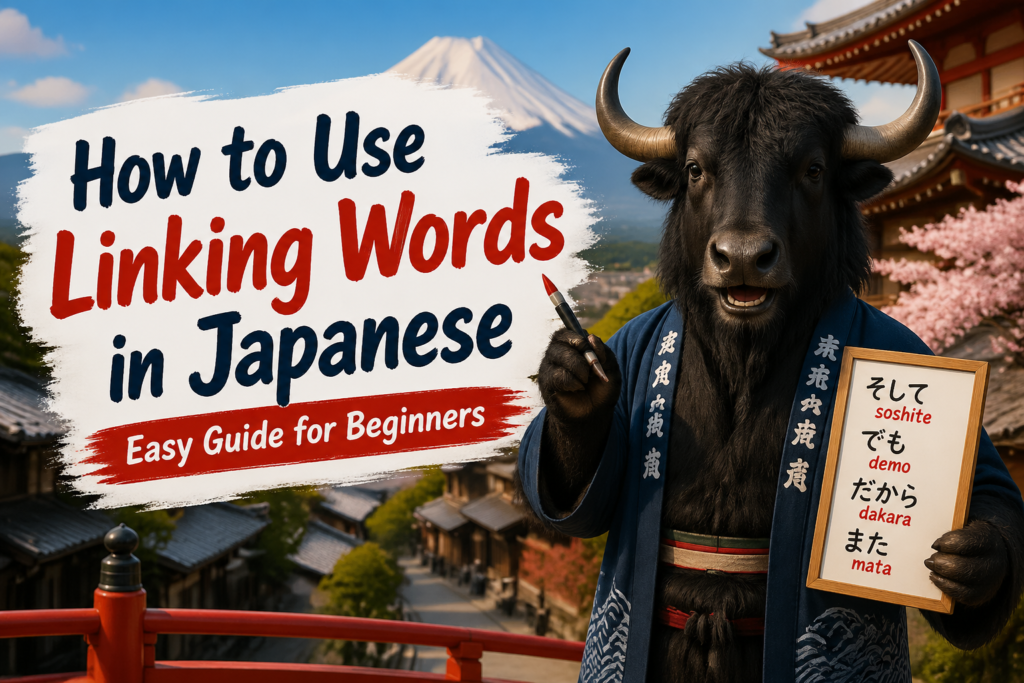
Linking words are the little glue pieces of Japanese. Without them, your sentences can sound like a pile of facts thrown on the floor. With them, your Japanese starts to flow like an actual conversation instead of a robot reading a shopping list.
A lot of beginners learn nouns, verbs, and a few survival phrases, then hit a wall when trying to connect ideas: “I went to the store… it was raining… I bought tea… also I was tired.” Technically, that is information. Emotionally, it is chaos. Linking words fix that. They help you say things like “and,” “but,” “so,” “because,” and “then” in a way that sounds much more natural.
This guide covers the most useful Japanese linking words for beginners, with simple explanations, real examples, and a quick reference section you can actually use. If you want more beginner-friendly lessons, the main Learn Japanese hub is a good place to keep the momentum going.
Why Linking Words Matter
In Japanese, linking ideas can be done with standalone words, set phrases, and grammar patterns. The good news: you do not need to master all of them at once. A small set of common linkers gets you very far in daily conversation.
Think of these as your conversation bridges. They help you add information, show contrast, explain reasons, and put events in order. Tiny words, big job.
Good Japanese is not just knowing words. It is knowing how to connect them without making the sentence wobble.
The Most Useful Linking Words In Japanese
Let’s start with the practical heroes. Each one includes the Japanese, Rōmaji, meaning, and a real example sentence.
そして — soshite — and / and then
そして
soshite
Meaning: and; and then
Use そして to add another action or piece of information in a smooth, neutral way. It is common in speaking and writing.
Example: 朝ご飯を食べました。そして、コーヒーを飲みました。
Asagohan o tabemashita. Soshite, kōhī o nomimashita.
I ate breakfast. And then I drank coffee.
それから — sorekara — after that / and then
それから
sorekara
Meaning: after that; and then
それから often shows sequence. It feels a bit more like “after that” than そして.
Example: 宿題をしました。それから、テレビを見ました。
Shukudai o shimashita. Sorekara, terebi o mimashita.
I did my homework. After that, I watched TV.
でも — demo — but / however
でも
demo
Meaning: but; however
This is one of the most useful casual linking words in Japanese. If you know only one word for contrast at first, make it this one.
Example: 日本語は難しいです。でも、おもしろいです。
Nihongo wa muzukashii desu. Demo, omoshiroi desu.
Japanese is difficult. But it is interesting.
しかし — shikashi — however / nevertheless
しかし
shikashi
Meaning: however; nevertheless
しかし is more formal than でも. You will see it in writing, speeches, news, and more polished explanations.
Example: この店は高いです。しかし、料理はとてもおいしいです。
Kono mise wa takai desu. Shikashi, ryōri wa totemo oishii desu.
This restaurant is expensive. However, the food is very delicious.
だから — dakara — so / therefore
だから
dakara
Meaning: so; therefore; that is why
Use だから when the second sentence is a result of the first. It is common in everyday speech.
Example: 今日は寒いです。だから、コートを着ます。
Kyō wa samui desu. Dakara, kōto o kimasu.
It is cold today. So I will wear a coat.
ですから — desukara — therefore / so
ですから
desukara
Meaning: therefore; so
This is a more polite or formal version of だから. Very useful in polite conversation and explanations.
Example: 明日は試験です。ですから、今夜は勉強します。
Ashita wa shiken desu. Desukara, kon’ya wa benkyō shimasu.
Tomorrow is the exam. Therefore, I will study tonight.
なぜなら — nazenara — because
なぜなら
nazenara
Meaning: because
なぜなら usually introduces a reason, and it is often followed later by からです or ためです. It sounds a bit more structured and explanation-heavy.
Example: 日本に行きたいです。なぜなら、日本の文化が好きだからです。
Nihon ni ikitai desu. Nazenara, Nihon no bunka ga suki dakara desu.
I want to go to Japan. Because I like Japanese culture.
それに — soreni — moreover / besides / on top of that
それに
soreni
Meaning: moreover; besides; on top of that
Use this when you want to add another supporting point. It is great for giving extra reasons.
Example: このアプリは便利です。それに、無料です。
Kono apuri wa benri desu. Soreni, muryō desu.
This app is convenient. Besides that, it is free.
また — mata — also / additionally
また
mata
Meaning: also; additionally
また is often used in writing or formal speaking to add another point. It can also mean “again” in other contexts, so context matters. Because Japanese likes to keep learners humble.
Example: 彼は英語を話します。また、日本語も話します。
Kare wa eigo o hanashimasu. Mata, nihongo mo hanashimasu.
He speaks English. Additionally, he speaks Japanese too.
たとえば — tatoeba — for example
例えば
tatoeba
Meaning: for example
This one is excellent for explaining things, giving examples, and sounding more organized.
Example: 日本の食べ物はおいしいです。例えば、すしやラーメンが人気です。
Nihon no tabemono wa oishii desu. Tatoeba, sushi ya rāmen ga ninki desu.
Japanese food is delicious. For example, sushi and ramen are popular.
つまり — tsumari — in other words / that means
つまり
tsumari
Meaning: in other words; that means
Use つまり when you want to sum up or restate something more clearly.
Example: 彼は毎日三時間勉強します。つまり、とても真面目です。
Kare wa mainichi san-jikan benkyō shimasu. Tsumari, totemo majime desu.
He studies for three hours every day. In other words, he is very serious.
一方で — ippō de — on the other hand
一方で
ippō de
Meaning: on the other hand
This is useful when comparing two sides of something. It is a little more formal than very basic conversation glue, but still worth learning early.
Example: この町は静かです。一方で、少し不便です。
Kono machi wa shizuka desu. Ippō de, sukoshi fuben desu.
This town is quiet. On the other hand, it is a little inconvenient.
それでは — soredewa — well then / in that case
それでは
soredewa
Meaning: well then; in that case
This one appears often when moving to the next step, especially in polite conversation, instructions, or service settings.
Example: 準備ができました。それでは、始めましょう。
Junbi ga dekimashita. Soredewa, hajimemashō.
The preparations are ready. Well then, let’s begin.
Quick Pattern Notes
Not all linking words do the same job. Here is the easy way to group them:
- Adding information: そして, それに, また
- Showing sequence: それから, そして
- Showing contrast: でも, しかし, 一方で
- Giving a result: だから, ですから
- Giving a reason or explanation: なぜなら
- Giving examples: 例えば
- Summarizing: つまり
- Moving to the next step: それでは
If you mix these up sometimes, congratulations, you are learning Japanese like a real person. The trick is to match the linker to the relationship between the ideas.
Useful Phrases And Real-Life Sentences
Here are more everyday examples so you can hear how these linking words sound in natural beginner-level Japanese.
- 今日は忙しいです。そして、少し眠いです。
Kyō wa isogashii desu. Soshite, sukoshi nemui desu.
I am busy today. And I am a little sleepy. - 駅に行きました。それから、友だちに会いました。
Eki ni ikimashita. Sorekara, tomodachi ni aimashita.
I went to the station. After that, I met a friend. - この本は安いです。でも、とても役に立ちます。
Kono hon wa yasui desu. Demo, totemo yaku ni tachimasu.
This book is cheap. But it is very useful. - 雨が降っています。だから、家にいます。
Ame ga futte imasu. Dakara, ie ni imasu.
It is raining. So I am staying home. - 彼女は親切です。それに、仕事も早いです。
Kanojo wa shinsetsu desu. Soreni, shigoto mo hayai desu.
She is kind. On top of that, she works quickly. - 日本にはたくさんの観光地があります。例えば、京都は有名です。
Nihon ni wa takusan no kankōchi ga arimasu. Tatoeba, Kyōto wa yūmei desu.
Japan has many sightseeing spots. For example, Kyoto is famous. - 電車が遅れました。つまり、会議に遅れます。
Densha ga okuremashita. Tsumari, kaigi ni okuremasu.
The train was delayed. In other words, I will be late for the meeting. - この店は便利です。一方で、少し高いです。
Kono mise wa benri desu. Ippō de, sukoshi takai desu.
This store is convenient. On the other hand, it is a little expensive. - 明日は休みです。ですから、ゆっくり寝ます。
Ashita wa yasumi desu. Desukara, yukkuri nemasu.
Tomorrow is a day off. Therefore, I will sleep in. - 日本語を勉強しています。なぜなら、日本で働きたいからです。
Nihongo o benkyō shite imasu. Nazenara, Nihon de hatarakitai kara desu.
I am studying Japanese. Because I want to work in Japan. - 彼は学生です。また、アルバイトもしています。
Kare wa gakusei desu. Mata, arubaito mo shite imasu.
He is a student. Additionally, he has a part-time job. - 時間ですね。それでは、帰りましょう。
Jikan desu ne. Soredewa, kaerimashō.
It is time, right? Well then, let’s go home.
Tables Of Common Linking Words
Adding And Sequencing Ideas
| Kanji | Rōmaji | Meaning | Example (JP) | Example (Rōmaji) | Translation (EN) |
|---|---|---|---|---|---|
| そして | soshite | and; and then | 朝ご飯を食べました。そして、出かけました。 | Asagohan o tabemashita. Soshite, dekakemashita. | I ate breakfast. And then I went out. |
| それから | sorekara | after that | シャワーを浴びました。それから、寝ました。 | Shawā o abimashita. Sorekara, nemashita. | I took a shower. After that, I went to bed. |
| それに | soreni | besides; moreover | このかばんは軽いです。それに、丈夫です。 | Kono kaban wa karui desu. Soreni, jōbu desu. | This bag is light. Besides that, it is durable. |
| また | mata | also; additionally | 彼は中国語を話します。また、韓国語も話します。 | Kare wa chūgokugo o hanashimasu. Mata, kankokugo mo hanashimasu. | He speaks Chinese. Additionally, he speaks Korean too. |
Contrast And Result
| Kanji | Rōmaji | Meaning | Example (JP) | Example (Rōmaji) | Translation (EN) |
|---|---|---|---|---|---|
| でも | demo | but | この映画は長いです。でも、退屈ではありません。 | Kono eiga wa nagai desu. Demo, taikutsu de wa arimasen. | This movie is long. But it is not boring. |
| しかし | shikashi | however | 計画はよかったです。しかし、時間がありませんでした。 | Keikaku wa yokatta desu. Shikashi, jikan ga arimasen deshita. | The plan was good. However, there was no time. |
| だから | dakara | so; that is why | お金がありません。だから、買いません。 | Okane ga arimasen. Dakara, kaimasen. | I do not have money. So I will not buy it. |
| ですから | desukara | therefore | 今日は大切な日です。ですから、早く起きました。 | Kyō wa taisetsu na hi desu. Desukara, hayaku okimashita. | Today is an important day. Therefore, I got up early. |
| 一方で | ippō de | on the other hand | この仕事は楽しいです。一方で、大変です。 | Kono shigoto wa tanoshii desu. Ippō de, taihen desu. | This job is fun. On the other hand, it is demanding. |
Reason, Example, And Summary
| Kanji | Rōmaji | Meaning | Example (JP) | Example (Rōmaji) | Translation (EN) |
|---|---|---|---|---|---|
| なぜなら | nazenara | because | 彼を尊敬しています。なぜなら、努力家だからです。 | Kare o sonkei shite imasu. Nazenara, doryokuka dakara desu. | I respect him. Because he is hardworking. |
| 例えば | tatoeba | for example | 趣味はいろいろあります。例えば、読書が好きです。 | Shumi wa iroiro arimasu. Tatoeba, dokusho ga suki desu. | There are various hobbies. For example, I like reading. |
| つまり | tsumari | in other words | 今日は日曜日です。つまり、学校は休みです。 | Kyō wa nichiyōbi desu. Tsumari, gakkō wa yasumi desu. | Today is Sunday. In other words, school is off. |
| それでは | soredewa | well then; in that case | 質問はありませんね。それでは、終わります。 | Shitsumon wa arimasen ne. Soredewa, owarimasu. | There are no questions, right? Well then, we will finish. |
Common Confusions Beginners Run Into
Some of these words seem similar. That is normal. Japanese loves subtle differences almost as much as it loves particles.
- そして vs それから
そして is a broad “and/and then.” それから is more clearly “after that.”
Example: 店に行きました。それから、スーパーに行きました。
Mise ni ikimashita. Sorekara, sūpā ni ikimashita.
I went to the shop. After that, I went to the supermarket. - でも vs しかし
でも is everyday and conversational. しかし sounds more formal and written.
Example: 安いです。でも、いいです。
Yasui desu. Demo, ii desu.
It is cheap. But it is good. - だから vs ですから
だから is casual to neutral. ですから is more polite.
Example: 疲れました。だから、休みます。
Tsukaremashita. Dakara, yasumimasu.
I got tired. So I will rest. - また can mean “also,” but in other contexts it can mean “again.” Always check the sentence around it.
Example: また来ます。
Mata kimasu.
I will come again.
Mini Practice Section
Try filling in the best linking word. Say the full sentence out loud if you can. Yes, even if it feels awkward. That awkward feeling is progress wearing a fake mustache.
- 日本語を勉強しています。___、日本の音楽もよく聞きます。
Nihongo o benkyō shite imasu. ___, Nihon no ongaku mo yoku kikimasu.
I study Japanese. Also, I often listen to Japanese music too. - 今日は雨です。___、傘を持っていきます。
Kyō wa ame desu. ___, kasa o motte ikimasu.
It is raining today. So I will bring an umbrella. - このホテルはきれいです。___、少し高いです。
Kono hoteru wa kirei desu. ___, sukoshi takai desu.
This hotel is clean. But it is a little expensive. - ご飯を食べました。___、歯をみがきました。
Gohan o tabemashita. ___, ha o migakimashita.
I ate. After that, I brushed my teeth.
Good answers:
- それに / また
- だから / ですから
- でも / しかし
- それから
Quick Reference Summary
- そして
soshite
and; and then - それから
sorekara
after that - でも
demo
but - しかし
shikashi
however - だから
dakara
so; that is why - ですから
desukara
therefore - なぜなら
nazenara
because - それに
soreni
besides; moreover - また
mata
also; additionally - 例えば
tatoeba
for example - つまり
tsumari
in other words - 一方で
ippō de
on the other hand - それでは
soredewa
well then; in that case
Yak Takeaway
If you learn only vocabulary without linking words, your Japanese can stay choppy for longer than it needs to. Start with a small set: そして (soshite), それから (sorekara), でも (demo), and だから (dakara). Those four alone can make your sentences sound much more alive. Then add the others as your confidence grows.
The goal is not to use fancy connectors every time. The goal is to connect ideas clearly and naturally. Simple wins. Simple wins a lot, actually.
More Japanese to explore

The Spider’s Thread: A2 Elementary Japanese Story with Audio

Golden Boy in Japanese: A1 Beginner Story with Audio, Tap-to-Translate Help & Free Lesson Notes

Learn Japanese with The Tale of the Bamboo Cutter – An A2 Graded Reader with Audio