Japanese proverbs list with meanings

50 Japanese Proverbs and What They Mean

50 Common Japanese Proverbs and What They Mean: ことわざ (Kotowaza)

Japanese proverbs, or ことわざ (kotowaza), are short, sharp little sayings that carry a lot of meaning for such tiny phrases. Basically, they are language with a very efficient personality.

If you learn a few of them, you will start spotting them everywhere: in conversation, in books, in dramas, and in the kind of advice older relatives love to drop when nobody asked. A proverb can teach culture, attitude, and vocabulary at the same time. Not bad for one line of Japanese, right?

For a broader beginner path, the main Japanese lesson hub is here: Learn Japanese. And for a quick related reference, see this Yak Yacker lesson.

Advertisement

Common Proverbs You Will Hear Often

KanjiRōmajiMeaningExample
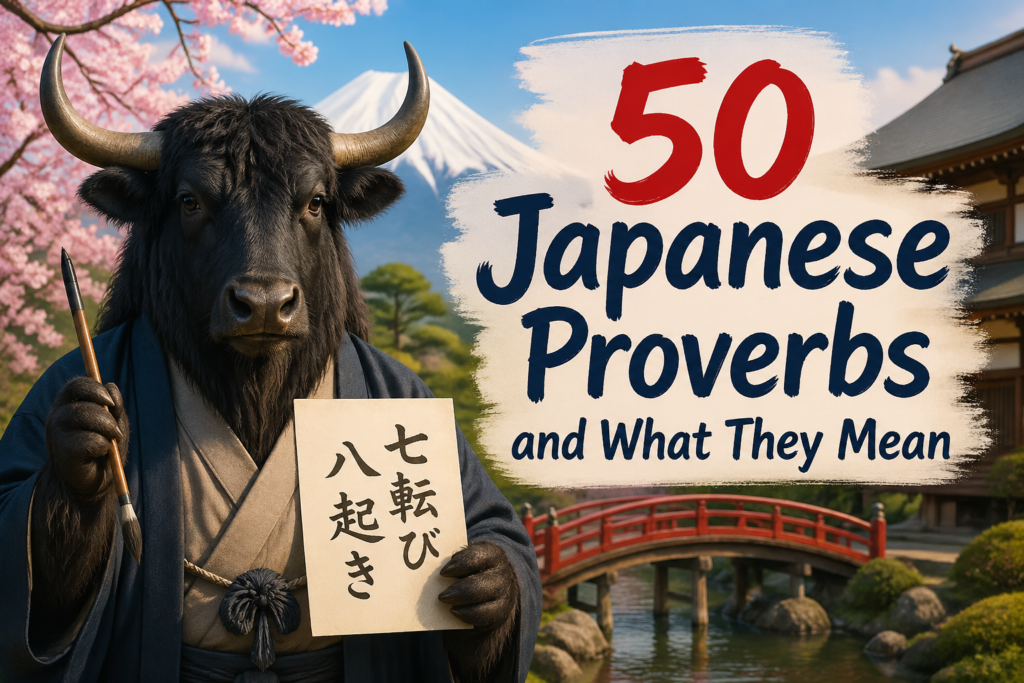
七転び八起きNanakorobi yaokiFall seven times, rise eight; keep going七転び八起き
Nanakorobi yaoki.
Keep getting back up.
花より団子Hana yori dangoDumplings over flowers; practical things matter more than looks花より団子
Hana yori dango.
Practicality beats prettiness.
猿も木から落ちるSaru mo ki kara ochiruEven monkeys fall from trees; everyone makes mistakes猿も木から落ちる
Saru mo ki kara ochiru.
Even experts slip up.
石の上にも三年Ishi no ue ni mo sannenThree years on a stone; patience pays off石の上にも三年
Ishi no ue ni mo sannen.
Stick with it.
案ずるより産むが易しAnzuru yori umu ga yasushiGiving birth is easier than worrying; things are easier than feared案ずるより産むが易し
Anzuru yori umu ga yasushi.
It was easier than expected.
雨降って地固まるAme futte ji katamaruAfter rain, the ground hardens; trouble can make things stronger雨降って地固まる
Ame futte ji katamaru.
Conflict can strengthen bonds.
出る釘は打たれるDeru kugi wa utareruThe nail that sticks out gets hammered down; standing out can be punished出る釘は打たれる
Deru kugi wa utareru.
Don’t be too flashy.
転ばぬ先の杖Korobanu saki no tsueA cane before you fall; prepare in advance転ばぬ先の杖
Korobanu saki no tsue.
Prepare before trouble.
二兎を追う者は一兎をも得ずNito o ou mono wa itto o mo ezuChase two rabbits, catch none; focus matters二兎を追う者は一兎をも得ず
Nito o ou mono wa itto o mo ezu.
Focus on one goal.
井の中の蛙大海を知らずI no naka no kawazu taikai o shirazuA frog in a well knows nothing of the sea; limited experience limits understanding井の中の蛙大海を知らず
I no naka no kawazu taikai o shirazu.
Do not assume your world is the whole world.

More Japanese Proverbs With Real-Life Meaning

KanjiRōmajiMeaningExample
三日坊主Mikka bōzuSomeone who quits after three days三日坊主にならないように。
Mikka bōzu ni naranai yō ni.
Try not to give up after three days.
親の心子知らずOya no kokoro ko shirazuChildren do not understand their parents’ feelings親の心子知らずだね。
Oya no kokoro ko shirazu da ne.
Kids do not always get it.
猫に小判Neko ni kobanGold coins for a cat; something valuable wasted on someone who cannot appreciate it猫に小判
Neko ni koban.
A waste on the wrong person.
知らぬが仏Shiranu ga hotokeNot knowing is like being a Buddha; ignorance can bring peace知らぬが仏もある。
Shiranu ga hotoke mo aru.
Sometimes not knowing is easier.
蛙の子は蛙Kawazu no ko wa kawazuA frog’s child is a frog; children often take after parents蛙の子は蛙だね。
Kawazu no ko wa kawazu da ne.
The child follows the parent.
情けは人の為ならずNasa ke wa hito no tame narazuKindness is not only for others; kindness comes back to you情けは人の為ならず
Naseke wa hito no tame narazu.
Kindness returns later.
旅の恥は掻き捨てTabi no haji wa kaki suteTravel shame can be left behind; people behave more freely while traveling旅の恥は掻き捨てと言うけど、
Tabi no haji wa kaki sute to iu kedo,
they say travel shame is easy to forget, but still…
時は金なりToki wa kane nariTime is money時は金なり
Toki wa kane nari.
Time matters.
門前の小僧習わぬ経を読むMonzen no kozō narawanu kyō o yomuA temple boy reads sutras he was never taught; people learn by exposure門前の小僧習わぬ経を読む
Monzen no kozō narawanu kyō o yomu.
You pick things up by being around them.
泣きっ面に蜂Nakittsura ni hachiA bee on a crying face; one bad thing after another泣きっ面に蜂だった。
Nakittsura ni hachi datta.
Things kept getting worse.

Proverbs About Effort, Patience, And Mistakes

KanjiRōmajiMeaningExample
継続は力なりKeizoku wa chikara nariConsistency is power継続は力なり
Keizoku wa chikara nari.
Keep going every day.
塵も積もれば山となるChiri mo tsumoreba yama to naruEven dust piles up into a mountain; small things add up塵も積もれば山となる
Chiri mo tsumoreba yama to naru.
Small efforts become big results.
急がば回れI-sogaba mawareHaste makes you take the longer route; the safe way can be faster急がば回れ
I-sogaba maware.
Slow down to save time.
負けるが勝ちMakeru ga kachiLosing is winning; sometimes backing down is the smarter move負けるが勝ち
Makeru ga kachi.
Walking away can be the win.
失敗は成功のもとShippai wa seikō no motoFailure is the source of success失敗は成功のもと
Shippai wa seikō no moto.
Mistakes can teach you.
習うより慣れろNarau yori nareroPractice more than study; learn by doing習うより慣れろ
Narau yori narero.
Get used to it by doing it.
石橋を叩いて渡るIshibashi o tataite wataruTap the stone bridge before crossing; be extremely careful石橋を叩いて渡る
Ishibashi o tataite wataru.
Check before you act.
善は急げZen wa isogeDo good quickly善は急げ
Zen wa isoge.
Do the right thing now.
千里の道も一歩からSenri no michi mo ippo karaA thousand-ri journey starts with one step千里の道も一歩から
Senri no michi mo ippo kara.
Every big goal starts small.
能ある鷹は爪を隠すNō aru taka wa tsume o kakusuA skilled hawk hides its claws; talented people do not show off能ある鷹は爪を隠す
Nō aru taka wa tsume o kakusu.
Real skill is quiet.

Proverbs About People, Society, And Life

KanjiRōmajiMeaningExample
十人十色Jūnin toiroTen people, ten colors; everyone is different十人十色だ。
Jūnin toiro da.
Everyone has their own style.
人は見た目によらぬものHito wa mitame ni yoranu monoPeople are not judged by appearance alone人は見た目によらぬもの
Hito wa mitame ni yoranu mono.
Looks can be misleading.
灯台下暗しTōdai moto kurashiThe base of the lighthouse is dark; we overlook what is close灯台下暗しだった。
Tōdai moto kurashi datta.
The answer was right there.
郷に入っては郷に従えGō ni itte wa gō ni shitagaeWhen in a village, follow the village’s rules; adapt to local customs郷に入っては郷に従え
Gō ni itte wa gō ni shitagae.
Follow local manners.
縁の下の力持ちEn no shita no chikaramochiThe strength under the floor; an unsung helper縁の下の力持ちだ。
En no shita no chikaramochi da.
They do important hidden work.
情けないNasakenaiPathetic; pitiful; disappointing情けない結果だった。
Nasakenai kekka datta.
It was a disappointing result.
口は災いの元Kuchi wa wazawai no motoThe mouth is the source of disaster; careless words cause trouble口は災いの元
Kuchi wa wazawai no moto.
Be careful what you say.
持ちつ持たれつMochitsu motaretsuGiving and receiving support持ちつ持たれつで生きる。
Mochitsu motaretsu de ikiru.
We help each other.
類は友を呼ぶRui wa tomo o yobuLike attracts like類は友を呼ぶ
Rui wa tomo o yobu.
People with similar tastes gather.
聞くは一時の恥聞かぬは一生の恥Kiku wa ittoki no haji kikanu wa isshō no hajiAsking is embarrassing for a moment; not asking is embarrassing for life聞くは一時の恥聞かぬは一生の恥
Kiku wa ittoki no haji kikanu wa isshō no haji.
Ask the question.

Curious Bit: Why Proverbs Feel So Sharp In Japanese

Many Japanese proverbs are compact, image-based, and a little poetic. They often sound old, but the meaning is still useful today. That is why 猿も木から落ちる (saru mo ki kara ochiru) still works in a modern office, and 時は金なり (toki wa kane nari) still works when your train is five minutes away and your inbox is a disaster.

Some sayings are a little similar to English proverbs, but not always exactly the same. That is the fun part. You are not just learning words. You are learning how Japanese speakers package advice into short, memorable images.

For a dictionary-style look at Japanese language basics, a plain reference like Wikipedia can help with context: Japanese language.

Quick Meaning Groups

ThemeProverbsWhat They Suggest
Patience石の上にも三年, 継続は力なり, 千里の道も一歩からKeep going; results take time
Mistakes猿も木から落ちる, 失敗は成功のもと, 泣きっ面に蜂Everyone slips; mistakes teach lessons
Practicality花より団子, 時は金なり, 急がば回れChoose what works, not just what looks nice
People十人十色, 類は友を呼ぶ, 持ちつ持たれつPeople differ, group up, and support each other

Practice With Proverbs

  • Choose the proverb for “slow and steady wins the race”: 石の上にも三年 (Ishi no ue ni mo sannen).
  • Choose the proverb for “everyone makes mistakes”: 猿も木から落ちる (Saru mo ki kara ochiru).
  • Choose the proverb for “like attracts like”: 類は友を呼ぶ (Rui wa tomo o yobu).
  • Choose the proverb for “prepare before trouble happens”: 転ばぬ先の杖 (Korobanu saki no tsue).
  • Choose the proverb for “small efforts add up”: 塵も積もれば山となる (Chiri mo tsumoreba yama to naru).
  • Choose the proverb for “do not be too proud or flashy”: 出る釘は打たれる (Deru kugi wa utareru).
  • Choose the proverb for “kindness comes back”: 情けは人の為ならず (Nasake wa hito no tame narazu).
  • Choose the proverb for “focus on one goal”: 二兎を追う者は一兎をも得ず (Nito o ou mono wa itto o mo ezu).

Common Mistakes And Fixes

MistakeFix
Learning the English meaning but skipping the imagePicture the proverb literally first, then remember the message
Forgetting the RōmajiRead the Japanese text and the Rōmaji together every time
Using a proverb in every sentenceDo not force it. Even proverb lovers need to relax.
Mixing up similar sayingsCompare the keyword in each one: patience, effort, mistake, or advice
Assuming the proverb means the same thing as EnglishCheck the exact nuance. Some are close, but not identical

Quick Reference Summary

  • ことわざ (kotowaza) means proverb.
  • Many Japanese proverbs use concrete images, not abstract lecture-speak.
  • Some are about patience: 石の上にも三年 (Ishi no ue ni mo sannen).
  • Some are about mistakes: 猿も木から落ちる (Saru mo ki kara ochiru).
  • Some are about social behavior: 出る釘は打たれる (Deru kugi wa utareru).
  • Some are about practical wisdom: 花より団子 (Hana yori dango).
  • One proverb can reveal a lot about Japanese values without taking up much space. Efficient, like a very polite ninja.

聞くは一時の恥聞かぬは一生の恥 (Kiku wa ittoki no haji kikanu wa isshō no haji) — Asking is embarrassing for a moment, but not asking can keep you confused forever.

That is the charm of Japanese proverbs: they are small, memorable, and full of life. Learn a handful, use them carefully, and you will start hearing Japanese in a richer way. Not bad for a bunch of tiny sentences with big opinions.