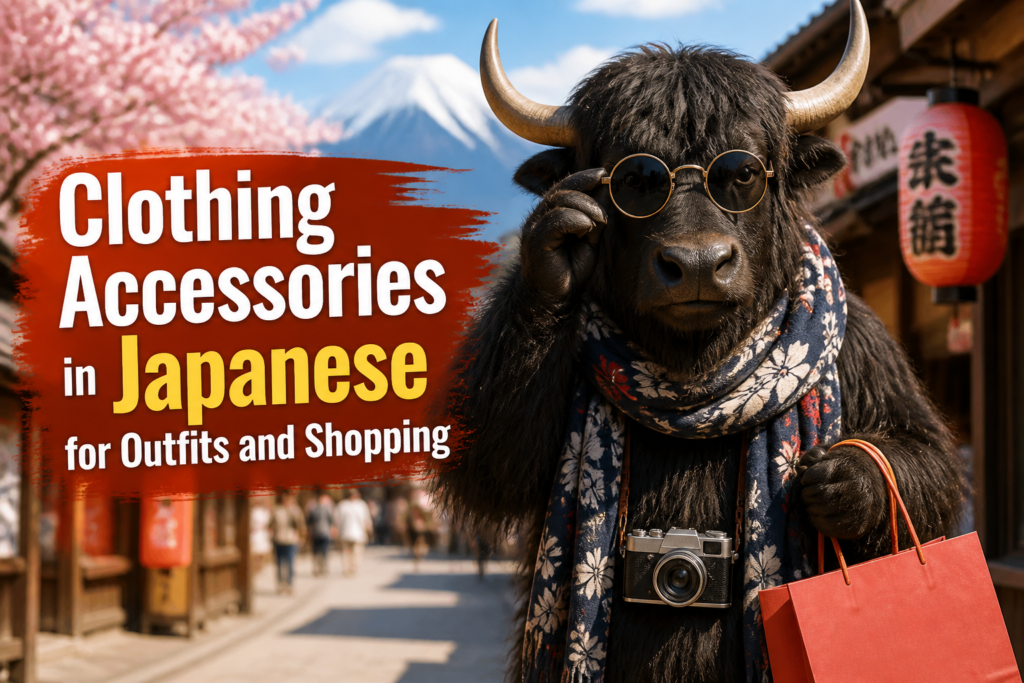
服飾小物 fukushoku komono means clothing accessories. That sounds fancy, but in real life it is just the stuff that makes an outfit look finished instead of “I got dressed in a hurry and hoped for the best.”
Japanese shopping can be very specific. A scarf, a belt, a hat, and a handbag all have their own words, and yes, your future self will be glad you learned them before standing in a shop pretending to understand the sales staff. If you want a broader study path, the main Japanese learning hub is here: Learn Japanese.
This guide gives you the most useful clothing accessory words in Japanese, with Rōmaji, English meanings, and real example sentences. Small words, big shopping power. Annoyingly useful, really.
Essential Clothing Accessories
| Kanji | Rōmaji | Meaning | Example (Japanese) | Example (Rōmaji) | Translation (English) |
|---|---|---|---|---|---|
| 帽子 | bōshi | hat | この帽子は暖かいです。 | Kono bōshi wa atatakai desu. | This hat is warm. |
| マフラー | mafuraa | scarf | 冬にマフラーをします。 | Fuyu ni mafuraa o shimasu. | I wear a scarf in winter. |
| 手袋 | tebukuro | gloves | 手袋を買いました。 | Tebukuro o kaimashita. | I bought gloves. |
| ベルト | beruto | belt | このベルトは少し大きいです。 | Kono beruto wa sukoshi ookii desu. | This belt is a little big. |
| 靴下 | kutsushita | socks | 新しい靴下が必要です。 | Atarashii kutsushita ga hitsuyou desu. | I need new socks. |
| サングラス | sangurasu | sunglasses | サングラスをかけています。 | Sangurasu o kakete imasu. | I am wearing sunglasses. |
| ネクタイ | nekutai | tie | 彼はネクタイをしています。 | Kare wa nekutai o shite imasu. | He is wearing a tie. |
| ハンカチ | hankachi | handkerchief | ハンカチを持っています。 | Hankachi o motte imasu. | I have a handkerchief. |
| イヤリング | iyaringu | earrings | そのイヤリングはきれいです。 | Sono iyaringu wa kirei desu. | Those earrings are pretty. |
| 指輪 | yubiwa | ring | この指輪は小さいです。 | Kono yubiwa wa chiisai desu. | This ring is small. |
| 腕時計 | udedokei | wristwatch | 腕時計を見ました。 | Udedokei o mimashita. | I looked at my watch. |
| バッグ | baggu | bag | バッグの中に財布があります。 | Baggu no naka ni saifu ga arimasu. | There is a wallet in the bag. |
| 財布 | saifu | wallet | 財布を忘れました。 | Saifu o wasuremashita. | I forgot my wallet. |
| 傘 | kasa | umbrella | 傘を持って行きます。 | Kasa o motte ikimasu. | I will take an umbrella. |
| ネックレス | nekkuresu | necklace | 母はネックレスをつけています。 | Haha wa nekkuresu o tsukete imasu. | My mother is wearing a necklace. |
Useful Phrases For Shopping And Outfits
| Kanji | Rōmaji | Meaning | Example (Japanese) | Example (Rōmaji) | Translation (English) |
|---|---|---|---|---|---|
| これをください | kore o kudasai | I’ll take this, please | これをください。 | Kore o kudasai. | I’ll take this, please. |
| 試着できますか | shichaku dekimasu ka | Can I try it on? | 試着できますか。 | Shichaku dekimasu ka. | Can I try it on? |
| サイズがありますか | saizu ga arimasu ka | Do you have a size? | もっと大きいサイズがありますか。 | Motto ookii saizu ga arimasu ka. | Do you have a bigger size? |
| 色違い | irochigai | different color | この色違いはありますか。 | Kono irochigai wa arimasu ka. | Do you have this in a different color? |
| 似合います | niaimasu | suits you / looks good on you | この帽子は私に似合います。 | Kono bōshi wa watashi ni niaimasu. | This hat suits me. |
| 合います | aimasu | matches / fits | そのバッグは服に合います。 | Sono baggu wa fuku ni aimasu. | That bag matches the clothes. |
| 安いです | yasui desu | It is cheap | このベルトは安いです。 | Kono beruto wa yasui desu. | This belt is cheap. |
| 高いです | takai desu | It is expensive | この指輪は高いです。 | Kono yubiwa wa takai desu. | This ring is expensive. |
| 似合う | niau | to suit, to look good | そのマフラーがよく似合う。 | Sono mafuraa ga yoku niau. | That scarf suits you well. |
| 持つ | motsu | to carry / to have | 傘を持つのを忘れないで。 | Kasa o motsu no o wasurenaide. | Don’t forget to bring an umbrella. |
Quick Grammar Notes For Accessory Words
Japanese often uses を with actions like wearing, carrying, or buying. The word changes depending on the verb. Simple, but not always nice enough to tell you directly, which is why people keep getting tripped up.
| Pattern | Meaning | Example (Japanese) | Rōmaji | English |
|---|---|---|---|---|
| 帽子をかぶる | to wear a hat | 帽子をかぶります。 | Bōshi o kaburimasu. | I wear a hat. |
| マフラーをする | to wear a scarf | マフラーをします。 | Mafuraa o shimasu. | I wear a scarf. |
| ネクタイをする | to wear a tie | ネクタイをします。 | Nekutai o shimasu. | I wear a tie. |
| サングラスをかける | to wear sunglasses | サングラスをかけます。 | Sangurasu o kakemasu. | I wear sunglasses. |
| 指輪をつける | to wear a ring | 指輪をつけます。 | Yubiwa o tsukemasu. | I wear a ring. |
| バッグを持つ | to carry a bag | バッグを持ちます。 | Baggu o mochimasu. | I carry a bag. |
Notice that Japanese does not use one single “wear” verb for everything. A hat is かぶる, glasses are かける, and jewelry is often つける. English says “wear” and acts like life is simple. Japanese says, “Not today.”
More Handy Shopping Vocabulary
| Kanji | Rōmaji | Meaning | Example (Japanese) | Example (Rōmaji) | Translation (English) |
|---|---|---|---|---|---|
| 店 | mise | shop | この店は安いです。 | Kono mise wa yasui desu. | This shop is cheap. |
| 売り場 | uriba | sales floor / section | 帽子の売り場はどこですか。 | Bōshi no uriba wa doko desu ka. | Where is the hat section? |
| 値段 | nedan | price | 値段を見ました。 | Nedan o mimashita. | I looked at the price. |
| 割引 | waribiki | discount | 割引があります。 | Waribiki ga arimasu. | There is a discount. |
| 新しい | atarashii | new | 新しいバッグがほしいです。 | Atarashii baggu ga hoshii desu. | I want a new bag. |
| 古い | furui | old | 古いベルトを使います。 | Furui beruto o tsukaimasu. | I use an old belt. |
| 必要 | hitsuyou | necessary / needed | 靴下が必要です。 | Kutsushita ga hitsuyou desu. | Socks are necessary. |
| 人気 | ninki | popular | この帽子は人気があります。 | Kono bōshi wa ninki ga arimasu. | This hat is popular. |
| かわいい | kawaii | cute | そのイヤリングはかわいいです。 | Sono iyaringu wa kawaii desu. | Those earrings are cute. |
| 便利 | benri | convenient | バッグはとても便利です。 | Baggu wa totemo benri desu. | The bag is very convenient. |
Mini Variants And Similar Words
| Word | Rōmaji | Meaning | Notes |
|---|---|---|---|
| 帽子 | bōshi | hat | General word for hats. |
| キャップ | kyappu | cap | Casual cap, often baseball cap. |
| マフラー | mafuraa | scarf | Common winter scarf. |
| ストール | sutōru | stole / wrap | A larger fashion scarf or wrap. |
| バッグ | baggu | bag | General bag word. |
| ハンドバッグ | handobaggu | handbag | A smaller, more formal bag. |
| 財布 | saifu | wallet | Very common in everyday shopping. |
| 小銭入れ | kozeniire | coin purse | Useful for coins and small change. |
Practice Time
Try swapping the accessory word in each sentence. This is the good kind of repetition. The brain gets stronger, and nobody has to pretend it is glamorous.
- 帽子をかぶります。 Bōshi o kaburimasu. — I wear a hat.
- マフラーをします。 Mafuraa o shimasu. — I wear a scarf.
- サングラスをかけます。 Sangurasu o kakemasu. — I wear sunglasses.
- 指輪をつけます。 Yubiwa o tsukemasu. — I wear a ring.
- バッグを持ちます。 Baggu o mochimasu. — I carry a bag.
- ネクタイをします。 Nekutai o shimasu. — I wear a tie.
- この帽子は似合います。 Kono bōshi wa niaimasu. — This hat suits me.
- そのバッグは服に合います。 Sono baggu wa fuku ni aimasu. — That bag matches the clothes.
- 新しい靴下が必要です。 Atarashii kutsushita ga hitsuyou desu. — I need new socks.
- このイヤリングはかわいいです。 Kono iyaringu wa kawaii desu. — These earrings are cute.
Common Mistakes And Fixes
| Mistake | Better Form | Why It Matters |
|---|---|---|
| Using する for every accessory | かぶる, かける, つける, する | Different accessories use different verbs. |
| Saying only the English idea | 帽子, バッグ, 財布 | Japanese shopping needs the actual item word. |
| Forgetting the polite shopping phrase | これをください | Very useful at the register or display shelf. |
| Mixing up 似合う and 合う | 似合う = suits a person, 合う = matches things | One is for looks, one is for matching. |
似合う niau is about how something looks on you. 合う au is about things matching each other. Small difference, big difference. Japanese likes these tiny traps, just to keep learners humble.
Quick Reference Summary
- 帽子 bōshi — hat
- マフラー mafuraa — scarf
- 手袋 tebukuro — gloves
- ベルト beruto — belt
- 靴下 kutsushita — socks
- サングラス sangurasu — sunglasses
- ネクタイ nekutai — tie
- バッグ baggu — bag
- 財布 saifu — wallet
- 傘 kasa — umbrella
- イヤリング iyaringu — earrings
- 指輪 yubiwa — ring
- 腕時計 udedokei — wristwatch
- 似合う niau — suits you
- 合う au — matches
If you can name these items and use the right verb, you are already doing real Japanese shopping language, not the fake “I know one anime word” version. Keep building from here, and the clothing aisle will start looking a lot less mysterious.
For more Japanese study, visit the main lesson hub again: Learn Japanese. For a related practice lesson, see this guide.