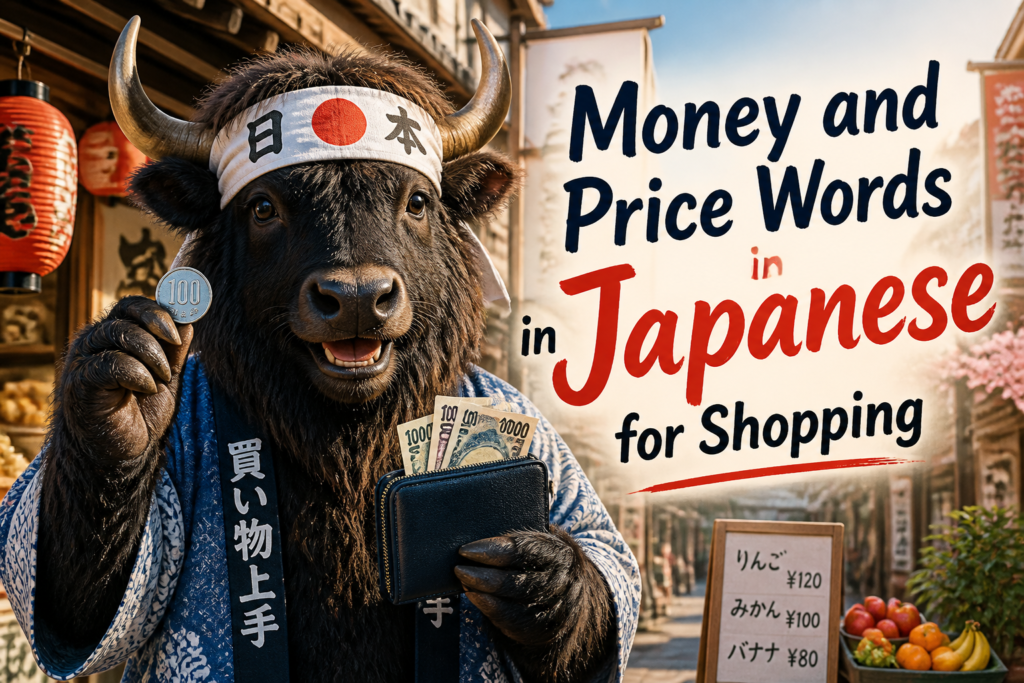
Japanese Money and Price Words Chart for Yen, Coins, and Store Language
Shopping in Japan is usually very smooth. The price is clear, the cashier is fast, and the only thing that may make your brain do a tiny backflip is the language around money. A sign says 税込 zeikomi and suddenly you are wondering whether the tax is included, excluded, or personally offended by you. Relax. It is not that scary.
Once you know a few money words, you can read prices, understand store signs, and ask for the amount without awkward guessing. That means fewer surprises and more confidence. Which is nice, because money words are one of those things that show up everywhere in real life, whether you asked for them or not.
If you want a broader look at Japanese learning, this learn Japanese hub is a handy starting point. For a quick reference on the yen itself, this related lesson also helps connect the dots.
Essential Money Words You Will See Everywhere
| Kanji | Rōmaji | English Meaning | Example | Rōmaji Example | Translation |
|---|---|---|---|---|---|
| 円 | en | yen, Japanese currency | これは千円です。 | Kore wa sen en desu. | This is 1,000 yen. |
| お金 | okane | money | お金を払います。 | Okane o haraimasu. | I pay money. |
| 値段 | nedan | price | 値段はいくらですか。 | Nedan wa ikura desu ka. | How much is the price? |
| 代金 | daikin | payment, charge | 代金をお願いします。 | Daikin o onegaishimasu. | Please charge the payment. |
| 合計 | gōkei | total | 合計は二千円です。 | Gōkei wa nisen en desu. | The total is 2,000 yen. |
Useful Shopping Phrases
| Kanji | Rōmaji | Meaning | Example | Rōmaji Example | Translation |
|---|---|---|---|---|---|
| いくらですか | ikura desu ka | How much is it? | このシャツはいくらですか。 | Kono shatsu wa ikura desu ka. | How much is this shirt? |
| ください | kudasai | Please give me / I’ll take it | これをください。 | Kore o kudasai. | Please give me this. |
| お願いします | onegaishimasu | Please / I’d like this | これをお願いします。 | Kore o onegaishimasu. | I’d like this, please. |
| 現金 | genkin | cash | 現金で払います。 | Genkin de haraimasu. | I will pay in cash. |
| カード | kādo | card | カードは使えますか。 | Kādo wa tsukaemasu ka. | Can I use a card? |
| レシート | reshīto | receipt | レシートをください。 | Reshīto o kudasai. | Please give me the receipt. |
| 税込 | zeikomi | tax included | 税込ですか。 | Zeikomi desu ka. | Is tax included? |
| 税抜 | zeinuki | tax excluded | これは税抜です。 | Kore wa zeinuki desu. | This is before tax. |
| 割引 | waribiki | discount | 割引があります。 | Waribiki ga arimasu. | There is a discount. |
| 安い | yasui | cheap, inexpensive | この店は安いです。 | Kono mise wa yasui desu. | This store is cheap. |
| 高い | takai | expensive | この時計は高いです。 | Kono tokei wa takai desu. | This watch is expensive. |
Numbers And Price Patterns
In shops, Japanese prices often use regular numbers plus 円 en. The setup is simple, which is very rude of Japanese, considering how often languages enjoy making money harder than necessary.
| Kanji | Rōmaji | Meaning | Example | Rōmaji Example | Translation |
|---|---|---|---|---|---|
| 百円 | hyaku en | 100 yen | このパンは百円です。 | Kono pan wa hyaku en desu. | This bread is 100 yen. |
| 五百円 | gohyaku en | 500 yen | このコーヒーは五百円です。 | Kono kōhī wa gohyaku en desu. | This coffee is 500 yen. |
| 千円 | sen en | 1,000 yen | チケットは千円です。 | Chiketto wa sen en desu. | The ticket is 1,000 yen. |
| 二千円 | nisen en | 2,000 yen | 二千円ください。 | Nisen en kudasai. | Give me 2,000 yen, please. |
| 一万円 | ichiman en | 10,000 yen | このバッグは一万円です。 | Kono baggu wa ichiman en desu. | This bag is 10,000 yen. |
Coins, Bills, And Small Money Talk
| Kanji | Rōmaji | Meaning | Example | Rōmaji Example | Translation |
|---|---|---|---|---|---|
| 一円玉 | ichien dama | 1 yen coin | 一円玉があります。 | Ichien dama ga arimasu. | There is a 1 yen coin. |
| 五円玉 | goen dama | 5 yen coin | 五円玉は穴があります。 | Goen dama wa ana ga arimasu. | The 5 yen coin has a hole. |
| 十円玉 | jūen dama | 10 yen coin | 十円玉を入れます。 | Jūen dama o iremasu. | I put in a 10 yen coin. |
| 百円玉 | hyakuen dama | 100 yen coin | 百円玉で払います。 | Hyakuen dama de haraimasu. | I pay with 100 yen coins. |
| 五百円玉 | gohyakuen dama | 500 yen coin | 五百円玉が必要です。 | Gohyakuen dama ga hitsuyō desu. | A 500 yen coin is needed. |
| 千円札 | sen en satsu | 1,000 yen bill | 千円札を渡します。 | Sen en satsu o watashimasu. | I hand over a 1,000 yen bill. |
| 五千円札 | gosen en satsu | 5,000 yen bill | 五千円札があります。 | Gosen en satsu ga arimasu. | There is a 5,000 yen bill. |
| 一万円札 | ichiman en satsu | 10,000 yen bill | 一万円札で払えますか。 | Ichiman en satsu de haraemasu ka. | Can I pay with a 10,000 yen bill? |
Store Language That Helps You Sound Calm And Polite
Japanese stores often use polite phrases. You do not need to sound like a robot in a necktie, but learning these words makes you much easier to understand.
| Kanji | Rōmaji | Meaning | Example | Rōmaji Example | Translation |
|---|---|---|---|---|---|
| 会計 | kaikei | checkout, bill | 会計をお願いします。 | Kaikei o onegaishimasu. | Checkout, please. |
| 支払い | shiharai | payment | 支払いはここです。 | Shiharai wa koko desu. | Payment is here. |
| お釣り | otsuri | change | お釣りをください。 | Otsuri o kudasai. | Please give me the change. |
| 袋 | fukuro | bag | 袋は要りますか。 | Fukuro wa irimasu ka. | Do you need a bag? |
| 要る | iru | to need | 袋は要りません。 | Fukuro wa irimasen. | I do not need a bag. |
| 使う | tsukau | to use | カードは使えますか。 | Kādo wa tsukaemasu ka. | Can I use a card? |
| 払う | harau | to pay | ここで払います。 | Koko de haraimasu. | I will pay here. |
| 売る | uru | to sell | この店で安く売ります。 | Kono mise de yasuku urimasu. | I sell it cheaply at this store. |
Quick Notes On Tax, Discounts, And Price Signs
税込 zeikomi means tax included. 税抜 zeinuki means tax excluded. If you see a big price sign, this difference matters more than your coffee did this morning.
割引 waribiki means discount. Stores may also show セール sēru, which is just “sale.” In Japan, sale signs can look dramatic, but the words are usually simple once you know them.
税込 means “final price including tax.” 税抜 means “base price before tax.” Tiny difference, big wallet impact. Classic.
Mini Shopping Dialogues
| Japanese | Rōmaji | English |
|---|---|---|
| これはいくらですか。 | Kore wa ikura desu ka. | How much is this? |
| これは千二百円です。 | Kore wa sen nihyaku en desu. | This is 1,200 yen. |
| カードは使えますか。 | Kādo wa tsukaemasu ka. | Can I use a card? |
| はい、使えます。 | Hai, tsukaemasu. | Yes, you can use it. |
| レシートをください。 | Reshīto o kudasai. | Please give me the receipt. |
| 現金でお願いします。 | Genkin de onegaishimasu. | Cash, please. |
Common Mistakes And Easy Fixes
| Common Mistake | Better Version | Why It Helps |
|---|---|---|
| Saying only a number without 円 | 千円です | Adding 円 makes the price clear. |
| Mixing up 税込 and 税抜 | Check the small label carefully | It changes the final amount. |
| Using a very casual phrase with staff | お願いします | Polite and safe in shops. |
| Forgetting to ask about card payment | カードは使えますか | Useful before the register surprise. |
| Not knowing change words | お釣り | Helps when getting money back. |
Quick Reference Summary
- 円 en = yen
- お金 okane = money
- 値段 nedan = price
- 税込 zeikomi = tax included
- 税抜 zeinuki = tax excluded
- 会計 kaikei = checkout
- 現金 genkin = cash
- カード kādo = card
- お釣り otsuri = change
- レシート reshīto = receipt
Yak Takeaway
Once you know a small set of money words, Japanese shopping gets much easier. Prices stop looking mysterious, store signs start making sense, and checkout becomes just another normal part of the day. Learn 円, 税込, 税抜, 現金, and カード first, then add the rest as you go. That is the boring secret to feeling less lost and more ready.