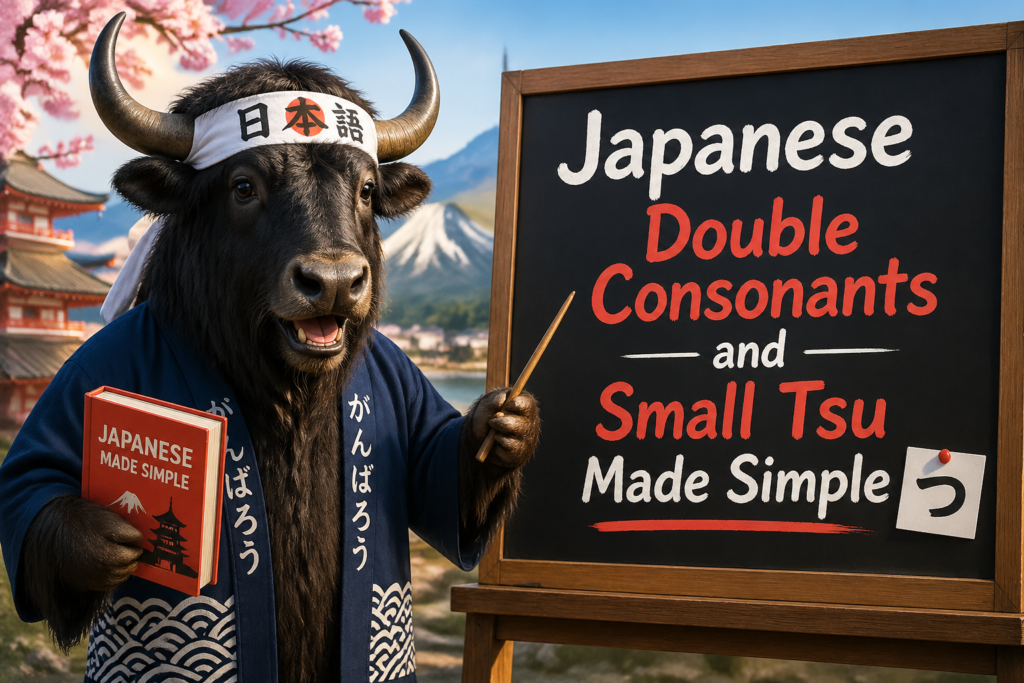
小さいつ chiisai tsu means “small tsu,” and it is one of those tiny Japanese characters that quietly changes everything. One little pause, and suddenly a word sounds right. Ignore it, and the word can turn into something else entirely. Japan loves a plot twist, apparently.
This lesson explains double consonants in Japanese using small っ and shows you the most common patterns with clear examples. If you have ever seen words like がっこう gakkō or きって kitte, this is the part where they stop looking mysterious and start making sense.
For a broader path into Japanese study, the main learning hub is here: Learn Japanese. If you want a quick practice page for this topic, there is also a related lesson at this guide.
What Small Tsu Does
っ does not have its own normal sound. Instead, it shows a pause before the next consonant. In Roman letters, this usually looks like a doubled consonant: kk, pp, tt, ss, and so on.
So がっこう gakkō is not “ga-ko.” It is closer to “ga-k-ko,” with a tiny stop before the k sound. Small, yes. Easy to miss. Also yes. Japanese enjoys this kind of tiny chaos.
| Kanji / Kana | Rōmaji | English Meaning | Example Sentence | Rōmaji Sentence | English Translation |
|---|---|---|---|---|---|
| がっこう | gakkō | school | わたしは がっこう へ いきます。 | Watashi wa gakkō e ikimasu. | I go to school. |
| きって | kitte | stamp | きって を かいます。 | Kitte o kaimasu. | I buy a stamp. |
| ざっし | zasshi | magazine | ざっし を よみます。 | Zasshi o yomimasu. | I read a magazine. |
| せっけん | sekken | soap | せっけん を つかいます。 | Sekken o tsukaimasu. | I use soap. |
Common Words With Small Tsu
Here are practical words you will meet again and again. Each one includes the Japanese form, Rōmaji, meaning, and a simple sentence so the pattern sticks instead of floating away like a forgotten flashcard.
| Kanji / Kana | Rōmaji | Meaning | Example Sentence | Rōmaji Sentence | English Translation |
|---|---|---|---|---|---|
| あった | atta | existed / there was | ほんが あった。 | Hon ga atta. | There was a book. |
| きっぷ | kippu | ticket | きっぷ を かって ください。 | Kippu o katte kudasai. | Please buy a ticket. |
| まって | matte | wait | ここで まって ください。 | Koko de matte kudasai. | Please wait here. |
| はっぴょう | happyō | presentation / announcement | はっぴょう は きんようび です。 | Happyō wa kin’yōbi desu. | The presentation is on Friday. |
| ざっか | zakka | general goods / miscellaneous items | ざっかや に いきます。 | Zakkaya ni ikimasu. | I go to the general goods store. |
| けっか | kekka | result | けっか が でました。 | Kekka ga demashita. | The result came out. |
| にっき | nikki | diary | にっき を かきます。 | Nikki o kakimasu. | I write a diary. |
| ざっし | zasshi | magazine | ざっし を よんだ。 | Zasshi o yonda. | I read a magazine. |
| いっしょ | issho | together | ともだち と いっしょ に べんきょうします。 | Tomodachi to issho ni benkyō shimasu. | I study together with a friend. |
| ちょっと | chotto | a little; a bit | ちょっと まって ください。 | Chotto matte kudasai. | Please wait a moment. |
| まっしろ | masshiro | pure white | ゆき は まっしろ です。 | Yuki wa masshiro desu. | The snow is pure white. |
| こっち | kotchi | this way / this side | こっち へ きて ください。 | Kotchi e kite kudasai. | Please come this way. |
How To Read Small Tsu
The easiest way to read っ is to imagine a tiny pause before the next consonant. You do not say a full extra syllable. You stop for a beat, then continue.
| Pattern | What It Means | Example | Rōmaji | English |
|---|---|---|---|---|
| っ + k | pause before k | がっこう | gakkō | school |
| っ + s | pause before s | ざっし | zasshi | magazine |
| っ + t | pause before t | きって | kitte | stamp |
| っ + p | pause before p | きっぷ | kippu | ticket |
In spoken Japanese, the pause can feel short, but it is important. Without it, the word may sound flat or become a different word. Tiny marks, big responsibility. Classic Japanese.
Useful Phrases With Double Consonants
These are everyday phrases where small tsu appears naturally. Learn them as chunks, because Japanese learners who memorize whole useful phrases usually sound better faster. Annoying, but true.
| Kanji / Kana | Rōmaji | Meaning | Example Sentence | Rōmaji Sentence | English Translation |
|---|---|---|---|---|---|
| ちょっと まって | chotto matte | wait a moment | ちょっと まって ください。 | Chotto matte kudasai. | Please wait a moment. |
| いっしょ に | issho ni | together with | ともだち と いっしょ に いきます。 | Tomodachi to issho ni ikimasu. | I go together with my friend. |
| きっと | kitto | surely; definitely | きっと だいじょうぶ です。 | Kitto daijōbu desu. | It will surely be okay. |
| やっぱり | yappari | as expected; after all | やっぱり すし が すき です。 | Yappari sushi ga suki desu. | After all, I like sushi. |
| まって ください | matte kudasai | please wait | ここで まって ください。 | Koko de matte kudasai. | Please wait here. |
| もっと | motto | more | もっと ゆっくり はなして ください。 | Motto yukkuri hanashite kudasai. | Please speak more slowly. |
| ちょっと だけ | chotto dake | just a little | ちょっと だけ たべます。 | Chotto dake tabemasu. | I will eat just a little. |
| しっかり | shikkari | firmly; properly | しっかり べんきょうします。 | Shikkari benkyō shimasu. | I study properly. |
| まっすぐ | massugu | straight | まっすぐ いって ください。 | Massugu itte kudasai. | Please go straight. |
| やっと | yatto | finally; at last | やっと つきました。 | Yatto tsukimashita. | I finally arrived. |
| さっそく | sassoku | right away | さっそく はじめます。 | Sassoku hajimemasu. | I will start right away. |
Why Double Consonants Matter
Sometimes the difference is not just about sound. It can change the meaning.
| Word | Rōmaji | Meaning | Why It Matters |
|---|---|---|---|
| さか | saka | slope | No small tsu. |
| さっか | sakka | writer / author | Small tsu changes the word. |
| こし | koshi | waist | No pause. |
| こっし | kosshi | not a common everyday word in the same way | The double consonant changes the sound pattern. |
In real life, you do not need to panic over every possible pair. But you do need to train your ear. Japanese speakers hear these differences naturally, so your brain needs a little coaching too.
Common Mistakes And Easy Fixes
| Mistake | Better Way | Why |
|---|---|---|
| Reading っ like a full syllable | Make a short pause instead | っ is not pronounced as a separate “tsu” sound in normal speech. |
| Skipping the pause completely | Hold the consonant a little | Without the pause, the word may sound wrong or unclear. |
| Adding an extra vowel | Keep the vowel pattern the same | Double consonants are about consonant timing, not extra vowels. |
| Thinking っ always means a loud sound | Think “stop,” not “volume” | It is timing, not strength. |
Small tsu is a timing mark, not a magic letter. If you can feel the pause, you are already on the right track.
Quick Practice
Try reading these aloud. First say the Rōmaji, then the Japanese, then check if the pause feels natural. No need to perform a dramatic opera pause. Just a clean little stop.
| Japanese | Rōmaji | English |
|---|---|---|
| きっぷ | kippu | ticket |
| がっこう | gakkō | school |
| まって | matte | wait |
| ざっし | zasshi | magazine |
| いっしょ | issho | together |
| もっと | motto | more |
| しっかり | shikkari | properly; firmly |
| まっすぐ | massugu | straight |
Now try these short sentences:
| Japanese Sentence | Rōmaji | English Translation |
|---|---|---|
| きっぷ を かいます。 | Kippu o kaimasu. | I buy a ticket. |
| ここで まって ください。 | Koko de matte kudasai. | Please wait here. |
| ともだち と いっしょ に べんきょうします。 | Tomodachi to issho ni benkyō shimasu. | I study with a friend. |
| もっと ゆっくり はなして ください。 | Motto yukkuri hanashite kudasai. | Please speak more slowly. |
Quick Reference Summary
- っ marks a short pause before the next consonant.
- In Rōmaji, it usually becomes a double consonant: kk, ss, tt, pp.
- Do not read it like a separate full syllable in normal speech.
- Listen for the timing in words like がっこう gakkō and きっぷ kippu.
- Learn common phrases as chunks: ちょっと まって, いっしょ に, まっすぐ, もっと.
- Small tsu can help distinguish meaning, so it is worth training early.
If you can hear the pause, you are already doing the hard part. The rest is just practice, and yes, Japanese will absolutely keep making tiny details important. That is part of the charm.