Hiragana is the friendly side of Japanese writing. It shows up everywhere: signs, textbooks, food labels, messages, and the kind of everyday Japanese that does not care whether you feel ready or not. If Kanji is the serious older sibling, Hiragana is the one holding the door open and saying, “Relax. Start here.”
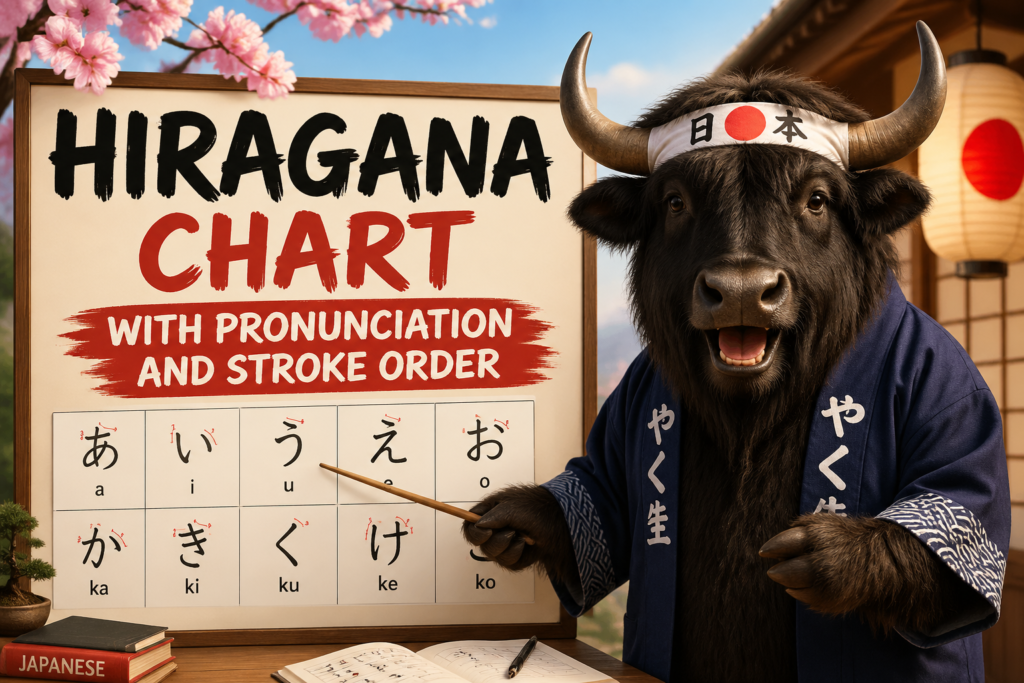
This guide gives you a clean Hiragana Chart with Pronunciation, Stroke Order, and Example Words. You will see the basic characters, how to say them, how to write them, and a few real words for each row. For extra reference, the Japanese learning hub and the related lesson can help you keep going after this chart stops being “that scary page” and starts being “oh, this is manageable.”
One more thing: Hiragana is not decorative. It is the engine room. Once you can read it smoothly, Japanese stops looking like a wall of mystery noodles.
Hiragana is used for native Japanese words, grammar endings, particles, and words that are not written in Kanji. If you are also learning the other phonetic script, compare it with the Katakana chart. They are twins, but not identical twins. Japanese enjoys making things just different enough to keep learners awake.
Before the chart, here is the basic idea: each Hiragana character represents one sound. No separate alphabet drama. No silent letters hiding in the corner. Very efficient.
How To Read The Chart
Each row below shows the Hiragana character, pronunciation in Rōmaji, English meaning or sound value, and an example word. The stroke order note gives a simple writing tip so you can practice the shape correctly. For a deeper overview of the writing system, the Hiragana page is a helpful reference.
Stroke order matters because it helps with neat writing, speed, and recognition. It is not about being fancy. It is about making the character look like the character and not like it lost a fight with a pencil.
Basic Hiragana Chart
Keep building your Japanese
Choose a practical next step when you are ready.
| Hiragana | Rōmaji | Sound | Stroke Order Tip | Example Word | Example Rōmaji | English |
|---|---|---|---|---|---|---|
| あ | a | ah | Write the left curve first, then the right part. | あさ | asa | morning |
| い | i | ee | Two short strokes, light and clean. | いぬ | inu | dog |
| う | u | oo | Start with the top curve, then the lower shape. | うみ | umi | sea |
| え | e | eh | Three strokes, ending with a flowing final line. | えき | eki | station |
| お | o | oh | Write the vertical and curved parts in order. | おかね | okane | money |
| か | ka | ka | Left radical first, then the right side. | かさ | kasa | umbrella |
| き | ki | ki | Keep the middle crossing strokes neat. | きく | kiku | chrysanthemum / to hear |
| く | ku | koo | One simple sweeping stroke. | くるま | kuruma | car |
| け | ke | keh | Two main strokes, then the side line. | けん | ken | pen / sword / prefecture |
| こ | ko | ko | Two parallel strokes, both relaxed. | こども | kodomo | child |
| さ | sa | sa | Top to bottom, then the flowing curve. | さかな | sakana | fish |
| し | shi | shee | Three strokes with a smooth finish. | した | shita | below / tongue |
| す | su | soo | Small opening, then the long curve. | すし | sushi | sushi |
| せ | se | seh | Make the lines even and balanced. | せんせい | sensei | teacher |
| そ | so | so | One stroke, then the small finishing line. | そら | sora | sky |
Small tip: do not rush the table. Hiragana is simple, but your hand still needs practice. Simple does not mean automatic. Sadly, the brain does not upload Japanese by osmosis.
More Hiragana Rows
| Hiragana | Rōmaji | Sound | Stroke Order Tip | Example Word | Example Rōmaji | English |
|---|---|---|---|---|---|---|
| た | ta | ta | Write the top and side strokes first, then the lower part. | たべる | taberu | to eat |
| ち | chi | chee | Keep the curve smooth and open. | ちず | chizu | map |
| つ | tsu | tsoo | Short stroke first, then the curved line. | つき | tsuki | moon |
| て | te | teh | One clean shape with a strong final line. | て | te | hand |
| と | to | to | Two strokes, very compact. | ともだち | tomodachi | friend |
| な | na | na | Start with the top shape, then the lower sweep. | なまえ | namae | name |
| に | ni | nee | Two horizontal strokes with a neat finish. | にほん | Nihon | Japan |
| ぬ | nu | noo | Begin with the curve, then the looped finish. | ぬの | nuno | cloth |
| ね | ne | neh | Write the main body first, then the looping tail. | ねこ | neko | cat |
| の | no | no | One flowing stroke, very round and open. | のり | nori | seaweed / glue |
| は | ha | ha | Write the left side first, then the right side. | はな | hana | flower / nose |
| ひ | hi | hee | Two strokes, curved and open. | ひと | hito | person |
| ふ | fu | foo | Start small, then let the shape flow downward. | ふね | fune | boat |
| へ | he | heh | One very simple slope shape. | へや | heya | room |
| ほ | ho | ho | Balanced strokes with a clear middle line. | ほん | hon | book |
Even More Hiragana Rows
| Hiragana | Rōmaji | Sound | Stroke Order Tip | Example Word | Example Rōmaji | English |
|---|---|---|---|---|---|---|
| ま | ma | ma | Top structure first, then the lower loop. | まち | machi | town |
| み | mi | mee | Three little curves, keep them light. | みず | mizu | water |
| む | mu | moo | The loop should feel round, not forced. | むし | mushi | insect |
| め | me | meh | Cross cleanly and keep the final curve open. | め | me | eye |
| も | mo | mo | Long flowing shape with two small interior lines. | もり | mori | forest |
| や | ya | ya | Start with the top, then draw the curved body. | やま | yama | mountain |
| ゆ | yu | yoo | One compact shape with a smooth finish. | ゆき | yuki | snow |
| よ | yo | yo | Three parts, but still simple and neat. | よる | yoru | night |
| ら | ra | ra | Small top mark, then a curling lower line. | らいぶ | raibu | live performance |
| り | ri | ree | Two graceful vertical strokes. | りんご | ringo | apple |
| る | ru | roo | Watch the loop at the end. | るす | rusu | absence / not at home |
| れ | re | reh | One upright stroke, then the curved finish. | れきし | rekishi | history |
| ろ | ro | ro | Simple, open, and round. | ろく | roku | six |
| わ | wa | wa | Top stroke first, then the looping body. | わたし | watashi | I / me |
| を | wo / o | o | Used mainly as a particle in modern Japanese. | を | wo | object marker particle |
| ん | n | n | One quick stroke, usually at the end of a syllable. | ほん | hon | book |
Voiced And Modified Hiragana
These versions use small marks called dakuten and handakuten. They change the sound of the base character. Tiny marks, big job. Classic Japanese.
| Hiragana | Rōmaji | Meaning / Sound Change | Example Word | Example Rōmaji | English |
|---|---|---|---|---|---|
| が | ga | voiced か | がっこう | gakkou | school |
| ぎ | gi | voiced き | ぎんこう | ginkou | bank |
| ぐ | gu | voiced く | ぐん | gun | group |
| げ | ge | voiced け | げんき | genki | healthy / energetic |
| ご | go | voiced こ | ごはん | gohan | rice / meal |
| ざ | za | voiced さ | ざっし | zasshi | magazine |
| じ | ji | voiced し | じかん | jikan | time |
| ず | zu | voiced す | ずっと | zutto | all the time / straight |
| ぜ | ze | voiced せ | ぜんぶ | zenbu | all / everything |
| ぞ | zo | voiced そ | ぞう | zou | elephant |
| だ | da | voiced た | だいがく | daigaku | university |
| ぢ | ji | rare, historical spelling | はなぢ | hanaji | nosebleed |
| づ | zu | rare, historical spelling | つづく | tsuzuku | to continue |
| で | de | voiced て | でんしゃ | densha | train |
| ど | do | voiced と | どうぞ | douzo | please / here you go |
| ば | ba | voiced は | ばしょ | basho | place |
| び | bi | voiced ひ | びょういん | byouin | hospital |
| ぶ | bu | voiced ふ | ぶんか | bunka | culture |
| べ | be | voiced へ | べんきょう | benkyou | study |
| ぼ | bo | voiced ほ | ぼく | boku | I / me |
| ぱ | pa | p-sound version of は | ぱん | pan | bread |
| ぴ | pi | p-sound version of ひ | ぴざ | piza | pizza |
| ぷ | pu | p-sound version of ふ | ぷれぜんと | purezento | present / gift |
| ぺ | pe | p-sound version of へ | ぺん | pen | pen |
| ぽ | po | p-sound version of ほ | ぽけっと | poketto |
Small Hiragana You Will Meet Often
These tiny characters change sound patterns. They are small, yes, but they quietly do a lot of work. Little characters, big attitude.
| Small Hiragana | Rōmaji | Use | Example Word | Example Rōmaji | English |
|---|---|---|---|---|---|
| ゃ | ya | small ya in combinations | きゃく | kyaku | guest / customer |
| ゅ | yu | small yu in combinations | しゅくだい | shukudai | homework |
| ょ | yo | small yo in combinations | びょういん | byouin | hospital |
| っ | small tsu | double consonant / pause | がっこう | gakkou | school |
| ー | long vowel mark | extends sound in loanwords | コーヒー | koohii | coffee |
Useful Hiragana Practice Words
- あさ — asa — morning
- いぬ — inu — dog
- うみ — umi — sea
- えき — eki — station
- おんがく — ongaku — music
- かさ — kasa — umbrella
- きっぷ — kippu — ticket
- くつ — kutsu — shoes
- さかな — sakana — fish
- しごと — shigoto — work
- すし — sushi — sushi
- せかい — sekai — world
- たべる — taberu — to eat
- ちかてつ — chikatetsu — subway
- つき — tsuki — moon
- てがみ — tegami — letter
- ともだち — tomodachi — friend
- にほん — Nihon — Japan
- ねこ — neko — cat
- ほん — hon — book
- まち — machi — town
- みず — mizu — water
- やま — yama — mountain
- ゆき — yuki — snow
- よる — yoru — night
- りんご — ringo — apple
- わたし — watashi — I / me
- がっこう — gakkou — school
- でんしゃ — densha — train
- ぱん — pan — bread
Real-Life Example Sentences
| Japanese | Rōmaji | English |
|---|---|---|
| わたしは えきへ いきます。 | Watashi wa eki e ikimasu. | I go to the station. |
| ねこが すきです。 | Neko ga suki desu. | I like cats. |
| あさに みずを のみます。 | Asa ni mizu o nomimasu. | I drink water in the morning. |
| ともだちと ほんを よみます。 | Tomodachi to hon o yomimasu. | I read a book with a friend. |
| がっこうで べんきょうします。 | Gakkou de benkyou shimasu. | I study at school. |
| やまは きれいです。 | Yama wa kirei desu. | The mountain is beautiful. |
| ゆきが ふります。 | Yuki ga furimasu. | It snows. |
| すしを たべます。 | Sushi o tabemasu. | I eat sushi. |
Stroke Order Tips That Actually Help
- Write from top to bottom whenever possible.
- Write from left to right whenever the shape allows it.
- Keep strokes smooth and even.
- Do not press too hard. Hiragana likes a relaxed hand.
- Learn a character and write it several times in a row.
- Say the Rōmaji aloud while you write the character.
If you want one practical rule, use this: look, say, write, repeat. That rhythm is simple, and annoying in the best way because it works.
Common Confusions
| Characters | Why They Confuse Learners | Quick Fix |
|---|---|---|
| し / つ | Both have a similar flowing shape. | Remember the sound: shi vs. tsu. |
| ぬ / め | Both can look looped and round. | Look at the direction and where the loop finishes. |
| れ / ね / わ | These can blur together at first. | Practice writing each one slowly and compare the tails. |
| は / ほ / ま | They share similar parts. | Focus on the middle and the number of strokes. |
| あ / お | They both have rounded forms. | Check the stroke count and the final line shape. |
For a broader language road map, the 100 Japanese words and phrases guide is a nice next step once the basics stop feeling like tiny chaos.
Quick Reference Summary
- Hiragana is the basic phonetic script used for Japanese grammar and native words.
- Each character usually represents one sound.
- Stroke order helps with neat writing and faster recognition.
- Voiced marks change sounds: か → が, さ → ざ, は → ば / ぱ.
- Small characters like っ, ゃ, ゅ, ょ change pronunciation and meaning.
- Practice with real words, not just isolated characters.
- Compare Hiragana with Katakana so the shapes do not all start blending into one dramatic blur.
Hiragana is the first real “unlock” in Japanese. Once it clicks, every label, sentence, and sign feels less like a puzzle and more like a path.
When Hiragana starts feeling familiar, that is a very good sign. It means your brain is doing the quiet hard work of learning the script that holds the rest of Japanese together. Keep going, keep writing, and let the characters stop being strangers. They are not trying to be difficult. They just look that way at first.
Reference List
Browse the full Yak Yacker reference list below. If a PDF is available for this page, the download button will appear under the table.
The original guide stays below, and now you can review the topic more actively with a quiz, the full reference table, and a free PDF download under the list.
Use this list as a starting point, then keep going in the Yak Yacker Japanese section for more words, phrases, and study-friendly reference pages.
Quick Quiz
Think you’ve locked hiragana into memory? The quick quiz below gives you a no-pressure check – jump in and see which characters still need a little love.
Quiz data not found. No rows have values for both headword and meaning.
Browse the Full List
The Yak Yacker reference table below gives you meanings, examples where available for this list, and a free PDF download button below the table.
| Character | Romaji | Type | Example | Example Reading |
|---|---|---|---|---|
| あ | a | hiragana | あか | あか |
| ア | a | katakana | アメリカ | あめりか |
| い | i | hiragana | いぬ | いぬ |
| イ | i | katakana | イギリス | いぎりす |
| う | u | hiragana | うみ | うみ |
| ウ | u | katakana | ウイスキー | ういすきー |
| え | e | hiragana | えき | えき |
| エ | e | katakana | エアコン | えあこん |
| お | o | hiragana | おかし | おかし |
| オ | o | katakana | オレンジ | おれんじ |
| か | ka | hiragana | かさ | かさ |
| カ | ka | katakana | カメラ | かめら |
| て | te | Hiragana | て | て |
| テ | te | Katakana | テスト | テスト |
| と | to | Hiragana | と | と |
| ト | to | Katakana | トマト | トマト |
| な | na | Hiragana | なつ | なつ |
| ナ | na | Katakana | ナイフ | ナイフ |
| に | ni | Hiragana | にほん | にほん |
| ニ | ni | Katakana | ニコニコ | ニコニコ |
| ぬ | nu | Hiragana | いぬ | いぬ |
| ヌ | nu | Katakana | ヌードル | ヌードル |
| ね | ne | Hiragana | ねこ | ねこ |
| ネ | ne | Katakana | ネクタイ | nekutai |
| の | no | Hiragana | わたしの | わたしの |