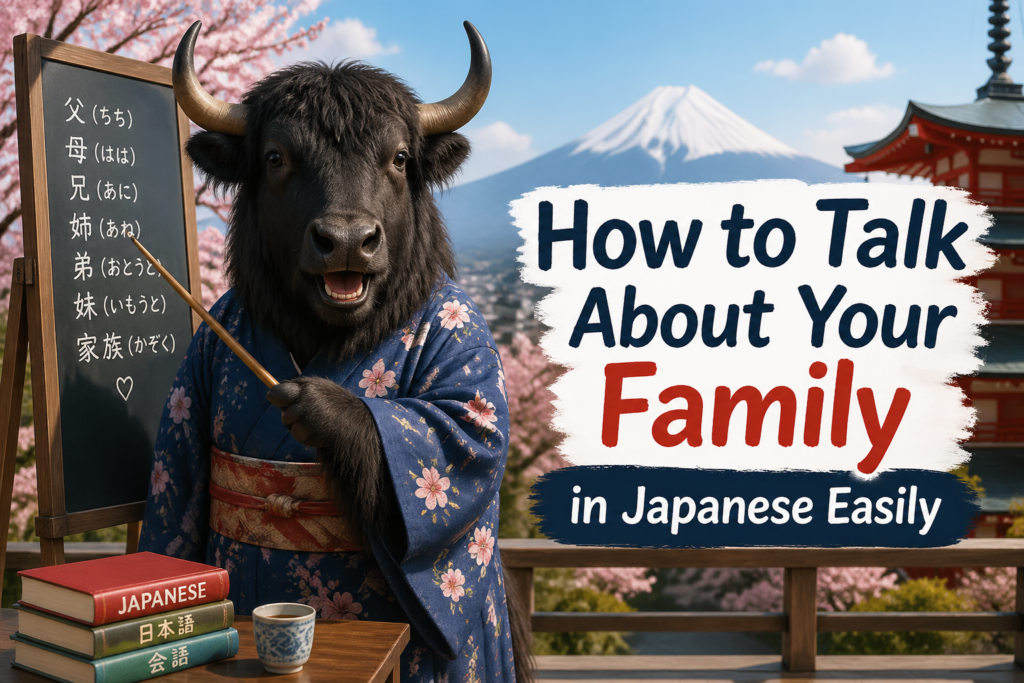
Family talk in Japanese is useful very quickly. It shows up when you introduce yourself, chat with coworkers, meet friends, or explain why you cannot go out tonight because your little brother has somehow turned the living room into a wrestling arena.
Here is the fun twist: Japanese often uses different family words for “my family” and “someone else’s family.” It sounds dramatic, but it is really just Japanese being polite and socially organized. Very on brand.
In this guide, you will learn how to talk about your family in Japanese with natural example sentences, including common family members, polite forms, casual forms, and real-life phrases you can actually use.
If you want a pure vocabulary list after this, visit Family Members In Japanese. For wider Japanese study, the main Learn Japanese page is a good next stop.
The Big Rule: My Family Vs Someone Else’s Family
Japanese has an “inside group” and “outside group” feeling. Your own family is your inside group, so you usually use simpler or more humble words. Someone else’s family is outside your group, so you use more polite words.
Yak wisdom: when talking about your own family, keep it modest. When talking about someone else’s family, add politeness. Congratulations, you are now socially functional in Japanese.
| Use | Japanese | Rōmaji | English Meaning | Natural Example | Rōmaji | Translation |
|---|---|---|---|---|---|---|
| My family | 家族 | Kazoku | family | 私の家族は四人です。 | Watashi no kazoku wa yonin desu. | My family has four people. |
| Someone else’s family | ご家族 | Go-kazoku | your family / someone’s family | ご家族はお元気ですか。 | Go-kazoku wa ogenki desu ka. | Is your family well? |
| My father | 父 | Chichi | my father | 父は会社員です。 | Chichi wa kaishain desu. | My father is an office worker. |
| Your father | お父さん | Otōsan | father / your father / dad | お父さんはどんな仕事をしていますか。 | Otōsan wa donna shigoto o shite imasu ka. | What kind of work does your father do? |
| My mother | 母 | Haha | my mother | 母は料理が上手です。 | Haha wa ryōri ga jōzu desu. | My mother is good at cooking. |
| Your mother | お母さん | Okāsan | mother / your mother / mom | お母さんは元気ですか。 | Okāsan wa genki desu ka. | Is your mother well? |
In casual speech, Japanese people often use お父さん otōsan and お母さん okāsan even for their own parents, especially when speaking warmly or casually. But in formal self-introductions, 父 chichi and 母 haha sound cleaner.
Basic Family Sentences You Can Use Right Away
These are natural starter phrases for talking about your family in Japanese. Each phrase includes the Japanese, Rōmaji, English meaning, and a real example sentence.
| Key Phrase | Rōmaji | Meaning | Example Sentence | Rōmaji | English Translation |
|---|---|---|---|---|---|
| 私の家族は〜人です | Watashi no kazoku wa 〜nin desu | My family has ~ people | 私の家族は五人です。 | Watashi no kazoku wa gonin desu. | My family has five people. |
| 〜がいます | 〜ga imasu | I have / there is ~ | 兄が一人います。 | Ani ga hitori imasu. | I have one older brother. |
| 〜と住んでいます | 〜to sunde imasu | I live with ~ | 両親と住んでいます。 | Ryōshin to sunde imasu. | I live with my parents. |
| 一人暮らしをしています | Hitorigurashi o shite imasu | I live alone | 今は一人暮らしをしています。 | Ima wa hitorigurashi o shite imasu. | I live alone now. |
| 〜は会社員です | 〜wa kaishain desu | ~ is an office worker | 父は会社員です。 | Chichi wa kaishain desu. | My father is an office worker. |
| 〜は学生です | 〜wa gakusei desu | ~ is a student | 妹は大学生です。 | Imōto wa daigakusei desu. | My younger sister is a university student. |
| 〜が好きです | 〜ga suki desu | ~ likes | 母は映画が好きです。 | Haha wa eiga ga suki desu. | My mother likes movies. |
| 〜は優しいです | 〜wa yasashii desu | ~ is kind | 祖母はとても優しいです。 | Sobo wa totemo yasashii desu. | My grandmother is very kind. |
| 〜に似ています | 〜ni nite imasu | I look like / resemble ~ | 私は父に似ています。 | Watashi wa chichi ni nite imasu. | I look like my father. |
| 〜と仲がいいです | 〜to naka ga ii desu | I get along well with ~ | 姉と仲がいいです。 | Ane to naka ga ii desu. | I get along well with my older sister. |
| 〜に会いたいです | 〜ni aitai desu | I want to see ~ | 家族に会いたいです。 | Kazoku ni aitai desu. | I want to see my family. |
| 〜を大切にしています | 〜o taisetsu ni shite imasu | I value ~ | 家族を大切にしています。 | Kazoku o taisetsu ni shite imasu. | I value my family. |
Core Family Vocabulary For Your Own Family
Use these words when talking about your own family, especially in polite introductions, interviews, school assignments, or situations where you do not want to sound like you were raised entirely by emojis.
| Kanji | Rōmaji | Meaning | Example Sentence | Rōmaji | Translation |
|---|---|---|---|---|---|
| 家族 | Kazoku | family | 家族は東京に住んでいます。 | Kazoku wa Tōkyō ni sunde imasu. | My family lives in Tokyo. |
| 両親 | Ryōshin | parents | 両親はとても親切です。 | Ryōshin wa totemo shinsetsu desu. | My parents are very kind. |
| 父 | Chichi | my father | 父は毎朝早く起きます。 | Chichi wa maiasa hayaku okimasu. | My father wakes up early every morning. |
| 母 | Haha | my mother | 母は日本語を勉強しています。 | Haha wa Nihongo o benkyō shite imasu. | My mother is studying Japanese. |
| 兄 | Ani | my older brother | 兄は医者です。 | Ani wa isha desu. | My older brother is a doctor. |
| 姉 | Ane | my older sister | 姉は大阪に住んでいます。 | Ane wa Ōsaka ni sunde imasu. | My older sister lives in Osaka. |
| 弟 | Otōto | my younger brother | 弟はサッカーが好きです。 | Otōto wa sakkā ga suki desu. | My younger brother likes soccer. |
| 妹 | Imōto | my younger sister | 妹は高校生です。 | Imōto wa kōkōsei desu. | My younger sister is a high school student. |
| 祖父 | Sofu | my grandfather | 祖父は九十歳です。 | Sofu wa kyūjussai desu. | My grandfather is ninety years old. |
| 祖母 | Sobo | my grandmother | 祖母は花が好きです。 | Sobo wa hana ga suki desu. | My grandmother likes flowers. |
| 夫 | Otto | my husband | 夫は料理をよくします。 | Otto wa ryōri o yoku shimasu. | My husband often cooks. |
| 妻 | Tsuma | my wife | 妻は音楽が好きです。 | Tsuma wa ongaku ga suki desu. | My wife likes music. |
| 子供 | Kodomo | child / children | 子供が二人います。 | Kodomo ga futari imasu. | I have two children. |
| 息子 | Musuko | my son | 息子は五歳です。 | Musuko wa gosai desu. | My son is five years old. |
| 娘 | Musume | my daughter | 娘は絵を描くのが好きです。 | Musume wa e o kaku no ga suki desu. | My daughter likes drawing pictures. |
Polite Words For Someone Else’s Family
When talking about another person’s family, use these warmer, more respectful forms. They often begin with お o or ご go, which adds politeness. Japanese: making tiny prefixes do big social work since forever.
| Kanji | Rōmaji | Meaning | Example Sentence | Rōmaji | Translation |
|---|---|---|---|---|---|
| ご家族 | Go-kazoku | your family / someone’s family | ご家族はどちらに住んでいますか。 | Go-kazoku wa dochira ni sunde imasu ka. | Where does your family live? |
| ご両親 | Go-ryōshin | your parents | ご両親はお元気ですか。 | Go-ryōshin wa ogenki desu ka. | Are your parents well? |
| お父さん | Otōsan | your father / dad | お父さんは何をしていますか。 | Otōsan wa nani o shite imasu ka. | What does your father do? |
| お母さん | Okāsan | your mother / mom | お母さんは料理が好きですか。 | Okāsan wa ryōri ga suki desu ka. | Does your mother like cooking? |
| お兄さん | Onīsan | your older brother | お兄さんは大学生ですか。 | Onīsan wa daigakusei desu ka. | Is your older brother a university student? |
| お姉さん | Onēsan | your older sister | お姉さんはどこに住んでいますか。 | Onēsan wa doko ni sunde imasu ka. | Where does your older sister live? |
| 弟さん | Otōto-san | your younger brother | 弟さんは何歳ですか。 | Otōto-san wa nansai desu ka. | How old is your younger brother? |
| 妹さん | Imōto-san | your younger sister | 妹さんは学校が好きですか。 | Imōto-san wa gakkō ga suki desu ka. | Does your younger sister like school? |
| お祖父さん | Ojīsan | your grandfather | お祖父さんはお元気ですか。 | Ojīsan wa ogenki desu ka. | Is your grandfather well? |
| お祖母さん | Obāsan | your grandmother | お祖母さんは近くに住んでいますか。 | Obāsan wa chikaku ni sunde imasu ka. | Does your grandmother live nearby? |
| ご主人 | Goshujin | your husband | ご主人は日本語を話しますか。 | Goshujin wa Nihongo o hanashimasu ka. | Does your husband speak Japanese? |
| 奥さん | Okusan | your wife | 奥さんは先生ですか。 | Okusan wa sensei desu ka. | Is your wife a teacher? |
| お子さん | Okosan | your child | お子さんは何歳ですか。 | Okosan wa nansai desu ka. | How old is your child? |
| 息子さん | Musuko-san | your son | 息子さんはスポーツが好きですか。 | Musuko-san wa supōtsu ga suki desu ka. | Does your son like sports? |
| 娘さん | Musume-san | your daughter | 娘さんはピアノを弾きますか。 | Musume-san wa piano o hikimasu ka. | Does your daughter play piano? |
How To Say How Many People Are In Your Family
To say how many people are in your family, use this pattern:
私の家族は〜人です。
Watashi no kazoku wa 〜nin desu.
My family has ~ people.
The counter for people is 人 nin, but one person and two people are special because Japanese enjoys keeping learners humble.
| Kanji | Rōmaji | Meaning | Example Sentence | Rōmaji | Translation |
|---|---|---|---|---|---|
| 一人 | Hitori | one person | 家族は私一人です。 | Kazoku wa watashi hitori desu. | My family is just me. |
| 二人 | Futari | two people | 私の家族は二人です。 | Watashi no kazoku wa futari desu. | My family has two people. |
| 三人 | Sannin | three people | 私の家族は三人です。 | Watashi no kazoku wa sannin desu. | My family has three people. |
| 四人 | Yonin | four people | 私の家族は四人です。 | Watashi no kazoku wa yonin desu. | My family has four people. |
| 五人 | Gonin | five people | 私の家族は五人です。 | Watashi no kazoku wa gonin desu. | My family has five people. |
| 六人 | Rokunin | six people | 私の家族は六人です。 | Watashi no kazoku wa rokunin desu. | My family has six people. |
| 七人 | Nananin | seven people | 私の家族は七人です。 | Watashi no kazoku wa nananin desu. | My family has seven people. |
| 八人 | Hachinin | eight people | 私の家族は八人です。 | Watashi no kazoku wa hachinin desu. | My family has eight people. |
Need to introduce yourself before talking about family? Try What Is Your Name And My Name Is In Japanese for name phrases that fit naturally before family talk.
How To Say You Have Siblings
To say you have someone in your family, use:
〜がいます。
〜ga imasu.
I have ~ / There is ~.
For people and animals, use います imasu. For objects, use あります arimasu. Your brother is not furniture, even if he sits on the couch like one.
| Kanji | Rōmaji | Meaning | Example Sentence | Rōmaji | Translation |
|---|---|---|---|---|---|
| 兄弟 | Kyōdai | siblings / brothers | 兄弟がいますか。 | Kyōdai ga imasu ka. | Do you have siblings? |
| 姉妹 | Shimai | sisters | 姉妹が二人います。 | Shimai ga futari imasu. | I have two sisters. |
| 一人っ子 | Hitorikko | only child | 私は一人っ子です。 | Watashi wa hitorikko desu. | I am an only child. |
| 長男 | Chōnan | eldest son | 兄は長男です。 | Ani wa chōnan desu. | My older brother is the eldest son. |
| 長女 | Chōjo | eldest daughter | 姉は長女です。 | Ane wa chōjo desu. | My older sister is the eldest daughter. |
| 末っ子 | Suekkō | youngest child | 弟は末っ子です。 | Otōto wa suekkō desu. | My younger brother is the youngest child. |
Natural Mini Introductions About Your Family
Here are full mini introductions you can borrow, bend, and shamelessly reuse. That is not cheating. That is language learning with decent survival instincts.
| Situation | Japanese | Rōmaji | English Translation |
|---|---|---|---|
| Simple family size | 私の家族は四人です。父、母、妹、私です。 | Watashi no kazoku wa yonin desu. Chichi, haha, imōto, watashi desu. | My family has four people: my father, my mother, my younger sister, and me. |
| Living with parents | 今、両親と住んでいます。家は駅の近くです。 | Ima, ryōshin to sunde imasu. Ie wa eki no chikaku desu. | I live with my parents now. Our house is near the station. |
| Living alone | 今は一人暮らしをしていますが、週末に家族に電話します。 | Ima wa hitorigurashi o shite imasu ga, shūmatsu ni kazoku ni denwa shimasu. | I live alone now, but I call my family on weekends. |
| Talking about siblings | 兄が一人と妹が一人います。兄は静かで、妹は元気です。 | Ani ga hitori to imōto ga hitori imasu. Ani wa shizuka de, imōto wa genki desu. | I have one older brother and one younger sister. My older brother is quiet, and my younger sister is energetic. |
| Warm family description | 私の家族はにぎやかです。毎晩、みんなで夕食を食べます。 | Watashi no kazoku wa nigiyaka desu. Maiban, minna de yūshoku o tabemasu. | My family is lively. Every night, we eat dinner together. |
| Polite question | ご家族は何人ですか。 | Go-kazoku wa nan-nin desu ka. | How many people are in your family? |
| Asking about parents | ご両親はどちらに住んでいますか。 | Go-ryōshin wa dochira ni sunde imasu ka. | Where do your parents live? |
| Short answer | 両親は京都に住んでいます。 | Ryōshin wa Kyōto ni sunde imasu. | My parents live in Kyoto. |
| Friendly question | 兄弟はいますか。 | Kyōdai wa imasu ka. | Do you have siblings? |
| Natural answer | はい、姉が一人います。 | Hai, ane ga hitori imasu. | Yes, I have one older sister. |
Describing Family Members Naturally
Once you can name family members, the next step is describing them. These simple adjectives and phrases make your Japanese sound less like a robot reading a family tree.
| Kanji | Rōmaji | Meaning | Example Sentence | Rōmaji | Translation |
|---|---|---|---|---|---|
| 優しい | Yasashii | kind / gentle | 母は優しい人です。 | Haha wa yasashii hito desu. | My mother is a kind person. |
| 厳しい | Kibishii | strict | 父は少し厳しいです。 | Chichi wa sukoshi kibishii desu. | My father is a little strict. |
| 面白い | Omoshiroi | funny / interesting | 兄はとても面白いです。 | Ani wa totemo omoshiroi desu. | My older brother is very funny. |
| 静か | Shizuka | quiet | 姉は静かな人です。 | Ane wa shizuka na hito desu. | My older sister is a quiet person. |
| 元気 | Genki | energetic / well | 祖母はとても元気です。 | Sobo wa totemo genki desu. | My grandmother is very energetic. |
| 忙しい | Isogashii | busy | 父は仕事で忙しいです。 | Chichi wa shigoto de isogashii desu. | My father is busy with work. |
| 背が高い | Se ga takai | tall | 兄は背が高いです。 | Ani wa se ga takai desu. | My older brother is tall. |
| 背が低い | Se ga hikui | short | 妹は背が低いです。 | Imōto wa se ga hikui desu. | My younger sister is short. |
| 頭がいい | Atama ga ii | smart | 姉は頭がいいです。 | Ane wa atama ga ii desu. | My older sister is smart. |
| 料理が上手 | Ryōri ga jōzu | good at cooking | 母は料理が上手です。 | Haha wa ryōri ga jōzu desu. | My mother is good at cooking. |
If you want to talk about what your family members do for work, pair these sentences with Job In Japanese. If you want to talk about what they enjoy, add phrases from Hobbies In Japanese.
Talking About Family Events And Celebrations
Family conversations often slide into birthdays, weddings, holidays, and visiting relatives. The sliding is inevitable. Like a family group chat.
| Kanji | Rōmaji | Meaning | Example Sentence | Rōmaji | Translation |
|---|---|---|---|---|---|
| 誕生日 | Tanjōbi | birthday | 今日は母の誕生日です。 | Kyō wa haha no tanjōbi desu. | Today is my mother’s birthday. |
| 結婚式 | Kekkonshiki | wedding ceremony | 来月、姉の結婚式があります。 | Raigetsu, ane no kekkonshiki ga arimasu. | Next month, my older sister has a wedding ceremony. |
| 記念日 | Kinenbi | anniversary | 両親の記念日に花を買いました。 | Ryōshin no kinenbi ni hana o kaimashita. | I bought flowers for my parents’ anniversary. |
| 正月 | Shōgatsu | New Year | 正月に家族と会います。 | Shōgatsu ni kazoku to aimasu. | I meet my family at New Year. |
| 旅行 | Ryokō | trip / travel | 夏に家族で旅行します。 | Natsu ni kazoku de ryokō shimasu. | In summer, I travel with my family. |
| 食事 | Shokuji | meal | 日曜日に家族と食事をします。 | Nichiyōbi ni kazoku to shokuji o shimasu. | On Sunday, I have a meal with my family. |
For birthday-specific phrases, including how to say “happy birthday” naturally, see Happy Birthday In Japanese.
Useful Questions About Family
Questions are where family vocabulary becomes conversation. Use polite forms when asking about someone else’s family. You do not need to sound stiff, just respectful.
| Question | Rōmaji | Meaning | Example Answer | Rōmaji | Translation |
|---|---|---|---|---|---|
| ご家族は何人ですか。 | Go-kazoku wa nan-nin desu ka. | How many people are in your family? | 家族は四人です。 | Kazoku wa yonin desu. | My family has four people. |
| 兄弟はいますか。 | Kyōdai wa imasu ka. | Do you have siblings? | はい、弟が一人います。 | Hai, otōto ga hitori imasu. | Yes, I have one younger brother. |
| ご両親はお元気ですか。 | Go-ryōshin wa ogenki desu ka. | Are your parents well? | はい、元気です。 | Hai, genki desu. | Yes, they are well. |
| ご家族はどこに住んでいますか。 | Go-kazoku wa doko ni sunde imasu ka. | Where does your family live? | 家族は福岡に住んでいます。 | Kazoku wa Fukuoka ni sunde imasu. | My family lives in Fukuoka. |
| お父さんは何をしていますか。 | Otōsan wa nani o shite imasu ka. | What does your father do? | 父は先生です。 | Chichi wa sensei desu. | My father is a teacher. |
| お母さんはどんな人ですか。 | Okāsan wa donna hito desu ka. | What kind of person is your mother? | 母は明るい人です。 | Haha wa akarui hito desu. | My mother is a cheerful person. |
| 家族とよく会いますか。 | Kazoku to yoku aimasu ka. | Do you often see your family? | 月に一回会います。 | Tsuki ni ikkai aimasu. | I see them once a month. |
| 家族と仲がいいですか。 | Kazoku to naka ga ii desu ka. | Do you get along with your family? | はい、とても仲がいいです。 | Hai, totemo naka ga ii desu. | Yes, we get along very well. |
Common Mistakes And Easy Fixes
Family Japanese is not hard, but there are a few traps. Tiny traps. Polite traps. The kind wearing a nice cardigan.
| Mistake | Better Japanese | Rōmaji | Why It Works | Example | Translation |
|---|---|---|---|---|---|
| Using 私のお父さん in formal self-introductions | 父 | Chichi | Use humble family words for your own family in formal speech. | 父は会社員です。 | My father is an office worker. |
| Using あなたの父 for someone else’s father | お父さん | Otōsan | Use polite family words for someone else’s family. | お父さんはお元気ですか。 | Is your father well? |
| Using あります for people | います | Imasu | Use います for people and animals. | 妹がいます。 | I have a younger sister. |
| Saying every sentence with 私の | Often omit it | Often omit “watashi no” | Japanese drops obvious words when context is clear. | 母は優しいです。 | My mother is kind. |
| Calling your own wife 奥さん in formal speech | 妻 | Tsuma | 妻 is the standard word for your own wife. | 妻は看護師です。 | My wife is a nurse. |
| Calling your own husband ご主人 | 夫 | Otto | 夫 is the standard word for your own husband. | 夫は家で働いています。 | My husband works at home. |
Practice: Build Your Own Family Introduction
Use these patterns and swap the words. Say them out loud. Quietly is fine. Dramatically to the mirror is also fine. Language learning needs range.
| Pattern | Rōmaji | Meaning | Your Example | Rōmaji | Translation |
|---|---|---|---|---|---|
| 私の家族は〜人です。 | Watashi no kazoku wa 〜nin desu. | My family has ~ people. | 私の家族は三人です。 | Watashi no kazoku wa sannin desu. | My family has three people. |
| 〜がいます。 | 〜ga imasu. | I have ~. | 兄が一人います。 | Ani ga hitori imasu. | I have one older brother. |
| 〜と住んでいます。 | 〜to sunde imasu. | I live with ~. | 母と住んでいます。 | Haha to sunde imasu. | I live with my mother. |
| 〜は〜です。 | 〜wa 〜desu. | ~ is ~. | 父は先生です。 | Chichi wa sensei desu. | My father is a teacher. |
| 〜は〜が好きです。 | 〜wa 〜ga suki desu. | ~ likes ~. | 妹は音楽が好きです。 | Imōto wa ongaku ga suki desu. | My younger sister likes music. |
| 〜と仲がいいです。 | 〜to naka ga ii desu. | I get along with ~. | 姉と仲がいいです。 | Ane to naka ga ii desu. | I get along well with my older sister. |
Quick Reference Summary
| English | My Family Word | Rōmaji | Someone Else’s Family Word | Rōmaji |
|---|---|---|---|---|
| family | 家族 | Kazoku | ご家族 | Go-kazoku |
| parents | 両親 | Ryōshin | ご両親 | Go-ryōshin |
| father | 父 | Chichi | お父さん | Otōsan |
| mother | 母 | Haha | お母さん | Okāsan |
| older brother | 兄 | Ani | お兄さん | Onīsan |
| older sister | 姉 | Ane | お姉さん | Onēsan |
| younger brother | 弟 | Otōto | 弟さん | Otōto-san |
| younger sister | 妹 | Imōto | 妹さん | Imōto-san |
| husband | 夫 | Otto | ご主人 | Goshujin |
| wife | 妻 | Tsuma | 奥さん | Okusan |
| child | 子供 | Kodomo | お子さん | Okosan |
Yak Takeaway
To talk about your family in Japanese naturally, learn two tracks: humble words for your own family, like 父 chichi and 母 haha, and polite words for someone else’s family, like お父さん otōsan and お母さん okāsan.
Start with one simple sentence: 私の家族は四人です。
Watashi no kazoku wa yonin desu.
My family has four people.
Then add one detail: where they live, what they do, what they like, or whether your sibling is funny, strict, quiet, or somehow all three before breakfast. That is how vocabulary turns into real conversation.