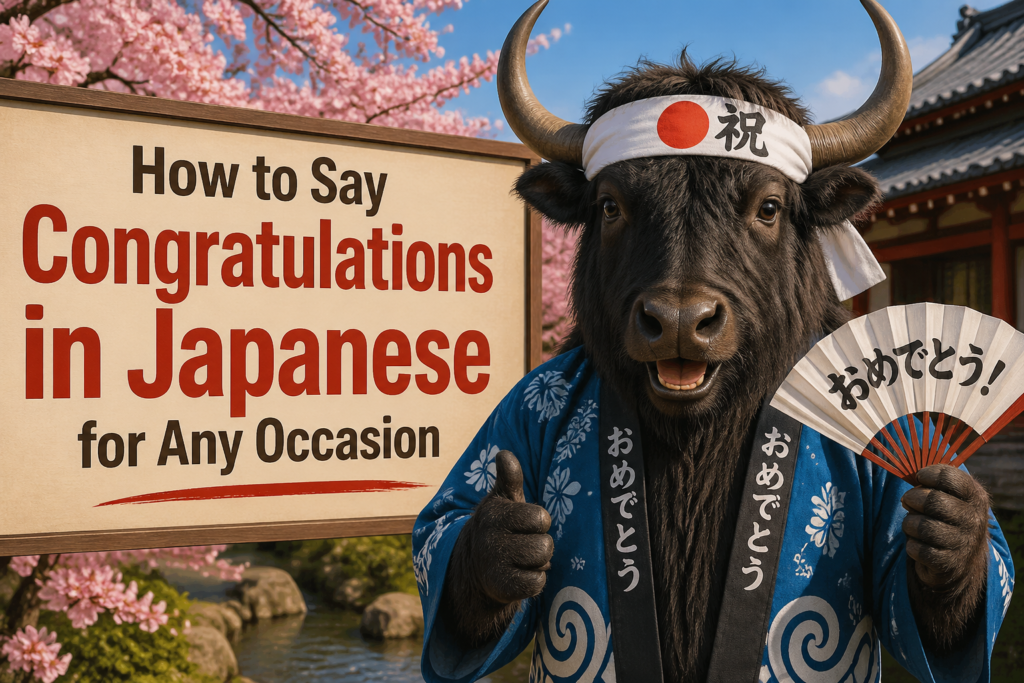
おめでとう omedetō is the little Japanese word that does a lot of heavy lifting. Birthdays, weddings, new jobs, exams, promotions, babies, and all those shiny life moments that make people smile like they just won a tiny personal lottery. One word can work in many situations, but Japanese likes nuance, so the exact phrase matters more than people expect. Naturally, language has opinions.
If you want to sound warm, natural, and not accidentally odd, it helps to learn the common congratulations phrases that Japanese speakers actually use in real life. This guide breaks them down with kanji, rōmaji, English meaning, and simple example sentences so you can use them without guessing.
For a broader look at Japanese greetings and social language, this lesson fits neatly into the bigger picture at Learn Japanese. And if you are also building a “good luck” vocabulary set, the related guide on good luck in Japanese pairs nicely with this one.
One more tiny but important thing: Japanese congratulations often change depending on how formal the situation is. A birthday text to a friend is not the same as a wedding speech to your boss. Language, like a well-dressed guest, should know when to behave.
Core Congratulations Words And Phrases
| Kanji | Rōmaji | English Meaning | Example | Rōmaji Example | Translation |
|---|---|---|---|---|---|
| おめでとう | omedetō | Congratulations; congratulations on a happy event | 誕生日おめでとう。 | Tanjōbi omedetō. | Happy birthday. |
| おめでとうございます | omedetō gozaimasu | Congratulations; polite and formal | ご結婚おめでとうございます。 | Gokekkon omedetō gozaimasu. | Congratulations on your marriage. |
| 誕生日 | tanjōbi | Birthday | 今日が誕生日です。 | Kyō ga tanjōbi desu. | Today is my birthday. |
| 結婚 | kekkon | Marriage; wedding | 結婚おめでとう。 | Kekkon omedetō. | Congratulations on your wedding. |
| 成功 | seikō | Success | 成功おめでとうございます。 | Seikō omedetō gozaimasu. | Congratulations on your success. |
| 合格 | gōkaku | Passing; passing an exam | 試験合格おめでとう。 | Shiken gōkaku omedetō. | Congratulations on passing the exam. |
| 入学 | nyūgaku | Entering school or university | 入学おめでとうございます。 | Nyūgaku omedetō gozaimasu. | Congratulations on entering school. |
| 昇進 | shōshin | Promotion | 昇進おめでとう。 | Shōshin omedetō. | Congratulations on your promotion. |
Birthday Congratulations
The most common birthday phrase is simple: 誕生日おめでとう tanjōbi omedetō. It is friendly and natural, especially with friends, family, and people you know well. If you want to be more polite, use 誕生日おめでとうございます tanjōbi omedetō gozaimasu.
| Kanji | Rōmaji | Meaning | Example Sentence | Rōmaji Example | English Translation |
|---|---|---|---|---|---|
| 誕生日おめでとう | tanjōbi omedetō | Happy birthday | 誕生日おめでとう、今日は楽しい日にしてね。 | Tanjōbi omedetō, kyō wa tanoshii hi ni shite ne. | Happy birthday, have a fun day today. |
| 誕生日おめでとうございます | tanjōbi omedetō gozaimasu | Happy birthday, polite | 先生、誕生日おめでとうございます。 | Sensei, tanjōbi omedetō gozaimasu. | Teacher, happy birthday. |
| 良い一日を | yoi ichinichi o | Have a good day | 誕生日おめでとう。良い一日を。 | Tanjōbi omedetō. Yoi ichinichi o. | Happy birthday. Have a good day. |
A useful habit in Japanese is to add a short warm sentence after the congratulation. That makes the message feel more personal and less like it was copied from a greeting card in a hurry.
Wedding Congratulations
Weddings call for a little more polish. The safest and most polite phrase is ご結婚おめでとうございます gokekkon omedetō gozaimasu. The little ご go adds politeness, and Japanese speakers use this kind of respectful style for important events.
| Kanji | Rōmaji | Meaning | Example Sentence | Rōmaji Example | English Translation |
|---|---|---|---|---|---|
| ご結婚おめでとうございます | gokekkon omedetō gozaimasu | Congratulations on your marriage | ご結婚おめでとうございます。お幸せに。 | Gokekkon omedetō gozaimasu. O shiawase ni. | Congratulations on your marriage. Wishing you happiness. |
| お幸せに | o shiawase ni | Wishing you happiness | お二人ともお幸せに。 | O futari tomo o shiawase ni. | Wishing happiness to both of you. |
| 末永くお幸せに | suenagaku o shiawase ni | May your happiness last long | 末永くお幸せに。 | Suenagaku o shiawase ni. | May your happiness last for a long time. |
ご結婚おめでとうございます gokekkon omedetō gozaimasu is a very safe choice for cards, messages, and speeches. If you are speaking to close friends, you can simply say 結婚おめでとう kekkon omedetō, but the formal version is usually the better bet unless the vibe is extremely casual.
Success And Achievement Congratulations
Japanese congratulation phrases are often tied to the specific achievement. That means “success” can be expressed in several different ways depending on what actually happened. Exams, promotions, new jobs, business wins, and school admissions all have their own common patterns.
| Kanji | Rōmaji | Meaning | Example Sentence | Rōmaji Example | English Translation |
|---|---|---|---|---|---|
| 合格おめでとう | gōkaku omedetō | Congratulations on passing | 試験合格おめでとう。 | Shiken gōkaku omedetō. | Congratulations on passing the exam. |
| 昇進おめでとう | shōshin omedetō | Congratulations on your promotion | 昇進おめでとう。すごいね。 | Shōshin omedetō. Sugoi ne. | Congratulations on your promotion. Amazing. |
| 就職おめでとう | shūshoku omedetō | Congratulations on getting a job | 就職おめでとうございます。 | Shūshoku omedetō gozaimasu. | Congratulations on getting a job. |
| 入学おめでとう | nyūgaku omedetō | Congratulations on entering school | 入学おめでとうございます。 | Nyūgaku omedetō gozaimasu. | Congratulations on entering school. |
| 受賞おめでとう | jushō omedetō | Congratulations on winning an award | 受賞おめでとうございます。 | Jushō omedetō gozaimasu. | Congratulations on your award. |
| 開店おめでとう | kaiten omedetō | Congratulations on opening a shop | 開店おめでとうございます。 | Kaiten omedetō gozaimasu. | Congratulations on the opening of your shop. |
For success-related congratulations, Japanese often prefers the result itself over a big dramatic sentence. In other words, the language is practical. A little modesty goes a long way, which is very Japanese and mildly inconvenient if you were hoping to sound like a movie trailer.
Everyday Congratulation Phrases You Will Actually Use
| Kanji | Rōmaji | English Meaning | Example Sentence | Rōmaji Example | English Translation |
|---|---|---|---|---|---|
| おめでとう | omedetō | Congrats | やったね、おめでとう。 | Yatta ne, omedetō. | Nice, congrats. |
| 本当におめでとう | hontō ni omedetō | Congratulations really; really congrats | 本当におめでとう、よく頑張ったね。 | Hontō ni omedetō, yoku ganbatta ne. | Congratulations, you worked really hard. |
| よかったね | yokatta ne | That’s great; I’m glad for you | 合格したの?よかったね。 | Gōkaku shita no? Yokatta ne. | You passed? That’s great. |
| すごい | sugoi | Amazing; wow | すごい、昇進したの? | Sugoi, shōshin shita no? | Wow, you got promoted? |
| お疲れさま | otsukaresama | Good work; thanks for your effort | 受賞、本当にお疲れさま。 | Jushō, hontō ni otsukaresama. | Congratulations on the award, and well done. |
Useful Patterns For Messages And Cards
| Pattern | Meaning | Example | Rōmaji | Translation |
|---|---|---|---|---|
| [Event] + おめでとう | Short, casual congratulations | 誕生日おめでとう。 | Tanjōbi omedetō. | Happy birthday. |
| [Event] + おめでとうございます | Polite congratulations | ご卒業おめでとうございます。 | Gosotsugyō omedetō gozaimasu. | Congratulations on your graduation. |
| おめでとう + sentence | Congrats plus warm comment | おめでとう。これからも応援しているよ。 | Omedetō. Kore kara mo ōen shite iru yo. | Congrats. I’ll keep cheering for you. |
| お幸せに | Wedding wish | ご結婚おめでとうございます。お幸せに。 | Gokekkon omedetō gozaimasu. O shiawase ni. | Congratulations on your marriage. Wishing you happiness. |
Quick Nuance Guide
おめでとう omedetō is casual. おめでとうございます omedetō gozaimasu is polite. If the occasion is important, formal language usually wins. Japanese likes showing respect first and being flashy second.
There is one thing to remember: おめでとう can be used by itself, but it often sounds better when you attach the event or reason. So instead of only saying “congratulations,” say “birthday congratulations,” “wedding congratulations,” or “promotion congratulations.” That small extra detail makes the phrase feel much more natural.
Also, avoid overusing the bare word in very formal situations. A wedding card to a coworker or a boss is a good place for おめでとうございます omedetō gozaimasu. A text to a close friend can be shorter and warmer. Same meaning, different social outfit.
Practice: Swap The Occasion
| English Prompt | Japanese Answer | Rōmaji | Translation |
|---|---|---|---|
| Happy birthday. | 誕生日おめでとう。 | Tanjōbi omedetō. | Happy birthday. |
| Congratulations on your wedding. | ご結婚おめでとうございます。 | Gokekkon omedetō gozaimasu. | Congratulations on your marriage. |
| Congratulations on passing the exam. | 試験合格おめでとう。 | Shiken gōkaku omedetō. | Congratulations on passing the exam. |
| Congratulations on your promotion. | 昇進おめでとう。 | Shōshin omedetō. | Congratulations on your promotion. |
| Wishing you happiness. | お幸せに。 | O shiawase ni. | Wishing you happiness. |
Try turning each English prompt into Japanese without looking. If you can do that, you are no longer just recognizing the words; you are actually using them. That is the part where the language starts behaving like a tool instead of a museum exhibit.
Common Mistakes And Easy Fixes
| Common Mistake | Better Choice | Why |
|---|---|---|
| Using only おめでとう in a very formal wedding setting | おめでとうございます | More polite and appropriate |
| Forgetting the event and just saying congratulations in English | 誕生日おめでとう, ご結婚おめでとうございます, etc. | Japanese sounds more natural with the occasion included |
| Using お幸せに for every situation | Use it mainly for weddings | It means “wishing happiness,” not general congratulations |
| Making success sound too dramatic | Keep it simple: 昇進おめでとう | Japanese congratulatory style is often concise |
Quick Reference Summary
- おめでとう omedetō = congrats, casual
- おめでとうございます omedetō gozaimasu = congratulations, polite
- 誕生日おめでとう tanjōbi omedetō = happy birthday
- ご結婚おめでとうございます gokekkon omedetō gozaimasu = congratulations on your marriage
- 合格おめでとう gōkaku omedetō = congratulations on passing
- 昇進おめでとう shōshin omedetō = congratulations on your promotion
- お幸せに o shiawase ni = wishing you happiness
When in doubt, use the polite version. Japanese speakers will almost never be offended by a little extra respect, but they may notice when it is missing. A safe phrase is better than a clever one that lands sideways.
So the big takeaway is simple: congratulations in Japanese are easy once you match the phrase to the event. Birthday? 誕生日おめでとう tanjōbi omedetō. Wedding? ご結婚おめでとうございます gokekkon omedetō gozaimasu. Success? Pick the achievement and say it directly. Short, clear, and natural. The Japanese language does not need a confetti cannon to make the point.