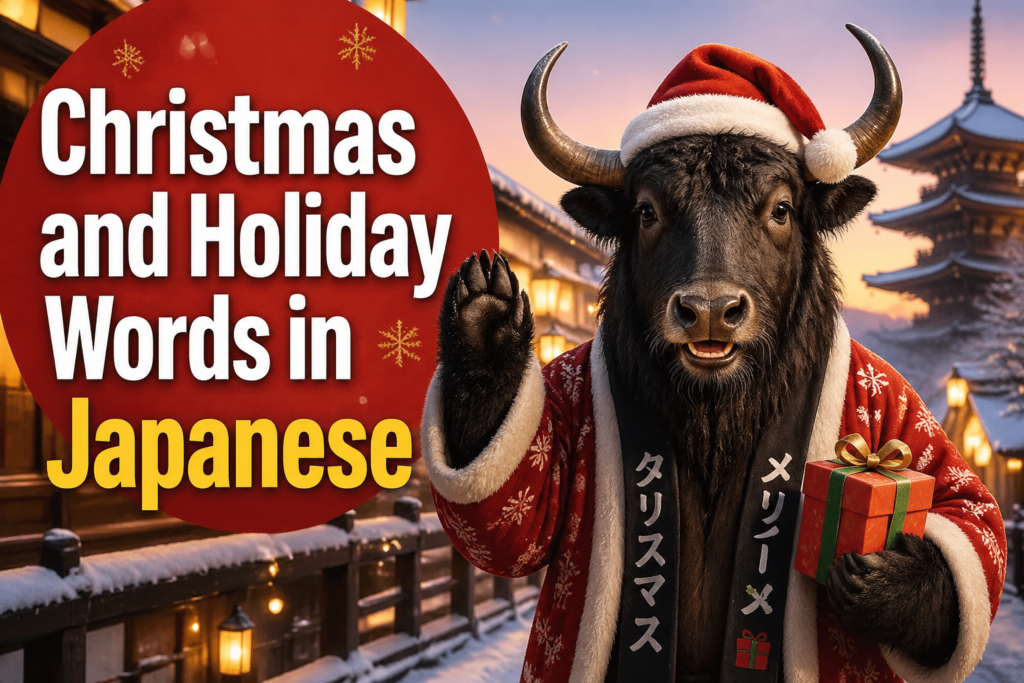
Christmas and Holiday Words in Japanese can be surprisingly useful, even if you are not planning to sing carols in a shopping mall with a suspiciously enthusiastic Santa. Japan mixes imported holiday words, native Japanese words, and seasonal expressions in a way that is very practical for learners. A lot of these words show up in ads, travel, social media, and everyday December life.
If you have ever seen メリークリスマス (Merī Kurisumasu) on a sign and thought, “Ah yes, Japanese Christmas, the most sparkly loanword situation possible,” you are already halfway there. This guide gives you real vocabulary, useful phrases, and example sentences so the words stick for more than five seconds.
For a broader starter pack of common Japanese language basics, this guide pairs nicely with 100 Japanese Words and Phrases to Start Learning, and if you like seasonal vocabulary, the spooky side has its own fun in Halloween in Japanese.
Useful Christmas And Holiday Words
| Kanji | Rōmaji | English Meaning | Example Sentence |
|---|---|---|---|
| クリスマス | Kurisumasu | Christmas | クリスマスが楽しみです。 Kurisumasu ga tanoshimi desu. I’m looking forward to Christmas. |
| メリークリスマス | Merī Kurisumasu | Merry Christmas | メリークリスマス! Merī Kurisumasu! Merry Christmas! |
| 祝日 | Shukujitsu | Holiday; national holiday | 祝日は学校が休みです。 Shukujitsu wa gakkō ga yasumi desu. School is closed on holidays. |
| 休暇 | Kyūka | Vacation; time off | 冬の休暇を楽しみます。 Fuyu no kyūka o tanoshimimasu. I enjoy winter vacation. |
| 年末 | Nenmatsu | Year-end | 年末はとても忙しいです。 Nenmatsu wa totemo isogashii desu. The year-end is very busy. |
| 年始 | Nenshi | Beginning of the year | 年始に家族に会います。 Nenshi ni kazoku ni aimasu. I meet my family at the start of the year. |
| 大晦日 | Ōmisoka | New Year’s Eve | 大晦日にそばを食べます。 Ōmisoka ni soba o tabemasu. I eat soba on New Year’s Eve. |
| 元日 | Ganjitsu | New Year’s Day | 元日は静かです。 Ganjitsu wa shizuka desu. New Year’s Day is quiet. |
| お正月 | Oshōgatsu | New Year’s celebrations | お正月におせちを食べます。 Oshōgatsu ni osechi o tabemasu. I eat osechi during New Year’s celebrations. |
| お祝い | Oiwai | Celebration; congratulations | お祝いのプレゼントを買います。 Oiwai no puresento o kaimasu. I buy a celebration present. |
One quick note: in Japan, Christmas is often more of a seasonal event than a family religious holiday for many people. That means you will see lots of shopping, lights, cakes, and date-night energy. Yes, dates. Very romantic. Very retail.
Holiday And Winter Words You Will Actually See
| Kanji | Rōmaji | English Meaning | Example Sentence |
|---|---|---|---|
| 冬 | Fuyu | Winter | 冬は寒いです。 Fuyu wa samui desu. Winter is cold. |
| 雪 | Yuki | Snow | 雪が降っています。 Yuki ga futteimasu. It is snowing. |
| 寒い | Samui | Cold | 今日はとても寒いです。 Kyō wa totemo samui desu. It is very cold today. |
| 飾り | Kazari | Decoration | 飾りがきれいです。 Kazari ga kirei desu. The decorations are beautiful. |
| 電飾 | Denshoku | Lights; illumination | 街に電飾があります。 Machi ni denshoku ga arimasu. There are lights in the city. |
| イルミネーション | Iruminēshon | Illumination; light display | イルミネーションを見に行きます。 Iruminēshon o mi ni ikimasu. I’m going to see the light display. |
| プレゼント | Purezento | Present; gift | プレゼントをもらいました。 Purezento o moraimashita. I received a present. |
| 贈り物 | Okurimono | Gift; present | 贈り物を選びます。 Okurimono o erabimasu. I choose a gift. |
| カード | Kādo | Card | カードにメッセージを書きます。 Kādo ni messēji o kakimasu. I write a message on the card. |
| ケーキ | Kēki | Cake | ケーキを食べます。 Kēki o tabemasu. I eat cake. |
Christmas Food And Treats
| Kanji | Rōmaji | English Meaning | Example Sentence |
|---|---|---|---|
| ケーキ | Kēki | Cake | ケーキが甘いです。 Kēki ga amai desu. The cake is sweet. |
| 苺 | Ichigo | Strawberry | 苺のケーキが好きです。 Ichigo no kēki ga suki desu. I like strawberry cake. |
| 鶏肉 | Toriniku | Chicken | 鶏肉を食べます。 Toriniku o tabemasu. I eat chicken. |
| フライドチキン | Furaido Chikin | Fried chicken | フライドチキンは人気です。 Furaido Chikin wa ninki desu. Fried chicken is popular. |
| ごちそう | Gochisō | Feast; special meal | ごちそうを用意します。 Gochisō o yōi shimasu. I prepare a feast. |
| 食事 | Shokuji | Meal | 家族で食事をします。 Kazoku de shokuji o shimasu. I have a meal with my family. |
| 飲み物 | Nomimono | Drink | 飲み物は何ですか。 Nomimono wa nan desu ka. What is the drink? |
| 温かい | Atatakai | Warm | 温かい飲み物がほしいです。 Atatakai nomimono ga hoshii desu. I want a warm drink. |
People, Events, And Holiday Activities
| Kanji | Rōmaji | English Meaning | Example Sentence |
|---|---|---|---|
| 家族 | Kazoku | Family | 家族と過ごします。 Kazoku to sugoshimasu. I spend time with family. |
| 友達 | Tomodachi | Friend | 友達に会います。 Tomodachi ni aimasu. I meet a friend. |
| 恋人 | Koi-bito | Romantic partner; sweetheart | 恋人とデートします。 Koi-bito to dēto shimasu. I go on a date with my partner. |
| イベント | I-bento | Event | イベントに行きます。 I-bento ni ikimasu. I’m going to the event. |
| パーティー | Pātī | Party | パーティーをします。 Pātī o shimasu. I have a party. |
| 集まり | Atsumari | Gathering | 小さな集まりがあります。 Chiisana atsumari ga arimasu. There is a small gathering. |
| 乾杯 | Kanpai | Cheers; toast | 乾杯しましょう。 Kanpai shimashō. Let’s toast. |
| 飾る | Kazaru | To decorate | 家を飾ります。 Ie o kazarimasu. I decorate the house. |
| 選ぶ | Erabu | To choose | プレゼントを選びます。 Purezento o erabimasu. I choose a present. |
| 祝う | Iwau | To celebrate; congratulate | みんなで祝います。 Minna de iwaimasu. We celebrate together. |
Real-Life Holiday Phrases
| Japanese | Rōmaji | English Meaning |
|---|---|---|
| メリークリスマス | Merī Kurisumasu | Merry Christmas |
| 良いお年を | Yoi Otoshi o | Have a good New Year |
| あけましておめでとうございます | Akemashite omedetō gozaimasu | Happy New Year |
| 今年もよろしくお願いします | Kotoshi mo yoroshiku onegaishimasu | Please treat me well this year too |
| プレゼントをありがとう | Purezento o arigatō | Thank you for the present |
| 楽しい休日を | Tanoshii kyūjitsu o | Have a fun holiday |
| 素敵な夜を | Suteki na yoru o | Have a lovely evening |
| 冬の予定があります | Fuyu no yotei ga arimasu | I have winter plans |
| 家族と過ごします | Kazoku to sugoshimasu | I spend time with family |
| パーティーに行きます | Pātī ni ikimasu | I’m going to a party |
Quick Nuance Notes
クリスマス (Kurisumasu) is the borrowed word for Christmas, but お正月 (Oshōgatsu) is the bigger holiday season in Japan. If Christmas feels festive and bright, New Year feels calm, traditional, and full of family customs. Different mood, same calendar. Japan likes contrast.
祝日 (Shukujitsu) means a national holiday, not just any fun day off. If you want a general “holiday” for travel or vacation, 休暇 (Kyūka) is often more natural.
良いお年を (Yoi Otoshi o) is used near the end of the year, before New Year arrives. After the new year starts, switch to あけましておめでとうございます (Akemashite omedetō gozaimasu). Timing matters. Language loves timing almost as much as gift wrap loves shiny ribbons.
Phrase Practice
| Prompt | Possible Answer | Rōmaji | English |
|---|---|---|---|
| Say “Merry Christmas.” | メリークリスマス | Merī Kurisumasu | Merry Christmas |
| Say “I’m looking forward to Christmas.” | クリスマスが楽しみです。 | Kurisumasu ga tanoshimi desu. | I’m looking forward to Christmas. |
| Say “I eat cake.” | ケーキを食べます。 | Kēki o tabemasu. | I eat cake. |
| Say “I decorate the house.” | 家を飾ります。 | Ie o kazarimasu. | I decorate the house. |
| Say “Happy New Year.” | あけましておめでとうございます | Akemashite omedetō gozaimasu | Happy New Year |
| Say “Have a good New Year.” | 良いお年を | Yoi Otoshi o | Have a good New Year |
Common Mistakes And Easy Fixes
| Common Mistake | Better Version | Why |
|---|---|---|
| Using メリークリスマス for New Year | あけましておめでとうございます | Christmas and New Year are different greetings. |
| Saying 祝日 when you mean vacation | 休暇 | 祝日 is a public holiday; 休暇 is time off. |
| Forgetting the polite ending | おめでとうございます | Very useful in formal or polite situations. |
| Mixing up 大晦日 and 元日 | 大晦日 = New Year’s Eve, 元日 = New Year’s Day | They are close, but not the same day. Annoyingly important. |
Mini Vocabulary Boost
| Kanji | Rōmaji | Meaning | Example |
|---|---|---|---|
| 希望 | Kibō | Hope; wish | 希望があります。 Kibō ga arimasu. I have hope. |
| 幸せ | Shiawase | Happiness | 幸せな気持ちです。 Shiawase na kimochi desu. I feel happy. |
| 楽しい | Tanoshii | Fun; enjoyable | 楽しい夜でした。 Tanoshii yoru deshita. It was a fun night. |
| 特別 | Tokubetsu | Special | 特別な日です。 Tokubetsu na hi desu. It is a special day. |
| 家 | Ie | House; home | 家でゆっくりします。 Ie de yukkuri shimasu. I relax at home. |
| 夜 | Yoru | Night | 夜は静かです。 Yoru wa shizuka desu. The night is quiet. |
Holiday Japanese is often a mix of Japanese tradition and borrowed English words. That means you do not need to panic every time you see katakana. Sometimes it is just Christmas wearing a Japanese name tag.
Yak Takeaway
Now you have a solid set of Christmas and Holiday Words in Japanese for December messages, winter conversations, and New Year greetings. Start with the big ones: クリスマス (Kurisumasu), メリークリスマス (Merī Kurisumasu), 大晦日 (Ōmisoka), 元日 (Ganjitsu), and あけましておめでとうございます (Akemashite omedetō gozaimasu). Once those are comfortable, the rest of the season starts feeling a lot less mysterious and a lot more fun.
If holiday vocabulary is your thing, the wider Japanese learning hub at Learn Japanese has plenty more words to collect before your brain declares an emergency snow day.