Practice Time
Try changing each verb into the potential form. Keep the meaning in mind, not just the shape.
| Base Verb | Your Goal | Answer |
|---|---|---|
| 読む | can read | 読める |
| 書く | can write | 書ける |
| 話す | can speak | 話せる |
| 見る | can see / watch | 見られる |
| する | can do | できる |
| 来る | can come | 来られる |
Now try the negative forms.
| Positive | Negative |
|---|---|
| 読める | 読めない |
| 行ける | 行けない |
| 話せる | 話せない |
| できる | できない |
And one more step: make them polite.
| Casual | Polite |
|---|---|
| 読める | 読めます |
| 行けない | 行けません |
| 話せる | 話せます |
| できない | できません |
Quick Reference Summary
- Potential form means “can” or “be able to.”
- It changes the verb itself.
- Common examples: 読める, 書ける, 話せる, 見られる, できる.
- Use が with the thing you can do: 日本語が読める.
- Use ます for polite speech: 読めます.
- Use the negative form for “cannot”: 読めない, 読めません.
- する becomes できる.
- 来る becomes 来られる.
The potential form is one of those grammar points that suddenly makes Japanese feel more alive. You are not just naming actions anymore. You are talking about ability, possibility, and real-world limits — which, honestly, is where the interesting sentences live.
Keep practicing with small, real sentences: what you can read, what you cannot do today, what you can see, what you can change later. That is where the form stops being “grammar” and starts being actual Japanese.
Common Mistakes And Fixes
- Using を instead of が
Fix: With potential form, try 日本語が読める, not 日本語を読める. - Forgetting the verb changes
Fix: Learn the potential form as a new verb, not as “the same verb plus can.” - Confusing できる with only “do”
Fix: Remember できる often means “can do / be able to do.” - Using the wrong politeness level
Fix: Choose 読めます in polite situations and 読める in casual ones. - Mixing up ability and permission
Fix: If the issue is “Is it allowed?” use a permission pattern, not potential form.
If you want a quick check on your overall level before digging deeper into verb forms, try the Japanese Placement Test JLPT or the Japanese Vocabulary Test. Sneaky little check-ins like that can be very motivating.
Practice Time
Try changing each verb into the potential form. Keep the meaning in mind, not just the shape.
| Base Verb | Your Goal | Answer |
|---|---|---|
| 読む | can read | 読める |
| 書く | can write | 書ける |
| 話す | can speak | 話せる |
| 見る | can see / watch | 見られる |
| する | can do | できる |
| 来る | can come | 来られる |
Now try the negative forms.
| Positive | Negative |
|---|---|
| 読める | 読めない |
| 行ける | 行けない |
| 話せる | 話せない |
| できる | できない |
And one more step: make them polite.
| Casual | Polite |
|---|---|
| 読める | 読めます |
| 行けない | 行けません |
| 話せる | 話せます |
| できない | できません |
Quick Reference Summary
- Potential form means “can” or “be able to.”
- It changes the verb itself.
- Common examples: 読める, 書ける, 話せる, 見られる, できる.
- Use が with the thing you can do: 日本語が読める.
- Use ます for polite speech: 読めます.
- Use the negative form for “cannot”: 読めない, 読めません.
- する becomes できる.
- 来る becomes 来られる.
The potential form is one of those grammar points that suddenly makes Japanese feel more alive. You are not just naming actions anymore. You are talking about ability, possibility, and real-world limits — which, honestly, is where the interesting sentences live.
Keep practicing with small, real sentences: what you can read, what you cannot do today, what you can see, what you can change later. That is where the form stops being “grammar” and starts being actual Japanese.
Mini Comparison: Can, Ability, And Permission
| English Idea | Japanese Pattern | Example | Meaning |
|---|---|---|---|
| ability | potential form | 漢字が読める | I can read kanji. |
| permission | 〜てもいい | ここで食べてもいい | You may eat here. |
| obligation | 〜なければならない | 行かなければならない | I must go. |
Do not mix these up too much. Can is about ability or possibility. May is about permission. Must is about obligation. If that trio starts fighting in your head, the comparison table is your referee. For a deeper look at obligation, visit must in Japanese. For permission patterns, see want in Japanese as a related grammar guide.
Common Mistakes And Fixes
- Using を instead of が
Fix: With potential form, try 日本語が読める, not 日本語を読める. - Forgetting the verb changes
Fix: Learn the potential form as a new verb, not as “the same verb plus can.” - Confusing できる with only “do”
Fix: Remember できる often means “can do / be able to do.” - Using the wrong politeness level
Fix: Choose 読めます in polite situations and 読める in casual ones. - Mixing up ability and permission
Fix: If the issue is “Is it allowed?” use a permission pattern, not potential form.
If you want a quick check on your overall level before digging deeper into verb forms, try the Japanese Placement Test JLPT or the Japanese Vocabulary Test. Sneaky little check-ins like that can be very motivating.
Practice Time
Try changing each verb into the potential form. Keep the meaning in mind, not just the shape.
| Base Verb | Your Goal | Answer |
|---|---|---|
| 読む | can read | 読める |
| 書く | can write | 書ける |
| 話す | can speak | 話せる |
| 見る | can see / watch | 見られる |
| する | can do | できる |
| 来る | can come | 来られる |
Now try the negative forms.
| Positive | Negative |
|---|---|
| 読める | 読めない |
| 行ける | 行けない |
| 話せる | 話せない |
| できる | できない |
And one more step: make them polite.
| Casual | Polite |
|---|---|
| 読める | 読めます |
| 行けない | 行けません |
| 話せる | 話せます |
| できない | できません |
Quick Reference Summary
- Potential form means “can” or “be able to.”
- It changes the verb itself.
- Common examples: 読める, 書ける, 話せる, 見られる, できる.
- Use が with the thing you can do: 日本語が読める.
- Use ます for polite speech: 読めます.
- Use the negative form for “cannot”: 読めない, 読めません.
- する becomes できる.
- 来る becomes 来られる.
The potential form is one of those grammar points that suddenly makes Japanese feel more alive. You are not just naming actions anymore. You are talking about ability, possibility, and real-world limits — which, honestly, is where the interesting sentences live.
Keep practicing with small, real sentences: what you can read, what you cannot do today, what you can see, what you can change later. That is where the form stops being “grammar” and starts being actual Japanese.
Common Real-Life Sentences
| Japanese | Rōmaji | English |
|---|---|---|
| 日本語が少し話せます。 | Nihongo ga sukoshi hanasemasu. | I can speak a little Japanese. |
| この本は子どもでも読めます。 | Kono hon wa kodomo demo yomemasu. | Even children can read this book. |
| 駅でお金が下ろせます。 | Eki de okane ga orosemasu. | You can withdraw money at the station. |
| ここでは写真が撮れません。 | Koko de wa shashin ga toremasen. | You cannot take photos here. |
| 今日は早く帰れます。 | Kyō wa hayaku kaeremasu. | I can go home early today. |
| その店で安く買えます。 | Sono mise de yasuku kaemasu. | You can buy it cheaply at that store. |
| 来週なら会えます。 | Raishū nara aemasu. | If it is next week, I can meet you. |
| このアプリはスマホで見られます。 | Kono apuri wa sumaho de miraremasu. | You can view this app on a smartphone. |
| 時間があれば勉強できます。 | Jikan ga areba benkyō dekimasu. | If you have time, you can study. |
| 雨の日でも行けますか。 | Ame no hi demo ikemasu ka. | Can you go even on rainy days? |
Mini Comparison: Can, Ability, And Permission
| English Idea | Japanese Pattern | Example | Meaning |
|---|---|---|---|
| ability | potential form | 漢字が読める | I can read kanji. |
| permission | 〜てもいい | ここで食べてもいい | You may eat here. |
| obligation | 〜なければならない | 行かなければならない | I must go. |
Do not mix these up too much. Can is about ability or possibility. May is about permission. Must is about obligation. If that trio starts fighting in your head, the comparison table is your referee. For a deeper look at obligation, visit must in Japanese. For permission patterns, see want in Japanese as a related grammar guide.
Common Mistakes And Fixes
- Using を instead of が
Fix: With potential form, try 日本語が読める, not 日本語を読める. - Forgetting the verb changes
Fix: Learn the potential form as a new verb, not as “the same verb plus can.” - Confusing できる with only “do”
Fix: Remember できる often means “can do / be able to do.” - Using the wrong politeness level
Fix: Choose 読めます in polite situations and 読める in casual ones. - Mixing up ability and permission
Fix: If the issue is “Is it allowed?” use a permission pattern, not potential form.
If you want a quick check on your overall level before digging deeper into verb forms, try the Japanese Placement Test JLPT or the Japanese Vocabulary Test. Sneaky little check-ins like that can be very motivating.
Practice Time
Try changing each verb into the potential form. Keep the meaning in mind, not just the shape.
| Base Verb | Your Goal | Answer |
|---|---|---|
| 読む | can read | 読める |
| 書く | can write | 書ける |
| 話す | can speak | 話せる |
| 見る | can see / watch | 見られる |
| する | can do | できる |
| 来る | can come | 来られる |
Now try the negative forms.
| Positive | Negative |
|---|---|
| 読める | 読めない |
| 行ける | 行けない |
| 話せる | 話せない |
| できる | できない |
And one more step: make them polite.
| Casual | Polite |
|---|---|
| 読める | 読めます |
| 行けない | 行けません |
| 話せる | 話せます |
| できない | できません |
Quick Reference Summary
- Potential form means “can” or “be able to.”
- It changes the verb itself.
- Common examples: 読める, 書ける, 話せる, 見られる, できる.
- Use が with the thing you can do: 日本語が読める.
- Use ます for polite speech: 読めます.
- Use the negative form for “cannot”: 読めない, 読めません.
- する becomes できる.
- 来る becomes 来られる.
The potential form is one of those grammar points that suddenly makes Japanese feel more alive. You are not just naming actions anymore. You are talking about ability, possibility, and real-world limits — which, honestly, is where the interesting sentences live.
Keep practicing with small, real sentences: what you can read, what you cannot do today, what you can see, what you can change later. That is where the form stops being “grammar” and starts being actual Japanese.
Important Special Case: できる
The verb する becomes できる in the potential form. This one is super important because できる is often used as a general “can do” word, not just for one action.
| Verb | Rōmaji | Potential Form | Meaning |
|---|---|---|---|
| する | suru | できる | can do |
| 勉強する | benkyō suru | 勉強できる | can study |
| 運転する | unten suru | 運転できる | can drive |
Examples:
| Japanese | Rōmaji | English |
|---|---|---|
| 日本語の勉強ができます。 | Nihongo no benkyō ga dekimasu. | I can study Japanese. |
| ここで運転できません。 | Koko de unten dekimasen. | You cannot drive here. |
| 今日は料理ができる。 | Kyō wa ryōri ga dekiru. | I can cook today. |
Think of できる as the Swiss army knife of “can.” It is flexible, useful, and shows up all over the place.
Common Real-Life Sentences
| Japanese | Rōmaji | English |
|---|---|---|
| 日本語が少し話せます。 | Nihongo ga sukoshi hanasemasu. | I can speak a little Japanese. |
| この本は子どもでも読めます。 | Kono hon wa kodomo demo yomemasu. | Even children can read this book. |
| 駅でお金が下ろせます。 | Eki de okane ga orosemasu. | You can withdraw money at the station. |
| ここでは写真が撮れません。 | Koko de wa shashin ga toremasen. | You cannot take photos here. |
| 今日は早く帰れます。 | Kyō wa hayaku kaeremasu. | I can go home early today. |
| その店で安く買えます。 | Sono mise de yasuku kaemasu. | You can buy it cheaply at that store. |
| 来週なら会えます。 | Raishū nara aemasu. | If it is next week, I can meet you. |
| このアプリはスマホで見られます。 | Kono apuri wa sumaho de miraremasu. | You can view this app on a smartphone. |
| 時間があれば勉強できます。 | Jikan ga areba benkyō dekimasu. | If you have time, you can study. |
| 雨の日でも行けますか。 | Ame no hi demo ikemasu ka. | Can you go even on rainy days? |
Mini Comparison: Can, Ability, And Permission
| English Idea | Japanese Pattern | Example | Meaning |
|---|---|---|---|
| ability | potential form | 漢字が読める | I can read kanji. |
| permission | 〜てもいい | ここで食べてもいい | You may eat here. |
| obligation | 〜なければならない | 行かなければならない | I must go. |
Do not mix these up too much. Can is about ability or possibility. May is about permission. Must is about obligation. If that trio starts fighting in your head, the comparison table is your referee. For a deeper look at obligation, visit must in Japanese. For permission patterns, see want in Japanese as a related grammar guide.
Common Mistakes And Fixes
- Using を instead of が
Fix: With potential form, try 日本語が読める, not 日本語を読める. - Forgetting the verb changes
Fix: Learn the potential form as a new verb, not as “the same verb plus can.” - Confusing できる with only “do”
Fix: Remember できる often means “can do / be able to do.” - Using the wrong politeness level
Fix: Choose 読めます in polite situations and 読める in casual ones. - Mixing up ability and permission
Fix: If the issue is “Is it allowed?” use a permission pattern, not potential form.
If you want a quick check on your overall level before digging deeper into verb forms, try the Japanese Placement Test JLPT or the Japanese Vocabulary Test. Sneaky little check-ins like that can be very motivating.
Practice Time
Try changing each verb into the potential form. Keep the meaning in mind, not just the shape.
| Base Verb | Your Goal | Answer |
|---|---|---|
| 読む | can read | 読める |
| 書く | can write | 書ける |
| 話す | can speak | 話せる |
| 見る | can see / watch | 見られる |
| する | can do | できる |
| 来る | can come | 来られる |
Now try the negative forms.
| Positive | Negative |
|---|---|
| 読める | 読めない |
| 行ける | 行けない |
| 話せる | 話せない |
| できる | できない |
And one more step: make them polite.
| Casual | Polite |
|---|---|
| 読める | 読めます |
| 行けない | 行けません |
| 話せる | 話せます |
| できない | できません |
Quick Reference Summary
- Potential form means “can” or “be able to.”
- It changes the verb itself.
- Common examples: 読める, 書ける, 話せる, 見られる, できる.
- Use が with the thing you can do: 日本語が読める.
- Use ます for polite speech: 読めます.
- Use the negative form for “cannot”: 読めない, 読めません.
- する becomes できる.
- 来る becomes 来られる.
The potential form is one of those grammar points that suddenly makes Japanese feel more alive. You are not just naming actions anymore. You are talking about ability, possibility, and real-world limits — which, honestly, is where the interesting sentences live.
Keep practicing with small, real sentences: what you can read, what you cannot do today, what you can see, what you can change later. That is where the form stops being “grammar” and starts being actual Japanese.
Positive And Negative Potential Form
You can also say what is not possible. That is where can not lives.
| Meaning | Casual | Polite | Example | Translation |
|---|---|---|---|---|
| can | 読める | 読めます | 新聞が読めます。 | I can read newspapers. |
| cannot | 読めない | 読めません | 新聞が読めません。 | I cannot read newspapers. |
| can | 行ける | 行けます | 午後に行けます。 | I can go in the afternoon. |
| cannot | 行けない | 行けません | 今日は行けません。 | I cannot go today. |
読めない Yomenai means “cannot read,” and 読めません Yomemasen is the polite version. Same idea, different social setting. Japanese loves social settings. Really, truly loves them.
Important Special Case: できる
The verb する becomes できる in the potential form. This one is super important because できる is often used as a general “can do” word, not just for one action.
| Verb | Rōmaji | Potential Form | Meaning |
|---|---|---|---|
| する | suru | できる | can do |
| 勉強する | benkyō suru | 勉強できる | can study |
| 運転する | unten suru | 運転できる | can drive |
Examples:
| Japanese | Rōmaji | English |
|---|---|---|
| 日本語の勉強ができます。 | Nihongo no benkyō ga dekimasu. | I can study Japanese. |
| ここで運転できません。 | Koko de unten dekimasen. | You cannot drive here. |
| 今日は料理ができる。 | Kyō wa ryōri ga dekiru. | I can cook today. |
Think of できる as the Swiss army knife of “can.” It is flexible, useful, and shows up all over the place.
Common Real-Life Sentences
| Japanese | Rōmaji | English |
|---|---|---|
| 日本語が少し話せます。 | Nihongo ga sukoshi hanasemasu. | I can speak a little Japanese. |
| この本は子どもでも読めます。 | Kono hon wa kodomo demo yomemasu. | Even children can read this book. |
| 駅でお金が下ろせます。 | Eki de okane ga orosemasu. | You can withdraw money at the station. |
| ここでは写真が撮れません。 | Koko de wa shashin ga toremasen. | You cannot take photos here. |
| 今日は早く帰れます。 | Kyō wa hayaku kaeremasu. | I can go home early today. |
| その店で安く買えます。 | Sono mise de yasuku kaemasu. | You can buy it cheaply at that store. |
| 来週なら会えます。 | Raishū nara aemasu. | If it is next week, I can meet you. |
| このアプリはスマホで見られます。 | Kono apuri wa sumaho de miraremasu. | You can view this app on a smartphone. |
| 時間があれば勉強できます。 | Jikan ga areba benkyō dekimasu. | If you have time, you can study. |
| 雨の日でも行けますか。 | Ame no hi demo ikemasu ka. | Can you go even on rainy days? |
Mini Comparison: Can, Ability, And Permission
| English Idea | Japanese Pattern | Example | Meaning |
|---|---|---|---|
| ability | potential form | 漢字が読める | I can read kanji. |
| permission | 〜てもいい | ここで食べてもいい | You may eat here. |
| obligation | 〜なければならない | 行かなければならない | I must go. |
Do not mix these up too much. Can is about ability or possibility. May is about permission. Must is about obligation. If that trio starts fighting in your head, the comparison table is your referee. For a deeper look at obligation, visit must in Japanese. For permission patterns, see want in Japanese as a related grammar guide.
Common Mistakes And Fixes
- Using を instead of が
Fix: With potential form, try 日本語が読める, not 日本語を読める. - Forgetting the verb changes
Fix: Learn the potential form as a new verb, not as “the same verb plus can.” - Confusing できる with only “do”
Fix: Remember できる often means “can do / be able to do.” - Using the wrong politeness level
Fix: Choose 読めます in polite situations and 読める in casual ones. - Mixing up ability and permission
Fix: If the issue is “Is it allowed?” use a permission pattern, not potential form.
If you want a quick check on your overall level before digging deeper into verb forms, try the Japanese Placement Test JLPT or the Japanese Vocabulary Test. Sneaky little check-ins like that can be very motivating.
Practice Time
Try changing each verb into the potential form. Keep the meaning in mind, not just the shape.
| Base Verb | Your Goal | Answer |
|---|---|---|
| 読む | can read | 読める |
| 書く | can write | 書ける |
| 話す | can speak | 話せる |
| 見る | can see / watch | 見られる |
| する | can do | できる |
| 来る | can come | 来られる |
Now try the negative forms.
| Positive | Negative |
|---|---|
| 読める | 読めない |
| 行ける | 行けない |
| 話せる | 話せない |
| できる | できない |
And one more step: make them polite.
| Casual | Polite |
|---|---|
| 読める | 読めます |
| 行けない | 行けません |
| 話せる | 話せます |
| できない | できません |
Quick Reference Summary
- Potential form means “can” or “be able to.”
- It changes the verb itself.
- Common examples: 読める, 書ける, 話せる, 見られる, できる.
- Use が with the thing you can do: 日本語が読める.
- Use ます for polite speech: 読めます.
- Use the negative form for “cannot”: 読めない, 読めません.
- する becomes できる.
- 来る becomes 来られる.
The potential form is one of those grammar points that suddenly makes Japanese feel more alive. You are not just naming actions anymore. You are talking about ability, possibility, and real-world limits — which, honestly, is where the interesting sentences live.
Keep practicing with small, real sentences: what you can read, what you cannot do today, what you can see, what you can change later. That is where the form stops being “grammar” and starts being actual Japanese.
Polite And Casual Ways To Say “Can”
| Meaning | Casual | Polite | Example |
|---|---|---|---|
| can read | 読める | 読めます | 本が読めます。 |
| can speak | 話せる | 話せます | 日本語が話せます。 |
| cannot go | 行けない | 行けません | 今日は行けません。 |
| can see | 見られる | 見られます | ここで見られます。 |
The polite form is usually the safest choice in writing and everyday respectful speech. The casual form is common with friends, family, and anyone who already knows you are not trying to sound like a robot in a suit.
Positive And Negative Potential Form
You can also say what is not possible. That is where can not lives.
| Meaning | Casual | Polite | Example | Translation |
|---|---|---|---|---|
| can | 読める | 読めます | 新聞が読めます。 | I can read newspapers. |
| cannot | 読めない | 読めません | 新聞が読めません。 | I cannot read newspapers. |
| can | 行ける | 行けます | 午後に行けます。 | I can go in the afternoon. |
| cannot | 行けない | 行けません | 今日は行けません。 | I cannot go today. |
読めない Yomenai means “cannot read,” and 読めません Yomemasen is the polite version. Same idea, different social setting. Japanese loves social settings. Really, truly loves them.
Important Special Case: できる
The verb する becomes できる in the potential form. This one is super important because できる is often used as a general “can do” word, not just for one action.
| Verb | Rōmaji | Potential Form | Meaning |
|---|---|---|---|
| する | suru | できる | can do |
| 勉強する | benkyō suru | 勉強できる | can study |
| 運転する | unten suru | 運転できる | can drive |
Examples:
| Japanese | Rōmaji | English |
|---|---|---|
| 日本語の勉強ができます。 | Nihongo no benkyō ga dekimasu. | I can study Japanese. |
| ここで運転できません。 | Koko de unten dekimasen. | You cannot drive here. |
| 今日は料理ができる。 | Kyō wa ryōri ga dekiru. | I can cook today. |
Think of できる as the Swiss army knife of “can.” It is flexible, useful, and shows up all over the place.
Common Real-Life Sentences
| Japanese | Rōmaji | English |
|---|---|---|
| 日本語が少し話せます。 | Nihongo ga sukoshi hanasemasu. | I can speak a little Japanese. |
| この本は子どもでも読めます。 | Kono hon wa kodomo demo yomemasu. | Even children can read this book. |
| 駅でお金が下ろせます。 | Eki de okane ga orosemasu. | You can withdraw money at the station. |
| ここでは写真が撮れません。 | Koko de wa shashin ga toremasen. | You cannot take photos here. |
| 今日は早く帰れます。 | Kyō wa hayaku kaeremasu. | I can go home early today. |
| その店で安く買えます。 | Sono mise de yasuku kaemasu. | You can buy it cheaply at that store. |
| 来週なら会えます。 | Raishū nara aemasu. | If it is next week, I can meet you. |
| このアプリはスマホで見られます。 | Kono apuri wa sumaho de miraremasu. | You can view this app on a smartphone. |
| 時間があれば勉強できます。 | Jikan ga areba benkyō dekimasu. | If you have time, you can study. |
| 雨の日でも行けますか。 | Ame no hi demo ikemasu ka. | Can you go even on rainy days? |
Mini Comparison: Can, Ability, And Permission
| English Idea | Japanese Pattern | Example | Meaning |
|---|---|---|---|
| ability | potential form | 漢字が読める | I can read kanji. |
| permission | 〜てもいい | ここで食べてもいい | You may eat here. |
| obligation | 〜なければならない | 行かなければならない | I must go. |
Do not mix these up too much. Can is about ability or possibility. May is about permission. Must is about obligation. If that trio starts fighting in your head, the comparison table is your referee. For a deeper look at obligation, visit must in Japanese. For permission patterns, see want in Japanese as a related grammar guide.
Common Mistakes And Fixes
- Using を instead of が
Fix: With potential form, try 日本語が読める, not 日本語を読める. - Forgetting the verb changes
Fix: Learn the potential form as a new verb, not as “the same verb plus can.” - Confusing できる with only “do”
Fix: Remember できる often means “can do / be able to do.” - Using the wrong politeness level
Fix: Choose 読めます in polite situations and 読める in casual ones. - Mixing up ability and permission
Fix: If the issue is “Is it allowed?” use a permission pattern, not potential form.
If you want a quick check on your overall level before digging deeper into verb forms, try the Japanese Placement Test JLPT or the Japanese Vocabulary Test. Sneaky little check-ins like that can be very motivating.
Practice Time
Try changing each verb into the potential form. Keep the meaning in mind, not just the shape.
| Base Verb | Your Goal | Answer |
|---|---|---|
| 読む | can read | 読める |
| 書く | can write | 書ける |
| 話す | can speak | 話せる |
| 見る | can see / watch | 見られる |
| する | can do | できる |
| 来る | can come | 来られる |
Now try the negative forms.
| Positive | Negative |
|---|---|
| 読める | 読めない |
| 行ける | 行けない |
| 話せる | 話せない |
| できる | できない |
And one more step: make them polite.
| Casual | Polite |
|---|---|
| 読める | 読めます |
| 行けない | 行けません |
| 話せる | 話せます |
| できない | できません |
Quick Reference Summary
- Potential form means “can” or “be able to.”
- It changes the verb itself.
- Common examples: 読める, 書ける, 話せる, 見られる, できる.
- Use が with the thing you can do: 日本語が読める.
- Use ます for polite speech: 読めます.
- Use the negative form for “cannot”: 読めない, 読めません.
- する becomes できる.
- 来る becomes 来られる.
The potential form is one of those grammar points that suddenly makes Japanese feel more alive. You are not just naming actions anymore. You are talking about ability, possibility, and real-world limits — which, honestly, is where the interesting sentences live.
Keep practicing with small, real sentences: what you can read, what you cannot do today, what you can see, what you can change later. That is where the form stops being “grammar” and starts being actual Japanese.
Rule For The Particle が
With potential form, the thing that can be done is usually followed by が instead of を.
| Structure | Example | Meaning |
|---|---|---|
| 日本語が読める | Nihongo ga yomeru | can read Japanese |
| 漢字が書ける | Kanji ga kakeru | can write kanji |
| 英語が話せる | Eigo ga hanaseru | can speak English |
This is one of the most useful habits to build early. If you keep using を out of muscle memory, your sentence may still be understood, but the natural feel gets a little wobbly. Like wearing one formal shoe and one sneaker.
Polite And Casual Ways To Say “Can”
| Meaning | Casual | Polite | Example |
|---|---|---|---|
| can read | 読める | 読めます | 本が読めます。 |
| can speak | 話せる | 話せます | 日本語が話せます。 |
| cannot go | 行けない | 行けません | 今日は行けません。 |
| can see | 見られる | 見られます | ここで見られます。 |
The polite form is usually the safest choice in writing and everyday respectful speech. The casual form is common with friends, family, and anyone who already knows you are not trying to sound like a robot in a suit.
Positive And Negative Potential Form
You can also say what is not possible. That is where can not lives.
| Meaning | Casual | Polite | Example | Translation |
|---|---|---|---|---|
| can | 読める | 読めます | 新聞が読めます。 | I can read newspapers. |
| cannot | 読めない | 読めません | 新聞が読めません。 | I cannot read newspapers. |
| can | 行ける | 行けます | 午後に行けます。 | I can go in the afternoon. |
| cannot | 行けない | 行けません | 今日は行けません。 | I cannot go today. |
読めない Yomenai means “cannot read,” and 読めません Yomemasen is the polite version. Same idea, different social setting. Japanese loves social settings. Really, truly loves them.
Important Special Case: できる
The verb する becomes できる in the potential form. This one is super important because できる is often used as a general “can do” word, not just for one action.
| Verb | Rōmaji | Potential Form | Meaning |
|---|---|---|---|
| する | suru | できる | can do |
| 勉強する | benkyō suru | 勉強できる | can study |
| 運転する | unten suru | 運転できる | can drive |
Examples:
| Japanese | Rōmaji | English |
|---|---|---|
| 日本語の勉強ができます。 | Nihongo no benkyō ga dekimasu. | I can study Japanese. |
| ここで運転できません。 | Koko de unten dekimasen. | You cannot drive here. |
| 今日は料理ができる。 | Kyō wa ryōri ga dekiru. | I can cook today. |
Think of できる as the Swiss army knife of “can.” It is flexible, useful, and shows up all over the place.
Common Real-Life Sentences
| Japanese | Rōmaji | English |
|---|---|---|
| 日本語が少し話せます。 | Nihongo ga sukoshi hanasemasu. | I can speak a little Japanese. |
| この本は子どもでも読めます。 | Kono hon wa kodomo demo yomemasu. | Even children can read this book. |
| 駅でお金が下ろせます。 | Eki de okane ga orosemasu. | You can withdraw money at the station. |
| ここでは写真が撮れません。 | Koko de wa shashin ga toremasen. | You cannot take photos here. |
| 今日は早く帰れます。 | Kyō wa hayaku kaeremasu. | I can go home early today. |
| その店で安く買えます。 | Sono mise de yasuku kaemasu. | You can buy it cheaply at that store. |
| 来週なら会えます。 | Raishū nara aemasu. | If it is next week, I can meet you. |
| このアプリはスマホで見られます。 | Kono apuri wa sumaho de miraremasu. | You can view this app on a smartphone. |
| 時間があれば勉強できます。 | Jikan ga areba benkyō dekimasu. | If you have time, you can study. |
| 雨の日でも行けますか。 | Ame no hi demo ikemasu ka. | Can you go even on rainy days? |
Mini Comparison: Can, Ability, And Permission
| English Idea | Japanese Pattern | Example | Meaning |
|---|---|---|---|
| ability | potential form | 漢字が読める | I can read kanji. |
| permission | 〜てもいい | ここで食べてもいい | You may eat here. |
| obligation | 〜なければならない | 行かなければならない | I must go. |
Do not mix these up too much. Can is about ability or possibility. May is about permission. Must is about obligation. If that trio starts fighting in your head, the comparison table is your referee. For a deeper look at obligation, visit must in Japanese. For permission patterns, see want in Japanese as a related grammar guide.
Common Mistakes And Fixes
- Using を instead of が
Fix: With potential form, try 日本語が読める, not 日本語を読める. - Forgetting the verb changes
Fix: Learn the potential form as a new verb, not as “the same verb plus can.” - Confusing できる with only “do”
Fix: Remember できる often means “can do / be able to do.” - Using the wrong politeness level
Fix: Choose 読めます in polite situations and 読める in casual ones. - Mixing up ability and permission
Fix: If the issue is “Is it allowed?” use a permission pattern, not potential form.
If you want a quick check on your overall level before digging deeper into verb forms, try the Japanese Placement Test JLPT or the Japanese Vocabulary Test. Sneaky little check-ins like that can be very motivating.
Practice Time
Try changing each verb into the potential form. Keep the meaning in mind, not just the shape.
| Base Verb | Your Goal | Answer |
|---|---|---|
| 読む | can read | 読める |
| 書く | can write | 書ける |
| 話す | can speak | 話せる |
| 見る | can see / watch | 見られる |
| する | can do | できる |
| 来る | can come | 来られる |
Now try the negative forms.
| Positive | Negative |
|---|---|
| 読める | 読めない |
| 行ける | 行けない |
| 話せる | 話せない |
| できる | できない |
And one more step: make them polite.
| Casual | Polite |
|---|---|
| 読める | 読めます |
| 行けない | 行けません |
| 話せる | 話せます |
| できない | できません |
Quick Reference Summary
- Potential form means “can” or “be able to.”
- It changes the verb itself.
- Common examples: 読める, 書ける, 話せる, 見られる, できる.
- Use が with the thing you can do: 日本語が読める.
- Use ます for polite speech: 読めます.
- Use the negative form for “cannot”: 読めない, 読めません.
- する becomes できる.
- 来る becomes 来られる.
The potential form is one of those grammar points that suddenly makes Japanese feel more alive. You are not just naming actions anymore. You are talking about ability, possibility, and real-world limits — which, honestly, is where the interesting sentences live.
Keep practicing with small, real sentences: what you can read, what you cannot do today, what you can see, what you can change later. That is where the form stops being “grammar” and starts being actual Japanese.
Useful Potential Form Phrases
| Kanji | Rōmaji | English Meaning | Example Sentence | Rōmaji | Translation |
|---|---|---|---|---|---|
| 読める | Yomeru | can read | 私は日本語が読めます。 | Watashi wa Nihongo ga yomemasu. | I can read Japanese. |
| 書ける | Kakeru | can write | 漢字が書けます。 | Kanji ga kakemasu. | I can write kanji. |
| 話せる | Hanaseru | can speak | 少し日本語が話せます。 | Sukoshi Nihongo ga hanasemasu. | I can speak a little Japanese. |
| 聞ける | Kikeru | can listen / can hear | 先生の話が聞けます。 | Sensei no hanashi ga kikemasu. | I can hear the teacher’s talk. |
| 見られる | Mirareru | can see / can watch | ここで映画が見られます。 | Koko de eiga ga miraremasu. | You can watch a movie here. |
| 食べられる | Taberareru | can eat | このレストランで食べられます。 | Kono resutoran de taberaremasu. | You can eat at this restaurant. |
| 行ける | Ikeru | can go | 今日は行けません。 | Kyō wa ikemasen. | I cannot go today. |
| 来られる | Korareru | can come | 明日来られますか。 | Ashita koraremasu ka. | Can you come tomorrow? |
| 会える | Aeru | can meet / can see someone | 来週会えます。 | Raishū aemasu. | I can meet you next week. |
| 買える | Kaeru | can buy | 駅で切符が買えます。 | Eki de kippu ga kaemasu. | You can buy tickets at the station. |
| 作れる | Tsukureru | can make / can create | 家で料理が作れます。 | Ie de ryōri ga tsukuremasu. | I can make food at home. |
| 遊べる | Asoberu | can play / can hang out | 公園で遊べます。 | Kōen de asobemasu. | You can play at the park. |
Notice the pattern in real sentences: the thing you can do is often marked with が. That matters. Japanese grammar loves to make tiny choices that feel huge later.
How To Build The Potential Form
There are different verb groups, so the form changes depending on the verb. Here is the short version.
| Verb Group | Rule | Example | Potential Form |
|---|---|---|---|
| Godan verbs | Change the final sound to the e sound + る | 書く → | 書ける |
| Ichidan verbs | Drop る and add られる | 見る → | 見られる |
| Irregular verbs | Special forms | する → | できる |
| Irregular verbs | Special forms | 来る → | 来られる |
Yes, 見る becomes 見られる. Yes, 来る becomes 来られる. Japanese did not choose the short path here, but at least the forms are regular enough to learn.
Rule For The Particle が
With potential form, the thing that can be done is usually followed by が instead of を.
| Structure | Example | Meaning |
|---|---|---|
| 日本語が読める | Nihongo ga yomeru | can read Japanese |
| 漢字が書ける | Kanji ga kakeru | can write kanji |
| 英語が話せる | Eigo ga hanaseru | can speak English |
This is one of the most useful habits to build early. If you keep using を out of muscle memory, your sentence may still be understood, but the natural feel gets a little wobbly. Like wearing one formal shoe and one sneaker.
Polite And Casual Ways To Say “Can”
| Meaning | Casual | Polite | Example |
|---|---|---|---|
| can read | 読める | 読めます | 本が読めます。 |
| can speak | 話せる | 話せます | 日本語が話せます。 |
| cannot go | 行けない | 行けません | 今日は行けません。 |
| can see | 見られる | 見られます | ここで見られます。 |
The polite form is usually the safest choice in writing and everyday respectful speech. The casual form is common with friends, family, and anyone who already knows you are not trying to sound like a robot in a suit.
Positive And Negative Potential Form
You can also say what is not possible. That is where can not lives.
| Meaning | Casual | Polite | Example | Translation |
|---|---|---|---|---|
| can | 読める | 読めます | 新聞が読めます。 | I can read newspapers. |
| cannot | 読めない | 読めません | 新聞が読めません。 | I cannot read newspapers. |
| can | 行ける | 行けます | 午後に行けます。 | I can go in the afternoon. |
| cannot | 行けない | 行けません | 今日は行けません。 | I cannot go today. |
読めない Yomenai means “cannot read,” and 読めません Yomemasen is the polite version. Same idea, different social setting. Japanese loves social settings. Really, truly loves them.
Important Special Case: できる
The verb する becomes できる in the potential form. This one is super important because できる is often used as a general “can do” word, not just for one action.
| Verb | Rōmaji | Potential Form | Meaning |
|---|---|---|---|
| する | suru | できる | can do |
| 勉強する | benkyō suru | 勉強できる | can study |
| 運転する | unten suru | 運転できる | can drive |
Examples:
| Japanese | Rōmaji | English |
|---|---|---|
| 日本語の勉強ができます。 | Nihongo no benkyō ga dekimasu. | I can study Japanese. |
| ここで運転できません。 | Koko de unten dekimasen. | You cannot drive here. |
| 今日は料理ができる。 | Kyō wa ryōri ga dekiru. | I can cook today. |
Think of できる as the Swiss army knife of “can.” It is flexible, useful, and shows up all over the place.
Common Real-Life Sentences
| Japanese | Rōmaji | English |
|---|---|---|
| 日本語が少し話せます。 | Nihongo ga sukoshi hanasemasu. | I can speak a little Japanese. |
| この本は子どもでも読めます。 | Kono hon wa kodomo demo yomemasu. | Even children can read this book. |
| 駅でお金が下ろせます。 | Eki de okane ga orosemasu. | You can withdraw money at the station. |
| ここでは写真が撮れません。 | Koko de wa shashin ga toremasen. | You cannot take photos here. |
| 今日は早く帰れます。 | Kyō wa hayaku kaeremasu. | I can go home early today. |
| その店で安く買えます。 | Sono mise de yasuku kaemasu. | You can buy it cheaply at that store. |
| 来週なら会えます。 | Raishū nara aemasu. | If it is next week, I can meet you. |
| このアプリはスマホで見られます。 | Kono apuri wa sumaho de miraremasu. | You can view this app on a smartphone. |
| 時間があれば勉強できます。 | Jikan ga areba benkyō dekimasu. | If you have time, you can study. |
| 雨の日でも行けますか。 | Ame no hi demo ikemasu ka. | Can you go even on rainy days? |
Mini Comparison: Can, Ability, And Permission
| English Idea | Japanese Pattern | Example | Meaning |
|---|---|---|---|
| ability | potential form | 漢字が読める | I can read kanji. |
| permission | 〜てもいい | ここで食べてもいい | You may eat here. |
| obligation | 〜なければならない | 行かなければならない | I must go. |
Do not mix these up too much. Can is about ability or possibility. May is about permission. Must is about obligation. If that trio starts fighting in your head, the comparison table is your referee. For a deeper look at obligation, visit must in Japanese. For permission patterns, see want in Japanese as a related grammar guide.
Common Mistakes And Fixes
- Using を instead of が
Fix: With potential form, try 日本語が読める, not 日本語を読める. - Forgetting the verb changes
Fix: Learn the potential form as a new verb, not as “the same verb plus can.” - Confusing できる with only “do”
Fix: Remember できる often means “can do / be able to do.” - Using the wrong politeness level
Fix: Choose 読めます in polite situations and 読める in casual ones. - Mixing up ability and permission
Fix: If the issue is “Is it allowed?” use a permission pattern, not potential form.
If you want a quick check on your overall level before digging deeper into verb forms, try the Japanese Placement Test JLPT or the Japanese Vocabulary Test. Sneaky little check-ins like that can be very motivating.
Practice Time
Try changing each verb into the potential form. Keep the meaning in mind, not just the shape.
| Base Verb | Your Goal | Answer |
|---|---|---|
| 読む | can read | 読める |
| 書く | can write | 書ける |
| 話す | can speak | 話せる |
| 見る | can see / watch | 見られる |
| する | can do | できる |
| 来る | can come | 来られる |
Now try the negative forms.
| Positive | Negative |
|---|---|
| 読める | 読めない |
| 行ける | 行けない |
| 話せる | 話せない |
| できる | できない |
And one more step: make them polite.
| Casual | Polite |
|---|---|
| 読める | 読めます |
| 行けない | 行けません |
| 話せる | 話せます |
| できない | できません |
Quick Reference Summary
- Potential form means “can” or “be able to.”
- It changes the verb itself.
- Common examples: 読める, 書ける, 話せる, 見られる, できる.
- Use が with the thing you can do: 日本語が読める.
- Use ます for polite speech: 読めます.
- Use the negative form for “cannot”: 読めない, 読めません.
- する becomes できる.
- 来る becomes 来られる.
The potential form is one of those grammar points that suddenly makes Japanese feel more alive. You are not just naming actions anymore. You are talking about ability, possibility, and real-world limits — which, honestly, is where the interesting sentences live.
Keep practicing with small, real sentences: what you can read, what you cannot do today, what you can see, what you can change later. That is where the form stops being “grammar” and starts being actual Japanese.
Core Pattern: Verb Into Potential Form
| Dictionary Form | Rōmaji | Potential Form | Rōmaji | Meaning |
|---|---|---|---|---|
| 読む | Yomu | 読める | Yomeru | can read |
| 書く | Kaku | 書ける | Kakeru | can write |
| 話す | Hanasu | 話せる | Hanaseru | can speak |
| 飲む | Nomu | 飲める | Nomeru | can drink |
| 見る | Miru | 見られる | Mirareru | can see / can watch |
Most verbs change their ending to show ability. This is the part where Japanese says, “Let me rewrite the verb itself instead of adding a helper word.” Cute. Efficient. Slightly annoying at first.
Useful Potential Form Phrases
| Kanji | Rōmaji | English Meaning | Example Sentence | Rōmaji | Translation |
|---|---|---|---|---|---|
| 読める | Yomeru | can read | 私は日本語が読めます。 | Watashi wa Nihongo ga yomemasu. | I can read Japanese. |
| 書ける | Kakeru | can write | 漢字が書けます。 | Kanji ga kakemasu. | I can write kanji. |
| 話せる | Hanaseru | can speak | 少し日本語が話せます。 | Sukoshi Nihongo ga hanasemasu. | I can speak a little Japanese. |
| 聞ける | Kikeru | can listen / can hear | 先生の話が聞けます。 | Sensei no hanashi ga kikemasu. | I can hear the teacher’s talk. |
| 見られる | Mirareru | can see / can watch | ここで映画が見られます。 | Koko de eiga ga miraremasu. | You can watch a movie here. |
| 食べられる | Taberareru | can eat | このレストランで食べられます。 | Kono resutoran de taberaremasu. | You can eat at this restaurant. |
| 行ける | Ikeru | can go | 今日は行けません。 | Kyō wa ikemasen. | I cannot go today. |
| 来られる | Korareru | can come | 明日来られますか。 | Ashita koraremasu ka. | Can you come tomorrow? |
| 会える | Aeru | can meet / can see someone | 来週会えます。 | Raishū aemasu. | I can meet you next week. |
| 買える | Kaeru | can buy | 駅で切符が買えます。 | Eki de kippu ga kaemasu. | You can buy tickets at the station. |
| 作れる | Tsukureru | can make / can create | 家で料理が作れます。 | Ie de ryōri ga tsukuremasu. | I can make food at home. |
| 遊べる | Asoberu | can play / can hang out | 公園で遊べます。 | Kōen de asobemasu. | You can play at the park. |
Notice the pattern in real sentences: the thing you can do is often marked with が. That matters. Japanese grammar loves to make tiny choices that feel huge later.
How To Build The Potential Form
There are different verb groups, so the form changes depending on the verb. Here is the short version.
| Verb Group | Rule | Example | Potential Form |
|---|---|---|---|
| Godan verbs | Change the final sound to the e sound + る | 書く → | 書ける |
| Ichidan verbs | Drop る and add られる | 見る → | 見られる |
| Irregular verbs | Special forms | する → | できる |
| Irregular verbs | Special forms | 来る → | 来られる |
Yes, 見る becomes 見られる. Yes, 来る becomes 来られる. Japanese did not choose the short path here, but at least the forms are regular enough to learn.
Rule For The Particle が
With potential form, the thing that can be done is usually followed by が instead of を.
| Structure | Example | Meaning |
|---|---|---|
| 日本語が読める | Nihongo ga yomeru | can read Japanese |
| 漢字が書ける | Kanji ga kakeru | can write kanji |
| 英語が話せる | Eigo ga hanaseru | can speak English |
This is one of the most useful habits to build early. If you keep using を out of muscle memory, your sentence may still be understood, but the natural feel gets a little wobbly. Like wearing one formal shoe and one sneaker.
Polite And Casual Ways To Say “Can”
| Meaning | Casual | Polite | Example |
|---|---|---|---|
| can read | 読める | 読めます | 本が読めます。 |
| can speak | 話せる | 話せます | 日本語が話せます。 |
| cannot go | 行けない | 行けません | 今日は行けません。 |
| can see | 見られる | 見られます | ここで見られます。 |
The polite form is usually the safest choice in writing and everyday respectful speech. The casual form is common with friends, family, and anyone who already knows you are not trying to sound like a robot in a suit.
Positive And Negative Potential Form
You can also say what is not possible. That is where can not lives.
| Meaning | Casual | Polite | Example | Translation |
|---|---|---|---|---|
| can | 読める | 読めます | 新聞が読めます。 | I can read newspapers. |
| cannot | 読めない | 読めません | 新聞が読めません。 | I cannot read newspapers. |
| can | 行ける | 行けます | 午後に行けます。 | I can go in the afternoon. |
| cannot | 行けない | 行けません | 今日は行けません。 | I cannot go today. |
読めない Yomenai means “cannot read,” and 読めません Yomemasen is the polite version. Same idea, different social setting. Japanese loves social settings. Really, truly loves them.
Important Special Case: できる
The verb する becomes できる in the potential form. This one is super important because できる is often used as a general “can do” word, not just for one action.
| Verb | Rōmaji | Potential Form | Meaning |
|---|---|---|---|
| する | suru | できる | can do |
| 勉強する | benkyō suru | 勉強できる | can study |
| 運転する | unten suru | 運転できる | can drive |
Examples:
| Japanese | Rōmaji | English |
|---|---|---|
| 日本語の勉強ができます。 | Nihongo no benkyō ga dekimasu. | I can study Japanese. |
| ここで運転できません。 | Koko de unten dekimasen. | You cannot drive here. |
| 今日は料理ができる。 | Kyō wa ryōri ga dekiru. | I can cook today. |
Think of できる as the Swiss army knife of “can.” It is flexible, useful, and shows up all over the place.
Common Real-Life Sentences
| Japanese | Rōmaji | English |
|---|---|---|
| 日本語が少し話せます。 | Nihongo ga sukoshi hanasemasu. | I can speak a little Japanese. |
| この本は子どもでも読めます。 | Kono hon wa kodomo demo yomemasu. | Even children can read this book. |
| 駅でお金が下ろせます。 | Eki de okane ga orosemasu. | You can withdraw money at the station. |
| ここでは写真が撮れません。 | Koko de wa shashin ga toremasen. | You cannot take photos here. |
| 今日は早く帰れます。 | Kyō wa hayaku kaeremasu. | I can go home early today. |
| その店で安く買えます。 | Sono mise de yasuku kaemasu. | You can buy it cheaply at that store. |
| 来週なら会えます。 | Raishū nara aemasu. | If it is next week, I can meet you. |
| このアプリはスマホで見られます。 | Kono apuri wa sumaho de miraremasu. | You can view this app on a smartphone. |
| 時間があれば勉強できます。 | Jikan ga areba benkyō dekimasu. | If you have time, you can study. |
| 雨の日でも行けますか。 | Ame no hi demo ikemasu ka. | Can you go even on rainy days? |
Mini Comparison: Can, Ability, And Permission
| English Idea | Japanese Pattern | Example | Meaning |
|---|---|---|---|
| ability | potential form | 漢字が読める | I can read kanji. |
| permission | 〜てもいい | ここで食べてもいい | You may eat here. |
| obligation | 〜なければならない | 行かなければならない | I must go. |
Do not mix these up too much. Can is about ability or possibility. May is about permission. Must is about obligation. If that trio starts fighting in your head, the comparison table is your referee. For a deeper look at obligation, visit must in Japanese. For permission patterns, see want in Japanese as a related grammar guide.
Common Mistakes And Fixes
- Using を instead of が
Fix: With potential form, try 日本語が読める, not 日本語を読める. - Forgetting the verb changes
Fix: Learn the potential form as a new verb, not as “the same verb plus can.” - Confusing できる with only “do”
Fix: Remember できる often means “can do / be able to do.” - Using the wrong politeness level
Fix: Choose 読めます in polite situations and 読める in casual ones. - Mixing up ability and permission
Fix: If the issue is “Is it allowed?” use a permission pattern, not potential form.
If you want a quick check on your overall level before digging deeper into verb forms, try the Japanese Placement Test JLPT or the Japanese Vocabulary Test. Sneaky little check-ins like that can be very motivating.
Practice Time
Try changing each verb into the potential form. Keep the meaning in mind, not just the shape.
| Base Verb | Your Goal | Answer |
|---|---|---|
| 読む | can read | 読める |
| 書く | can write | 書ける |
| 話す | can speak | 話せる |
| 見る | can see / watch | 見られる |
| する | can do | できる |
| 来る | can come | 来られる |
Now try the negative forms.
| Positive | Negative |
|---|---|
| 読める | 読めない |
| 行ける | 行けない |
| 話せる | 話せない |
| できる | できない |
And one more step: make them polite.
| Casual | Polite |
|---|---|
| 読める | 読めます |
| 行けない | 行けません |
| 話せる | 話せます |
| できない | できません |
Quick Reference Summary
- Potential form means “can” or “be able to.”
- It changes the verb itself.
- Common examples: 読める, 書ける, 話せる, 見られる, できる.
- Use が with the thing you can do: 日本語が読める.
- Use ます for polite speech: 読めます.
- Use the negative form for “cannot”: 読めない, 読めません.
- する becomes できる.
- 来る becomes 来られる.
The potential form is one of those grammar points that suddenly makes Japanese feel more alive. You are not just naming actions anymore. You are talking about ability, possibility, and real-world limits — which, honestly, is where the interesting sentences live.
Keep practicing with small, real sentences: what you can read, what you cannot do today, what you can see, what you can change later. That is where the form stops being “grammar” and starts being actual Japanese.
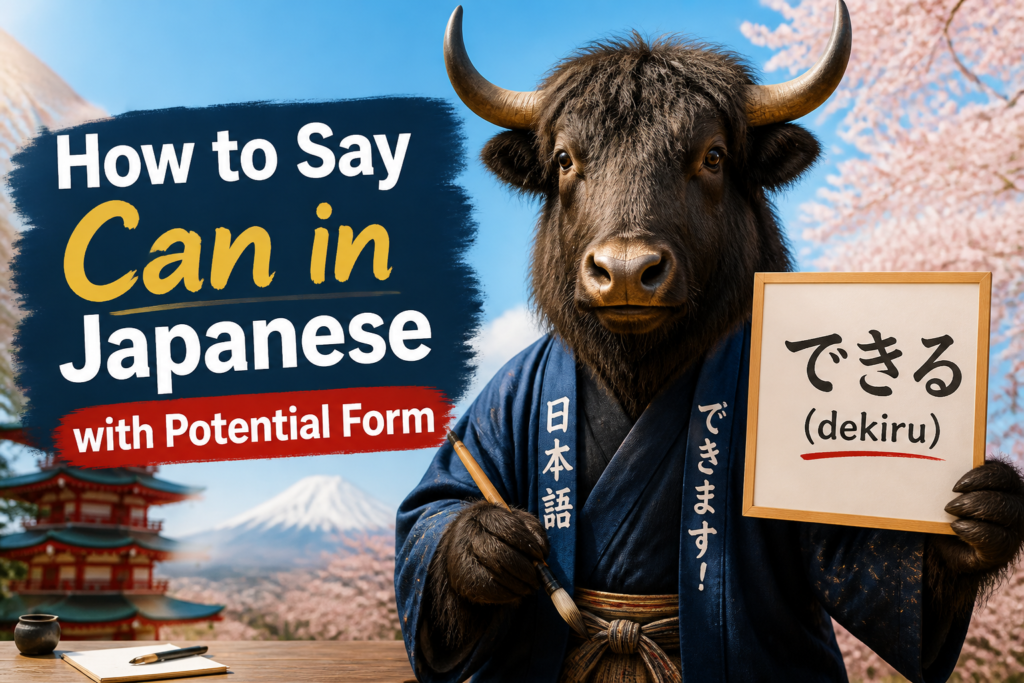
Potential Form in Japanese: How to Say Can and Cannot Naturally. Japanese has a neat little trick for saying “can” and “cannot,” and no, it is not just a matter of throwing in a random できる and hoping for the best. The potential form changes the verb itself, which is very Japanese and very efficient. Slightly dramatic, but useful.
If you have ever wanted to say “I can read kanji,” “Can you speak Japanese?,” or “I cannot go today,” this lesson is for you. The good news: the pattern is not scary. The better news: once you learn it, you will start spotting it everywhere in real Japanese.
A lot of learners first meet potential form in textbooks, then later hear it in real speech and think, “Ah. So that’s what that was.” This article will help make that moment arrive sooner, with clear examples, simple explanations, and enough practice to make the form stick.
What The Potential Form Means
The potential form shows ability or possibility. In simple English, it usually means can or be able to.
For example, 読む Yomu means “to read,” but 読める Yomeru means “can read.” Same action, new ability. Japanese likes to keep things tidy like that.
For a quick general overview of Japanese grammar and verb groups, the Learn Japanese pillar page is a useful place to wander next. No pressure. Language is just a series of tiny adventures with extra punctuation.
Core Pattern: Verb Into Potential Form
| Dictionary Form | Rōmaji | Potential Form | Rōmaji | Meaning |
|---|---|---|---|---|
| 読む | Yomu | 読める | Yomeru | can read |
| 書く | Kaku | 書ける | Kakeru | can write |
| 話す | Hanasu | 話せる | Hanaseru | can speak |
| 飲む | Nomu | 飲める | Nomeru | can drink |
| 見る | Miru | 見られる | Mirareru | can see / can watch |
Most verbs change their ending to show ability. This is the part where Japanese says, “Let me rewrite the verb itself instead of adding a helper word.” Cute. Efficient. Slightly annoying at first.
Useful Potential Form Phrases
| Kanji | Rōmaji | English Meaning | Example Sentence | Rōmaji | Translation |
|---|---|---|---|---|---|
| 読める | Yomeru | can read | 私は日本語が読めます。 | Watashi wa Nihongo ga yomemasu. | I can read Japanese. |
| 書ける | Kakeru | can write | 漢字が書けます。 | Kanji ga kakemasu. | I can write kanji. |
| 話せる | Hanaseru | can speak | 少し日本語が話せます。 | Sukoshi Nihongo ga hanasemasu. | I can speak a little Japanese. |
| 聞ける | Kikeru | can listen / can hear | 先生の話が聞けます。 | Sensei no hanashi ga kikemasu. | I can hear the teacher’s talk. |
| 見られる | Mirareru | can see / can watch | ここで映画が見られます。 | Koko de eiga ga miraremasu. | You can watch a movie here. |
| 食べられる | Taberareru | can eat | このレストランで食べられます。 | Kono resutoran de taberaremasu. | You can eat at this restaurant. |
| 行ける | Ikeru | can go | 今日は行けません。 | Kyō wa ikemasen. | I cannot go today. |
| 来られる | Korareru | can come | 明日来られますか。 | Ashita koraremasu ka. | Can you come tomorrow? |
| 会える | Aeru | can meet / can see someone | 来週会えます。 | Raishū aemasu. | I can meet you next week. |
| 買える | Kaeru | can buy | 駅で切符が買えます。 | Eki de kippu ga kaemasu. | You can buy tickets at the station. |
| 作れる | Tsukureru | can make / can create | 家で料理が作れます。 | Ie de ryōri ga tsukuremasu. | I can make food at home. |
| 遊べる | Asoberu | can play / can hang out | 公園で遊べます。 | Kōen de asobemasu. | You can play at the park. |
Notice the pattern in real sentences: the thing you can do is often marked with が. That matters. Japanese grammar loves to make tiny choices that feel huge later.
How To Build The Potential Form
There are different verb groups, so the form changes depending on the verb. Here is the short version.
| Verb Group | Rule | Example | Potential Form |
|---|---|---|---|
| Godan verbs | Change the final sound to the e sound + る | 書く → | 書ける |
| Ichidan verbs | Drop る and add られる | 見る → | 見られる |
| Irregular verbs | Special forms | する → | できる |
| Irregular verbs | Special forms | 来る → | 来られる |
Yes, 見る becomes 見られる. Yes, 来る becomes 来られる. Japanese did not choose the short path here, but at least the forms are regular enough to learn.
Rule For The Particle が
With potential form, the thing that can be done is usually followed by が instead of を.
| Structure | Example | Meaning |
|---|---|---|
| 日本語が読める | Nihongo ga yomeru | can read Japanese |
| 漢字が書ける | Kanji ga kakeru | can write kanji |
| 英語が話せる | Eigo ga hanaseru | can speak English |
This is one of the most useful habits to build early. If you keep using を out of muscle memory, your sentence may still be understood, but the natural feel gets a little wobbly. Like wearing one formal shoe and one sneaker.
Polite And Casual Ways To Say “Can”
| Meaning | Casual | Polite | Example |
|---|---|---|---|
| can read | 読める | 読めます | 本が読めます。 |
| can speak | 話せる | 話せます | 日本語が話せます。 |
| cannot go | 行けない | 行けません | 今日は行けません。 |
| can see | 見られる | 見られます | ここで見られます。 |
The polite form is usually the safest choice in writing and everyday respectful speech. The casual form is common with friends, family, and anyone who already knows you are not trying to sound like a robot in a suit.
Positive And Negative Potential Form
You can also say what is not possible. That is where can not lives.
| Meaning | Casual | Polite | Example | Translation |
|---|---|---|---|---|
| can | 読める | 読めます | 新聞が読めます。 | I can read newspapers. |
| cannot | 読めない | 読めません | 新聞が読めません。 | I cannot read newspapers. |
| can | 行ける | 行けます | 午後に行けます。 | I can go in the afternoon. |
| cannot | 行けない | 行けません | 今日は行けません。 | I cannot go today. |
読めない Yomenai means “cannot read,” and 読めません Yomemasen is the polite version. Same idea, different social setting. Japanese loves social settings. Really, truly loves them.
Important Special Case: できる
The verb する becomes できる in the potential form. This one is super important because できる is often used as a general “can do” word, not just for one action.
| Verb | Rōmaji | Potential Form | Meaning |
|---|---|---|---|
| する | suru | できる | can do |
| 勉強する | benkyō suru | 勉強できる | can study |
| 運転する | unten suru | 運転できる | can drive |
Examples:
| Japanese | Rōmaji | English |
|---|---|---|
| 日本語の勉強ができます。 | Nihongo no benkyō ga dekimasu. | I can study Japanese. |
| ここで運転できません。 | Koko de unten dekimasen. | You cannot drive here. |
| 今日は料理ができる。 | Kyō wa ryōri ga dekiru. | I can cook today. |
Think of できる as the Swiss army knife of “can.” It is flexible, useful, and shows up all over the place.
Common Real-Life Sentences
| Japanese | Rōmaji | English |
|---|---|---|
| 日本語が少し話せます。 | Nihongo ga sukoshi hanasemasu. | I can speak a little Japanese. |
| この本は子どもでも読めます。 | Kono hon wa kodomo demo yomemasu. | Even children can read this book. |
| 駅でお金が下ろせます。 | Eki de okane ga orosemasu. | You can withdraw money at the station. |
| ここでは写真が撮れません。 | Koko de wa shashin ga toremasen. | You cannot take photos here. |
| 今日は早く帰れます。 | Kyō wa hayaku kaeremasu. | I can go home early today. |
| その店で安く買えます。 | Sono mise de yasuku kaemasu. | You can buy it cheaply at that store. |
| 来週なら会えます。 | Raishū nara aemasu. | If it is next week, I can meet you. |
| このアプリはスマホで見られます。 | Kono apuri wa sumaho de miraremasu. | You can view this app on a smartphone. |
| 時間があれば勉強できます。 | Jikan ga areba benkyō dekimasu. | If you have time, you can study. |
| 雨の日でも行けますか。 | Ame no hi demo ikemasu ka. | Can you go even on rainy days? |
Mini Comparison: Can, Ability, And Permission
| English Idea | Japanese Pattern | Example | Meaning |
|---|---|---|---|
| ability | potential form | 漢字が読める | I can read kanji. |
| permission | 〜てもいい | ここで食べてもいい | You may eat here. |
| obligation | 〜なければならない | 行かなければならない | I must go. |
Do not mix these up too much. Can is about ability or possibility. May is about permission. Must is about obligation. If that trio starts fighting in your head, the comparison table is your referee. For a deeper look at obligation, visit must in Japanese. For permission patterns, see want in Japanese as a related grammar guide.
Common Mistakes And Fixes
- Using を instead of が
Fix: With potential form, try 日本語が読める, not 日本語を読める. - Forgetting the verb changes
Fix: Learn the potential form as a new verb, not as “the same verb plus can.” - Confusing できる with only “do”
Fix: Remember できる often means “can do / be able to do.” - Using the wrong politeness level
Fix: Choose 読めます in polite situations and 読める in casual ones. - Mixing up ability and permission
Fix: If the issue is “Is it allowed?” use a permission pattern, not potential form.
If you want a quick check on your overall level before digging deeper into verb forms, try the Japanese Placement Test JLPT or the Japanese Vocabulary Test. Sneaky little check-ins like that can be very motivating.
Practice Time
Try changing each verb into the potential form. Keep the meaning in mind, not just the shape.
| Base Verb | Your Goal | Answer |
|---|---|---|
| 読む | can read | 読める |
| 書く | can write | 書ける |
| 話す | can speak | 話せる |
| 見る | can see / watch | 見られる |
| する | can do | できる |
| 来る | can come | 来られる |
Now try the negative forms.
| Positive | Negative |
|---|---|
| 読める | 読めない |
| 行ける | 行けない |
| 話せる | 話せない |
| できる | できない |
And one more step: make them polite.
| Casual | Polite |
|---|---|
| 読める | 読めます |
| 行けない | 行けません |
| 話せる | 話せます |
| できない | できません |
Quick Reference Summary
- Potential form means “can” or “be able to.”
- It changes the verb itself.
- Common examples: 読める, 書ける, 話せる, 見られる, できる.
- Use が with the thing you can do: 日本語が読める.
- Use ます for polite speech: 読めます.
- Use the negative form for “cannot”: 読めない, 読めません.
- する becomes できる.
- 来る becomes 来られる.
The potential form is one of those grammar points that suddenly makes Japanese feel more alive. You are not just naming actions anymore. You are talking about ability, possibility, and real-world limits — which, honestly, is where the interesting sentences live.
Keep practicing with small, real sentences: what you can read, what you cannot do today, what you can see, what you can change later. That is where the form stops being “grammar” and starts being actual Japanese.