
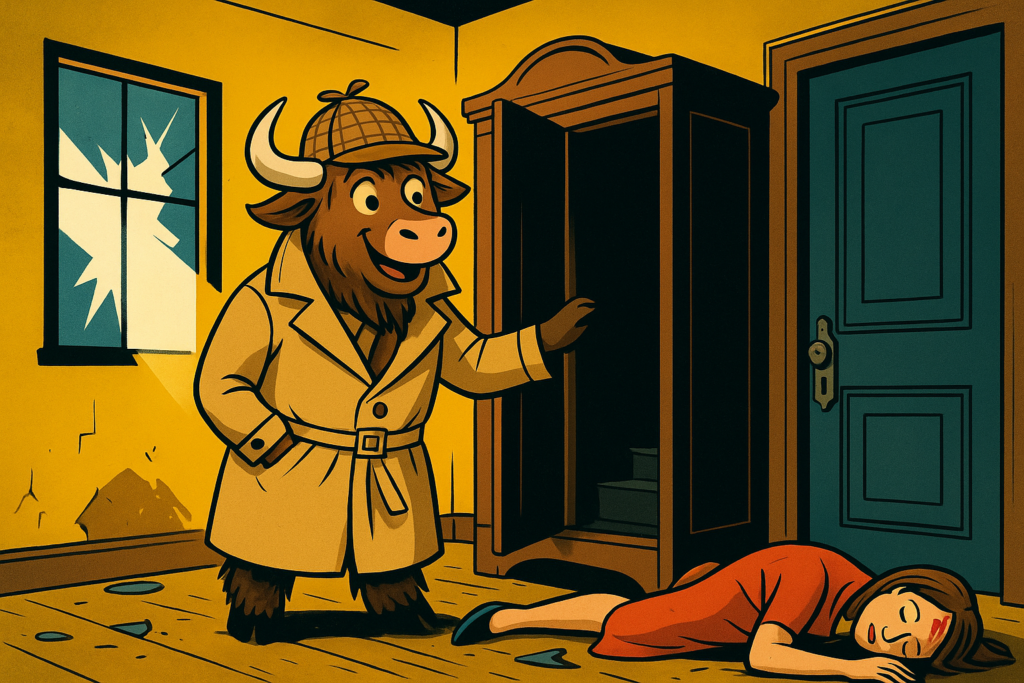
Welcome to a thrilling French B1 reading adventure! In this graded retelling of Gaston Leroux's classic mystery, young reporter Joseph Rouletabille visits the Château du Glandier to investigate an impossible crime: Mlle Mathilde Stangerson has been attacked inside the locked, window‐barred Yellow Room. No one could have escaped, yet the assailant has vanished-and only Rouletabille's sharp mind can untangle the clues.
Follow Rouletabille as he questions suspects, examines overlooked details, and challenges the official police theory. Every twist of the puzzle is written in clear, natural French, designed to strengthen your reading skills while keeping you on the edge of your seat. Can you figure out the truth before the final reveal?
This interactive B1 reader gives you everything you need for confident, enjoyable French practice. Simply click any word for an instant translation, listen to the full story audio to train your ear, and review the built-in lesson notes that highlight key grammar and vocabulary. Start reading for free and let the mystery guide your progress!
C'était un soir d'octobre 1892, au château du Glandier. Le vent soufflait fort et la pluie battait contre les fenêtres. Mademoiselle Mathilde Stangerson travaillait seule dans sa , comme chaque soir.
Soudain, un déchira le silence. Le professeur Stangerson et son ami Robert Darzac se vers la porte. Elle était de l'intérieur.
"Mathilde ! Ouvre !" cria le professeur, . Personne ne répondit. Ils entendirent des , puis plus rien.
Avec l'aide d'un domestique, ils la porte. La chambre était en . Mathilde gisait sur le sol, à la tête. Mais l'agresseur avait disparu.
"C'est impossible !" murmura le père. "La porte était , la fenêtre aussi. Comment a-t-il pu ?"
Le était total. La police arriva, mais ne trouva aucune . Quelques jours plus tard, le célèbre détective Joseph Rouletabille se au château.
Rouletabille, un jeune homme aux yeux brillants, la scène avec soin. "Le criminel est entré et sorti sans laisser de … à moins qu'il ne soit jamais sorti," dit-il .
Le professeur le regarda, . "Que voulez-vous dire ?" Rouletabille sourit. ". Si la porte et les fenêtres sont fermées, où peut se quelqu'un ?"
Le jeune détective montra un grand dans un coin de la chambre. "Et si l'assassin était déjà là avant que Mademoiselle n'entre ?"
"Mais nous avons partout !" protesta Darzac. Rouletabille secoua la tête. "Pas assez bien. L'assassin connaissait la maison. Il savait que ce placard a un ."
Les yeux du professeur s'. "Alors, c'était ?" Rouletabille hocha la tête. "Exactement. Et maintenant, laissez-moi vous montrer…"
Il ouvrit le placard, poussa une planche au fond, et révéla un derrière le mur. Il y faisait . "Voilà comment il a disparu," dit Rouletabille.
"Mais qui ?" demanda le professeur, la voix . Rouletabille regarda Darzac. "Je crois que c'est quelqu'un qui voulait Mademoiselle d'épouser Robert Darzac."
Finalement, la police un ancien admirateur . Mathilde se remit de ses blessures. Et le mystère de la chambre jaune fut résolu grâce à la et l'.
It was an evening in October 1892, at the Château du Glandier. The wind blew hard and rain beat against the windows. Miss Mathilde Stangerson was working alone in her yellow room, as she did every evening.
Suddenly, a terrible cry tore through the silence. Professor Stangerson and his friend Robert Darzac rushed to the door. It was locked from the inside.
"Mathilde! Open up!" the professor cried, panicked. No one answered. They heard sounds of a struggle, then nothing more.
With the help of a servant, they forced the door open. The room was in disarray. Mathilde lay on the floor, wounded on the head. But the attacker had vanished.
"It's impossible!" murmured the father. "The door was locked, the window too. How could he have gotten out?"
The mystery was complete. The police arrived, but found no trace. A few days later, the famous detective Joseph Rouletabille came to the château.
Rouletabille, a young man with bright eyes, examined the scene carefully. "The criminal entered and left without a trace... unless he never left," he said slowly.
The professor looked at him, incredulous. "What do you mean?" Rouletabille smiled. "Think about it. If the door and windows are closed, where can someone hide?"
The young detective pointed to a large closet in a corner of the room. "What if the assassin was already there before Miss entered?"
"But we searched everywhere!" protested Darzac. Rouletabille shook his head. "Not well enough. The assassin knew the house. He knew this closet has a false back."
The professor's eyes widened. "So it was premeditated?" Rouletabille nodded. "Exactly. And now, let me show you..."
He opened the closet, pushed a board at the back, and revealed a secret passage behind the wall. It was dark and damp in there. "That's how he disappeared," said Rouletabille.
"But who?" asked the professor, voice trembling. Rouletabille looked at Darzac. "I believe it's someone who wanted to prevent Miss from marrying Robert Darzac."
Eventually, the police arrested a jealous former admirer. Mathilde recovered from her wounds. And the mystery of the yellow room was solved thanks to logic and observation.
Let's unlock the French words that make this locked-room mystery so gripping. Pay attention to how these terms appear in the story-they'll boost your comprehension and give you handy phrases for describing a crime scene (or just your last chaotic Monday).
- le château - castle (here, a grand country house)
- fermée à clé - locked (literally "closed with a key")
- le cri terrible - the terrible scream (déchira le silence - tore through the silence)
- affolé / incrédule - panicked / incredulous
- le placard - closet or cupboard (notice the double fond - false bottom)
- le passage secret - secret passage
- grâce à - thanks to (used for positive outcomes: grâce à la logique)
This story switches smoothly between two key past tenses: the passé composé for completed, one-off events and the imparfait for ongoing descriptions or background context. For example, 'Le vent soufflait fort' (The wind was blowing hard) sets the scene with imparfait, while 'ils forcèrent la porte' (they forced the door) marks a distinct action in passé simple-the literary equivalent of passé composé. At B1, you'll mostly use passé composé in speech, but recognizing the imparfait is essential for rich storytelling.
- Imparfait: used for descriptions, habitual actions, or ongoing states - "Mathilde gisait sur le sol" (Mathilde was lying on the floor).
- Passé simple (literary) / Passé composé (spoken): used for completed actions that move the plot forward - "Rouletabille sourit" (Rouletabille smiled).
- Try retelling part of the story in your own words, alternating between the two: "Il pleuvait quand le cri a déchiré le silence."
French narrative style often thrives on vivid, dramatic phrasing. The story doesn't just say 'there was a scream'-it says 'un cri terrible déchira le silence' (a terrible scream tore through the silence). These little flourishes make the mystery feel alive and teach you how to add colour to your own French.
- "déchira le silence" - literally "tore the silence," a powerful metaphor for a sudden, shocking sound.
- "Le mystère était total" - short and punchy; much more dramatic than "it was a mystery."
- "Les yeux s'écarquillèrent" - the eyes widened; a classic physical reaction for surprise or disbelief.
- Notice the build-up: description (vent, pluie) → calm routine → sudden event → questioning - a template you can borrow for your own stories.
You've just solved a classic French mystery-and picked up some nifty language tools along the way. Why not try reading another short detective story, or even rewriting a scene from the point of view of… the secret passage? The best way to make vocabulary and grammar stick is to play with them, so don't be afraid to create your own locked-room puzzle en français.
- Re-read the story and highlight every instance of the imparfait - then underline the passé simple events. See the pattern?
- Write a three-sentence 'sequel' using at least two expressions from the "Building Suspense" section.
Le Mystère de la Chambre Jaune comes from the French / Gaston Leroux tradition and is best known as a detective novel. This Yak Yacker article is an original learner retelling based on Gaston Leroux, 1907; public domain, so the wording here is simplified for modern learners rather than copied from one old edition.
Older printings, translations, and retellings of this story can vary quite a bit. The original audience was usually adult/general, but this version is adapted for B1 Intermediate learners studying French. Classic locked-room mystery; retell in stages.
If you want to look into the source tradition, start with Project Gutenberg.
If you want to keep going, browse more in our French section and review the B1 French Vocabulary List. After that, try Basic Questions in French for another useful next step.