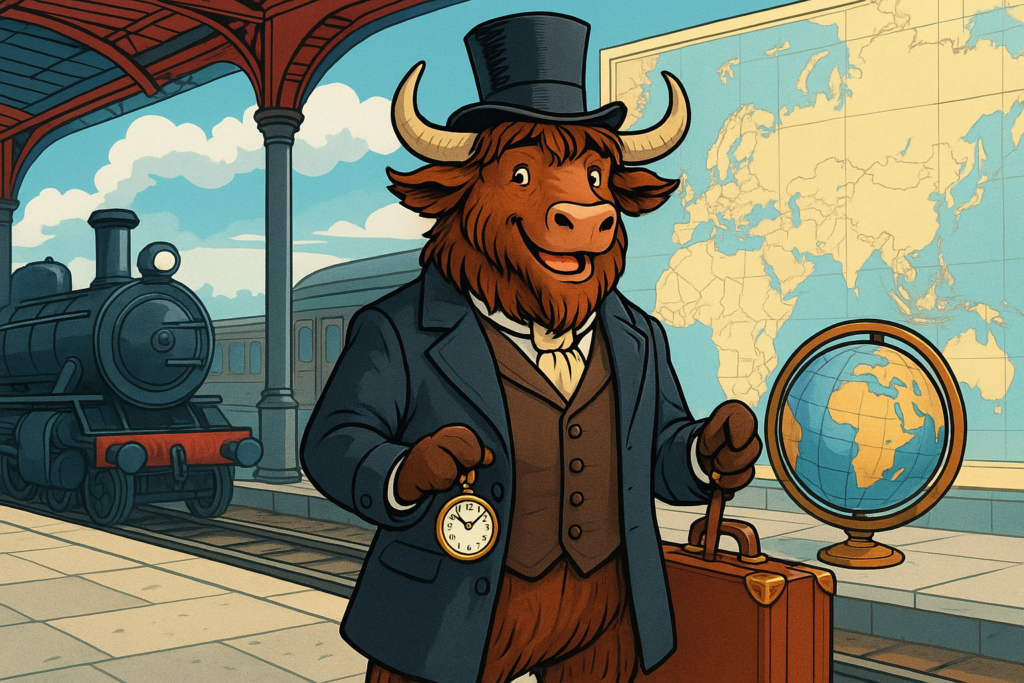
This A2 Elementary retelling of Le tour du monde en quatre-vingts jours keeps the plot clear for learners while still giving the story some atmosphere and momentum. Phileas Fogg est un gentleman anglais, toujours très précis. Il vit à Londres, et chaque jour est exactement le même.
This version teaches French through English and includes clickable word help inside the story, full story audio, and lesson notes after the reading. It is free to use on Yak Yacker and is designed to feel natural, readable, and manageable for learners.
Phileas Fogg est un , toujours . Il vit à Londres, et chaque jour est exactement le même. « Bonjour, Passepartout ! » dit-il à son serviteur français. « Bonjour, monsieur ! » répond Passepartout avec un grand sourire.
Un soir, au Reform-Club, Fogg avec ses amis. « On peut en quatre-vingts jours ! » dit-il. Ses amis rient. « ! » s'exclame l'un d'eux. Fogg vingt mille livres. « Je pars ce soir ! » annonce-t-il. « On verra ! » répond son ami en riant.
Fogg rentre vite à la maison. « Passepartout, nous pour le tour du monde ! » Passepartout est . « Vraiment, monsieur ? » « Oui, et nous avons quatre-vingts jours. les bagages ! » Passepartout répond joyeusement, « Tout est possible ! »
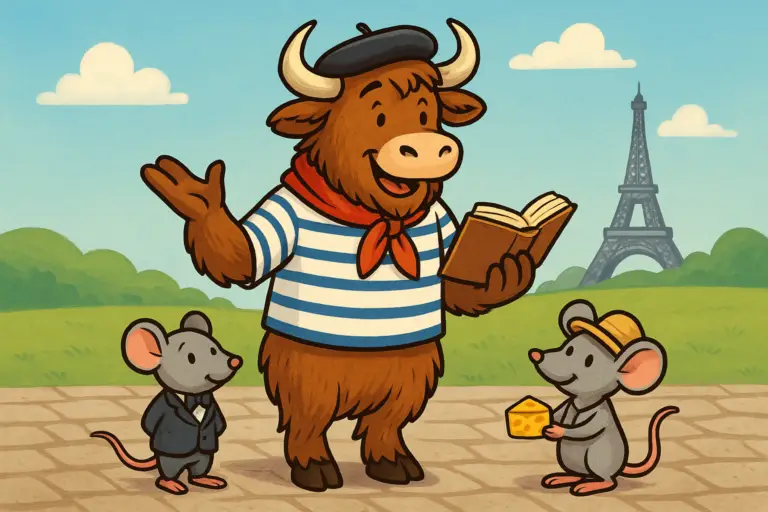
Ils pour Paris. Dans le wagon, Fogg lit son . Passepartout regarde le . « C'est beau, la campagne ! » dit-il. « Oui, mais nous n'avons pas le temps d', Passepartout. Il faut continuer ! » répond Fogg.
À Paris, ils prennent un autre train pour Brindisi, en Italie. Là, ils un bateau, le Mongolia, pour la mer. Passepartout a un peu peur. « Et si la mer est mauvaise ? » « Ne vous , tout va bien se passer », dit Fogg calmement.
Pendant le voyage, l'inspecteur Fix Fogg. « Ce Fogg est-il un voleur ? » Il Fogg discrètement. Mais Fogg ne remarque rien. Il continue son voyage, . « Le temps est bon, nous sommes à l'heure ! » dit-il souvent.
En Inde, Fogg et Passepartout prennent un éléphant pour plus vite. « Quelle aventure, monsieur ! » s'écrie Passepartout. « Oui, une belle , et tout se passe comme prévu », sourit Fogg.
Après beaucoup de trains, de bateaux, et même un traîneau à voile, ils arrivent enfin en Angleterre. Passepartout est mais heureux. « Monsieur, nous avons réussi ? » « Regardez la date ! » dit Fogg. « Nous sommes en d'un jour ! » s'exclame Passepartout, étonné. Fogg a gagné le pari.
De retour au Reform-Club, ses amis l'. « C'est incroyable, vous avez réussi ! » « Avec l'aide de Passepartout et un peu de chance, tout est possible ! » répond Fogg en souriant. Et Passepartout ajoute, « Le monde est , n'est-ce pas ? »
Phileas Fogg is an English gentleman, always very precise. He lives in London, and each day is exactly the same. "Hello, Passepartout!" he says to his French servant. "Hello, sir!" replies Passepartout with a big smile.
One evening at the Reform Club, Fogg discusses with his friends. "One can travel around the world in eighty days!" he says. His friends laugh. "Impossible!" exclaims one of them. Fogg bets twenty thousand pounds. "I leave tonight!" he announces. "We shall see!" replies his friend laughing.
Fogg quickly returns home. "Passepartout, we are leaving for a trip around the world!" Passepartout is surprised. "Really, sir?" "Yes, and we have eighty days. Prepare the luggage!" Passepartout replies joyfully, "Anything is possible!"
They take the train to Paris. In the carriage, Fogg reads his railway guide. Passepartout looks at the scenery. "The countryside is beautiful!" he says. "Yes, but we don't have time to admire, Passepartout. We must continue!" replies Fogg.
In Paris, they take another train to Brindisi, Italy. There, they board a ship, the Mongolia, to cross the sea. Passepartout is a little afraid. "What if the sea is rough?" "Don't worry, everything will be fine," says Fogg calmly.
During the journey, Inspector Fix watches Fogg. "Is this Fogg a thief?" He follows Fogg discreetly. But Fogg notices nothing. He continues his journey, confident. "The weather is good, we are on time!" he often says.
In India, Fogg and Passepartout take an elephant to go faster. "What an adventure, sir!" exclaims Passepartout. "Yes, a fine adventure, and everything is going as planned," smiles Fogg.
After many trains, boats, and even a sailing sled, they finally arrive in England. Passepartout is tired but happy. "Sir, have we succeeded?" "Look at the date!" says Fogg. "We are a day early!" exclaims Passepartout, astonished. Fogg has won the bet.
Back at the Reform Club, his friends await him. "It's incredible, you succeeded!" "With the help of Passepartout and a little luck, anything is possible!" replies Fogg smiling. And Passepartout adds, "The world is big and beautiful, isn't it?"
Phileas Fogg's adventure is packed with handy travel words that you'll hear again and again in real-life conversations. Knowing these will help you talk about your own trips, whether you're catching a train or dreaming of the sea.
Most of the words are simple building blocks you can start using right away. Here are a few favorites from the story:
- le tour du monde - around the world
- le bagage - luggage
- partir - to leave
- arriver - to arrive
- à l'heure - on time
- en avance - early / in advance
When Fogg says « Il faut continuer ! », he isn't pointing at one person - he's saying "we / you / one must keep going." The phrase il faut is a super-useful way to talk about necessity without naming who has to do it.
You'll see it followed by an infinitive verb. In daily life, you can use it for everything from reminders to strong suggestions: Il faut partir tôt. (It's necessary to leave early.) Il ne faut pas oublier son billet ! (One mustn't forget the ticket!)
- Il faut préparer les bagages. - We need to pack the bags.
- Il faut être à l'heure. - One must be on time.
- Il ne faut pas stresser. - No need to stress.
The friends, Passepartout, and even Fogg himself use colorful little phrases to show surprise, joy, or disbelief. These ready-made reactions can make your own French sound more natural and spirited.
Learn them as chunks, and you'll be ready to react just like Passepartout when something extraordinary happens.
- C'est incroyable ! - It's incredible!
- Quelle aventure ! - What an adventure!
- Vraiment ? - Really?
- Tout est possible ! - Anything is possible!
Now you've got some travel words, a handy grammar tool, and a bunch of lively reactions - all from one classic tale.
Try using « il faut » when you make your own to-do list, or throw a friendly « Quelle aventure ! » into your next chat. And if you re-read the story, you'll spot even more signals and surprises that sound just like real life.
Le tour du monde en quatre-vingts jours comes from the French / Jules Verne tradition and is best known as a adventure novel. This Yak Yacker article is an original learner retelling based on Jules Verne, 1872; public domain, so the wording here is simplified for modern learners rather than copied from one old edition.
Older printings, translations, and retellings of this story can vary quite a bit. The original audience was usually general/older kids, but this version is adapted for A2 Elementary learners studying French. Very good travel/unit content; retell in episodes.
If you want to look into the source tradition, start with Project Gutenberg.
If you want to keep going, browse more in our French section and review the A2 French Vocabulary List. After that, try Basic Questions in French for another useful next step.