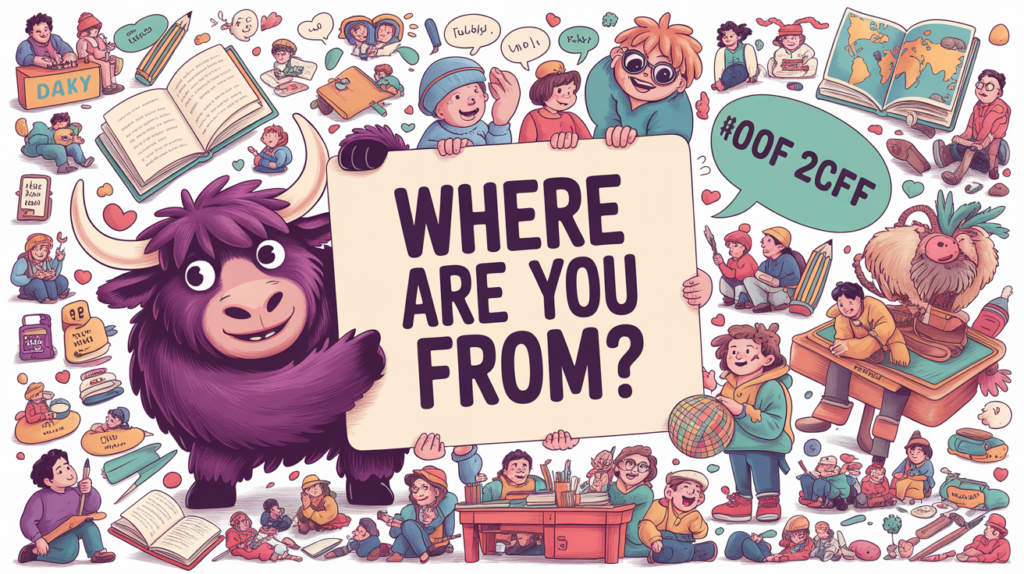
A friendly guide to how to ask where are you from in English, how to answer it naturally, and how to use it in real conversation. This is one of the first questions people ask when meeting someone new — so let’s get you ready to use it with confidence.
1. Why “Where Are You From?” Matters
When you meet someone in an English-speaking context, one of the most common questions is:
“Where are you from?”
Learners often feel awkward because they aren’t sure if the question means country, city, or region. It’s important because:
- It helps you start a conversation.
- It shows interest and friendliness.
- It opens up follow-up topics (culture, travel, hometown).
English teaching resources show this is a core question at beginner level. LearnEnglish – British Council+1
2. How to Ask “Where Are You From?” in English
Here are common ways to ask this question, and notes about formality or casualness:
| Question | Tone | Notes |
| Where are you from? | Standard | Safe and neutral |
| Where do you come from? | Slightly formal / direct | Use in travel or official contexts |
| Where are you originally from? | Polite, follow-up | Good when someone moved countries |
| Are you from [place]? | Casual | Use if you guess their origin |
| Where were you born? | Formal / deeper | Slightly more personal |
Notes on usage
- Native speakers often shorten it: “Where are you from?” → “Where you from?” in very casual speech. EnglishClass101
- Use the standard form when you don’t know the person well.
- Avoid “Where are you from?” immediately if it might feel intrusive (in sensitive contexts around national origin). Follow social cues.
3. How to Answer “Where Are You From?” in English
Here are natural ways to respond:
| Response | Meaning | Example |
| I’m from Japan. | Country only | “I’m from Japan.” |
| I’m from Osaka, Japan. | City + country | “I’m from Osaka, Japan.” |
| I was born in Brazil, but now I live in Taiwan. | Detailed origin & current | “I was born in Brazil, but now I live in Taiwan.” |
| I live in Tainan, but my roots are in Kaohsiung. | Local region context | “I live in Tainan, but my roots are in Kaohsiung.” |
| I’m half-Canadian, half-Taiwanese. | Mixed background | “I’m half Canadian, half Taiwanese.” |
Useful follow-up responses
- “What about you?” → invites the other person to share.
- “How about you?” → casual version.
- “Nice place! What’s it like there?” → keeps the conversation going.
4. Useful Phrases Surrounding The Question
Let’s add some supporting phrases to help you use this question smoothly in conversation.
| Phrase | Use |
| I’m originally from … | For telling your origin |
| But now I live in … | For telling current location |
| What’s it like in …? | Asking about their place |
| How long have you lived in …? | Asking about current location |
| Do you miss …? | Asking about their origin place |
Example Dialogue
A: Hi, I’m Sarah. Where are you from?
B: I’m from Vietnam. I moved here two years ago. What about you?
A: I’m from Australia originally, but I live in Taiwan now. Do you miss Vietnam?
B: Yes a bit—especially the food!
5. Common Mistakes And How To Avoid Them
Here are some typical learner mistakes and quick fixes:
- Mistake: “Where you from?” (missing “are”) → Acceptable in informal speech, but use full form in most contexts.
- Mistake: “Where are you from originally?” → Fine, but “originally” adds nuance; don’t overuse.
- Mistake: “I am from in Taiwan.” → Fix: “I am from Taiwan.”
- Mistake: Asking this question too early in formal contexts → Use a warmer greeting first if necessary.
6. Practice Exercises
A. Fill in the blanks:
- “____ you from?”
- “I’m from ___.”
- “What’s ___ like in your hometown?”
B. Role-play with a friend (or yourself):
- Person A: “Hello! My name is ___.”
- Person B: “Nice to meet you. Where are you from?”
- Person A: “I’m from ___, but I now live in ___.”
- Person B: “Oh, ___ sounds great. What’s it like there?”
Yak’s Final Chewables
Asking “Where are you from?” in English isn’t just a question—it’s a doorway into conversation, culture, and connection. Use the standard form, answer with a little extra info when you feel comfortable, and add a follow-up question to keep things flowing. You’re now ready to make that first connection. Even yaks know: start by asking where the other yak/learner is from, then you’ve got your herd.