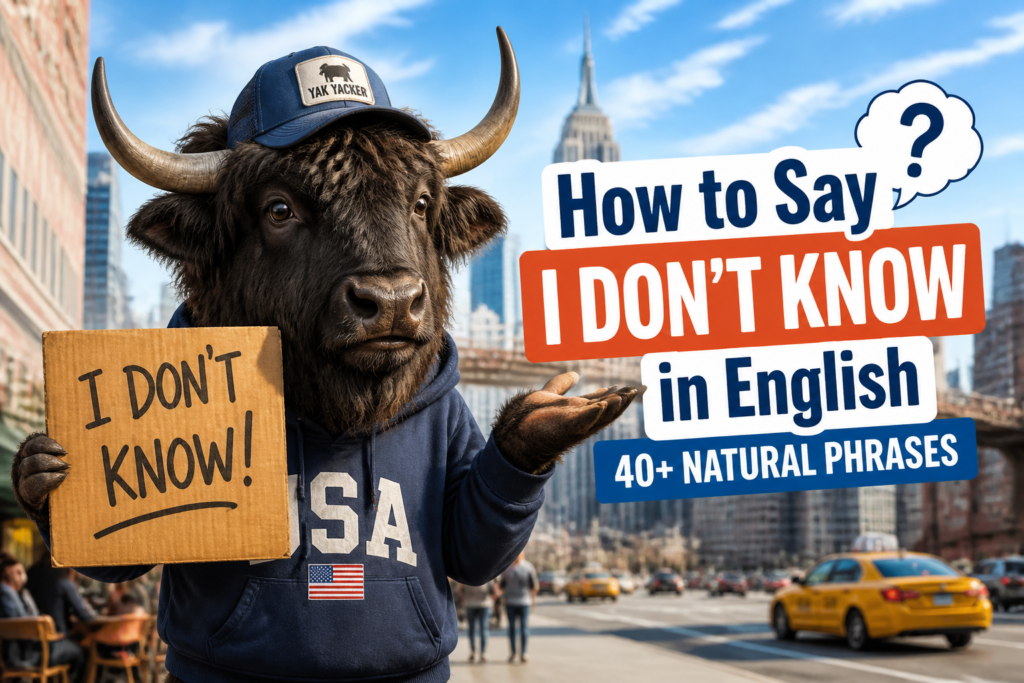
“I don’t know” sounds simple. And it is. But English speakers do not say it the same way in every situation. At school, at work, in a conversation with a friend, or when someone asks a tricky question, the tone can change a lot. Tiny phrase. Big social life. Very rude of English, honestly.
For the broader learning path, visit our parent guide.
In this guide, you’ll learn more than 40 natural ways to say you don’t know in English. You’ll see which phrases are neutral, casual, polite, or formal, plus when to sound confident, when to sound careful, and when to avoid sounding like a robot with a Wi-Fi problem.
By the end, you’ll be able to answer “I don’t know” questions in a more natural way, with better tone for everyday conversation, classes, meetings, emails, and texting.
Quick Meaning: “I Don’t Know”
“I don’t know” means you do not have the answer. That may sound obvious, but English speakers often soften it, add a little extra context, or show they want to help even if they do not know.
For a simple dictionary check, you can look at Cambridge Dictionary’s entry for “know”.
Most Common Ways To Say It
| English | Pronunciation | Meaning | Example Sentence | Learner Note |
|---|---|---|---|---|
| I don’t know. | ey don’t noh | I do not have the answer. | I don’t know. Ask Maria. | Neutral, simple, and always correct. |
| No idea. | noh eye-DEE-uh | I have no information. | No idea. I just got here. | Very common in speech. Casual. |
| I’m not sure. | aim not shoor | I think maybe, but I’m not certain. | I’m not sure, but I think the meeting is at 3. | Polite and useful when you are unsure. |
| I have no clue. | ey hav noh kloo | I do not know at all. | I have no clue where he lives. | Casual. Very common in conversation. |
| Beats me. | beets mee | I don’t know. | Beats me. I didn’t see what happened. | Casual, a little slangy. |
| Your guess is as good as mine. | yor guess iz az good az mine | I don’t know either. | Who’s going to win? Your guess is as good as mine. | Natural when nobody knows. |
| I’m not the best person to ask. | aim not thee best pur-sun tuh ask | I may not have the right answer. | I’m not the best person to ask about taxes. | Polite and safe. |
| I couldn’t tell you. | ey kud-nt tel yuh | I do not know. | I couldn’t tell you where she went. | Common in spoken English. |
| I wish I knew. | ey wish eye noo | I don’t know, and I want to know. | I wish I knew the answer. | Good when you sound sympathetic. |
| That’s a good question. | thats uh good kwes-chun | I don’t know, and your question is hard. | That’s a good question. Let me think. | Useful in interviews, class, and meetings. |
Natural Phrases For Everyday Conversation
These phrases are the ones people actually say. Some are direct. Some are softer. Some sound more confident. Pick the one that fits the moment, because “I don’t know” can sound polite, lazy, annoyed, or helpful depending on your tone. English loves that little trick.
- I don’t know. — the basic phrase
- No idea. — short and casual
- I’m not sure. — polite uncertainty
- I have no clue. — casual, stronger than “I don’t know”
- I couldn’t tell you. — spoken English, natural and soft
- Beats me. — informal, common with friends
- Your guess is as good as mine. — nobody knows
- I’m not the best person to ask. — polite way to step away
- I wish I knew. — shows you want the answer
- That’s a good question. — useful when you need a moment
- Let me think. — gives you time to remember or decide
- I’m drawing a blank. — you cannot remember anything
- It’s slipping my mind. — you almost remember, but not quite
- I’m afraid I don’t know. — polite, slightly formal
- I’m sorry, I don’t know. — polite and direct
40+ Natural Phrases By Situation
Here are more phrases grouped by style so they are easier to remember. No need to memorize all of them at once. English learners do not need a phrase museum. They need a few good tools that work.
Neutral And Everyday
| English | Pronunciation | Meaning | Example Sentence | Learner Note |
|---|---|---|---|---|
| I don’t know. | ey don’t noh | I have no answer. | I don’t know where he is. | The safest, most common choice. |
| No idea. | noh eye-DEE-uh | I have no information. | No idea. I didn’t check. | Short, natural, and very common. |
| I’m not sure. | aim not shoor | I am uncertain. | I’m not sure if the store is open. | Often sounds better than a flat “I don’t know.” |
| I have no clue. | ey hav noh kloo | I don’t know at all. | I have no clue what he meant. | Casual, informal. |
| I couldn’t tell you. | ey kud-nt tel yuh | I really don’t know. | I couldn’t tell you who called. | Very natural in speech. |
| I have no idea. | ey hav noh eye-DEE-uh | I have absolutely no information. | I have no idea where my keys are. | Often a little stronger than “No idea.” |
| I’m drawing a blank. | aim draw-ing uh blank | I cannot remember. | I’m drawing a blank on her name. | Use when memory fails you. |
| It’s slipped my mind. | its slipt my mind | I forgot. | Sorry, it’s slipped my mind. | Polite way to say you forgot something. |
Polite And Careful
| English | Pronunciation | Meaning | Example Sentence | Learner Note |
|---|---|---|---|---|
| I’m afraid I don’t know. | aim uh-frayd eye don’t noh | Polite way to say you do not know. | I’m afraid I don’t know the answer. | Common in British English too, but understood everywhere. |
| I’m sorry, I don’t know. | aim sor-ee eye don’t noh | Polite and direct. | I’m sorry, I don’t know his phone number. | Works well with strangers or customers. |
| I’m not certain. | aim not sur-tun | I am not completely sure. | I’m not certain about the date. | Slightly more formal than “I’m not sure.” |
| I don’t have that information. | ey don’t hav that in-for-MAY-shun | I do not know that fact. | I don’t have that information right now. | Professional and polite. |
| I’m not the best person to ask. | aim not thee best pur-sun tuh ask | Someone else knows better. | I’m not the best person to ask about the schedule. | Very useful at work or school. |
| Let me check. | let mee chek | I may find the answer. | Let me check and get back to you. | Helpful in service situations and emails. |
| Let me think about that. | let mee thingk uh-BOUT that | I need a moment to think. | Let me think about that before I answer. | Good when you want time, not pressure. |
| That’s a good question. | thats uh good kwes-chun | Your question is difficult or useful. | That’s a good question. I’m not sure. | Works in class, interviews, and meetings. |
Casual And Friendly
| English | Pronunciation | Meaning | Example Sentence | Learner Note |
|---|---|---|---|---|
| Beats me. | beets mee | I don’t know. | Beats me. I wasn’t there. | Friendly, informal, common. |
| Your guess is as good as mine. | yor guess iz az good az mine | No one knows better than anyone else. | Where did they go? Your guess is as good as mine. | Good when two people are equally clueless. |
| Who knows? | hoo nohz | No one can say for sure. | Who knows what will happen next? | Often suggests uncertainty about the future. |
| Don’t ask me. | dont ask mee | I don’t know, and maybe I’m annoyed. | Don’t ask me. I just got here. | Casual; tone can sound impatient. |
| How should I know? | how shood eye noh | I don’t know, and maybe I’m frustrated. | How should I know where he left it? | Can sound sharp. Use carefully. |
| Beats the heck out of me. | beets thee hek out uhv mee | I really do not know. | Beats the heck out of me why she quit. | Informal. “Heck” softens the phrase. |
| I haven’t got a clue. | ey hav-nt got uh kloo | I don’t know at all. | I haven’t got a clue what he’s talking about. | Very common in British English; understood in the US too. |
| Beats me why… | beets mee why | I don’t know why. | Beats me why they cancelled it. | Often followed by a reason clause. |
Formal And Professional
| English | Pronunciation | Meaning | Example Sentence | Learner Note |
|---|---|---|---|---|
| I’m not sure at the moment. | aim not shoor at thee moh-munt | I do not know right now. | I’m not sure at the moment, but I can find out. | Good in work conversations. |
| I don’t have that information right now. | ey don’t hav that in-for-MAY-shun right now | Professional way to say you don’t know. | I don’t have that information right now, but I’ll check. | Useful in customer service. |
| I’ll need to confirm that. | eyl need tuh kun-FERM that | I need to check before answering. | I’ll need to confirm that with my manager. | Professional and careful. |
| I’m unable to say. | aim un-AY-bul tuh say | I cannot give that information. | I’m unable to say at this time. | Formal, and sometimes used in official contexts. |
| I don’t have an answer for that. | ey don’t hav an an-ser fer that | I cannot answer that question. | I don’t have an answer for that yet. | Honest, neutral, and professional. |
| I’m not in a position to answer that. | aim not in uh puh-ZISH-un tuh an-ser that | I should not answer that. | I’m not in a position to answer that question. | Very formal; common in legal or company settings. |
Common Patterns You Can Reuse
Many “I don’t know” phrases follow simple patterns. Once you learn the pattern, you can make your own version without panic-guessing in public.
| Pattern | Meaning | Example | Learner Note |
|---|---|---|---|
| I’m not sure + clause | Uncertainty | I’m not sure if she’s coming. | Very common before “if,” “when,” or “where.” |
| I don’t know + clause | No information | I don’t know why he left. | Simple and direct. |
| Let me + verb | I will check or think | Let me check. | Shows you are trying to help. |
| I’m afraid + statement | Polite softening | I’m afraid I don’t know. | Useful in polite speech. |
| That’s a good question + response | Buy time politely | That’s a good question. Let me think. | Great when you need a pause. |
| I have no + noun | No information or ability | I have no idea. | “No clue,” “no idea,” and “no answer” are common. |
Pronunciation Tips
A lot of learners know the words but sound unnatural because of stress and speed. Here are a few helpful points.
- I don’t know is often reduced in fast speech: “I dunno” or “I dunno.” This is informal.
- I’m not sure usually sounds smoother than “I am not sure” in conversation.
- No idea often has the stress on idea: no eye-DEE-uh.
- Beats me is short and quick. Do not overthink it. English already has enough drama.
- I’m afraid I don’t know should sound calm, not apologetic to the point of panic.
If you want more support with vocabulary and level checking, try the English Vocabulary Test or the English Placement Test CEFR.
Wrong Vs Natural
| Too Direct or Awkward | More Natural English | Why |
|---|---|---|
| I don’t understand. | I don’t know. | “Don’t understand” means the message is unclear, not just that you lack information. |
| I am no idea. | I have no idea. | “Have” is the correct verb here. |
| I am not know. | I don’t know. | English uses the auxiliary “do” in negatives like this. |
| I’m not sure about it. | I’m not sure. | The shorter version sounds more natural in many situations. |
| I don’t know nothing. | I don’t know anything. | Double negatives are standard in some dialects, but not in standard written English. |
Mini Practice
Try these quick drills. No grade, no pressure, no surprise pop quiz from the Grammar Police.
- Choose a polite phrase for work: I’m afraid I don’t know. / Beats me.
- Choose a casual phrase for a friend: No idea. / I’m not in a position to answer that.
- Choose a phrase that means “I will check”: Let me check. / Your guess is as good as mine.
- Choose a phrase for memory loss: I’m drawing a blank. / I don’t have that information right now.
- Choose a phrase that sounds uncertain but polite: I’m not sure. / How should I know?
Now transform these into natural English:
- “I do not know the answer.” → I don’t know the answer.
- “I am not sure if he is here.” → I’m not sure if he’s here.
- “I have no information about that.” → I don’t have that information.
- “I need to check that first.” → Let me check that first.
- “I cannot remember her name.” → I’m drawing a blank on her name.
Quick American Vs British Note
Most of these phrases work in both American and British English. One small difference: I haven’t got a clue is especially common in British English, while I have no clue is very common in American English too. Both are understood widely, so no need to panic and call the language embassy.
Yak wisdom: Saying “I don’t know” well is not about sounding smart. It is about sounding honest, polite, and human.
Quick Reference Summary
- Simple: I don’t know. / No idea.
- Polite: I’m not sure. / I’m afraid I don’t know.
- Casual: Beats me. / I have no clue.
- Professional: I’ll need to confirm that. / I don’t have that information right now.
- Memory problem: I’m drawing a blank. / It’s slipped my mind.
- Helpful pause: That’s a good question. / Let me think.
So the next time you need to say “I don’t know,” you will have options instead of one tired little phrase doing all the work. That is the real English win. Yak takeaway: choose the phrase that matches the moment, not just the dictionary.