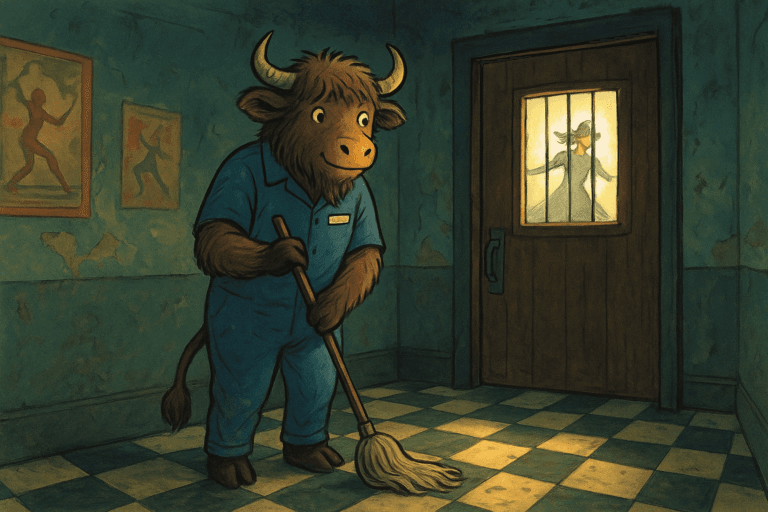
This B1 Intermediate retelling of The Tower Treasure keeps the plot clear for learners while still giving the story some atmosphere and momentum. Frank and Joe Hardy were brothers, and they loved a good mystery. Their father, Fenton Hardy, was a famous detective, and the boys often helped him with his cases.
This version is written for English-speaking learners and includes clickable word help inside the story, full story audio, and lesson notes after the reading. It is free to use on Yak Yacker and is designed to feel natural, readable, and manageable in English.
Frank and Joe Hardy were brothers, and they loved a good .
Their father, , was a famous , and the boys often helped him with his .
"Another boring Saturday," Joe said, a baseball into his glove.
"Don't worry," Frank smiled. "Chet promised to bring his new car over."
Just then, their friend Chet Morton the driveway in a red convertible.
"Wow! Whose car is that?" Joe asked, .
"It's my uncle's," Chet said . "He let me it for the day."
The boys , and soon they were down the roads of Bayport.
"Hey, have you heard about the Tower Mansion?" Chet asked, .
"The old Applegate place?" Frank said. "What about it?"
"My dad says there's a treasure hidden somewhere inside," Chet .
Joe grinned. "A treasure? Now that sounds like a for us!"
They drove to Tower Mansion, a huge stone house with a tall, dark tower at one .
Mr. Applegate, the owner, was a old man who never let anyone inside.
"We'll never get in there," Chet said as they parked outside the .
"Then we'll find another way," Frank said with a look.
That night, the brothers returned to the mansion with .
"Are you sure about this?" Joe whispered as they the garden wall.
"Don't you want to find the treasure?" Frank grinned. "We're !"
They through the bushes and found a small, unlocked window leading into the cellar.
Inside, it was and smelled of old wood.
"Look at these footprints in the dust," Joe said, on the floor.
"Someone else has been here," Frank whispered. "And ."
They followed the footprints up a narrow, staircase into the tower.
At the top, they found a locked wooden door with strange carved into it.
"These symbols mean 'danger' and 'treasure'," Frank said, touching the carvings.
Suddenly, footsteps from below. "Hide!" Joe hissed.
They ducked behind a tall curtain just as a man in a dark coat walked by, holding a flashlight.
The man stopped right in front of the wooden door and pulled out a key.
"He's opening it!" Joe breathed.
"We have to see what's inside," Frank whispered.
When the man disappeared through the door, they after him.
Inside, the room with gold coins, jewelry, and an old chest.
"The tower treasure!" Joe gasped.
But the man turned around-it was Mr. Applegate himself!
"What are you boys doing here?" he , his face turning red.
Frank stepped forward bravely. "We… we were just about the treasure."
Mr. Applegate's anger melted into a tired sigh. "You shouldn't be here. This treasure is a ."
He explained that his grandfather had hidden the treasure, but it brought nothing but to the family.
"And now someone has been stealing from it," he said, pointing to the chest. "The jewels are gone."
"We can help you find the thief, Mr. Applegate," Frank said. "We're detectives."
Joe nodded. "Our dad is Fenton Hardy. We know how to mysteries."
Mr. Applegate looked at them with a . "All right. If you can find my jewels, I'll give you a reward."
The next day, the Hardy brothers started their .
They questioned the staff, searched for clues, and even .
"I found a long blonde hair near the open window," Joe said, holding it up with .
"And I found a torn piece of fabric," Frank added. "It looks like from a woman's ."
They remembered seeing a woman with long blonde hair and a red scarf near the mansion gates earlier that week.
"That's the thief!" Joe exclaimed. "But who is she?"
They followed the clues to a small cottage at the .
Inside, they found the missing jewels hidden under a floorboard.
A woman named Mrs. Brown, a former maid at the mansion, confessed to the crime.
"I felt I deserved more after working for the Applegates for so many years," she said .
The boys called their father, and the police took Mrs. Brown away.
Mr. Applegate was to get his jewels back. "You boys are true detectives!" he said, handing them a generous reward.
Frank and Joe smiled. "Just another day on the !"
They drove home in Chet's convertible, the wind in their hair, already wondering what would come next.
This story is packed with classic detective vocabulary. Words like <em>clue</em>, <em>case</em>, <em>treasure</em>, and <em>thief</em> help build the mystery mood and tell you what the boys are looking for.
Notice how the story uses words for places and objects too: <em>mansion</em>, <em>cellar</em>, <em>tower</em>, <em>flashlight</em>, and <em>fingerprints</em>. These words make the setting feel vivid and a little spooky.
- <em>clue</em> = a small piece of information that helps solve a mystery
- <em>case</em> = a problem or mystery a detective works on
- <em>treasure</em> = valuable objects like gold, jewels, or money
- <em>thief</em> = a person who steals something
The story keeps you turning the page by using short actions and quick dialogue: "We're on the case!" "Hide!" "He's opening it!" This style makes the scene feel fast and tense.
The writer also uses details that appeal to the senses, like a damp cellar, old wood, and footsteps echoing. Those details help the reader feel as if they are sneaking through the tower with the boys.
- Short sentences can create excitement and speed
- Dialogue makes the mystery feel immediate and alive
- Sensory details help the setting feel real
- A sudden reveal, like the man turning out to be Mr. Applegate, adds surprise
Most of the story is told in the past tense, because the events already happened. You see forms like <em>were</em>, <em>said</em>, <em>found</em>, <em>followed</em>, and <em>hid</em>. This is the normal choice for storytelling in English.
The story also uses past continuous for actions in progress, such as <em>were cruising</em> and <em>was opening</em>. That form is great for showing background action while something else happens suddenly.
- Past simple tells the main events: <em>They found the treasure.</em>
- Past continuous shows an action in progress: <em>They were searching the tower.</em>
- Use both together for suspense: <em>They were hiding when the man appeared.</em>
- Storytelling often mixes action, dialogue, and description in the past tense
Frank and Joe do not solve the mystery by guessing wildly. They notice details, compare clues, and stay calm under pressure. That is a useful reading habit too: slow down, track the evidence, and ask what each detail might mean.
If you want to practice, retell the story in three steps: the discovery, the investigation, and the reveal. It is a neat way to remember both the plot and the language.
- Look for clues, not just big events
- Retelling in steps helps you remember the story
- Try using mystery verbs like <em>noticed</em>, <em>followed</em>, <em>discovered</em>, and <em>confessed</em>
- A good detective, and a good reader, pays attention
The Tower Treasure comes from the American / Stratemeyer Syndicate tradition and is best known as a mystery novel. This Yak Yacker article is an original learner retelling based on Franklin W. Dixon/Stratemeyer, 1927; public domain in U.S., so the wording here is simplified for modern learners rather than copied from one old edition.
Older printings, translations, and retellings of this story can vary quite a bit. The original audience was usually kids/general, but this version is adapted for B1 Intermediate learners studying English. Use original 1927 version; trademark/revised-text caution.
If you want to look into the source tradition, start with Project Gutenberg.
If you want to keep going, browse more in our English section and review the B1 English Vocabulary List. After that, try English Question Words for another useful next step.