My Name Is In English: Natural Ways To Ask And Answer
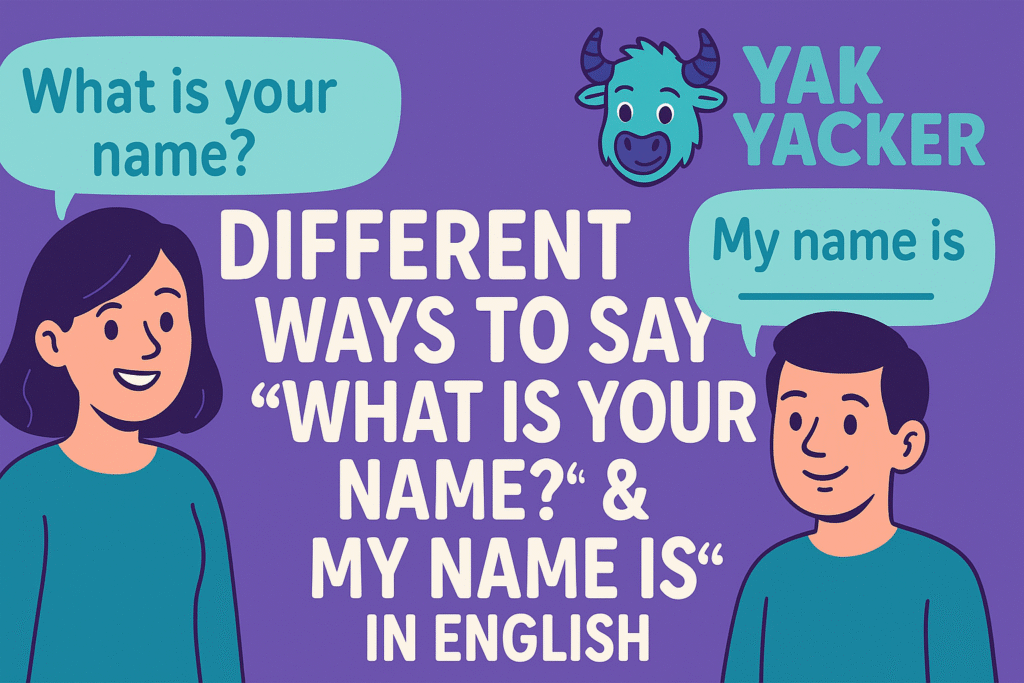
In English, you ask someone’s name with “What’s your name?” (casual) or “May I ask your name?” (polite). To answer, say “My name is ___,” “I’m ___,” or “You can call me ___.”
If you’ve ever frozen right after “Hi…” (same), this guide gives you clean, natural phrases you can use in real conversations—work, school, travel, online, anywhere humans gather and yaks quietly judge.
What You’ll Get
-
Multiple Ways To Ask Someone’s Name (Casual → Formal)
So you don’t sound too stiff… or accidentally too spicy.
-
Real-Life Replies Beyond “My Name Is…”
Including nicknames and “what should I call you?” moments.
-
Mini Dialogues + Quick Wins
Copy, tweak your name, go talk to humans. You’ve got this.
Yak Snark Box: I once practiced “What’s your name?” so much that I accidentally asked my barista three times in one visit. Great news: the phrase worked perfectly. Bad news: I now know his name, his dog’s name, and his dog’s chiropractor.
Quick Win: The Default Script
Say: “Hi! I’m ___.” Then: “Nice to meet you.” Then ask: “And you?” It’s short, friendly, and works almost everywhere.
Most Natural In Daily Life: “I’m ___.”
Ways To Ask “What’s Your Name?” From Casual To Formal
English introductions are a “small words, warm tone” situation. Pick the version that matches the setting, then keep moving.
Everyday And Friendly
- What’s your name? Casual
The default. Works with almost anyone.
- What’s your name, please? Polite
Still simple, just a touch more respectful.
- What should I call you? Friendly
Great when nicknames or preferred names matter.
Polite And Formal
- May I ask your name? Polite
Soft, respectful, and very common.
- Could you tell me your name? Polite
A smooth choice in workplaces and customer service.
- May I have your name? Formal
Common when someone is taking details (hotels, offices, appointments).
Quick Win: Make Any Question Politer
Add “please” and slow down slightly: “What’s your name, please?” Politeness in English is often that simple.
Ways To Say “My Name Is” (Alternatives People Actually Use)
These are all correct. The “best” one is the one you’ll actually say out loud without panicking.
Most Common Replies
- My name is ___. Neutral
Clear and safe in almost any setting.
- I’m ___. Natural
The most common in real conversation.
- You can call me ___. Friendly
Perfect for nicknames or preferred names.
Other Natural Options
- I’m called ___. Okay
Used sometimes, but less common than “I’m ___.”
- People call me ___. Casual
Great for nicknames: “People call me AJ.”
- This is ___. Introducing Someone Else
Use it when you’re introducing another person: “This is Priya.”
Small confidence trick: if your name is harder to pronounce, add one helpful line: “It’s pronounced ___.” or “You can call me ___.”
“What Is Your Good Name?” And “Your Nice Name” Explained
You might hear “What is your good name?” (or “your nice name”) in some regions, but it’s not standard English. In English, say “What’s your name?” or “May I ask your name?”
Quick Win: If Someone Asks “Good Name,” Reply Normally
Just answer with “I’m ___.” No need to correct anyone mid-conversation (unless you’re teaching and they want the fix).
Mini Dialogues (Boosts Relevance And Featured Snippet Chances)
Two tiny conversations you can copy today. Swap in your name and go.
What To Say After The Name Exchange
Names are the “hello,” but the next line keeps the moment warm (and prevents the famous English silence).
Friendly Follow-Ups
- Nice to meet you. Universal
The safest response in English.
- Great to meet you. Warm
Friendly and common in social settings.
- It’s a pleasure. Formal
More professional, still kind.
Tiny nuance: “Nice meeting you” is usually for the end of the conversation, not the beginning.
If You Didn’t Catch The Name
- Sorry, what was your name again? Most Natural
Friendly and honest—native speakers do this constantly.
- I’m so sorry, I didn’t catch your name. Polite
Soft, respectful, and clear.
- How do you spell that? Helpful
Perfect for appointments, forms, and unfamiliar names.
Your goal isn’t “perfect.” It’s clear + kind. That wins in English introductions.
Tips For English Introductions (Cultural + Context Tips)
Same phrases, different settings. Here’s what tends to work first.
Workplace
Start clear and professional: “Hi, I’m ___.” If useful, add one detail: “I’m the new ___.” Keep it calm and steady—confidence beats fancy grammar.
Try: “Hi, I’m Mina. I’m on the marketing team.”
Social Settings
Short and warm wins: “I’m ___!” Then ask a simple question to keep the flow.
Try: “I’m Sam—nice to meet you. Where are you from?”
Online/Chat Situations
Go even simpler. “Hi, I’m ___.” can feel more natural than “My name is ___.” online. If you use a nickname, say it clearly: “You can call me ___ here.”
Try: “Hi, I’m Alexandra, but call me Alex here.”
Common Mistakes English Learners Make (And Easy Fixes)
Even “simple” introductions can go sideways when you translate word-for-word. Here are the fixes that make you sound natural fast.
| Mistake | Why It Sounds Strange | Better Option |
|---|---|---|
| “Allow me to introduce myself, my name is…” | Too formal for everyday life (unless you’re giving a speech). | “Hi, I’m ___.” |
| “Myself is Alex.” | Not grammatical in English. | “I’m Alex.” |
| “I call myself Alex.” | Sounds like you named yourself today. | “My name is Alex.” / “I’m Alex.” |
| Only giving a long legal name in casual situations | Can feel stiff and harder to remember. | Give the name you want people to use: “I’m ___.” |
| Not offering a nickname when your name is tricky | People may feel unsure how to say it. | “I’m ___ — you can call me ___.” |
English introductions are some of the least “grammatical” sentences in real life. Shorter is usually more natural.
Language In Action: A 10-Second Introduction Script
Use this when meeting someone new. It’s simple, friendly, and works for work, school, and travel.
Say Hello + Your Name
“Hi! I’m ___.”
Show Warmth
“Nice to meet you.”
Invite Them To Share
“And you?” or “What’s your name?”
Keep The Conversation Going
Ask one easy follow-up: “Where are you from?” or “What brings you here?”
Quick Win: Nickname Line That Saves Everyone
“I’m ___ — you can call me ___.” This is especially helpful if your name has multiple pronunciations.
FAQ
Is “My name is…” or “I’m…” better?
Both are correct. “I’m ___” is more common in everyday conversation. “My name is ___” is slightly more formal and very clear.
How do I ask someone’s name politely?
Use “May I ask your name?” or “Could you tell me your name?” Adding “please” also helps: “What’s your name, please?”
Is “What is your good name?” correct English?
It’s common in some regions, but it’s not standard English. In standard English, use “What’s your name?” or “May I ask your name?”
What should I say after they tell me their name?
“Nice to meet you.” is the safest. Then ask a simple follow-up like “Where are you from?” to keep the conversation moving.
What if I forget their name right away?
It happens. Say “Sorry, what was your name again?” or “I didn’t catch your name—could you repeat it?” It’s normal and polite.