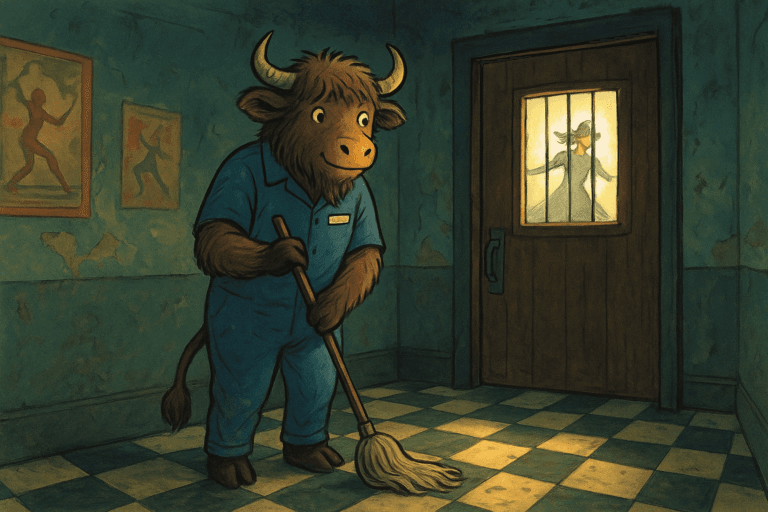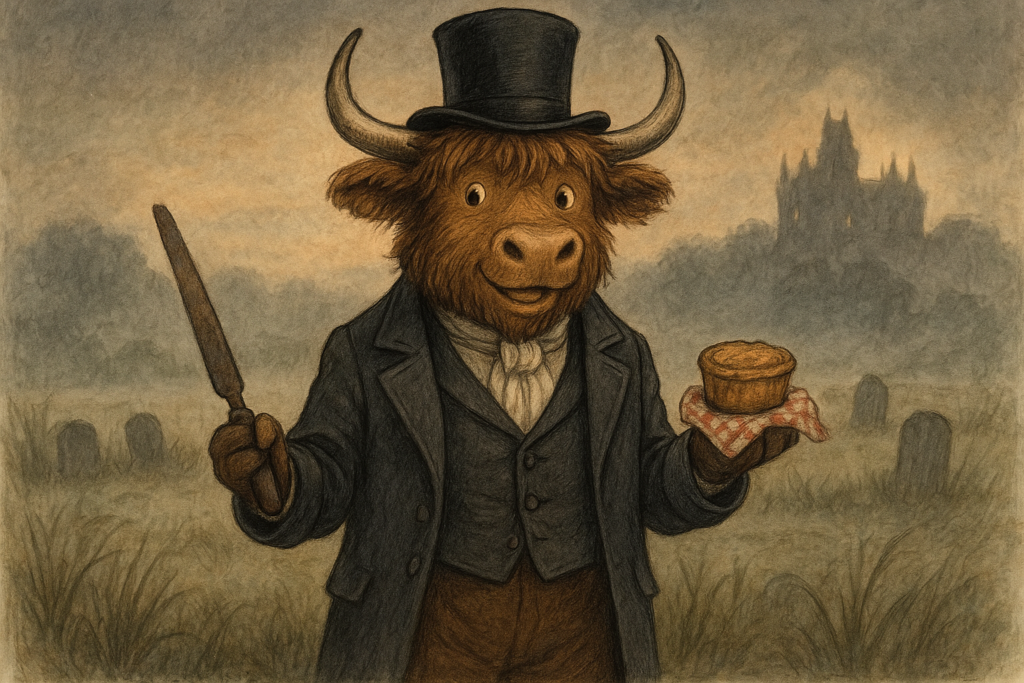
Read this story on Yak Yacker with clickable word help, full story audio, and lesson notes below the text.
This version is written for English-speaking learners who want a friendly reading experience in English.
My name is Philip Pirrip, but everyone calls me Pip. I grew up in the cold, wet marshes of England with my sister and her husband, Joe.
One sad evening, I visited my parents' . Suddenly, a man jumped out from behind a stone.
"Hold still, boy," he . "Tell no one you saw me. Bring me food and a ." He looked and hungry.
I was so . But I stole some food and one of Joe's files and to the marshes.
I found the man . He ate like a while I watched. Not long after, soldiers caught him.
Later, a strange woman invited me to her house. Her name was Miss Havisham, and she lived in a dark, dusty old house called Satis House.
Miss Havisham wore an old and sat in a room with a . She had not seen sunlight in years.
"Look at her," Miss Havisham said, a beautiful girl about my age. "Her name is ."
Estella had . "You are a boy," she said, looking down at me. My cheeks burned with .
I visited Satis House many times. I pushed Miss Havisham in her and played cards with Estella. But she always made me feel .
"I want to be a ," I told Joe one day. Joe smiled and said, "You are already fine in my heart, Pip."
When I was a little older, a lawyer named Jaggers came to see me. "You have a ," he said. "You will go to London and learn to be a gentleman."
I thought Miss Havisham was my . I dreamed of becoming good enough for Estella.
In London, I met a young man named Herbert Pocket. We became and shared a flat.
"Let's eat like true gentlemen," Herbert laughed, even though we often made a . He was kind and taught me many things.
One day, Joe came to visit me in London. He wore his best suit, but I felt . I was not kind to him, and he left quietly.
Later, on a dark , a man knocked at my door. It was the from the marshes!
"I never forgot you, Pip," he said softly. "I am your . I worked hard in Australia to make you a gentleman."
My heart . All my dreams about Miss Havisham and Estella were wrong. I wanted to run away from this man named Magwitch.
But as Magwitch told me his sad life story, my heart began to . "I will help you," I said at last. "You are in in England."
We tried to help Magwitch escape by , but the police caught him. He was hurt and soon died, but I held his hand until the end.
Miss Havisham asked for my . "I raised Estella to break hearts," she cried. Then her old dress caught , and I saved her, but she was badly burned.
Estella married a man, and I lost her. I fell very ill, and when I woke, Joe was sitting beside my bed.
"Oh, Joe," I whispered. "I am so sorry." Joe just smiled and held my hand. He had paid all my and never asked for thanks.
Years passed. I worked hard and became a better man. One evening, I returned to the old Satis House .
A woman was walking there. It was Estella, older and sadder. "I have thought of you often," she said .
"I have changed, Pip," she said. "Suffering has given me a ." We walked hand in hand out of the garden, into a quiet, hopeful future.
In the story, you met many new words that describe characters, places, and feelings. Let's break down a few of the most useful ones together.
Understanding these will help you talk about your own past, describe people, and express emotions more fluently.
- A benefactor is someone who secretly gives you money or help. Pip had a secret benefactor.
- A gentleman is a man who behaves kindly, honorably, and often comes from a high social class.
- To feel shame is to feel embarrassed or unworthy. Pip felt shame when Estella looked down at him.
- A file is a tool with rough surfaces, used to shape metal. The convict wanted a file to remove his chains.
You'll notice sentences like 'Miss Havisham had not seen sunlight in years.' This is the past perfect tense. We use it when we are already talking about the past and we want to mention something that happened even earlier.
It's a powerful tool for storytelling because it adds layers of time to your narrative.
- Form: had + past participle (e.g., had seen, had lived).
- Use it for an action completed before another action in the past: 'He ate the food after I had brought it.'
- Often used with words like 'already', 'just', 'never' to show the order of events.
- Try: 'By the time I arrived, he had already escaped.'
Dickens was a master of creating vivid images. He used adjectives and comparisons to make you feel the cold, see the darkness, and understand the characters' emotions.
In your own English, try adding a few well-chosen details to bring your stories to life.
- Notice the adjectives: cold, wet marshes; dark, dusty house; rough man; beautiful girl with cold eyes.
- Similes make comparisons: 'He ate like a wild animal' gives you a clear picture of his hunger.
- When describing a place, think about the lighting, temperature, and colour to set the mood.
- Example: Instead of just 'a sad room', try 'a silent, grey room with a stopped clock'.
Pip's story is about growing up, making mistakes, and finding forgiveness. The language helps us feel every moment of his journey.
Next time you write or speak, try using some of the vocabulary and tenses you've learned. Describe a memorable person from your past, or a place that felt special to you.
- Share your thoughts: Who was your favourite character? Why?
- Write three sentences about a life-changing moment using the past perfect.
- Remember, every word you learn is a tool to open up new conversations.
Great Expectations comes from an older public-domain story tradition and is best known as a public_domain_story_retelling. This Yak Yacker article is an original learner retelling based on public-domain source material, so the wording here is simplified for modern learners rather than copied from one old edition.
Older printings, translations, and retellings of this story can vary quite a bit. This version is adapted for B1 Intermediate learners studying English.
If you want to keep going, browse more in our English section and review the B1 English Vocabulary List. After that, try 1,200 English Phrases and Expressions for another useful next step.