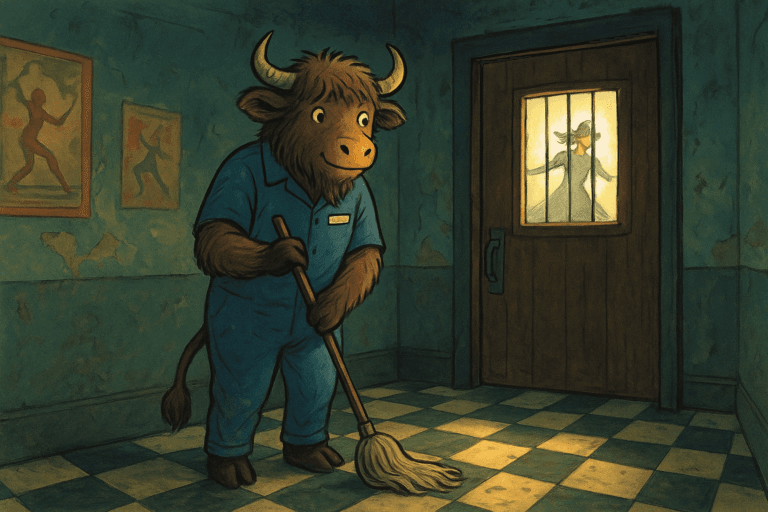
This B1 Intermediate retelling of As I Lay Dying keeps the plot clear for learners while still giving the story some atmosphere and momentum. Addie Bundren lay in her bed, very sick. Her son Cash worked outside under the hot sun, sawing wood for a coffin.
This version is written for English-speaking learners and includes clickable word help inside the story, full story audio, and lesson notes after the reading. It is free to use on Yak Yacker and is designed to feel natural, readable, and manageable in English.
Addie Bundren lay in her bed, very sick. Her son Cash worked outside under the hot sun, sawing wood for a coffin. He wanted the corners to be perfect.
"," called Anse from the porch. "Your mother is asking for you."
Cash stopped his work and . Darl and Jewel came from the , their faces wet with .
Addie whispered, "I want to Jefferson. That is my home. you will take me there." Anse nodded slowly.
That evening, Addie took her . The room was very . Cash finished the coffin and they put her body inside.
The next morning, Anse said, "We Jefferson before the sun gets too hot." They all climbed onto the old with the coffin.
The road was . Vardaman, the youngest, asked, "Is Mama sleeping in that box?"
Dewey Dell held his hand. "She is now," she said. But she was worried about her own .
They came to a big river. The water was from the rain. "We must ," Anse said.
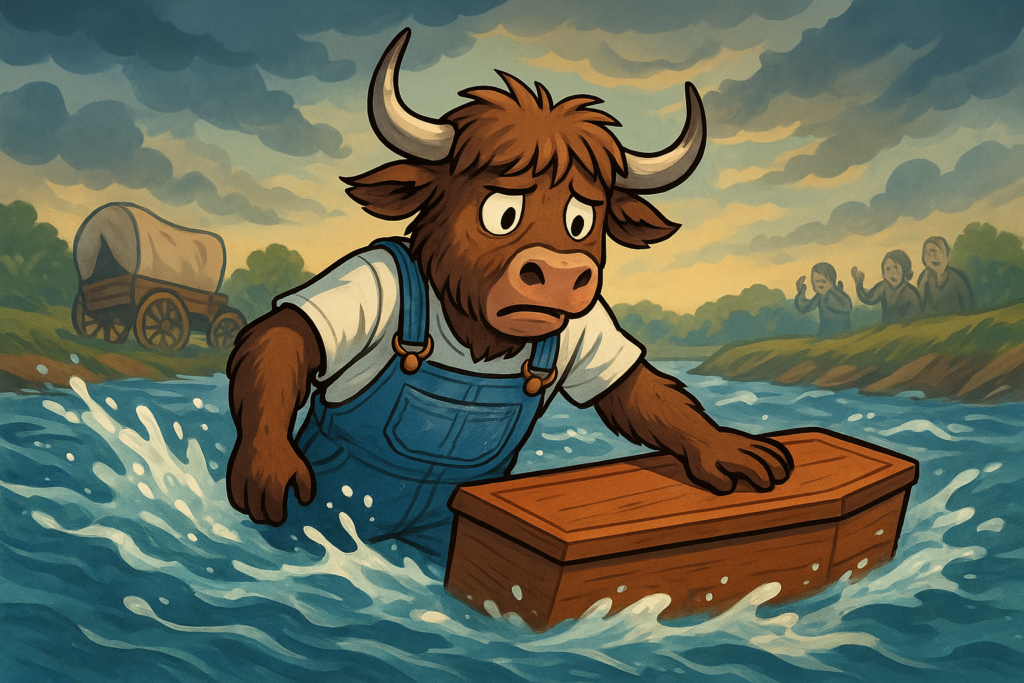
The wagon . Suddenly, it ! The coffin fell into the river and started floating away.
"!" shouted Jewel. He the water and swam after the coffin. Darl helped him. Cash broke his leg and cried out in pain.
They the coffin to the other side. Everyone was wet and tired. "Nothing goes for this family," said Anse, shaking his head.
That night, they stayed in a farmer's barn. A fire ! flew and the barn began to burn.
Jewel ran inside the . . He pushed the coffin out just in time. The family watched, scared.
Finally, they Jefferson. They buried Addie in the quiet churchyard. The sun was , turning the sky gold.
Anse cleared his throat. "Well, now. While we are in town, I have something to tell you." He pointed to a woman standing nearby. "Meet your ."
Addie Bundren was very sick in bed. Her son Cash was outside making a coffin from wood. He wanted the corners to be just right.
Anse called from the porch, "Cash, come inside. Your mother wants to see you."
Cash stopped and went inside. Darl and Jewel came from the fields, sweating.
Addie whispered, "I want to be buried in Jefferson. It's my home. Promise to take me there." Anse slowly nodded.
That evening, Addie died. The room was silent. Cash finished the coffin and they placed her body inside.
Next morning, Anse said, "We're going to Jefferson before it gets too hot." They all got on the old wagon with the coffin.
The road was dusty and long. The youngest, Vardaman, asked, "Is Mama sleeping in that box?"
Dewey Dell held his hand and said, "She's at peace now." But she had her own secret worry.
They reached a wide river. The water was high because of rain. Anse said, "We have to cross."
The wagon went into the water and suddenly tipped over. The coffin fell out and floated away.
Jewel yelled, "Save her!" He jumped in and swam after the coffin. Darl helped. Cash broke his leg and cried in pain.
They pulled the coffin to the far side. Everyone was wet and exhausted. Anse shook his head, "Nothing ever goes smoothly for us."
That night, they slept in a barn. A fire broke out! Sparks flew and the barn caught fire.
Jewel ran into the flames, through thick smoke. He pushed the coffin out just in time. The family watched in fear.
At last, they arrived in Jefferson. They buried Addie in a peaceful churchyard as the sun set, coloring the sky gold.
Anse cleared his throat. "Now that we're here in town, I have news." He pointed to a woman nearby. "Meet your new mother."
This story uses some powerful words that paint a vivid picture of the Bundren family's difficult journey. Let's look at a few of them more closely so you can use them confidently.
A coffin is the box for a dead body-Cash was sawing wood to build one. A wagon is an old-fashioned vehicle pulled by horses, perfect for long, dusty roads. When you bury someone, you place them in the ground, usually in a graveyard or churchyard.
- coffin (n.) - a long box in which a dead person is buried or cremated. E.g., The coffin was carried carefully into the church.
- saw (v.) - to cut wood using a tool with a long blade and sharp teeth. E.g., He was sawing logs for the fire.
- bury (v.) - to put a dead body into the ground. E.g., They buried her in the quiet churchyard.
- cross (v.) - to go from one side of something to the other, such as a road, river, or bridge. E.g., The family crossed the dangerous river.
In storytelling, we often combine the past continuous and the past simple to create a sense of time and motion. The past continuous (was/were + -ing) sets the background, while the past simple pushes the main events forward.
For example: 'Cash was working outside under the hot sun when Anse called him.' The long action (was working) is interrupted by a shorter, completed one (called). This structure makes your narrative more dynamic and easy to follow.
- Use past continuous for ongoing background actions: The sun was setting; Jewel was running into the flames.
- Use past simple for the main sequence of events: She whispered; The wagon tipped; They pulled the coffin.
- Tip: If you only use past simple, the story can sound like a list. Mixing both gives it life.
The story is full of movement-across rivers, into barns, out of fires. Phrasal verbs (verb + particle) are a natural way to describe this in English. They often have a more vivid, conversational feel than single-word verbs.
Notice how 'jump into,' 'float away,' and 'push out' make you see the action. Learning a few common ones will help you tell any story more fluently.
- climb onto - to get up onto something: They climbed onto the old wagon.
- float away - to move slowly on water or through air out of reach: The coffin floated away down the river.
- jump into - to enter quickly, often with force: Jewel jumped into the water.
- push out - to force something out of a place: He pushed the coffin out of the burning barn.
You've explored some rich vocabulary and handy grammar patterns from this family's tragic adventure. Now, why not retell the story in your own words? Focus on using the narrative tenses to create atmosphere, and drop in a few phrasal verbs to make the journey feel real.
Notice how the writer uses simple but emotional language-short sentences, direct speech, and a twist at the end. That's a technique you can borrow for your own storytelling, whether it's a personal anecdote or a creative piece.
- Challenge: Summarize the Bundrens' journey in 5-6 sentences using at least three new vocabulary words and two phrasal verbs.
- Think about: What made the journey so difficult? How did the family members react? What surprised you at the end?
As I Lay Dying comes from the American / William Faulkner tradition and is best known as a modernist novel. This Yak Yacker article is an original learner retelling based on William Faulkner, 1930; public domain in U.S. as of 2026, so the wording here is simplified for modern learners rather than copied from one old edition.
Older printings, translations, and retellings of this story can vary quite a bit. The original audience was usually adult, but this version is adapted for B1 Intermediate learners studying English. Adult/dark; B1 retell should simplify voices.
If you want to look into the source tradition, start with Library of Congress.
If you want to keep going, browse more in our English section and review the B1 English Vocabulary: Key Words for Your Level. After that, try 1,200 English Phrases and Expressions for another useful next step.