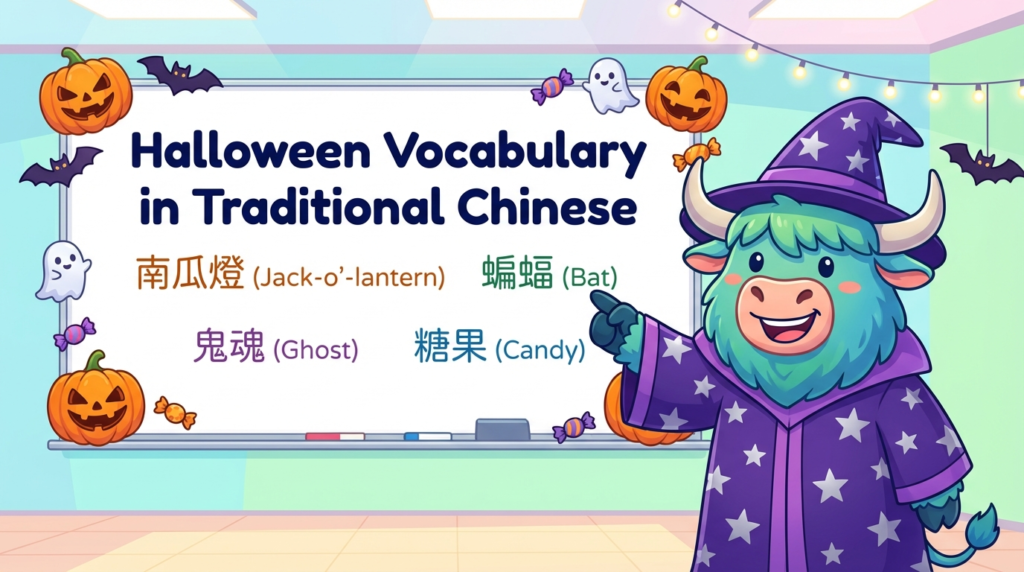
Halloween Vocabulary in Traditional Chinese
Learn real-life spooky words, candy talk, and door-knocking lines — 萬聖節詞彙與常用句
Want to talk about Halloween in Mandarin without sounding like you learned it from a haunted textbook? This list gives you Traditional Chinese (繁體中文), pinyin with tone marks, and examples you can actually use.
Tap the 🔊 buttons to hear the words out loud. Then go collect candy and social confidence. In that order.
Core Halloween words you’ll use a lot
Go-to Halloween phrases (the ones you actually say)
These are ready to copy, shout, whisper, or politely mumble at your neighbor’s door.
萬聖節快樂!
Wànshèngjié kuàilè!
Happy Halloween!
不給糖就搗蛋!
Bù gěi táng jiù dǎodàn!
Trick or treat!
我們去要糖吧。
Wǒmen qù yào táng ba.
Let’s go trick-or-treating.
給你糖,別搗蛋。
Gěi nǐ táng, bié dǎodàn.
Here’s candy—no tricks.
你要幾顆糖?
Nǐ yào jǐ kē táng?
How many candies do you want?
我扮成吸血鬼。
Wǒ bànchéng xīxuèguǐ.
I’m dressed as a vampire.
這個造型好酷!
Zhège zàoxíng hǎo kù!
This look/costume is so cool!
好可怕!
Hǎo kěpà!
So scary!
嚇死我了!
Xiàsǐ wǒ le!
You scared me to death!
進鬼屋嗎?
Jìn guǐwū ma?
Want to go into the haunted house?
我不敢。
Wǒ bù gǎn.
I don’t dare.
來拍照!
Lái pāizhào!
Let’s take a photo!
門口有南瓜燈。
Ménkǒu yǒu nánguā dēng.
There’s a jack-o’-lantern at the door.
小心有惡作劇。
Xiǎoxīn yǒu èzuòjù.
Watch out for pranks.
我只要糖,不要惡作劇。
Wǒ zhǐ yào táng, bú yào èzuòjù.
I only want candy, not pranks.
Quick note: why “trick or treat” looks so intense
不給糖就搗蛋 is literally “If you don’t give (me) candy, I’ll cause trouble.” In real life it’s playful, not a threat. If you want a softer vibe, pair it with a smile and 萬聖節快樂.
Also: candies are often counted with 顆 (kē). You’ll see it in the examples below.
Table of words (with examples)
Everything below includes Traditional Chinese, pinyin, meaning, and a usable example sentence (with pinyin). Yes, it’s a lot. No, you don’t have to memorize it all in one night.
Core terms (from the cards)
| Traditional | Pinyin | Meaning (EN) | Example (ZH) | Translation (EN) | 🔊 |
|---|---|---|---|---|---|
萬聖節 | Wànshèngjié | Halloween | 今年萬聖節我們去參加派對。 Jīnnián Wànshèngjié wǒmen qù cānjiā pàiduì. | This Halloween we’re going to a party. | |
不給糖就搗蛋 | Bù gěi táng jiù dǎodàn | Trick or treat | 小朋友在門口喊:「不給糖就搗蛋!」 Xiǎopéngyǒu zài ménkǒu hǎn: “Bù gěi táng jiù dǎodàn!” | Kids shout “Trick or treat!” at the door. | |
南瓜燈 | Nánguā dēng | jack-o’-lantern | 我們把南瓜燈放在門口。 Wǒmen bǎ nánguā dēng fàng zài ménkǒu. | We put the jack-o’-lantern at the door. | |
變裝 | Biànzhuāng | to dress up | 今晚大家都要變裝。 Jīnwǎn dàjiā dōu yào biànzhuāng. | Tonight everyone is dressing up. | |
糖果 | Tángguǒ | candy | 我包了一大袋糖果要發給小朋友。 Wǒ bāo le yí dà dài tángguǒ yào fā gěi xiǎopéngyǒu. | I packed a big bag of candy to hand out to kids. | |
鬼屋 | Guǐwū | haunted house | 那間鬼屋裡的音效超嚇人。 Nà jiān guǐwū lǐ de yīnxiào chāo xiàrén. | The sound effects in that haunted house are super scary. | |
女巫 | Nǚwū | witch | 她穿著女巫的黑斗篷。 Tā chuānzhe nǚwū de hēi dǒupéng. | She’s wearing a witch’s black cloak. | |
幽靈 | Yōulíng | ghost | 我扮成幽靈,走路不出聲。 Wǒ bànchéng yōulíng, zǒulù bù chū shēng. | I dressed as a ghost and walked silently. |
Creatures & spooky beings
| Traditional | Pinyin | Meaning (EN) | Example (ZH) | Translation (EN) | 🔊 |
|---|---|---|---|---|---|
吸血鬼 | Xīxuèguǐ | vampire | 他的吸血鬼牙齒看起來很逼真。 Tā de xīxuèguǐ yáchǐ kànqǐlái hěn bīzhēn. | His vampire fangs look very realistic. | |
殭屍 | Jiāngshī | zombie | 大家學殭屍走路,超好笑。 Dàjiā xué jiāngshī zǒulù, chāo hǎoxiào. | Everyone did a zombie walk—so funny. | |
狼人 | Lángrén | werewolf | 他扮成狼人,臉上還畫了毛。 Tā bànchéng lángrén, liǎnshàng hái huà le máo. | He dressed as a werewolf and even drew fur on his face. | |
木乃伊 | Mùnǎiyī | mummy | 木乃伊的繃帶一圈一圈地纏著。 Mùnǎiyī de bēngdài yì quān yì quān de chánzhe. | The mummy’s bandages are wrapped around and around. | |
骷髏 | Kūlóu | skeleton | 牆上貼著一個大骷髏。 Qiángshàng tiēzhe yí ge dà kūlóu. | There’s a big skeleton stuck on the wall. | |
骷髏頭 | Kūlóutóu | skull | 桌上有一個骷髏頭裝飾。 Zhuōshàng yǒu yí ge kūlóutóu zhuāngshì. | There’s a skull decoration on the table. | |
怪物 | Guàiwù | monster | 小朋友最愛怪物面具。 Xiǎopéngyǒu zuì ài guàiwù miànjù. | Kids love monster masks the most. | |
惡魔 | Èmó | demon | 他扮成惡魔,還帶了角。 Tā bànchéng èmó, hái dài le jiǎo. | He dressed as a demon and even wore horns. | |
魔鬼 | Móguǐ | devil | 這個魔鬼造型有點可愛。 Zhège móguǐ zàoxíng yǒudiǎn kě’ài. | This devil costume is kind of cute. | |
幽魂 | Yōuhún | spirit (ghostly soul) | 這個故事說附近有幽魂。 Zhège gùshì shuō fùjìn yǒu yōuhún. | This story says there are spirits nearby. | |
妖怪 | Yāoguài | monster / “yokai”-style creature | 他喜歡扮成各種妖怪。 Tā xǐhuān bànchéng gèzhǒng yāoguài. | He likes dressing as different kinds of creatures. | |
蝙蝠 | Biānfú | bat | 天花板掛著紙蝙蝠。 Tiānhuābǎn guàzhe zhǐ biānfú. | Paper bats are hanging from the ceiling. | |
黑貓 | Hēimāo | black cat | 黑貓圖案常常出現在萬聖節裝飾上。 Hēimāo tú’àn chángcháng chūxiàn zài Wànshèngjié zhuāngshì shàng. | Black cat designs often show up on Halloween decorations. | |
蜘蛛 | Zhīzhū | spider | 我看到蜘蛛就會尖叫。 Wǒ kàndào zhīzhū jiù huì jiānjiào. | I scream when I see a spider. | |
烏鴉 | Wūyā | crow | 烏鴉叫聲讓氣氛更陰森。 Wūyā jiàoshēng ràng qìfēn gèng yīnsēn. | Crow sounds make the vibe creepier. |
Costumes, makeup & props
| Traditional | Pinyin | Meaning (EN) | Example (ZH) | Translation (EN) | 🔊 |
|---|---|---|---|---|---|
服裝 | Fúzhuāng | costume / outfit | 我的服裝有點熱,但很帥。 Wǒ de fúzhuāng yǒudiǎn rè, dàn hěn shuài. | My costume is a bit hot, but it looks cool. | |
造型 | Zàoxíng | look / styling | 她的造型很用心。 Tā de zàoxíng hěn yòngxīn. | Her look is really thoughtfully done. | |
面具 | Miànjù | mask | 戴上面具以後,誰也認不出我。 Dàishàng miànjù yǐhòu, shéi yě rèn bù chū wǒ. | After putting on a mask, no one recognizes me. | |
斗篷 | Dǒupéng | cloak | 黑斗篷一披上就很有氣勢。 Hēi dǒupéng yì pīshàng jiù hěn yǒu qìshì. | Putting on a black cloak instantly looks dramatic. | |
尖帽 | Jiānmào | pointy hat (witch hat) | 女巫的尖帽歪歪的,很可愛。 Nǚwū de jiānmào wāiwāi de, hěn kě’ài. | The witch’s pointy hat is crooked—cute. | |
魔杖 | Mózhàng | magic wand | 他拿著魔杖到處施法(假裝的)。 Tā názhe mózhàng dàochù shīfǎ (jiǎzhuāng de). | He walks around “casting spells” with a wand (pretend). | |
掃把 | Sàobǎ | broom | 女巫的掃把只是道具,不會飛。 Nǚwū de sàobǎ zhǐshì dàojù, bú huì fēi. | The witch’s broom is just a prop—it won’t fly. | |
假牙 | Jiǎyá | fake teeth / fangs | 戴假牙講話會有點含糊。 Dài jiǎyá jiǎnghuà huì yǒudiǎn hánhú. | Talking with fake fangs can sound a bit muffled. | |
假血 | Jiǎxuè | fake blood | 他用假血做出「受傷」的效果。 Tā yòng jiǎxuè zuòchū “shòushāng” de xiàoguǒ. | He used fake blood to create an “injured” effect. | |
化妝 | Huàzhuāng | makeup | 我花了一小時化妝,結果下雨。 Wǒ huā le yì xiǎoshí huàzhuāng, jiéguǒ xiàyǔ. | I spent an hour doing makeup—then it rained. | |
特效化妝 | Tèxiào huàzhuāng | special-effects makeup | 特效化妝讓傷疤看起來很真。 Tèxiào huàzhuāng ràng shāngbā kànqǐlái hěn zhēn. | SFX makeup makes the scar look real. | |
傷疤 | Shāngbā | scar | 這條傷疤是畫的,不是真的。 Zhè tiáo shāngbā shì huà de, bù shì zhēn de. | This scar is drawn on—it’s not real. | |
披風 | Pīfēng | cape | 他的披風一甩,大家都笑了。 Tā de pīfēng yì shuǎi, dàjiā dōu xiào le. | He flicked his cape and everyone laughed. | |
道具 | Dàojù | prop | 別擔心,那把刀是道具。 Bié dānxīn, nà bǎ dāo shì dàojù. | Don’t worry—that knife is a prop. | |
咒語 | Zhòuyǔ | spell words / incantation | 她念了幾句咒語,燈就亮了(剛好)。 Tā niàn le jǐ jù zhòuyǔ, dēng jiù liàng le (gānghǎo). | She said some “spell words” and the lights came on (perfect timing). | |
藥水 | Yàoshuǐ | potion | 這杯「藥水」其實是果汁。 Zhè bēi “yàoshuǐ” qíshí shì guǒzhī. | This “potion” is actually juice. |
Decorations & spooky places
| Traditional | Pinyin | Meaning (EN) | Example (ZH) | Translation (EN) | 🔊 |
|---|---|---|---|---|---|
南瓜 | Nánguā | pumpkin | 我們買了一顆大南瓜要雕刻。 Wǒmen mǎi le yì kē dà nánguā yào diāokè. | We bought a big pumpkin to carve. | |
雕刻 | Diāokè | to carve | 我把南瓜雕刻成一張笑臉。 Wǒ bǎ nánguā diāokè chéng yì zhāng xiàoliǎn. | I carved the pumpkin into a smiling face. | |
裝飾 | Zhuāngshì | decoration(s) | 客廳的萬聖節裝飾超多。 Kètīng de Wànshèngjié zhuāngshì chāo duō. | There are tons of Halloween decorations in the living room. | |
佈置 | Bùzhì | to set up / decorate a space | 我們下午一起佈置場地。 Wǒmen xiàwǔ yìqǐ bùzhì chǎngdì. | We decorated the place together in the afternoon. | |
蜘蛛網 | Zhīzhūwǎng | spiderweb | 角落拉了好多蜘蛛網。 Jiǎoluò lā le hǎo duō zhīzhūwǎng. | There are lots of spiderwebs stretched in the corners. | |
蠟燭 | Làzhú | candle | 蠟燭的光讓房間更神祕。 Làzhú de guāng ràng fángjiān gèng shénmì. | Candlelight makes the room more mysterious. | |
煙霧 | Yānwù | fog / smoke | 舞台上有煙霧,看起來很恐怖。 Wǔtái shàng yǒu yānwù, kànqǐlái hěn kǒngbù. | There’s fog on the stage—it looks scary. | |
墓地 | Mùdì | graveyard | 電影裡的墓地很陰森。 Diànyǐng lǐ de mùdì hěn yīnsēn. | The graveyard in the movie is very creepy. | |
墳墓 | Fénmù | grave | 那個墳墓道具做得很逼真。 Nàge fénmù dàojù zuò de hěn bīzhēn. | That fake grave prop is made very realistically. | |
墓碑 | Mùbēi | tombstone | 院子裡放了幾個墓碑裝飾。 Yuànzi lǐ fàng le jǐ ge mùbēi zhuāngshì. | There are a few tombstone decorations in the yard. | |
棺材 | Guāncái | coffin | 鬼屋門口擺了一個棺材。 Guǐwū ménkǒu bǎi le yí ge guāncái. | There’s a coffin placed at the haunted house entrance. | |
門口 | Ménkǒu | doorway / entrance | 門口排了很多來要糖的人。 Ménkǒu pái le hěn duō lái yào táng de rén. | Lots of people lined up at the door to get candy. | |
門鈴 | Ménlíng | doorbell | 他一直按門鈴,像在打拍子。 Tā yìzhí àn ménlíng, xiàng zài dǎ pāizi. | He kept ringing the doorbell like it was a rhythm. | |
海報 | Hǎibào | poster | 牆上貼了恐怖片海報。 Qiángshàng tiē le kǒngbù piàn hǎibào. | Horror movie posters are stuck on the wall. | |
貼紙 | Tiēzhǐ | sticker | 我買了很多南瓜貼紙。 Wǒ mǎi le hěn duō nánguā tiēzhǐ. | I bought lots of pumpkin stickers. |
Candy & treats
| Traditional | Pinyin | Meaning (EN) | Example (ZH) | Translation (EN) | 🔊 |
|---|---|---|---|---|---|
巧克力 | Qiǎokèlì | chocolate | 我最想拿到巧克力。 Wǒ zuì xiǎng ná dào qiǎokèlì. | I most want to get chocolate. | |
棒棒糖 | Bàngbàngtáng | lollipop | 小朋友拿著棒棒糖笑得很開心。 Xiǎopéngyǒu názhe bàngbàngtáng xiào de hěn kāixīn. | The kid held a lollipop and smiled happily. | |
軟糖 | Ruǎntáng | gummy candy | 這包軟糖是水果口味的。 Zhè bāo ruǎntáng shì shuǐguǒ kǒuwèi de. | This bag of gummies is fruit-flavored. | |
口香糖 | Kǒuxiāngtáng | chewing gum | 我不太吃口香糖,會黏牙。 Wǒ bù tài chī kǒuxiāngtáng, huì niányá. | I don’t really eat gum—it sticks to my teeth. | |
太妃糖 | Tàifēitáng | toffee | 太妃糖很甜,吃一顆就夠了。 Tàifēitáng hěn tián, chī yì kē jiù gòu le. | Toffee is very sweet—one piece is enough. | |
玉米糖 | Yùmǐtáng | candy corn | 有人愛玉米糖,有人完全不懂。 Yǒurén ài yùmǐtáng, yǒurén wánquán bù dǒng. | Some people love candy corn; others don’t get it at all. | |
糖蘋果 | Táng píngguǒ | candied apple | 糖蘋果外面脆脆的,很香。 Táng píngguǒ wàimiàn cuìcuì de, hěn xiāng. | Candied apples are crunchy outside and smell great. | |
餅乾 | Bǐnggān | cookies | 我做了鬼臉餅乾。 Wǒ zuò le guǐliǎn bǐnggān. | I made ghost-face cookies. | |
杯子蛋糕 | Bēizi dàngāo | cupcake | 杯子蛋糕上面有小蝙蝠裝飾。 Bēizi dàngāo shàngmiàn yǒu xiǎo biānfú zhuāngshì. | The cupcake has a tiny bat decoration on top. | |
南瓜派 | Nánguā pài | pumpkin pie | 我第一次吃南瓜派,意外地好吃。 Wǒ dì yī cì chī nánguā pài, yìwài de hǎochī. | It’s my first time eating pumpkin pie—surprisingly tasty. | |
零食 | Língshí | snacks | 萬聖節的零食永遠不夠。 Wànshèngjié de língshí yǒngyuǎn bù gòu. | There are never enough Halloween snacks. | |
甜食 | Tiánshí | sweets | 我愛甜食,但我也愛刷牙。 Wǒ ài tiánshí, dàn wǒ yě ài shuāyá. | I love sweets, but I also love brushing my teeth. | |
糖果袋 | Tángguǒdài | candy bag | 他的糖果袋快滿了。 Tā de tángguǒdài kuài mǎn le. | His candy bag is almost full. | |
包裝 | Bāozhuāng | packaging | 這些糖果的包裝很可愛。 Zhèxiē tángguǒ de bāozhuāng hěn kě’ài. | The packaging for these candies is cute. | |
發糖 | Fā táng | to hand out candy | 我們七點開始發糖。 Wǒmen qī diǎn kāishǐ fā táng. | We start handing out candy at 7. | |
要糖 | Yào táng | to ask for candy (trick-or-treat) | 他們挨家挨戶去要糖。 Tāmen āijiā-āihù qù yào táng. | They went door to door asking for candy. | |
挨家挨戶 | Āijiā-āihù | from house to house | 我們挨家挨戶走了一個小時。 Wǒmen āijiā-āihù zǒu le yí ge xiǎoshí. | We went house to house for an hour. |
Activities, party stuff & spooky media
| Traditional | Pinyin | Meaning (EN) | Example (ZH) | Translation (EN) | 🔊 |
|---|---|---|---|---|---|
派對 | Pàiduì | party | 這場派對要比誰的裝扮最有創意。 Zhè chǎng pàiduì yào bǐ shéi de zhuāngbàn zuì yǒu chuàngyì. | This party is judging who has the most creative costume. | |
化妝舞會 | Huàzhuāng wǔhuì | costume party / masquerade | 我們參加了一場化妝舞會。 Wǒmen cānjiā le yì chǎng huàzhuāng wǔhuì. | We attended a costume party. | |
裝扮 | Zhuāngbàn | to dress up / costume | 你的裝扮太厲害了! Nǐ de zhuāngbàn tài lìhài le! | Your costume is amazing! | |
扮成 | Bànchéng | to dress up as | 我想扮成一隻黑貓。 Wǒ xiǎng bànchéng yì zhī hēimāo. | I want to dress up as a black cat. | |
敲門 | Qiāomén | to knock on the door | 他們敲門以後一起說口號。 Tāmen qiāomén yǐhòu yìqǐ shuō kǒuhào. | After knocking, they said the chant together. | |
按門鈴 | Àn ménlíng | to ring the doorbell | 有人一直按門鈴,我以為是鬼。 Yǒurén yìzhí àn ménlíng, wǒ yǐwéi shì guǐ. | Someone kept ringing the bell—I thought it was a ghost. | |
惡作劇 | Èzuòjù | prank | 我們只做小惡作劇,不傷人。 Wǒmen zhǐ zuò xiǎo èzuòjù, bù shāng rén. | We only do small pranks—no hurting people. | |
捉弄 | Zhuōnòng | to tease / prank | 別捉弄我,我很容易被嚇到。 Bié zhuōnòng wǒ, wǒ hěn róngyì bèi xiàdào. | Don’t prank me—I get scared easily. | |
嚇人 | Xiàrén | scary / to scare people | 那個音效真的很嚇人。 Nàge yīnxiào zhēn de hěn xiàrén. | That sound effect is genuinely scary. | |
被嚇到 | Bèi xiàdào | to get scared | 我在鬼屋裡一直被嚇到。 Wǒ zài guǐwū lǐ yìzhí bèi xiàdào. | I kept getting scared in the haunted house. | |
尖叫 | Jiānjiào | to scream | 他一出現,大家就尖叫。 Tā yí chūxiàn, dàjiā jiù jiānjiào. | When he appeared, everyone screamed. | |
拍照 | Pāizhào | to take photos | 我們跟南瓜燈一起拍照。 Wǒmen gēn nánguā dēng yìqǐ pāizhào. | We took photos with the jack-o’-lantern. | |
分享 | Fēnxiǎng | to share | 我把糖果分享給朋友。 Wǒ bǎ tángguǒ fēnxiǎng gěi péngyǒu. | I shared candy with my friends. | |
鬼故事 | Guǐ gùshì | ghost story | 他講鬼故事講到大家不敢睡。 Tā jiǎng guǐ gùshì jiǎng dào dàjiā bù gǎn shuì. | He told ghost stories until nobody dared to sleep. | |
恐怖片 | Kǒngbù piàn | horror movie | 萬聖節晚上很適合看恐怖片。 Wànshèngjié wǎnshàng hěn shìhé kàn kǒngbù piàn. | Halloween night is perfect for horror movies. | |
氣氛 | Qìfēn | atmosphere / vibe | 燈光一暗,氣氛馬上變了。 Dēngguāng yí àn, qìfēn mǎshàng biàn le. | When the lights dimmed, the vibe changed immediately. | |
口號 | Kǒuhào | chant / slogan | 我們的口號是「不給糖就搗蛋」。 Wǒmen de kǒuhào shì “Bù gěi táng jiù dǎodàn”. | Our chant is “trick or treat.” |
How to describe the spooky vibe
| Traditional | Pinyin | Meaning (EN) | Example (ZH) | Translation (EN) | 🔊 |
|---|---|---|---|---|---|
可怕 | Kěpà | scary | 那張面具真的很可怕。 Nà zhāng miànjù zhēn de hěn kěpà. | That mask is really scary. | |
恐怖 | Kǒngbù | horror / terrifying | 這段音樂太恐怖了。 Zhè duàn yīnyuè tài kǒngbù le. | This music is too terrifying. | |
陰森 | Yīnsēn | creepy / gloomy (spooky) | 走廊很陰森,我不想一個人走。 Zǒuláng hěn yīnsēn, wǒ bù xiǎng yí ge rén zǒu. | The hallway is creepy—I don’t want to walk alone. | |
詭異 | Guǐyì | weird (in a spooky way) | 這裡的聲音很詭異。 Zhèlǐ de shēngyīn hěn guǐyì. | The sounds here are spooky-weird. | |
神祕 | Shénmì | mysterious | 她的裝扮很神祕,沒人知道是誰。 Tā de zhuāngbàn hěn shénmì, méi rén zhīdào shì shéi. | Her costume is mysterious—no one knows who she is. | |
黑暗 | Hēi’àn | darkness | 一進去就很黑暗,我看不清楚。 Yí jìnqù jiù hěn hēi’àn, wǒ kàn bù qīngchǔ. | It’s very dark inside—I can’t see clearly. | |
驚悚 | Jīngsǒng | thrilling/scary (spine-tingly) | 那個橋段很驚悚。 Nàge qiáoduàn hěn jīngsǒng. | That scene is spine-tingly scary. | |
毛骨悚然 | Máogǔsǒngrán | creepy to the bone (gives chills) | 聽到那句話我整個毛骨悚然。 Tīngdào nà jù huà wǒ zhěnggè máogǔsǒngrán. | Hearing that line gave me chills. | |
逼真 | Bīzhēn | lifelike / realistic | 這個傷疤化妝太逼真了。 Zhège shāngbā huàzhuāng tài bīzhēn le. | This scar makeup is too realistic. | |
血腥 | Xuèxīng | gory | 我不太能看血腥的畫面。 Wǒ bù tài néng kàn xuèxīng de huàmiàn. | I can’t really watch gory scenes. | |
搞笑 | Gǎoxiào | funny / comedic | 他的殭屍裝扮其實很搞笑。 Tā de jiāngshī zhuāngbàn qíshí hěn gǎoxiào. | His zombie costume is actually hilarious. | |
可愛 | Kě’ài | cute | 小幽靈的裝飾好可愛。 Xiǎo yōulíng de zhuāngshì hǎo kě’ài. | The little ghost decoration is so cute. | |
走廊 | Zǒuláng | hallway | 走廊的燈一閃一閃的。 Zǒuláng de dēng yì shǎn yì shǎn de. | The hallway light is flickering. |
Bonus: useful variants (synonyms + measure words)
| What you want to say | Traditional | Pinyin | Meaning / note | 🔊 |
|---|---|---|---|---|
| “ghost” (general) | 鬼 | Guǐ | General “ghost.” More casual than 幽靈. | |
| “witch” (older woman vibe) | 巫婆 | Wūpó | Often “old witch” vibe. Use carefully (not for real people). | |
| “wizard” | 巫師 | Wūshī | Wizard / sorcerer. | |
| Measure word for candies | 一顆糖 | Yì kē táng | Use 顆 (kē) for small round-ish things (candies). | |
| Measure word for a bag of candy | 一袋糖果 | Yí dài tángguǒ | Use 袋 (dài) for bags. | |
| Measure word for a costume | 一套服裝 | Yí tào fúzhuāng | Use 套 (tào) for a set (full outfit). |