When I first arrived in Germany, I confidently told a bakery lady that I’d moved there in „Jänner“.
She stared. I stared.
Turns out Jänner is Austrian. In Germany, it’s „Januar“ /ˈjaːnu̯aʁ/—and I had just revealed myself as a confused foreign yak before I’d even ordered a pretzel.
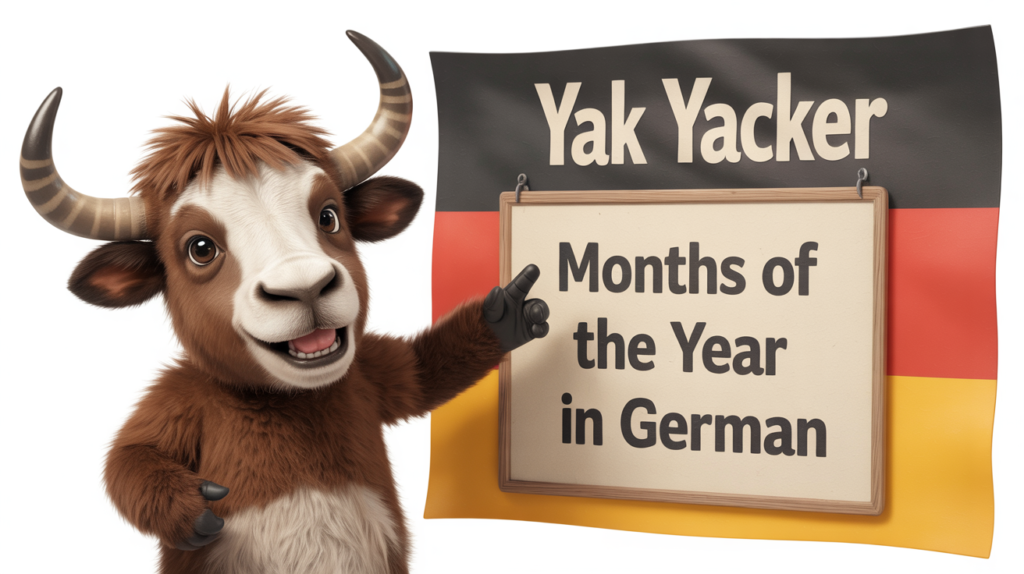
The good news? German months are wonderfully straightforward, super similar to English, and perfect for building your first calendar-friendly sentences. Let’s make them stick in your head without any stress.
Quick Primer
- German months are not capitalised by grammar rules… but in practice they are capitalised because all nouns are capitalised in German.
- They’re mostly recognisable cousins of English months.
- Pronunciation is simple once you know where the stress falls.
The 12 Months With IPA & English Meaning
| German | IPA | English |
| Januar | /ˈjaːnu̯aʁ/ | January |
| Februar | /ˈfeːbʁu̯aʁ/ | February |
| März | /mɛʁt͡s/ | March |
| April | /aˈpʁɪl/ | April |
| Mai | /maɪ̯/ | May |
| Juni | /ˈjuːni/ | June |
| Juli | /ˈjuːli/ | July |
| August | /aʊ̯ˈɡʊst/ | August |
| September | /zɛpˈtɛmbɐ/ | September |
| Oktober | /ɔkˈtoːbɐ/ | October |
| November | /noˈvɛmbɐ/ | November |
| Dezember | /deˈt͡sɛmbɐ/ | December |
Tiny note:
In Austria, you sometimes hear Jänner /ˈjɛnɐ/ instead of Januar.
Useful Patterns With Months
Saying “in January / in March / in December”
Just use im + month (short for in dem).
- im Januar – in January
- im März – in March
- im Dezember – in December
Saying “in June 2025”
German order: month + year (no comma)
- im Juni 2025
/in ˈjuːni tsvant͡sɪçˈfʏnfʊnf/
Talking About Birthdays
- Ich habe im Mai Geburtstag.
/ɪç ˈhaːbə ɪm maɪ̯ ɡəˈbʊʁtstaːk/
My birthday is in May.
Talking About Travel
- Ich fahre im Oktober nach Berlin.
/ɪç ˈfaːʁə ɪm ɔkˈtoːbɐ naːx bɛʁˈliːn/
I’m going to Berlin in October.
Region Notes
- In Germany, the list above is standard everywhere.
- Austria may use Jänner for January.
- Switzerland pronounces months with a slightly softer r, but spelling stays the same.
Mini Dialogues
Dialogue 1 – Planning A Trip
Wann fliegst du nach Deutschland?
/van fliːkst duː naːx ˈdɔʏ̯tʃlant/
When are you flying to Germany?
Im April.
/ɪm aˈpʁɪl/
In April.
Cool, da ist das Wetter schon besser.
/kuːl daː ɪst das ˈvɛtɐ ʃoːn ˈbɛsɐ/
Nice, the weather’s already better then.
Dialogue 2 – Birthday Talk
Wann hast du Geburtstag?
/van hast duː ɡəˈbʊʁtstaːk/
When’s your birthday?
Im Dezember.
/ɪm deˈt͡sɛmbɐ/
In December.
Oh, Winterkind!
/oː ˈvɪntɐkɪnt/
Oh, a winter baby!
Dialogue 3 – Making Reservations
Wir brauchen einen Tisch für Juni.
/viːɐ̯ ˈbʁaʊ̯xn̩ ˈaɪ̯nən tɪʃ fyːɐ̯ ˈjuːni/
We need a table for June.
Im Juni sind wir schon voll. Wie wäre Juli?
/ɪm ˈjuːni zɪnt viːɐ̯ ʃoːn fɔl viː ˈvɛːʁə ˈjuːli/
We’re full in June. How about July?
Quick Reference
| Phrase | IPA | Meaning |
| im Januar | /ɪm ˈjaːnu̯aʁ/ | in January |
| im Mai | /ɪm maɪ̯/ | in May |
| im Juli | /ɪm ˈjuːli/ | in July |
| im Oktober | /ɪm ɔkˈtoːbɐ/ | in October |
| im Dezember | /ɪm deˈt͡sɛmbɐ/ | in December |
| Wann hast du Geburtstag? | /van hast duː ɡəˈbʊʁtstaːk/ | When is your birthday? |
| Ich habe im Mai Geburtstag. | /ɪç ˈhaːbə ɪm maɪ̯ ɡəˈbʊʁtstaːk/ | My birthday is in May. |
Five-Minute Practice Plan
- Say all 12 months aloud once slowly.
- Try grouping them into seasons.
- Say 3 sentences using im + month.
- Whisper your birthday, then shout a friend’s birthday (pronunciation training = dramatic training).
- Shadow Dialogue 1 once.
- Write one micro-journal line: Im ___ mache ich ___.
A Year Of German, One Month At A Time
Once the months feel natural, you suddenly understand birthdays, plans, weather talk, holidays, opening hours—and German calendars stop looking like secret codes. Keep repeating them in real sentences, and soon your brain will think in Januar… Februar… März… without even trying.