When I first moved to Munich, a friendly neighbour tried to teach me the word „Eichhörnchen“ /ˈaɪ̯çhœʁnçən/.
I tried. I truly did. What came out of my yak mouth sounded like a dying accordion.
She laughed so hard she had to lean on a mailbox. I laughed too—partly at the absurdity, partly because my tongue had apparently quit its job.
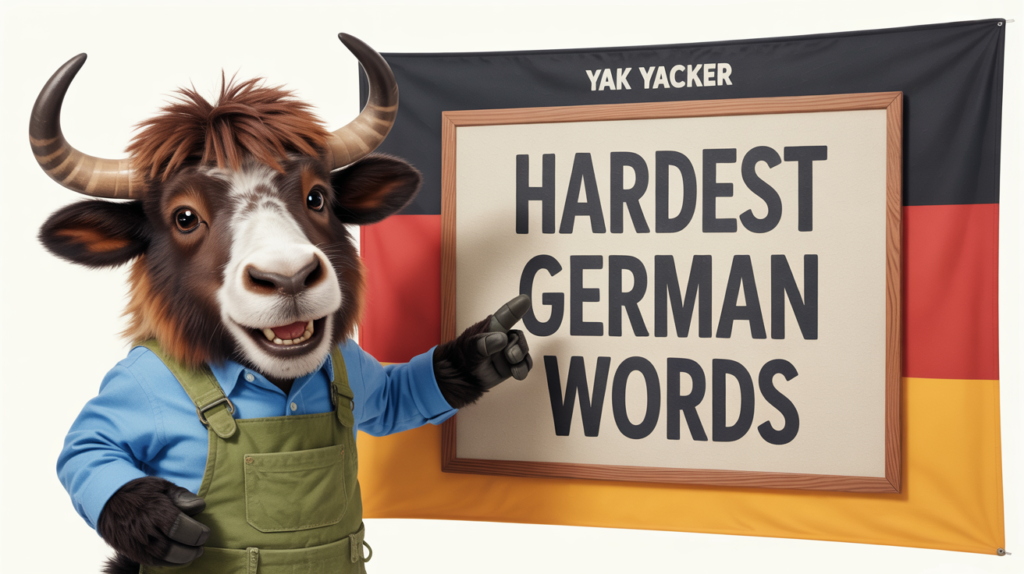
German is full of beautiful, impossible, tongue-bending words. But once you learn the patterns behind them, they stop being enemies and start becoming… well, slightly friendlier enemies.
Let’s tackle the most notorious pronunciation and spelling monsters.
Quick Primer
German “hard words” usually fall into a few categories:
- Words with the „ch“ twins – /x/ vs. /ç/
- Words with stacked consonants – pf, sp, st
- Long compound words – the famous German hobby
- Vowel tricks – ä, ö, ü
- Words that look friendly but betray you
You don’t need perfection—just small, consistent mouth movements and confidence. Really.
The „CH“ Monsters (The Twin Dragons)
German has two different ch sounds. Learn these and half the battle is won.
1. The soft /ç/ (“cheek-smile hiss”)
Happens after i, e, ä, ö, ü.
| German word | IPA | Meaning |
| ich | /ɪç/ | I |
| Milchen | /ˈmɪlçən/ | milks (plural) |
| Mädchen | /ˈmɛːtçən/ | girl |
| Löcher | /ˈlœçɐ/ | holes |
Sample pattern:
- Ich sehe dich.
/ɪç ˈzeːə dɪç/
I see you.
2. The harsh /x/ (“back-of-throat scrape”)
After a, o, u, au.
| German word | IPA | Meaning |
| Buch | /buːx/ | book |
| auch | /aʊ̯x/ | also |
| machen | /ˈmaxən/ | to do/make |
| Loch | /lɔx/ | hole |
Try both:
- Ich mache es.
/ɪç ˈmaxə ɛs/
I’m doing it.
Pf, Sp, St: The Consonant Clusters That Ambush You
pf /pf/
Just pronounce p and f at the same time—gently.
| German | IPA | English |
| Pferd | /pfeːʁt/ | horse |
| Pfanne | /ˈpfanə/ | pan |
| Pfund | /pfʊnt/ | pound |
Practice whispering pfff—same muscle movement.
sp & st (at the beginning!)
In Standard German, sp → /ʃp/ and st → /ʃt/ at the beginning of words.
| Word | IPA | Meaning |
| Spaß | /ʃpaːs/ | fun |
| Spiel | /ʃpiːl/ | game |
| Straße | /ˈʃtʁaːsə/ | street |
| stehen | /ˈʃteːən/ | to stand |
So Stuttgart is /ˈʃtʊtɡaʁt/, not stut-gart.
The Umlaut Triforce (ä, ö, ü)
If your lips don’t feel silly, you’re not doing umlauts.
ä /ɛ/ or /eː/
| Word | IPA | Meaning |
| spät | /ʃpeːt/ | late |
| Männer | /ˈmɛnɐ/ | men |
ö /øː/ or /œ/
Think of saying “eh” while rounding your lips.
| Word | IPA | Meaning |
| schön | /ʃøːn/ | beautiful |
| können | /ˈkœnən/ | can, to be able to |
ü /yː/ or /ʏ/
Make the English ee, then round your lips.
| Word | IPA | Meaning |
| über | /ˈyːbɐ/ | over, about |
| Grüß | /ɡʁyːs/ | greetings (root) |
Small mouth movements matter immensely here.
The Legend: Eichhörnchen /ˈaɪ̯çhœʁnçən/
The unofficial German fitness test.
Break it into parts:
- Eich → /aɪ̯ç/
- hörn → /hœʁn/
- chen → /çən/
Say them slowly… then try to survive the combo.
Meaning:
- Eichhörnchen — squirrel
A famously impossible creature to name.
The Other Trouble-Makers
1. Streichholzschächtelchen
/ˈʃtʁaɪ̯çˌhɔlt͡sˌʃɛçtl̩çən/
small matchbox
Because Germans love stacking nouns until your jaw falls off.
2. Zungenbrecher
/ˈt͡sʊŋənˌbʁɛçɐ/
tongue-twister
Appropriately named.
3. Frühstück
/ˈfʁyːʃtʏk/
breakfast
The evil combo of /fʁyː/ + /ʃt/.
4. Schwangerschaft
/ˈʃvaŋɐʃaft/
pregnancy
Looks straightforward, then the consonants jump you.
5. Entschuldigung
/ɛntˈʃʊldɪɡʊŋ/
sorry / excuse me
Not hard individually—just… long.
6. Quatsch
/kvat͡ʃ/
nonsense
Somehow feels like chewing on piano wires.
7. Fünfhundertfünfundfünfzig
/ˈfʏnfˌhʊndɐtˈfʏnʊntˈfʏnftsɪç/
555
A number designed by linguists who wanted revenge.
8. Wissenschaft
/ˈvɪsənʃaft/
science
Lots of hissy consonants.
9. Geschwindigkeit
/ɡəˈʃvɪndɪçkaɪ̯t/
speed
A marathon disguised as a word.
Region Notes
- Austria tends to soften some consonants—schwierig becomes a little rounder.
- Swiss Standard German simplifies some endings (they pronounce -ig as /ik/ more often).
- Compounds can vary, but the tricky core words remain the same everywhere.
If you master the ch, pf, sp/st, and umlauts, you’re golden across all regions.
Mini Dialogues
Dialogue 1 – The Legendary Squirrel
Kannst du „Eichhörnchen“ sagen?
/kanst duː ˈaɪ̯çhœʁnçən ˈzaːɡən/
Can you say “squirrel”?
Nein, unmöglich.
/naɪ̯n ʊnˈmøːklɪç/
No, impossible.
Doch, versuch’s mal.
/dɔx fɛɐ̯ˈzuːxs mal/
Come on, try it.
Eich… hör… DING!
/aɪ̯ç hœʁ dɪŋ/
Squir—THING!
Dialogue 2 – Breakfast Troubles
Was willst du frühstücken?
/vas vɪlst duː ˈfʁyːʃtʏkən/
What do you want for breakfast?
Brötchen, bitte.
/ˈbʁøːtçən ˈbɪtə/
Bread rolls, please.
Kannst du das nochmal sagen?
/kanst duː das ˈnɔxˌmaːl ˈzaːɡən/
Can you say that again?
Nein, mein Mund ist kaputt.
/naɪ̯n maɪ̯n mʊnt ɪst kaˈpʊt/
No, my mouth is broken.
Dialogue 3 – The Apology Marathon
Wie war das Wort?
/viː vaːɐ̯ das vɔʁt/
What was that word?
Entschuldigung.
/ɛntˈʃʊldɪɡʊŋ/
Sorry.
Das ist schwer.
/das ɪst ʃveːɐ̯/
That’s hard.
Ja, aber wichtig.
/jaː ˈaːbɐ ˈvɪçtɪç/
Yes, but important.
Quick Reference
| Word | IPA | Meaning |
| ich | /ɪç/ | I |
| Buch | /buːx/ | book |
| Spaß | /ʃpaːs/ | fun |
| Straße | /ˈʃtʁaːsə/ | street |
| schön | /ʃøːn/ | beautiful |
| über | /ˈyːbɐ/ | over/about |
| Frühstück | /ˈfʁyːʃtʏk/ | breakfast |
| Entschuldigung | /ɛntˈʃʊldɪɡʊŋ/ | sorry |
| Wissenschaft | /ˈvɪsənʃaft/ | science |
| Eichhörnchen | /ˈaɪ̯çhœʁnçən/ | squirrel |
Five-Minute Practice Plan
- Practice both ch sounds: ich /ɪç/ and Buch /buːx/.
- Whisper pfpfpfpf like a startled cat to loosen the pf sound.
- Say sp and st words with /ʃ/: Spiel, Straße, stehen.
- Do “umlaut drills”: ä-ö-ü in slow motion.
- Pick the top 3 hardest words above and say them three times each.
- Shadow Dialogue 1 (slowly). Your squirrel deserves it.
Your Mouth Doesn’t Hate You—It’s Just Learning German
German “hard words” look intimidating, but every monster has a pattern.
Once you tame the ch twins, umlauts, and consonant clusters, you’ll suddenly be able to pronounce words that used to scare you.
And somewhere out there, a German squirrel is cheering for you.