When I first moved to Germany, I thought my German was… not bad. I could talk about the environment, the school system, even the history of potatoes. Then a neighbor greeted me in the stairwell with a cheerful
« Na, alles klar? » /naː ˈaləs klaːɐ̯/ — “So, all good?”
My brain froze. I could explain the passive voice, but I could not answer the most basic small-talk question in the hallway. I smiled, panicked, and replied:
« Ja. Kartoffel. Danke. »
That’s when I understood: conversational German is not the same as textbook German. You don’t need big, complicated sentences. You need short, automatic phrases: greetings, reactions, little noises that keep conversations alive.
Let’s give you those essentials, so you can survive stairwells, bakeries, parties, and awkward elevator rides like a surprisingly social yak.
Quick Primer: How Conversational German Works
Before we jump into phrases, a few important ideas.
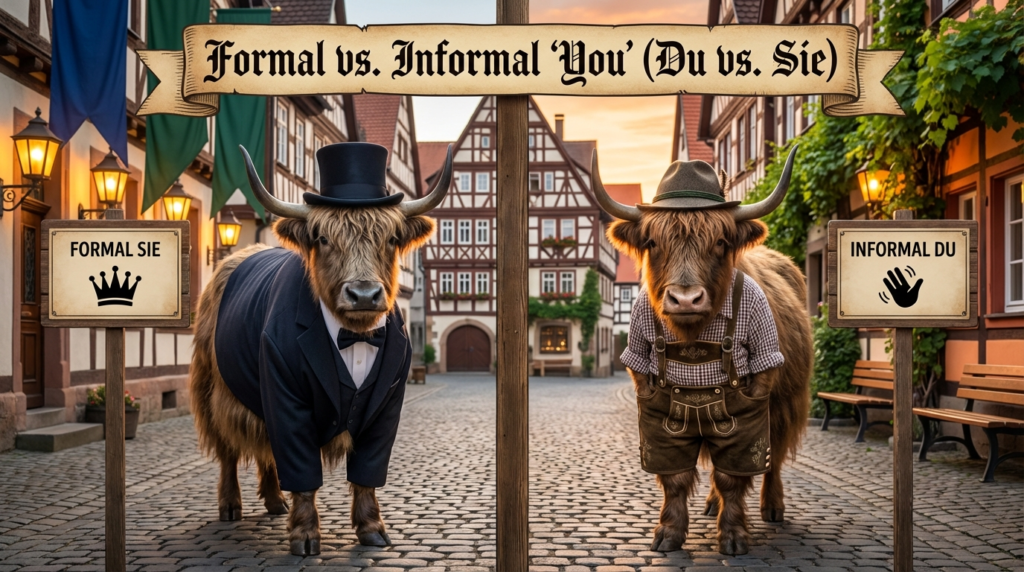
First, German has two you forms:
- du /duː/ — informal “you” (friends, kids, people your age in casual settings)
- Sie /ziː/ — formal “you” (older people, strangers, officials, many work situations)
Whenever you see a pair like:
- Wie geht es dir? /viː ɡeːt ɛs diːɐ̯/ — How are you? (informal)
- Wie geht es Ihnen? /viː ɡeːt ɛs ˈiːnən/ — How are you? (formal)
you’ll know: same meaning, different level of politeness.
Second, conversational German runs on chunks, not individual words:
- Alles klar? /ˈaləs klaːɐ̯/ — All good? / Okay?
- Kein Problem /kaɪ̯n pʁoˈbleːm/ — No problem
- Macht nichts /maxt nɪçts/ — It doesn’t matter
Third, you don’t need long sentences to sound natural. Short reactions like Genau /ɡəˈnaʊ̯/ — exactly, or Echt? /ɛçt/ — really? carry half of every conversation.
Let’s build your toolkit section by section.
Everyday Openers And Greetings
If you can start a conversation smoothly, everything feels easier.
Basic Greetings
- Hallo /ˈhalo/ — Hello
- Hi /haɪ̯/ — Hi
- Guten Morgen /ˈɡuːtən ˈmɔʁɡn̩/ — Good morning
- Guten Tag /ˈɡuːtən taːk/ — Good day / Hello
- Guten Abend /ˈɡuːtən ˈaːbənt/ — Good evening
Short, casual options:
- Morgen /ˈmɔʁɡn̩/ — Morning
- Tag /taːk/ — Day (used like “hi”)
Asking How Someone Is
Core options:
- Wie geht’s? /viː ɡeːts/ — How are you? / How’s it going?
- Wie geht es dir? /viː ɡeːt ɛs diːɐ̯/ — How are you? (informal)
- Wie geht es Ihnen? /viː ɡeːt ɛs ˈiːnən/ — How are you? (formal)
- Alles gut? /ˈaləs ɡuːt/ — Everything good?
- Na, wie geht’s? /naː viː ɡeːts/ — So, how’s it going?
Simple answers:
- Gut, danke. /ɡuːt ˈdaŋkə/ — Good, thanks.
- Sehr gut. /zeːɐ̯ ɡuːt/ — Very good.
- Ganz gut. /ɡants ɡuːt/ — Pretty good.
- Es geht. /ɛs ɡeːt/ — I’m okay / so-so.
You can bounce the question back with:
- Und dir? /ʊnt diːɐ̯/ — And you? (informal)
- Und Ihnen? /ʊnt ˈiːnən/ — And you? (formal)
Small Talk Lifelines: Easy Things To Say
Conversational German is full of tiny comments that show interest without long speeches.
Showing Interest
- Echt? /ɛçt/ — Really?
- Wirklich? /ˈvɪʁklɪç/ — Really? (a bit stronger)
- Ach so! /ax zoː/ — Oh, I see!
- Interessant. /ɪntɛʁɛˈsant/ — Interesting.
- Oh, cool. /oː kuːl/ — Oh, cool.
Agreeing
- Ja, genau. /jaː ɡəˈnaʊ̯/ — Yes, exactly.
- Stimmt. /ʃtɪmt/ — That’s right. / True.
- Genau so. /ɡəˈnaʊ̯ zoː/ — Exactly like that.
- Auf jeden Fall. /aʊ̯f ˈjeːdən fal/ — Definitely / For sure.
Softening Opinions
These help you sound polite, not aggressive.
- Ich glaube… /ɪç ˈɡlaʊ̯bə/ — I think…
- Ich finde… /ɪç ˈfɪndə/ — I find / I think…
- Vielleicht /fiːˈlaɪ̯çt/ — Maybe.
- Ein bisschen /aɪ̯n ˈbɪsçən/ — A little bit.
For example:
Ich glaube, das ist ein bisschen teuer. /ɪç ˈɡlaʊ̯bə das ɪst aɪ̯n ˈbɪsçən ˈtɔɪ̯ɐ/
I think that’s a bit expensive.
Keeping Conversations Going: Questions That Work Everywhere
If you know a few easy questions, you can keep people talking while your brain catches up.
Simple Follow-Up Questions
- Und du? /ʊnt duː/ — And you? (informal)
- Und Sie? /ʊnt ziː/ — And you? (formal)
- Und sonst so? /ʊnt zɔnst zoː/ — And what else? / How’s life?
- Was machst du so? /vas maxt duː zoː/ — So what are you up to?
- Was arbeitest du? /vas ˈaʁbaɪ̯təst duː/ — What do you do for work?
- Wo wohnst du? /voː voːnst duː/ — Where do you live?
Formal versions:
- Was machen Sie beruflich? /vas ˈmaxən ziː bəˈʁuːflɪç/ — What do you do for a living?
- Wo wohnen Sie? /voː ˈvoːnən ziː/ — Where do you live?
Topic Switchers
These rescue you when a topic dies.
- Und am Wochenende? /ʊnt am ˈvɔxn̩ˌɛndə/ — And on the weekend?
- Reist du gern? /ʁaɪ̯st duː ɡɛʁn/ — Do you like travelling?
- Magst du…? /makst duː/ — Do you like…?
- Hast du Hobbys? /hast duː ˈhɔbiːs/ — Do you have hobbies?
Even if your German is basic, these questions make the other person talk more, which buys you time.
Reacting And Showing Emotion
Germans use short emotional reactions all the time. Learning a few gives your speech a big boost.
Positive Reactions
- Super! /ˈzuːpɐ/ — Great!
- Toll! /tɔl/ — Awesome!
- Cool! /kuːl/ — Cool!
- Wie schön! /viː ʃøːn/ — How nice!
- Das freut mich. /das fʁɔɪ̯t mɪç/ — I’m glad to hear that.
Negative Reactions
- Oh nein! /oː naɪ̯n/ — Oh no!
- Wie schade. /viː ˈʃaːdə/ — What a pity.
- Das ist blöd. /das ɪst bløːt/ — That sucks / That’s stupid.
- Echt nicht? /ɛçt nɪçt/ — Really not?
Little Fillers To Sound Natural
- Ähm… /ɛm/ — Um…
- Also… /ˈalzɔ/ — So… / Well…
- Naja… /naˈja/ — Well… / You know…
Used in moderation, these make you sound more like a real human and less like a vocabulary list.
Fixing Mistakes On The Fly
The most powerful conversational skill is not “speaking perfectly”. It’s repairing when things go wrong.
Asking People To Repeat Or Slow Down
- Wie bitte? /ˈviː ˈbɪtə/ — Pardon? / What was that?
- Noch einmal, bitte. /nɔx ˈaɪ̯nmal ˈbɪtə/ — Once more, please.
- Langsamer, bitte. /ˈlaŋzamɐ ˈbɪtə/ — Slower, please.
- Können Sie das wiederholen? /ˈkœnən ziː das ˈviːdɐˌhoːlən/ — Can you repeat that? (formal)
- Kannst du das wiederholen? /kanst duː das ˈviːdɐˌhoːlən/ — Can you repeat that? (informal)
Saying You Don’t Understand (Yet)
- Ich verstehe nicht. /ɪç fɛɐ̯ˈʃteːə nɪçt/ — I don’t understand.
- Ich habe nicht verstanden. /ɪç ˈhaːbə nɪçt fɛɐ̯ˈʃtandən/ — I didn’t understand.
- Was bedeutet das? /vas bəˈdɔɪ̯tət das/ — What does that mean?
You can soften it:
- Mein Deutsch ist noch nicht so gut. /maɪ̯n dɔʏ̯tʃ ɪst nɔx nɪçt zoː ɡuːt/ — My German isn’t so good yet.
Most people become nicer when they hear this, not stricter.
Fixing Your Own Sentence
You don’t need to start from zero every time.
- Nein, ich meine… /naɪ̯n ɪç ˈmaɪ̯nə/ — No, I mean…
- Oder besser: … /ˈoːdɐ ˈbɛsɐ/ — Or better: …
For example:
Ich arbeite in Schule – nein, ich meine: in einer Schule.
I work in school – no, I mean: in a school.
That kind of self-correction is extremely normal.
Ending Conversations Politely
Knowing how to exit a conversation is just as important as starting one.
Simple Goodbyes
- Tschüss /tʃʏs/ — Bye
- Ciao /tʃaʊ̯/ — Bye (very common)
- Bis später /bɪs ˈʃpɛːtɐ/ — See you later
- Bis morgen /bɪs ˈmɔʁɡn̩/ — See you tomorrow
- Schönen Abend. /ˈʃøːnən ˈaːbənt/ — Have a nice evening.
- Schönes Wochenende. /ˈʃøːnəs ˈvɔxn̩ˌɛndə/ — Have a nice weekend.
You can combine:
Tschüss, schönen Abend! /tʃʏs ˈʃøːnən ˈaːbənt/
Bye, have a nice evening!
Polite Conversation Closers
- War schön, mit dir zu reden. /vaːʁ ʃøːn mɪt diːɐ̯ tsuː ˈʁeːdən/ — It was nice talking to you.
- Wir schreiben. /viːɐ̯ ˈʃʁaɪ̯bn̩/ — We’ll text / stay in touch.
- Wir sehen uns. /viːɐ̯ ˈzeːən ʊns/ — See you.
These help you exit without sounding cold.
Region Notes
The good news: most phrases above work across Germany, Austria, and Switzerland.
You might also hear:
- Servus /ˈsɛʁvʊs/ — Hi / Bye (South Germany, Austria)
- Grüß dich /ɡʁyːs dɪç/ — Hi (South, friendly, informal)
- Grüezi /ˈɡʁyət͡si/ — Hello (Swiss German areas)
As a learner, you’re absolutely safe with:
- Hallo
- Guten Morgen / Guten Tag / Guten Abend
- Tschüss
- Wie geht’s?
Those work everywhere, even if locals sometimes use dialect with each other.
Mini Dialogues
Dialogue 1 – At A Party
Hallo, ich bin Alex.
/ˈhalo ɪç bɪn ˈalɛks/
Hi, I’m Alex.
Hi, ich heiße Nina.
/haɪ̯ ɪç ˈhaɪ̯sə ˈniːna/
Hi, my name is Nina.
Freut mich. Wie geht’s?
/fʁɔɪ̯t mɪç viː ɡeːts/
Nice to meet you. How are you?
Ganz gut, danke. Und dir?
/ɡants ɡuːt ˈdaŋkə ʊnt diːɐ̯/
Pretty good, thanks. And you?
Auch gut. Bist du aus Berlin?
/aʊ̯x ɡuːt bɪst duː aʊ̯s bɛʁˈliːn/
Also good. Are you from Berlin?
Nein, ich komme aus Hamburg.
/naɪ̯n ɪç ˈkɔmə aʊ̯s ˈhambʊʁk/
No, I’m from Hamburg.
Dialogue 2 – At A Café
Entschuldigung, ist hier noch frei?
/ɛntˈʃʊldɪɡʊŋ ɪst hiːɐ̯ nɔx fʁaɪ̯/
Excuse me, is this seat free?
Ja, klar.
/jaː klaːɐ̯/
Yes, sure.
Danke.
/ˈdaŋkə/
Thanks.
Kein Problem.
/kaɪ̯n pʁoˈbleːm/
No problem.
Arbeitest du hier in der Nähe?
/ˈaʁbaɪ̯təst duː hiːɐ̯ ɪn deːɐ̯ ˈneːə/
Do you work nearby?
Ja, im Büro um die Ecke.
/jaː ɪm byˈʁoː ʊm diː ˈɛkə/
Yes, in an office around the corner.
Dialogue 3 – Fixing A Misunderstanding
Wie spät ist es?
/viː ʃpɛːt ɪst ɛs/
What time is it?
(They answer too fast.)
Wie bitte? Noch einmal, bitte.
/viː ˈbɪtə nɔx ˈaɪ̯nmal ˈbɪtə/
Sorry? Once more, please.
Es ist halb acht.
/ɛs ɪst halp axt/
It’s half past seven.
Ah, danke. Mein Deutsch ist noch nicht so gut.
/aː daŋkə maɪ̯n dɔʏ̯tʃ ɪst nɔx nɪçt zoː ɡuːt/
Ah, thanks. My German isn’t so good yet.
Doch, ist gut!
/dɔx ɪst ɡuːt/
Yes it is, it’s good!
Danke, sehr nett.
/ˈdaŋkə zeːɐ̯ nɛt/
Thanks, very kind.
Quick Reference
Here’s a compact snapshot of some of the most useful conversational chunks.
| Function | German | IPA | English |
| Greeting | Hallo | /ˈhalo/ | Hello |
| How are you? | Wie geht’s? | /viː ɡeːts/ | How are you? |
| I’m good | Gut, danke. | /ɡuːt ˈdaŋkə/ | I’m good, thanks. |
| And you? (informal) | Und dir? | /ʊnt diːɐ̯/ | And you? |
| Excuse me | Entschuldigung | /ɛntˈʃʊldɪɡʊŋ/ | Excuse me / Sorry |
| I don’t understand | Ich verstehe nicht. | /ɪç fɛɐ̯ˈʃteːə nɪçt/ | I don’t understand. |
| Once more, please | Noch einmal, bitte. | /nɔx ˈaɪ̯nmal ˈbɪtə/ | Once more, please. |
| Really? | Echt? | /ɛçt/ | Really? |
| Exactly | Genau. | /ɡəˈnaʊ̯/ | Exactly. |
| No problem | Kein Problem. | /kaɪ̯n pʁoˈbleːm/ | No problem. |
| Have fun | Viel Spaß. | /fiːl ʃpaːs/ | Have fun. |
| Bye | Tschüss | /tʃʏs/ | Bye |
| See you tomorrow | Bis morgen. | /bɪs ˈmɔʁɡn̩/ | See you tomorrow. |
Five-Minute Practice Plan
Do this little routine and your conversational German will get smoother, fast.
- Greeting Chain (1 minute)
Say out loud, like you’re meeting people at a party:
Hallo. Guten Morgen. Guten Tag. Guten Abend. Wie geht’s? Gut, danke. Und dir? - Reaction Drill (1 minute)
Alternate these like quick-fire responses:
Echt? – Ach so. – Genau. – Stimmt. – Wie schade. – Super! - Rescue Phrases (1 minute)
Repeat:
Wie bitte? Noch einmal, bitte. Langsamer, bitte. Ich verstehe nicht. Was bedeutet das? - Mini Conversation (1–2 minutes)
Play both roles from Dialogue 1 or 2. Speak it slowly once. Then again faster. Try once with no text if you can. - Goodbye Carousel (30–60 seconds)
Practice closing:
Tschüss. Bis später. Bis morgen. Schönen Abend. Schönes Wochenende. War schön, mit dir zu reden.
From Silent Yak To Chatty Stairwell Neighbor
Conversational German isn’t about perfect grammar or elegant essays. It’s about feeling confident with a handful of small, powerful phrases that come out of your mouth automatically when you need them.
With these essentials, you can now greet people, ask how they are, react, fix misunderstandings, and escape conversations politely—exactly what you need to stop being the silent foreigner in the corner and start being the yak who can actually chat back.