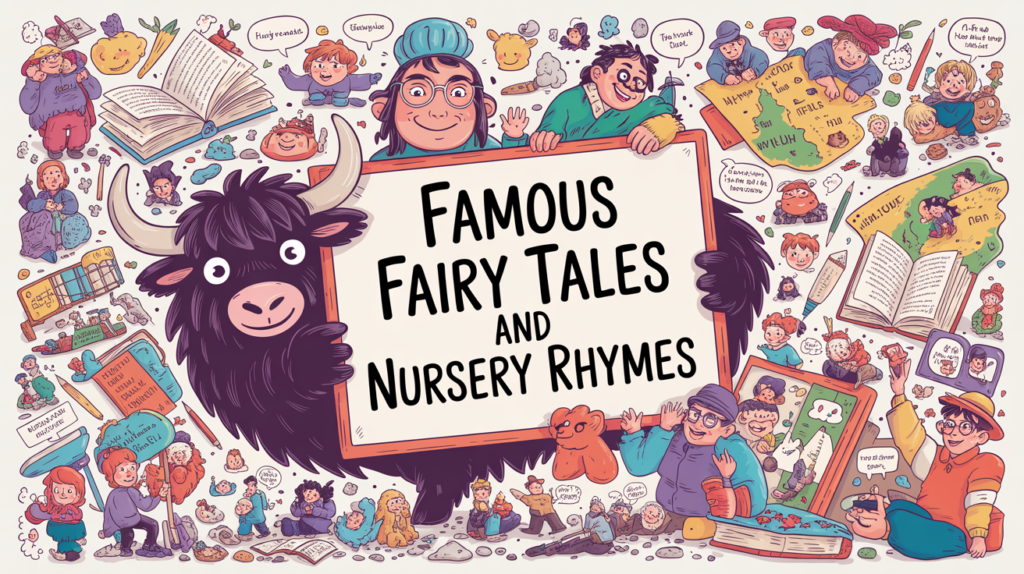
Fairy tales and nursery rhymes have been whispered, sung, acted out, and reinvented for centuries. They’re tiny time capsules packed with magic, danger, lessons, bravery, mischief, and sometimes questionable decision-making. Here are 25 of the most well-known stories of all time, each retold in friendly, modern Yak-style English so you can enjoy them, remember them, and maybe even understand them better than you did as a kid.
1. Cinderella
Cinderella tells the story of a gentle young woman forced to serve her stepfamily after the death of her parents. She lives in ashes and rags until a fairy godmother transforms her for a royal ball, where she meets a prince who immediately falls in love with her. The magic fades at midnight, leaving behind only a glass slipper—just enough evidence for the prince to begin a very determined shoe-based manhunt.
At its heart, Cinderella is about hope, kindness, and the belief that circumstances can change. The story has been retold everywhere—movies, books, stage plays—because almost everyone relates to the dream of being seen for who they truly are, not for how life has treated them.
2. Snow White
Snow White is a princess whose beauty enrages her jealous stepmother, the Queen. After ordering her huntsman to kill Snow White (which he refuses to do), the Queen disguises herself and poisons Snow White with a shiny apple. Snow White falls into a deep sleep until a prince discovers her, and love breaks the spell.
The story balances innocence and danger, showing how jealousy can twist a person into something monstrous. Snow White also introduced seven of the most iconic side characters in fairy-tale history, proving that even when life is dangerous, you can still survive with the help of unlikely friends.
3. Little Red Riding Hood
Little Red Riding Hood follows a young girl traveling through the forest to visit her grandmother, carrying a basket of food and too much trust. She meets a wolf who beats her to Grandma’s house, impersonates Grandma, and nearly succeeds in tricking Red—until a woodcutter arrives to save the day.
The story is a classic warning about talking to strangers and paying attention to your surroundings. It’s simple, dark, and strangely funny, especially the wolf trying to convince Red that his giant teeth are a normal grandmother feature.
4. Hansel and Gretel
Hansel and Gretel are siblings abandoned in the forest by parents who can’t afford to feed them. After wandering lost, they discover a house made of candy, only to be captured by a witch who plans to eat Hansel and force Gretel into servitude. Clever Gretel outwits the witch, pushes her into the oven, and frees them both.
This tale deals with hunger, fear, and courage. It’s a reminder that even in desperate situations, clever thinking and teamwork can save you. Also, it warns that free candy in the woods is usually a trap.
5. Goldilocks and the Three Bears
Goldilocks is a curious girl who breaks into the home of three bears while they’re out. She samples their porridge, tries their chairs, and eventually naps in their beds—all without permission. When the bears return, she wakes up, panics, and escapes before they can decide what to do.
This tale humorously explores boundaries and consequences. Goldilocks isn’t malicious—just impulsive—and the story shows how even innocent curiosity can create chaos if you don’t respect others’ space.
6. The Three Little Pigs
Three pigs build three homes: one of straw, one of sticks, and one of bricks. A hungry wolf arrives and blows down the first two, but fails to destroy the solid brick house. The two less-prepared pigs take shelter with their wiser sibling, and the wolf retreats in frustration.
This story highlights planning and preparation. It’s fun, rhythmic, and memorable, with a big bad wolf whose only real superpower is excellent lung capacity.
7. Jack and the Beanstalk
Jack trades his family’s cow for “magic beans,” disappoints his mother, and then watches the beans grow into a gigantic beanstalk reaching the clouds. At the top, he finds a giant who owns treasure, magical items, and a golden-egg-laying hen. After stealing these, Jack escapes by chopping down the beanstalk.
It’s a story about luck, bravery, and sometimes questionable ethics. Jack isn’t perfect, but he’s daring, and that bravery leads him out of poverty.
8. Sleeping Beauty
A cursed princess pricks her finger on a spinning wheel and falls into a century-long sleep. The entire castle sleeps with her, frozen in time behind a wall of thorns. Eventually, a prince discovers her, kisses her, and breaks the spell, waking everyone.
This tale is dreamy, romantic, and eerie. It explores fate, destiny, and the idea that some things—even curses—can be overcome with patience and heart.
9. Beauty and the Beast
A father steals a rose from a Beast’s castle and must send his daughter, Belle, in his place. Belle discovers that the Beast is frightening but gentle, and their friendship slowly transforms into love. This love breaks the curse on the Beast, revealing him as a prince.
It’s a tale about seeing beyond appearances and valuing kindness. It teaches that compassion can change not just lives but entire destinies.
10. Rapunzel
Rapunzel is a girl with magically long hair locked in a tower by a witch. A prince hears her singing, climbs her hair to visit her, and eventually helps her escape. The witch tries to stop them, but love reunites Rapunzel and the prince in the end.
The story shows the power of hope and resilience. Rapunzel grows up isolated yet remains gentle and strong, proving that even the tallest tower can’t contain a determined spirit.
11. The Frog Prince
A spoiled princess drops her golden ball into a pond, and a frog retrieves it—but demands she keep her promise to befriend him. After reluctantly accepting him, the frog transforms into a prince, breaking a curse.
This tale focuses on promises, kindness, and transformation. It’s charming and teaches that real magic often appears when you keep your word.
12. Rumpelstiltskin
A miller brags that his daughter can spin straw into gold. A greedy king traps her until she performs the impossible. A strange little man, Rumpelstiltskin, helps her—at a price. When she becomes queen, he demands her firstborn child unless she guesses his name, which she ultimately discovers and uses to break the deal.
It’s a story about desperation, bargains, and cunning. And it introduces one of the best “gotcha” endings in fairy-tale history.
13. The Gingerbread Man
A Gingerbread Man magically comes to life and escapes from everyone who tries to eat him, chanting “Run, run, as fast as you can!” Eventually he trusts a fox to help him cross a river, and the fox eats him.
It’s a cautionary tale about trust, cleverness, and knowing when someone’s smile is suspiciously wide.
14. The Little Mermaid
A mermaid longs to live on land after falling in love with a human prince. She makes a dangerous trade—her voice for legs—and tries to win his heart. The original story is tragic, but modern versions often soften the ending.
This tale explores longing, sacrifice, and identity. It reminds us that love can be powerful, but choices always have consequences.
15. The Ugly Duckling
A strange gray “duckling” is mocked for looking different. After suffering loneliness and rejection, he grows into a beautiful swan and finally finds belonging.
It’s a moving story about transformation, self-acceptance, and discovering your true place—even if it takes time.
16. Humpty Dumpty
Humpty Dumpty is an egg-shaped character who falls off a wall and cannot be repaired. “All the king’s horses and all the king’s men” fail to put him back together again.
This rhyme is short but powerful. It’s a reminder that some mistakes can’t be undone, and that even small, silly stories can hold surprisingly deep meaning.
17. The Boy Who Cried Wolf
A shepherd repeatedly lies about a wolf attacking his sheep. When a real wolf appears, nobody believes him, and disaster follows.
This story teaches honesty and how trust can be lost quicker than it’s gained. It’s one of the clearest moral lessons in children’s literature.
18. The Pied Piper of Hamelin
A mysterious piper saves a town from a rat infestation using magical music, but the townspeople refuse to pay him. In revenge, the Piper plays again and leads their children away forever.
The tale warns against breaking promises and highlights how greed can destroy entire communities.
19. Little Bo-Peep
Little Bo-Peep is a shepherdess who loses her sheep and worries about them wandering away. Eventually they return, “wagging their tails behind them.”
It’s a gentle rhyme about worry, responsibility, and the hope that lost things—and lost sheep—will someday return.
20. Little Miss Muffet
Miss Muffet sits eating curds and whey when a spider frightens her away. That’s the whole rhyme, yet its rhythm and simplicity made it unforgettable for generations.
This nursery rhyme captures the timeless struggle between innocent snack-eating and unexpected creepy-crawly interruptions.
21. Old Mother Hubbard
Old Mother Hubbard tries to fetch a bone for her dog, but every time she checks the cupboard, it’s empty. The rhyme continues with humorous misadventures involving the clever dog.
It’s a playful story showing how short, silly verses can create entire worlds of imagination with just a few lines.
22. Hickory Dickory Dock
A mouse climbs a clock, the clock strikes one, and the mouse runs down—though later versions add more numbers and chaos.
This rhyme teaches rhythm, counting, and the fascinating idea that mice are apparently excellent time-keepers.
23. Mary Had a Little Lamb
Mary brings her lamb to school, causing a cute disruption in class. Everyone wonders why the lamb follows Mary everywhere, and the rhyme suggests it’s because Mary loved it deeply.
It’s a sweet and cozy rhyme that shows how affection creates strong attachments—even between people and sheep.
24. Jack and Jill
Jack and Jill go up a hill to fetch water, Jack falls and injures himself, and Jill tumbles after. The rhyme is simple, rhythmic, and strangely memorable.
Many interpretations exist, but the rhyme mainly survives because of its playful beat, making it easy to recite and hard to forget.
25. Baa Baa Black Sheep
This rhyme asks whether the black sheep has any wool, and the sheep answers that it has enough for the master, the dame, and the little boy who lives down the lane.
It has been recited for centuries and teaches rhythm, counting, and the idea of sharing—even if the sharing system feels oddly formal.
26. The Princess and the Pea
A prince searches endlessly for a “real” princess but can never be sure who’s genuine. One rainy night, a young woman arrives at the castle, soaked and exhausted, claiming to be a princess. The queen tests her by placing a pea under twenty mattresses. Despite all the layers, the girl barely sleeps because the tiny pea causes such discomfort.
The prince finally believes she’s a true princess—after all, only someone extraordinarily sensitive could feel a single pea under all that bedding. The story humorously shows how strange royalty standards can be, while also celebrating the idea that real qualities sometimes show themselves in unusual ways.
27. Thumbelina
Thumbelina is a tiny girl born from a flower. Despite her size, she faces enormous challenges: being kidnapped by a toad, befriending field creatures, and rejecting marriage proposals from various insects and animals. Eventually, she finds a place where she truly belongs—and a prince her own size.
Thumbelina’s journey is about courage and belonging. Even though she’s physically small, her spirit is large, proving that bravery isn’t measured in inches.
28. The Emperor’s New Clothes
Two con artists convince a vain emperor that they can weave magical cloth invisible to anyone unfit for their position. Not wanting to appear incompetent, everyone—including the emperor—pretends to see the nonexistent outfit. During a parade, a child finally shouts the truth: the emperor is wearing nothing at all.
The story exposes how pride and fear of judgment make people believe the unbelievable. It’s still one of the most famous metaphors for honesty and social pressure today.
29. The Bremen Town Musicians
A donkey, dog, cat, and rooster—all aging and unwanted—decide to run away together to become musicians in Bremen. On the way, they scare off a group of robbers by stacking themselves up and making a terrifying racket. The animals settle into the robbers’ abandoned house and live happily together.
This tale celebrates teamwork, second chances, and the idea that even when society gives up on you, you can create a new life with the right friends.
30. The Twelve Dancing Princesses
A king’s twelve daughters mysteriously wear out their shoes every night, even though their bedroom door stays locked. Many try to solve the mystery, but only a clever soldier succeeds by following them through a hidden passage into an underground world where they dance all night with twelve princes.
The story mixes magic, mystery, and determination. It suggests that curiosity—combined with patience—can reveal secret worlds hidden in plain sight.
31. The Velveteen Rabbit
A stuffed rabbit longs to become real. Through the love of a child, he experiences joy, fear, sickness, and devotion. After the boy falls ill, the rabbit is discarded for health reasons, but a fairy transforms him into a real rabbit because of his loving heart.
This moving tale explores love, loyalty, and the transformation that kindness can bring. It’s a tear-jerker but a beautiful reminder that love leaves lasting marks.
32. The Snow Queen
A powerful queen of ice kidnaps a boy named Kai, whose heart has been frozen by a magic shard. His best friend Gerda travels across dangerous lands to rescue him, driven purely by love and loyalty. Eventually, Gerda’s warm tears melt the ice in Kai’s heart and break the spell.
The story is grand, complex, and filled with adventure. It teaches that love—especially friendship—can defeat even the coldest magic.
33. The Pied Piper (Nursery Rhyme Version)
In rhyme form, the Pied Piper is portrayed simply as a magical figure who plays enchanting music that leads rats (and sometimes children) away. Shorter and more playful than the full tale, the rhyme captures the hypnotic charm of music and mystery.
Its rhythm and imagery stick in your mind, reminding you that music can lead you places… sometimes unexpectedly.
34. Hey Diddle Diddle
In this surreal nursery rhyme, a cow jumps over the moon, a little dog laughs, a dish runs away with a spoon, and absolutely nothing makes logical sense. But that’s the point—the rhyme is pure imagination.
Children adore it because it sounds like a dream world where the rules don’t apply. Adults secretly love it too because it’s a reminder that nonsense can be delightful.
35. The Goose That Laid the Golden Eggs
A farmer discovers his goose lays a solid gold egg every day. Greed takes over, and he kills the goose, hoping to get all the gold at once—only to find nothing inside.
The tale offers one of the clearest lessons in literature: greed destroys the very thing that brings fortune. The story remains timeless because humans keep making the same mistake.
36. The Tortoise and the Hare
A fast but arrogant hare races a slow, determined tortoise. Confident he’ll win easily, the hare naps mid-race. The tortoise, steady and persistent, reaches the finish line first.
This fable turns the idea of speed on its head. Slow and steady may actually win the race—and overconfidence can stop you in your tracks.
37. The Ant and the Grasshopper
All summer, the hardworking ant stores food while the carefree grasshopper sings and relaxes. When winter comes, the grasshopper finds himself hungry and cold, while the ant is safe and well-fed.
The story emphasizes preparation, responsibility, and the idea that fun is great—but not at the cost of your future.
38. The Fox and the Grapes
A fox tries to reach a bunch of grapes hanging high on a vine. After failing, he walks away saying they were probably sour anyway.
This tale gave birth to the phrase “sour grapes,” a perfect description of pretending you never wanted something because you couldn’t get it.
39. Old King Cole
Old King Cole is described as a merry king who enjoys pipe music and calls for his musicians to entertain him. The rhyme paints him as cheerful, lively, and always ready for a tune.
It’s a short, upbeat rhyme reminding us that music, laughter, and simple pleasures can brighten any kingdom.
40. The Shoemaker and the Elves
A poor shoemaker wakes up each morning to find beautiful shoes mysteriously crafted while he sleeps. He eventually discovers that elves are helping him out of kindness, and he and his wife make them clothes as thanks.
It’s a gentle tale about generosity, gratitude, and how kindness often comes back to you in unexpected ways.
41. Puss in Boots
A miller’s youngest son inherits nothing but a clever cat. The cat wears boots, tricks nobles, outwits a giant, and eventually helps his master rise from poverty to nobility.
This story celebrates wit and creativity—Puss succeeds not through force but through charm and smart planning.
42. The Red Shoes
A girl becomes obsessed with a pair of beautiful red shoes. After wearing them inappropriately, she falls under a curse that forces her to dance endlessly until she learns humility and repentance.
It’s a dramatic tale warning about vanity and obsession. Despite the darkness, it remains iconic because of its haunting symbolism.
43. The Little Match Girl
A poor girl tries to sell matches on a freezing night. She lights them one by one to stay warm, seeing comforting visions before peacefully passing away and being carried to a better world.
It’s one of the most emotional fairy tales ever written, showing hardship, compassion, and the hope that exists beyond suffering.
44. Rock-a-Bye Baby
This lullaby describes a baby in a cradle perched high in a treetop. When the wind blows, the cradle falls—yet the rhyme is meant to soothe babies to sleep.
It’s oddly suspenseful, but its rhythm and melody have soothed children for generations. It’s a perfect example of how nursery rhymes mix sweetness with shadows.
45. Three Blind Mice
Three mice run after a farmer’s wife, only to encounter trouble due to their blindness and mischief. The rhyme’s playful rhythm hides surprisingly dark undertones.
Children love its sing-song quality, while adults quietly wonder why so many nursery rhymes involve danger.
46. Rub-a-Dub-Dub
This rhyme describes three men in a tub—a butcher, a baker, and a candlestick-maker—somehow all fitting in together. Their professions make the rhyme rhythmic and quirky.
It’s whimsical, silly, and catchy—the kind of rhyme that sticks in your mind without needing deeper meaning.
47. The Owl and the Pussycat
This poem tells of an owl and a cat who sail away together, get married, and celebrate their love in a strange and charming world of nonsense.
It’s a whimsical celebration of imagination, suggesting that love can bloom anywhere—even between natural enemies.
48. Hans in Luck
Hans trades away valuable items for less valuable ones during his journey home—but stays cheerful through every exchange. Eventually he ends up with nothing but feels perfectly satisfied.
The tale explores happiness, contentment, and the idea that wealth doesn’t always equal joy. Hans is either very wise or very naïve—but undeniably happy.
49. The Elves and the Shoemaker (Nursery Rhyme Version)
A simplified rhyme version summarizes the elves’ kindness in a catchy, memorable verse. It focuses less on the story and more on the magical helpers who appear just in time.
Its charm is in how quickly it captures the spirit of generosity, making it perfect for little learners.
50. Pat-a-Cake
One of the oldest English nursery rhymes, Pat-a-Cake is all about rhythm and clapping, often used to entertain babies. It describes marking a cake with a letter and handing it off to be baked.
Its simple structure makes it ideal for early language learning. It shows how rhythm, repetition, and play can turn even baking instructions into a beloved childhood memory.
Yak’s Final Chewables
Fairy tales and nursery rhymes have survived for centuries because they carry something all of us recognize: courage, fear, hope, foolishness, magic, danger, love, and the occasional talking animal with questionable intentions. Whether it’s a girl climbing a tower of mattresses, a tortoise beating a hare, or a fox charming a gingerbread man into becoming lunch, each story holds a tiny truth about being human.
Some tales warn us, some comfort us, and some simply entertain us with joyful nonsense. But together, they build a shared cultural language—one that kids, adults, and even wandering yaks can understand. Keep exploring them. Keep retelling them. And if you ever feel lost in the forest of life, remember: every fairy tale has a path forward… even if it starts with breadcrumbs.