Days Of The Week In English
Learn Monday to Sunday, how to pronounce each day, how to use them in real American English, and how to stop writing things like in Monday. English can be dramatic. We can still win.
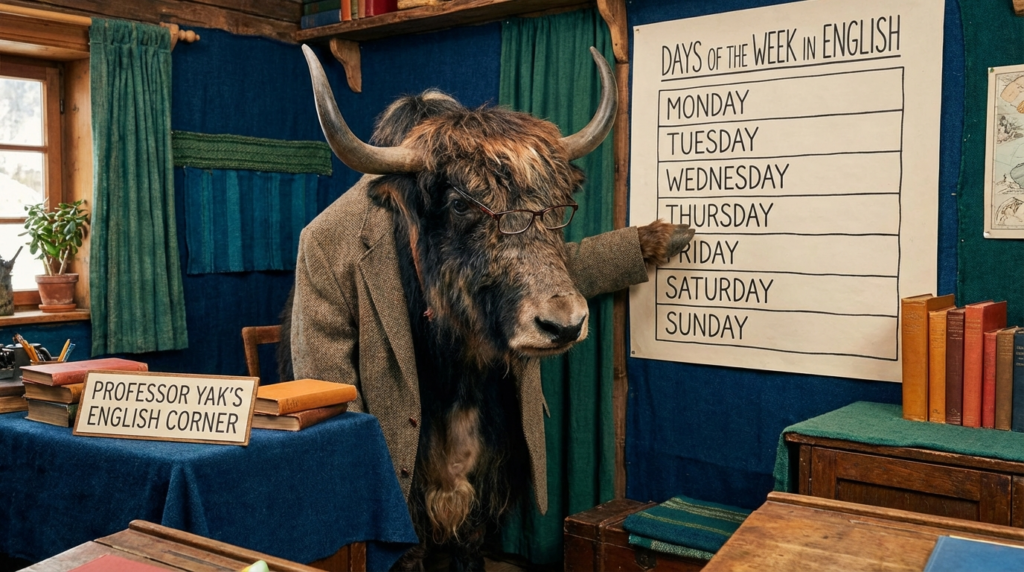
Most lessons stop at the list: Monday, Tuesday, Wednesday, Thursday, Friday, Saturday, Sunday. Nice. Useful for about twelve seconds. What people actually need is the spelling, the pronunciation, the grammar around these words, and the phrases that show up in real life when someone asks about your schedule, your classes, your workweek, or your weekend plans.
This guide teaches the days of the week in American English with easy meanings, real examples, common mistakes, and practice. By the end, you should be able to say things like I work Mondays, See you Thursday, and We went out over the weekend without sounding like your calendar gave up on you.
Yak Tip: Learn The Rule Before The Words
- Capitalize every day name. Write Monday, not monday.
- Use on with one specific day. I have class on Tuesday.
- Use every or plural day names for routines. We meet every Friday. / I work Fridays.
- American English commonly says on the weekend. British English often says at the weekend.
- Casual English sometimes drops on. See you Monday. / The meeting is Friday.
The 7 Days At A Glance
Monday
Meaning: the day after Sunday; a weekday.
Say It: MUN-day
Example: I start my new job on Monday.
Tuesday
Meaning: the day after Monday; a weekday.
Say It: TOOZ-day in very common American speech
Example: We have English class on Tuesday.
Wednesday
Meaning: the day after Tuesday; a weekday.
Say It: WENZ-day
Example: She has piano on Wednesday.
Thursday
Meaning: the day after Wednesday; a weekday.
Say It: THURZ-day
Example: Our quiz is on Thursday.
Friday
Meaning: the day after Thursday; often the last weekday for many people.
Say It: FRY-day
Example: The deadline is Friday.
Saturday
Meaning: the day after Friday; a weekend day.
Say It: SAT-er-day
Example: We are going hiking on Saturday.
Sunday
Meaning: the day after Saturday; a weekend day.
Say It: SUN-day
Example: We visit family on Sunday.
How To Use Days Naturally
The names are only step one. The real magic is the grammar around them. Use on with one specific day, use every for a repeating habit, and use plural day names for routines. Also, yes, casual English sometimes drops on. That is normal. English enjoys making simple things just slightly rude.
Use on for one day, use every for habits, and use plural days when the habit repeats.
| Pattern | Meaning | Example 1 | Example 2 |
|---|---|---|---|
| on Monday | one specific day | I have class on Monday. | The test is on Monday. |
| every Friday | a repeated habit | We meet every Friday. | I call my dad every Friday. |
| on Wednesdays | a repeated habit using plural days | I work on Wednesdays. | On Wednesdays, we eat out. |
| this Thursday | the nearest or current Thursday | This Thursday is better for me. | We leave this Thursday. |
| next Tuesday | a coming Tuesday after now | Let’s talk next Tuesday. | The trip starts next Tuesday. |
| last Sunday | the previous Sunday | I saw her last Sunday. | Last Sunday was quiet. |
| Monday morning | a time inside that day | Call me Monday morning. | I have a meeting Monday morning. |
| See you Monday. | casual English without on | Great, see you Monday. | Okay, see you Thursday. |
| on the weekend | during the weekend in American English | I rest on the weekend. | Are you free on the weekend? |
One useful note: next Monday can sound a little different from person to person. When the plan matters, add the date too: next Monday, March 16. Your future self will complain less.
Useful Phrases And Real-Life Sentences
These are the phrases people actually use when they make plans, ask about schedules, or talk about routines. Tiny phrases, big survival value.
What day is it today? Ask for the current day. Example: “What day is it today?” “It’s Monday.”
What day works for you? Ask which day is convenient. Example: “What day works for you for the meeting?”
Are you free on Friday? Ask about availability. Example: “Are you free on Friday after lunch?”
See you Monday. A natural casual goodbye. Example: “Great, see you Monday.”
The deadline is Friday. Give the final day. Example: “The deadline is Friday, so please send the draft before then.”
I work Mondays. Talk about a repeated routine. Example: “I work Mondays and Wednesdays.”
I’m off on Thursday. Say you do not work or study that day. Example: “I’m off on Thursday, so let’s go early.”
We meet every Wednesday. Talk about a repeating schedule. Example: “We meet every Wednesday at 6:00.”
Let’s move it to Tuesday. Reschedule something. Example: “Friday is packed, so let’s move it to Tuesday.”
What are you doing on Saturday? Ask about weekend plans. Example: “What are you doing on Saturday night?”
We are closed on Sundays. A common business phrase. Example: “The bakery is closed on Sundays.”
I need it by Thursday. Mean no later than Thursday. Example: “I need the report by Thursday morning.”
A Curious Bit: Why These Names Sound Like Mythology Class
The names of the days are old. Very old. English picked them up from Roman, Germanic, and Norse traditions, which is why the list sounds like a calendar built by the Sun, the Moon, Thor, and Saturn during one very messy team project.
- Monday = Moon’s day
- Tuesday = Tiw’s day
- Wednesday = Woden’s day
- Thursday = Thor’s day
- Friday = Frigg’s day
- Saturday = Saturn’s day
- Sunday = Sun’s day
This is also why some spellings and pronunciations feel like they barely know each other. Wednesday, we are looking directly at you.
Tables Of Words
Here is the full reference section: meanings, examples, abbreviations, and the phrases that show up in calendars, conversations, school schedules, office messages, and basic human life.
The 7 Days Of The Week
| Vocabulary | Meaning | Example 1 | Example 2 | Example 3 |
|---|---|---|---|---|
| Monday | the day after Sunday; a weekday | I start work on Monday. | Monday is usually busy. | See you Monday. |
| Tuesday | the day after Monday; a weekday | We have class on Tuesday. | Tuesday works for me. | I called her last Tuesday. |
| Wednesday | the day after Tuesday; a weekday | She has piano on Wednesday. | Wednesday feels long sometimes. | We meet Wednesday morning. |
| Thursday | the day after Wednesday; a weekday | Our quiz is on Thursday. | Thursday night works best. | I finish the draft on Thursday. |
| Friday | the day after Thursday; often the last weekday | Friday feels lighter here. | The deadline is Friday. | We go out on Friday night. |
| Saturday | the day after Friday; a weekend day | We’re hiking on Saturday. | Saturday morning is perfect. | I rest on Saturdays. |
| Sunday | the day after Saturday; a weekend day | Sunday is quiet here. | We visit family on Sunday. | Sunday dinner starts at six. |
Calendar Words And Abbreviations
| Vocabulary | Meaning | Example 1 | Example 2 | Example 3 |
|---|---|---|---|---|
| weekday | one day from Monday to Friday | Thursday is a weekday. | I wake up early on a weekday. | Weekday traffic is rough. |
| weekdays | Monday to Friday as a group | I work weekdays. | The gym is busier on weekdays. | We keep a simple routine on weekdays. |
| weekend | Saturday and Sunday | We traveled over the weekend. | The weekend went fast. | I sleep more on the weekend. |
| workweek | the usual working days, often Monday to Friday | My workweek starts on Monday. | It was a long workweek. | The workweek ends Friday evening. |
| weeknight | an evening from Monday to Friday | I cook at home on weeknights. | Tuesday is a quiet weeknight here. | We do not go out on weeknights. |
| business day | a working day used by offices and services | The bank will reply in one business day. | Your package ships in two business days. | Friday counts as a business day. |
| day off | a day when you do not work | I took Friday off. | Thursday is my day off this week. | She really needed a day off. |
| Mon. | abbreviation for Monday | The calendar says Mon. | We are open Mon.–Fri. | Class starts Mon. at 9:00. |
| Tue. / Tues. | abbreviation for Tuesday | The form says Tues. | My doctor is free Tue. afternoon. | Delivery is due Tues. |
| Wed. | abbreviation for Wednesday | The meeting moved to Wed. | Wed. is our short day. | I leave on Wed. morning. |
| Thu. / Thur. / Thurs. | common abbreviations for Thursday | The ticket says Thurs. | We practice Thu. after work. | Thu. is still open. |
| Fri. | abbreviation for Friday | Payday is Fri. | The store closes early Fri. | Our call is on Fri. |
| Sat. | abbreviation for Saturday | The event is Sat. night. | We leave Sat. morning. | Sat. works for me. |
| Sun. | abbreviation for Sunday | The market opens Sun. | I usually rest Sun. afternoon. | Sun. is family day. |
Day Phrases You Will Actually Use
| Vocabulary | Meaning | Example 1 | Example 2 | Example 3 |
|---|---|---|---|---|
| on Monday | use before one specific day | I have yoga on Monday. | The test is on Monday. | We arrived on Monday night. |
| every Tuesday | a repeated habit | I call my mom every Tuesday. | We meet every Tuesday. | Every Tuesday feels full. |
| on Wednesdays | a repeated habit with plural day | I work on Wednesdays. | On Wednesdays, we eat out. | She studies on Wednesdays. |
| this Thursday | the nearest or current Thursday | This Thursday is better for me. | We leave this Thursday. | I have a dentist appointment this Thursday. |
| next Friday | a coming Friday after now | Let’s talk next Friday. | The trip starts next Friday. | I’ll pay you next Friday. |
| last Saturday | the previous Saturday | I worked last Saturday. | Last Saturday was fun. | We met last Saturday. |
| Monday morning | a time inside that day | Monday morning is packed. | Call me Monday morning. | I have a meeting Monday morning. |
| Friday night | evening or night on Friday | We’re cooking on Friday night. | Friday night is busy downtown. | I rest Friday night. |
| from Monday to Friday | a range of days | The office opens from Monday to Friday. | I commute from Monday to Friday. | We practice from Monday to Friday. |
| Monday through Friday | the same range in very common American English | The shop is open Monday through Friday. | I work Monday through Friday. | Buses run Monday through Friday. |
| by Thursday | before or no later than Thursday | Send it by Thursday. | I need the report by Thursday. | Be here by Thursday morning. |
| until Sunday | up to Sunday | I’m away until Sunday. | The sale runs until Sunday. | Wait until Sunday night. |
| over the weekend | during the weekend | I cleaned the house over the weekend. | What did you do over the weekend? | We traveled over the weekend. |
| on the weekend | during the weekend in American English | I usually sleep in on the weekend. | Are you free on the weekend? | We grill on the weekend. |
| earlier this week | at an earlier time in the current week | I saw him earlier this week. | Earlier this week, we had snow. | She emailed me earlier this week. |
| later this week | at a later time in the current week | I’ll finish it later this week. | Can we talk later this week? | The package should arrive later this week. |
Common Mistakes And Quick Fixes
| Wrong | Better | Why |
|---|---|---|
| monday | Monday | Days of the week always start with a capital letter. |
| in Friday | on Friday | Use on with specific days. |
| on every Tuesday | every Tuesday / on Tuesdays | Do not stack on with every. |
| See you on next Monday. | See you next Monday. | Usually no on before this, next, or last. |
| I work on Monday’s. | I work on Mondays. | The plural is Mondays, with no apostrophe. |
| The meeting is in Monday morning. | The meeting is on Monday morning. | Use on with a specific day plus part of the day. |
| Wensday | Wednesday | The spelling is tricky: Wed-nes-day, but we usually say WENZ-day. |
Practice Section
- Choose the correct preposition: We have math ___ Tuesday.
- Choose the natural phrase: I go running every Friday or I go running on every Friday.
- Fix the sentence: my birthday is on sunday.
- Fill in the blank: The office is open from Monday ___ Friday.
- Choose the best American English phrase: We relax on the weekend or We relax at the weekend.
- Fill in the blank: I saw her earlier this ___.
- Fix the sentence: See you on next Thursday.
- Write one sentence about your real life using a day of the week.
Answer Key
- on
- I go running every Friday
- My birthday is on Sunday.
- to
- We relax on the weekend.
- week
- See you next Thursday.
- Sample answer: I go grocery shopping on Saturday.
Fast FAQs
Do I always capitalize the days of the week?
Yes. Write Monday, Tuesday, Wednesday, and so on with a capital letter every time.
Do I say on Monday or in Monday?
Say on Monday. Use on with specific days: on Friday, on Sunday morning, on Wednesdays.
Is See you Monday correct?
Yes. It is very natural in casual American English. English often drops on in short time expressions like See you Monday or The meeting is Friday.
What is the difference between weekdays and the weekend?
Weekdays are Monday to Friday. The weekend is Saturday and Sunday.
Is Sunday or Monday the first day of the week?
It depends on the calendar and the context. Many American calendars show Sunday first, but many work and school schedules treat Monday as the start of the workweek. When it matters, use the date too.
Why is Wednesday pronounced WENZ-day?
Because English spelling and pronunciation do not always move together. The older spelling stayed, but the spoken form got simpler over time. Very on-brand for English, honestly.
Final Yak
Learn the order first, then learn the grammar around it. The real win is not just memorizing Monday to Sunday. The real win is saying things like I work Mondays, Let’s meet Thursday night, We traveled over the weekend, and I need it by Friday without stopping to think. That is when the days of the week stop being a list and start being real English.