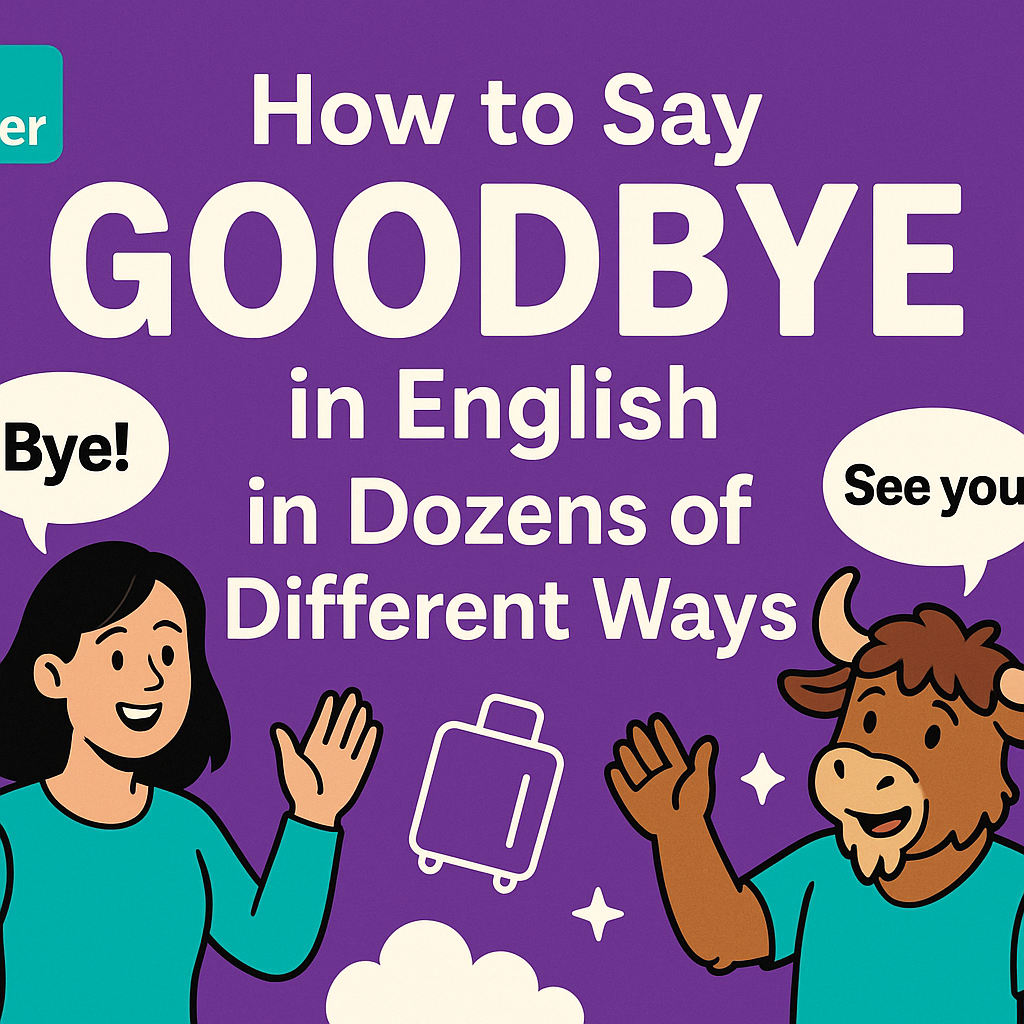
A friendly guide to formal farewells, casual goodbyes, modern slang, funny expressions, polite sign-offs, and all the natural ways English speakers end a conversation.
Why Saying Goodbye in English Matters
Goodbyes are often the last impression you leave in a conversation — and in English, they carry more meaning than most learners realize. English speakers use different goodbye phrases depending on the situation: polite, professional, casual, emotional, funny, rushed, or relaxed. Each has its own rhythm and tone.
A great goodbye helps you sound natural, confident, and culturally aware. It signals whether you’re closing a work meeting, ending a friendly chat, leaving a message, saying farewell at an airport, or just logging off for the day. English has dozens of goodbye expressions, from simple classics like “Goodbye” to modern variations like “See ya!”, “Take care,” or “Catch you later!”
And the best part?
Once you understand the patterns — polite vs casual, short vs expressive — you can choose the perfect English goodbye every time.
This guide explores every type of goodbye you’ll hear from native speakers, and when to use each one. By the end, you’ll be able to wrap up any conversation smoothly, naturally, and with the right tone.
The Classic English “Goodbye”
The phrase “Goodbye” is the oldest and most traditional farewell in English. It’s simple, clear, and universally understood — which makes it the safest option for learners. You can use it in almost any situation: polite conversations, professional settings, social events, and anytime you want to sound respectful or neutral.
What Native Speakers Naturally Use
Even though “Goodbye” is correct and universal, English speakers often shorten it or choose softer alternatives depending on the tone.
Standard forms you’ll hear everywhere:
| Phrase | Tone | When You’d Use It |
| Goodbye. | Neutral, polite | Any situation |
| Bye. | Casual | Daily conversations |
| Bye-bye. | Cute/playful | Close friends, family, kids |
| Goodbye, everyone. | Group farewell | Meetings/events |
| Goodbye for now. | Warm + neutral | Temporary farewells |
“Goodbye” vs. “Bye”
- Goodbye = more formal, more complete
- Bye = natural, everyday, extremely common
- Bye-bye = friendly, gentle, a bit cute
Native speakers actually say “bye” far more often than “goodbye,” especially with friends.
Mini-Tips for Sounding Natural
- If the situation is polite, professional, or new → “Goodbye” works perfectly.
- If the situation is relaxed or casual → “Bye” feels more natural.
- If you want warmth → add a small phrase:
- “Bye! Take care.”
- “Goodbye! Have a good evening.”
- “Bye! See you soon.”
- “Bye! Take care.”
This simple foundation is the core of all other English goodbye phrases.
Formal English Ways to Say Goodbye
Formal English goodbyes are polite, respectful, and professional. These expressions are perfect for workplaces, business calls, customer service, interviews, official emails, or any situation where you want to sound polished and courteous.
Professional & Business Settings
These are the most universal, safe options when ending a conversation in a professional environment.
| Phrase | Tone | When You’d Use It |
| Goodbye. | Standard | Any formal setting |
| Goodbye. Have a great evening. | Polite | Work, meetings |
| Goodbye, and thank you for your time. | Respectful | Interviews, business |
| Goodbye. I appreciate your help. | Professional gratitude | Work discussions |
| Goodbye, everyone. | Organized | Ending group calls or meetings |
Mini-note:
Formal English prefers short, clear endings. No dramatic sentences needed.
Formal Social Situations (Events, Dinners, Ceremonies)
These phrases are warm but still refined.
| Phrase | Tone | When You’d Use It |
| Goodbye. Thank you for having me. | Polite | Leaving a dinner or event |
| Goodbye. It was a pleasure meeting you. | Warm + formal | First-time meetings |
| Goodbye. Hope you enjoy the rest of your evening. | Polite | Social events |
| Goodbye. I had a wonderful time. | Warm | Parties, gatherings |
| Goodbye. Until next time. | Polished | Formal but friendly |
Customer Service & Hospitality Farewells
English in service settings is upbeat and professional.
| Phrase | Tone | When You’d Use It |
| Goodbye. Have a safe trip. | Warm + polite | Hotels, travel |
| Goodbye. Thank you for visiting. | Customer service | Restaurants, stores |
| Goodbye. Let us know if you need anything. | Service-friendly | Hotels |
| Goodbye. We appreciate your business. | Professional | Shops, service |
| Goodbye. Enjoy the rest of your day. | Polite | Retail/customer support |
Mini-note:
These phrases always feel welcoming — never cold or abrupt.
Casual & Friendly English Ways to Say Goodbye
In relaxed situations — friends, classmates, coworkers you know well, neighbors, group chats — English speakers rarely say “Goodbye.” Instead, they use warmer, lighter, more natural expressions. These feel friendly, modern, and perfect for daily life.
Everyday Casual Goodbyes
These are the most common farewells you’ll hear in English-speaking countries.
| Phrase | Tone | When You’d Use It |
| Bye! | Natural, universal | Any casual situation |
| See you! | Friendly | When you expect to meet again |
| See ya! | Very casual | Friends and peers |
| Take care! | Warm + caring | Casual goodbyes |
| Later! | Slangy, relaxed | Young speakers, friends |
Mini-note:
“Later!” is extremely common among teens and young adults.
Friendly Goodbyes for People You Know Well
These add connection without being romantic.
| Phrase | Tone | When You’d Use It |
| See you later! | Friendly | Daily conversations |
| Talk to you later! | Natural | Messages, calls |
| Catch you later! | Casual + fun | Friends, coworkers |
| Bye! Have a good one. | Warm | Common in US/Canada |
| Take it easy! | Relaxed | Casual social vibe |
Mini-note:
“Have a good one” means “Have a good day,” “evening,” etc.
Slightly Playful or Lighthearted Goodbyes
Used among people comfortable with each other.
| Phrase | Tone | When You’d Use It |
| I’m out! | Playful | Leaving casually |
| Alright, see ya! | Natural | Friends |
| Peace out! | Fun, slangy | Teens/young adults |
| Later, man. | Casual | Between friends |
| See ya tomorrow! | Friendly | Classmates/coworkers |
Mini-note:
Slang goodbyes change by region, but these are understood everywhere.
Warm & Supportive Friendly Goodbyes
These add kindness or encouragement.
| Phrase | Tone | When You’d Use It |
| Get some rest! | Supportive | Tired friends |
| Take care of yourself. | Warm | Caring tone |
| Hope the rest of your day is good! | Friendly | Ending conversations |
| Stay safe! | Caring | Nighttime or weather-related |
| Have a chill evening! | Relaxed | Friends |
Creative, Funny & Unique English Goodbye Phrases
English speakers love adding humor, personality, or a bit of flair to their goodbyes — especially with friends, close coworkers, or in casual chats. These phrases aren’t formal, but they’re fun, memorable, and extremely common in real life.
Modern Slang & Internet-Style Goodbyes
These show up mostly in texts, online chats, or among younger speakers.
| Phrase | Tone | When You’d Use It |
| Bye! ✌️ | Casual + emoji | Texting, DMs |
| Cya! | Very casual | Online chats |
| L8r! (“later”) | Slangy | Texting shorthand |
| GTG, bye! | Quick exit | Chats, gaming |
| Peace! | Cool, relaxed | Young speakers |
Mini-note:
Emoji-based goodbyes are everywhere in English texting culture.
Funny & Playful Goodbyes
These make people smile and show personality.
| Phrase | Tone | When You’d Use It |
| I’m vanishing now. Goodbye! | Silly | Friends |
| Farewell, mortal. | Dramatic joke | Close friends |
| I leave you with my wisdom. Bye. | Playful brag | Humorous chats |
| Goodbye! Don’t do anything I wouldn’t do. | Light humor | Friendly goodbyes |
| Alright, I’m escaping. Bye! | Playful | Ending a social moment |
Mini-note:
English humor often uses exaggeration or playful drama.
Unique & Creative English Goodbye Lines
These sound warm, expressive, or poetic — without being strange.
| Phrase | Tone | When You’d Use It |
| Catch you on the flip side. | Casual + creative | Friends |
| Until next time. | Warm + stylish | Social gatherings |
| May your day treat you gently. | Soft + poetic | Close friends |
| Off I go! Until later. | Cute | Friendships |
| May your coffee be strong tomorrow. Bye! | Humorous + modern | Work friends |
Theatrical or Over-the-Top (On Purpose)
Used jokingly to be dramatic.
| Phrase | Tone | When You’d Use It |
| Farewell, my good people! | Dramatic | Group chats |
| Goodbye… forever. (See you tomorrow.) | Playful sarcasm | Friends |
| I must depart! | Mock dramatic | Social humor |
| My journey begins now. Goodbye. | Jokingly epic | Friends |
| Fare thee well! | Old-timey joke | Humor-only contexts |
English Goodbye Expressions for Different Situations
Different moments call for different tones. English speakers switch goodbye phrases depending on whether they’re at work, with friends, chatting online, saying goodbye at night, or leaving a long conversation. Here’s how to choose the most natural farewell for each situation.
At Work or in Professional Settings
Workplace goodbyes should be polite, clear, and not overly dramatic or emotional.
| Phrase | Tone | When You’d Use It |
| Goodbye. | Neutral | Standard workplace exit |
| Goodbye. Have a good evening. | Polite | Leaving after work |
| See you tomorrow. | Friendly + professional | Daily coworkers |
| Talk to you later. | Work chats | Teams/Slack/Meet |
| Goodbye, everyone. Thanks for today. | Group goodbye | Meetings, calls |
Mini-note:
Work English avoids exaggeration — clean and respectful is best.
With Friends or Social Groups
These goodbyes are relaxed, warm, and natural for people you enjoy spending time with.
| Phrase | Tone | When You’d Use It |
| See you! | Friendly | Any casual farewell |
| See ya later! | Very casual | Friends, peers |
| Catch you later! | Fun | Social circles |
| Bye! Get home safe. | Caring | Leaving gatherings |
| Let’s hang out again soon! | Warm + social | Dinners, meetups |
With Family or Loved Ones
These are warm, simple, and affectionate without being overly formal.
| Phrase | Tone | When You’d Use It |
| Bye! Love you. | Family affection | Parents, siblings |
| See you at home. | Practical | Partner/family |
| Night! | Evening goodbye | Family/friends |
| Take care of yourself. | Caring | Someone leaving |
| Call me when you get there. | Protective | Parents, partners |
When Ending a Phone Call or Video Call
Online or phone English has its own natural patterns.
| Phrase | Tone | When You’d Use It |
| Alright, bye! | Natural | Everyday calls |
| Talk to you soon. | Friendly | Polite, warm |
| Okay, I’ll let you go. Goodbye! | Polite exit | Work calls |
| Thanks for the call. Bye! | Professional/friendly | Work or personal |
| Speak soon! | Warm | Friends, coworkers |
Mini-note:
“Okay, I’ll let you go” is a very common way to end calls politely.
When Leaving a Place (Store, Restaurant, Event)
English goodbyes in public places are short and polite.
- Bye! Thanks!
- Thanks, have a good one!
- Take care!
- Have a good day!
- Goodbye, thank you.
These are used everywhere — cafes, shops, gyms, restaurants, salons.
In Text Messages, Group Chats, or Online Communities
Digital English favors brevity.
| Phrase | Tone | When You’d Use It |
| gtg, bye! | Quick exit | Online chats |
| brb (“be right back”) | Short absence | Games/chat |
| ttyl (“talk to you later”) | Text slang | Friends |
| ok bye | Quick, casual | Very informal |
| logging off, bye! | Polite | Remote work |
Common English Mistakes Learners Make with Goodbye Phrases
Even though “goodbye” seems simple, English learners often make small mistakes that can sound awkward, overly formal, or unintentionally emotional. Here are the mistakes you want to avoid — and the natural versions native speakers actually use.
Mistake #1 — Using “Goodbye” When It Sounds Too Formal
Learners often overuse “Goodbye,” even in casual situations.
To native speakers, “Goodbye” can sound serious — not wrong, but heavier than needed.
Example:
- Saying “Goodbye” to a close friend = sounds distant
- Natural version = “Bye!” / “See ya!”
Tip:
Use “Goodbye” for polite or formal situations; use “Bye” for everyday life.
Mistake #2 — Mixing Up “Goodbye” With Nighttime Phrases
Many learners accidentally use:
- “Good night” when they mean goodbye, or
- “Goodbye” when someone is going to sleep.
Remember:
- Goodbye = anytime farewell
- Good night = ONLY used at night as a goodbye or when someone is sleeping
- Good evening = greeting in the evening
Mixing these confuses native speakers.
Mistake #3 — Using Direct Translations That Don’t Fit English
Some languages use elaborate or poetic goodbye phrases that sound strange in English.
Avoid phrases like:
- “I wish you a very good departure from this place.”
- “I say my farewell to you now.”
- “May your path be gentle as you go.”
Natural English favors simple, warm, clear goodbyes.
Better:
- “Take care.”
- “See you later.”
- “Bye! Have a good one.”
Mistake #4 — Goodbye Phrases That Sound Too Romantic
Many learners use sweet or intimate phrases with the wrong people.
Avoid these with coworkers, strangers, or acquaintances:
- “Goodbye, dear.”
- “Goodbye, my love.”
- “I’ll miss you.”
- “Think of me.”
To native speakers, these sound romantic unless you’re very close.
Use neutral phrases instead:
- “Bye! Have a good day.”
- “See you next time.”
- “Take care.”
Mistake #5 — Using Outdated or Old-Fashioned Goodbyes
Words like:
- “Farewell”
- “Fare thee well”
- “Goodbye now, madam”
- “I bid you goodbye”
These are not used in normal daily English unless they’re jokes.
Modern alternatives:
- “Bye!”
- “See you later!”
- “Take care!”
- “Catch you tomorrow!”
Mistake #6 — Ending Too Abruptly
Some learners end conversations too directly:
- “I go now.”
- “I leave.”
- “I’m finished.”
- “Enough talk.”
These sound rude or robotic.
Natural English endings:
- “Alright, I should get going. Bye!”
- “Okay, talk soon.”
- “I have to run — see you later!”
- “Alright, heading out. Bye!”
Quick English Goodbye Table (30+ Examples)
Here’s your complete cheat sheet of natural, real-world English goodbye expressions.
Use this list for studying, practicing, or copy-pastable reference in everyday conversations.
30+ GOODBYE PHRASES IN ENGLISH
| Phrase | Tone / Meaning | When You’d Use It |
| Goodbye. | Standard | Any situation |
| Bye. | Casual | Daily life |
| See you. | Friendly | Expecting to meet again |
| See ya! | Very casual | Friends |
| See you later! | Natural | Social settings |
| Catch you later! | Casual + fun | Friends/peers |
| Talk to you later. | Friendly | Calls, texting |
| Take care. | Warm | Any friendly goodbye |
| Have a good one! | Casual US/Canada | Leaving stores/work |
| Later! | Slangy | Young speakers |
| I’m out! | Playful | Very casual |
| Bye for now. | Warm | Temporary farewell |
| Until next time. | Polished | Social events |
| Get home safe. | Caring | Friends/family |
| Stay safe. | Warm + supportive | Night/weather |
| Take it easy. | Relaxed | Friendly goodbye |
| Goodbye, everyone. | Group farewell | Meetings/calls |
| Goodbye. Have a great evening. | Formal | Work setting |
| Goodbye, and thank you. | Professional | Customer service |
| Thanks, bye! | Polite | Stores/restaurants |
| Alright, bye! | Natural | Phone calls |
| Peace out! | Slang | Friends |
| L8r! (“later”) | Text slang | Chats |
| Cya! | Very casual | Messaging |
| Ok bye | Quick, casual | Texts |
| ttyl (“talk to you later”) | Slang | Friends |
| gtg, bye! | Time to leave | Online chats |
| Logging off, bye! | Polite digital | Remote teams |
| Bye-bye! | Cute | Kids/family |
| Farewell! | Dramatic/joking | Humor only |
| Goodbye, I appreciate your time. | Professional | Interviews |
| Bye! Let’s catch up soon. | Friendly | Social circles |
This table covers polite, casual, friendly, slang, funny, workplace, digital, supportive, and formal goodbye expressions — everything a learner needs to sound like a native speaker.
Yak’s Final Chewables
Goodbyes might seem simple, but they reveal a lot about how English speakers manage tone, relationships, and context. Once you understand when to be polite, when to be casual, and when to be playful, you can exit any conversation smoothly and naturally.
Here’s your quick yak-sized recap:
- “Goodbye” is correct but often sounds formal.
Daily English prefers short forms like “Bye” or “See you.” - Match the tone to the situation.
Workplace → polite
Friends → casual
Texting → short
Groups → clear
Family → warm - Avoid overly dramatic or romantic phrases in normal settings.
English can get accidentally intimate fast. - Learn the modern phrases.
“Take care,” “Catch you later,” “Have a good one,” and “Talk soon” are extremely common. - Be gentle when ending conversations.
English speakers often soften exits with small friendly phrases like:- “Alright, I should get going.”
- “Talk to you later.”
- “Have a good rest of your day.”
- “Alright, I should get going.”
You’re now fully equipped to say goodbye in English — professionally, casually, politely, warmly, humorously, creatively, or with just the right amount of flair.