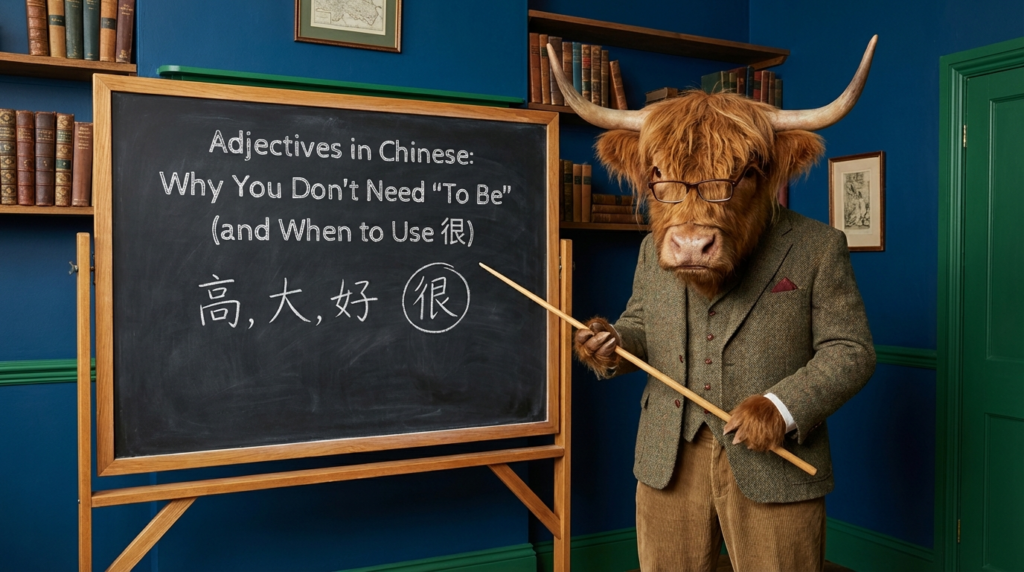
Adjectives in Chinese: Why You Don’t Need “To Be” (and When to Use 很)
Subtitle: 中文形容詞:不用「是」,但要會用「很」 — speak naturally without sounding like a grammar robot.
In Mandarin, lots of “adjectives” behave like verbs. So instead of saying “He is busy,” you can say 他很忙 — literally “he very busy.” (And yes, 很 often isn’t “very.” It’s more like a friendly connector.)
Below you’ll get high-utility Traditional Chinese adjectives with pinyin (tone marks), clear meanings, and real example sentences. Plus the patterns you actually use: 很, 不, 太…了, comparisons, and the sneaky moments when 是 shows up.
Yak Snark
If you keep saying 他是忙, people will still understand you… but it sounds like you’re translating word-for-word in your head. Your brain deserves better.
Quick Visual Cards: The Adjectives You’ll Use Today
These are the “say it a thousand times” adjectives. Tap the audio to hear the Hanzi spoken in Taiwan Mandarin (zh-TW).
Patterns You Actually Use With Adjectives
Adjectives can be the main verb. The “glue” words below help your sentence sound natural (and not like a translation app having a bad day).
Why you don’t need “to be”
So what’s 很 doing?
Relevant Phrases & Sentences (Copy-Paste Friendly)
These patterns are what you’ll hear in real life. Each one includes a ready-to-use sentence.
| Pattern (ZH) | Pinyin | Meaning (EN) | Example (ZH + pinyin) | Translation (EN) | Audio |
|---|---|---|---|---|---|
| 很 + 形容詞 | hěn + xíngróngcí | neutral “is Adj” | 這裡很安靜。 Zhèlǐ hěn ānjìng. | It’s quiet here. | |
| 不 + 形容詞 | bù + xíngróngcí | not (generally/now) | 這個不貴。 Zhège bù guì. | This isn’t expensive. | |
| 太 + 形容詞 + 了 | tài + Adj + le | too / extremely | 今天太冷了。 Jīntiān tài lěng le. | It’s way too cold today. | |
| 有點 + 形容詞 | yǒudiǎn + Adj | a bit (often negative-ish) | 這杯咖啡有點苦。 Zhè bēi kāfēi yǒudiǎn kǔ. | This coffee is a bit bitter. | |
| 真 + 形容詞 | zhēn + Adj | really (speaker feeling) | 你真厲害! Nǐ zhēn lìhài! | You’re really impressive! | |
| 比較 + 形容詞 | bǐjiào + Adj | comparatively / rather | 這家比較便宜。 Zhè jiā bǐjiào pián yi. | This place is cheaper (than others). | |
| 更 + 形容詞 | gèng + Adj | even more | 這個顏色更好看。 Zhège yánsè gèng hǎokàn. | This color looks even better. | |
| 最 + 形容詞 | zuì + Adj | the most | 這家店最有名。 Zhè jiā diàn zuì yǒumíng. | This shop is the most famous. | |
| 越來越 + 形容詞 | yuèláiyuè + Adj | more and more | 最近越來越忙。 Zuìjìn yuèláiyuè máng. | Lately I’ve been getting busier and busier. | |
| A 不 A? | Adj bù Adj? | “Adj or not?” | 你忙不忙? Nǐ máng bu máng? | Are you busy? | |
| 形容詞 + 得不得了 | Adj + de bùdéliǎo | extremely Adj | 外面熱得不得了。 Wàimiàn rè de bùdéliǎo. | It’s insanely hot outside. | |
| 形容詞 + 死了 | Adj + sǐ le | “so Adj I’m dead” (casual) | 我累死了。 Wǒ lèi sǐ le. | I’m exhausted. |
When You DO Use 是 With Adjectives
You usually don’t say 他是忙. But 是 shows up when you’re classifying something (noun phrase), or doing contrast/emphasis.
是 + noun phrase (with an adjective inside)
Contrast/emphasis: “this one is the new one”
Table of Words: Adjectives You’ll Actually Use
Grouped by topic so your brain doesn’t rage-quit.
Feelings & Physical States
| Traditional | Pinyin | Meaning (EN) | Example (ZH + pinyin) | Translation (EN) | Audio |
|---|---|---|---|---|---|
| 開心 | kāixīn | happy | 我今天很開心。 Wǒ jīntiān hěn kāixīn. | I’m happy today. | |
| 難過 | nánguò | sad | 他看起來很難過。 Tā kàn qǐlái hěn nánguò. | He looks sad. | |
| 生氣 | shēngqì | angry | 別生氣,我只是問問。 Bié shēngqì, wǒ zhǐshì wènwen. | Don’t be mad, I’m just asking. | |
| 緊張 | jǐnzhāng | nervous | 我有點緊張。 Wǒ yǒudiǎn jǐnzhāng. | I’m a little nervous. | |
| 放鬆 | fàngsōng | relaxed | 週末我比較放鬆。 Zhōumò wǒ bǐjiào fàngsōng. | I’m more relaxed on weekends. | |
| 擔心 | dānxīn | worried | 別擔心,沒問題。 Bié dānxīn, méi wèntí. | Don’t worry, no problem. | |
| 害怕 | hàipà | afraid | 我不太害怕。 Wǒ bú tài hàipà. | I’m not really scared. | |
| 興奮 | xīngfèn | excited | 我對明天很興奮。 Wǒ duì míngtiān hěn xīngfèn. | I’m excited about tomorrow. | |
| 無聊 | wúliáo | bored | 這個會議有點無聊。 Zhège huìyì yǒudiǎn wúliáo. | This meeting is a bit boring. | |
| 餓 | è | hungry | 我很餓,我們去吃飯吧。 Wǒ hěn è, wǒmen qù chīfàn ba. | I’m hungry—let’s go eat. | |
| 渴 | kě | thirsty | 我有點渴。 Wǒ yǒudiǎn kě. | I’m a little thirsty. | |
| 舒服 | shūfu | comfortable | 這張椅子很舒服。 Zhè zhāng yǐzi hěn shūfu. | This chair is comfortable. | |
| 不舒服 | bù shūfu | unwell / uncomfortable | 我今天不舒服。 Wǒ jīntiān bù shūfu. | I don’t feel well today. | |
| 痛 | tòng | painful / hurts | 我的頭很痛。 Wǒ de tóu hěn tòng. | My head hurts. | |
| 睏 | kùn | sleepy (common in Taiwan) | 我好睏。 Wǒ hǎo kùn. | I’m so sleepy. |
Personality & People Vibes
| Traditional | Pinyin | Meaning (EN) | Example (ZH + pinyin) | Translation (EN) | Audio |
|---|---|---|---|---|---|
| 友善 | yǒushàn | friendly | 她很友善。 Tā hěn yǒushàn. | She’s friendly. | |
| 有禮貌 | yǒu lǐmào | polite | 他一直很有禮貌。 Tā yìzhí hěn yǒu lǐmào. | He’s always polite. | |
| 大方 | dàfāng | generous / easygoing | 她很大方,常請大家喝飲料。 Tā hěn dàfāng, cháng qǐng dàjiā hē yǐnliào. | She’s generous—often treats everyone to drinks. | |
| 小氣 | xiǎoqì | stingy | 他不小氣,只是比較省。 Tā bù xiǎoqì, zhǐshì bǐjiào shěng. | He’s not stingy, just more frugal. | |
| 誠實 | chéngshí | honest | 我喜歡誠實的人。 Wǒ xǐhuān chéngshí de rén. | I like honest people. | |
| 聰明 | cōngmíng | smart | 你很聰明,一下就懂了。 Nǐ hěn cōngmíng, yíxià jiù dǒng le. | You’re smart—you got it right away. | |
| 笨 | bèn | clumsy / not smart | 我今天有點笨,忘了帶鑰匙。 Wǒ jīntiān yǒudiǎn bèn, wàng le dài yàoshi. | I’m a bit dumb today—I forgot my keys. | |
| 懶 | lǎn | lazy | 我不懶,我只是很累。 Wǒ bù lǎn, wǒ zhǐshì hěn lèi. | I’m not lazy, I’m just tired. | |
| 勤快 | qínkuài | hardworking | 他很勤快,什麼都自己做。 Tā hěn qínkuài, shénme dōu zìjǐ zuò. | He’s hardworking—does everything himself. | |
| 可靠 | kěkào | reliable | 他很可靠,我很放心。 Tā hěn kěkào, wǒ hěn fàngxīn. | He’s reliable, so I feel at ease. | |
| 幽默 | yōumò | humorous | 他很幽默,大家都愛跟他聊天。 Tā hěn yōumò, dàjiā dōu ài gēn tā liáotiān. | He’s funny—everyone loves chatting with him. | |
| 認真 | rènzhēn | serious / earnest | 她做事很認真。 Tā zuòshì hěn rènzhēn. | She’s very serious about her work. | |
| 隨和 | suíhé | easygoing | 他很隨和,去哪都可以。 Tā hěn suíhé, qù nǎ dōu kěyǐ. | He’s easygoing—anywhere is fine. | |
| 固執 | gùzhí | stubborn | 他有點固執,不太容易改變想法。 Tā yǒudiǎn gùzhí, bú tài róngyì gǎibiàn xiǎngfǎ. | He’s a bit stubborn—hard to change his mind. | |
| 溫柔 | wēnróu | gentle | 她說話很溫柔。 Tā shuōhuà hěn wēnróu. | She speaks gently. | |
| 兇 | xiōng | fierce / strict | 他看起來不兇,其實人很好。 Tā kàn qǐlái bù xiōng, qíshí rén hěn hǎo. | He doesn’t look scary—he’s actually nice. |
Looks, Size, Shape & “Where Things Are”
| Traditional | Pinyin | Meaning (EN) | Example (ZH + pinyin) | Translation (EN) | Audio |
|---|---|---|---|---|---|
| 高 | gāo | tall / high | 他很高。 Tā hěn gāo. | He’s tall. | |
| 矮 | ǎi | short (height) | 這張椅子太矮了。 Zhè zhāng yǐzi tài ǎi le. | This chair is too low. | |
| 胖 | pàng | fat / chubby | 這隻貓有點胖。 Zhè zhī māo yǒudiǎn pàng. | This cat is a bit chubby. | |
| 瘦 | shòu | thin | 他最近變瘦了。 Tā zuìjìn biàn shòu le. | He’s gotten thinner lately. | |
| 帥 | shuài | handsome | 那個演員很帥。 Nàge yǎnyuán hěn shuài. | That actor is handsome. | |
| 漂亮 | piàoliang | pretty / beautiful | 你的衣服很漂亮。 Nǐ de yīfu hěn piàoliang. | Your clothes are beautiful. | |
| 可愛 | kě’ài | cute | 這個娃娃好可愛。 Zhège wáwa hǎo kě’ài. | This doll is so cute. | |
| 年輕 | niánqīng | young | 他看起來很年輕。 Tā kàn qǐlái hěn niánqīng. | He looks young. | |
| 老 | lǎo | old | 這台電腦很老了。 Zhè tái diànnǎo hěn lǎo le. | This computer is old. | |
| 乾淨 | gānjìng | clean | 這裡很乾淨。 Zhèlǐ hěn gānjìng. | It’s clean here. | |
| 髒 | zāng | dirty | 鞋子有點髒。 Xiézi yǒudiǎn zāng. | The shoes are a bit dirty. | |
| 近 | jìn | near | 我家很近。 Wǒ jiā hěn jìn. | My place is nearby. | |
| 遠 | yuǎn | far | 那個地方很遠。 Nàge dìfāng hěn yuǎn. | That place is far. | |
| 長 | cháng | long | 這條路很長。 Zhè tiáo lù hěn cháng. | This road is long. | |
| 短 | duǎn | short (length) | 這段影片很短。 Zhè duàn yǐngpiàn hěn duǎn. | This clip is short. | |
| 厚 | hòu | thick | 這本書很厚。 Zhè běn shū hěn hòu. | This book is thick. | |
| 薄 | báo | thin | 這件外套太薄了。 Zhè jiàn wàitào tài báo le. | This jacket is too thin. | |
| 寬 | kuān | wide | 這條路很寬。 Zhè tiáo lù hěn kuān. | This road is wide. | |
| 窄 | zhǎi | narrow | 這個走道有點窄。 Zhège zǒudào yǒudiǎn zhǎi. | This hallway is a bit narrow. | |
| 圓 | yuán | round | 這個盤子是圓的。 Zhège pánzi shì yuán de. | This plate is round. | |
| 方 | fāng | square | 桌子是方的。 Zhuōzi shì fāng de. | The table is square. |
Quality, Convenience, and Everyday Judgments
| Traditional | Pinyin | Meaning (EN) | Example (ZH + pinyin) | Translation (EN) | Audio |
|---|---|---|---|---|---|
| 新 | xīn | new | 這台手機很新。 Zhè tái shǒujī hěn xīn. | This phone is new. | |
| 舊 | jiù | old / used | 我的包包有點舊。 Wǒ de bāobao yǒudiǎn jiù. | My bag is a bit old. | |
| 方便 | fāngbiàn | convenient | 坐捷運很方便。 Zuò jiéyùn hěn fāngbiàn. | Taking the MRT is convenient. | |
| 麻煩 | máfan | troublesome | 這樣很麻煩,我們換個方法。 Zhèyàng hěn máfan, wǒmen huàn gè fāngfǎ. | This is troublesome—let’s change the method. | |
| 安全 | ānquán | safe | 這裡晚上也很安全。 Zhèlǐ wǎnshàng yě hěn ānquán. | It’s safe here even at night. | |
| 危險 | wéixiǎn | dangerous | 那條路有點危險。 Nà tiáo lù yǒudiǎn wéixiǎn. | That road is a bit dangerous. | |
| 清楚 | qīngchǔ | clear (understandable) | 你說得很清楚。 Nǐ shuō de hěn qīngchǔ. | You explained it clearly. | |
| 模糊 | móhú | blurry / vague | 照片有點模糊。 Zhàopiàn yǒudiǎn móhú. | The photo is a bit blurry. | |
| 正確 | zhèngquè | correct | 你的答案是正確的。 Nǐ de dá’àn shì zhèngquè de. | Your answer is correct. | |
| 錯 | cuò | wrong | 這個不對,是錯的。 Zhège bú duì, shì cuò de. | This isn’t right—it’s wrong. | |
| 重要 | zhòngyào | important | 這件事很重要。 Zhè jiàn shì hěn zhòngyào. | This matter is important. | |
| 有用 | yǒuyòng | useful | 這個建議很有用。 Zhège jiànyì hěn yǒuyòng. | This advice is useful. | |
| 沒用 | méiyòng | useless | 這樣做沒用。 Zhèyàng zuò méiyòng. | Doing it this way is useless. | |
| 容易 | róngyì | easy | 這個很容易。 Zhège hěn róngyì. | This is easy. | |
| 難 | nán | difficult | 這題有點難。 Zhè tí yǒudiǎn nán. | This question is a bit hard. |
Price, Amount, Speed & Time
| Traditional | Pinyin | Meaning (EN) | Example (ZH + pinyin) | Translation (EN) | Audio |
|---|---|---|---|---|---|
| 便宜 | pián yi | cheap | 這個很便宜。 Zhège hěn pián yi. | This is cheap. | |
| 多 | duō | many / much | 今天人很多。 Jīntiān rén hěn duō. | There are many people today. | |
| 少 | shǎo | few / little | 這裡人比較少。 Zhèlǐ rén bǐjiào shǎo. | There are fewer people here. | |
| 夠 | gòu | enough | 時間夠不夠? Shíjiān gòu bu gòu? | Is there enough time? | |
| 不夠 | bù gòu | not enough | 這份不夠,我還想再點。 Zhè fèn bù gòu, wǒ hái xiǎng zài diǎn. | This portion isn’t enough; I want to order more. | |
| 快 | kuài | fast | 他跑得很快。 Tā pǎo de hěn kuài. | He runs fast. | |
| 慢 | màn | slow | 網路有點慢。 Wǎnglù yǒudiǎn màn. | The internet is a bit slow. | |
| 早 | zǎo | early | 我今天起得很早。 Wǒ jīntiān qǐ de hěn zǎo. | I got up early today. | |
| 晚 | wǎn | late | 今天下班很晚。 Jīntiān xiàbān hěn wǎn. | I got off work late today. |
Colors (Yes, They Work Like Adjectives Too)
| Traditional | Pinyin | Meaning (EN) | Example (ZH + pinyin) | Translation (EN) | Audio |
|---|---|---|---|---|---|
| 紅 | hóng | red | 我喜歡紅的。 Wǒ xǐhuān hóng de. | I like the red one. | |
| 藍 | lán | blue | 這件衣服很藍。 Zhè jiàn yīfu hěn lán. | This piece of clothing is very blue. | |
| 綠 | lǜ | green | 那台車是綠的。 Nà tái chē shì lǜ de. | That car is the green one. | |
| 黃 | huáng | yellow | 這盞燈有點黃。 Zhè zhǎn dēng yǒudiǎn huáng. | This lamp is a bit yellowish. | |
| 黑 | hēi | black | 我想要黑的。 Wǒ xiǎng yào hēi de. | I want the black one. | |
| 白 | bái | white | 這雙鞋很白。 Zhè shuāng xié hěn bái. | These shoes are very white. | |
| 灰 | huī | gray | 天空灰灰的。 Tiānkōng huī huī de. | The sky is grayish. | |
| 紫 | zǐ | purple | 我覺得紫的很特別。 Wǒ juéde zǐ de hěn tèbié. | I think the purple one is special. | |
| 粉紅 | fěnhóng | pink | 這個杯子是粉紅的。 Zhège bēizi shì fěnhóng de. | This cup is the pink one. | |
| 棕 | zōng | brown | 這件外套是棕的。 Zhè jiàn wàitào shì zōng de. | This coat is the brown one. |
Optional Variants: Degree Words That Love Adjectives
These are the “how strong is the adjective?” knobs you can turn. Start with 很, then upgrade when you feel spicy.
| Traditional | Pinyin | Meaning (EN) | Example (ZH + pinyin) | Translation (EN) | Audio |
|---|---|---|---|---|---|
| 很 | hěn | often neutral “is Adj” | 這裡很舒服。 Zhèlǐ hěn shūfu. | It’s comfortable here. | |
| 非常 | fēicháng | very (strong) | 這家店非常有名。 Zhè jiā diàn fēicháng yǒumíng. | This shop is very famous. | |
| 超 | chāo | super (casual) | 這個超好吃。 Zhège chāo hǎochī. | This is super delicious. | |
| 挺 | tǐng | pretty / quite | 這個地方挺安靜的。 Zhège dìfāng tǐng ānjìng de. | This place is quite quiet. | |
| 有點 | yǒudiǎn | a bit (often negative-ish) | 我有點忙。 Wǒ yǒudiǎn máng. | I’m a bit busy. | |
| 不太 | bú tài | not really | 這個我不太喜歡。 Zhège wǒ bú tài xǐhuān. | I don’t really like this. | |
| 沒那麼 | méi nàme | not that (Adj) | 其實沒那麼難。 Qíshí méi nàme nán. | Actually, it’s not that hard. |
Yak Snark
If you remember only one thing: subject + 很 + adjective will save you in 80% of real conversations. The other 20% is just you being dramatic with 太…了. Which is valid.