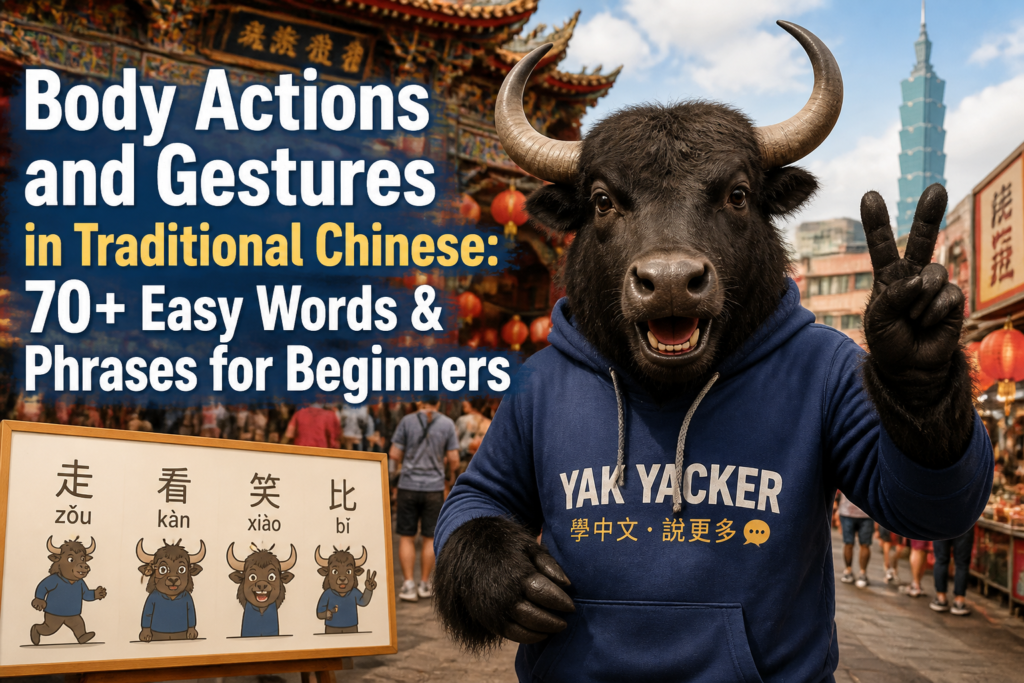
身體動作與手勢 shēntǐ dòngzuò yǔ shǒushì means body actions and gestures. In real-life Mandarin, people use these all the time — to wave, point, nod, shrug, clap, blink, and do that very Taiwanese “I get it, don’t worry” little hand wave. Quietly dramatic? Absolutely. Useful? Very.
For the broader learning path, visit our parent guide.
When you learn these words, you do more than memorize vocabulary. You start understanding the kind of language people use in cafés, classrooms, offices, MRT stations, and group chats where one emoji is doing the work of a whole sentence. Nice little life hack, honestly.
By the end of this guide, you’ll be able to talk about common body actions in Traditional Chinese, understand simple gesture vocabulary, and use practical example sentences without sounding like a textbook that escaped from a library.
For a broader vocabulary base, you can also review 基本詞彙 jīběn cíhuì and basic pronouns in 中文代名詞 Zhōngwén dàimíngcí.
Everyday Body Actions
Here are the most useful body-action words first. These are the ones you’ll actually see and hear in real conversation. Fancy vocabulary can wait in line.
| Traditional Chinese | Pinyin | Meaning | Example (ZH) | Example (Pinyin) | Translation (EN) |
|---|---|---|---|---|---|
| 做 | zuò | do; make | 我在做功課。 | Wǒ zài zuò gōngkè. | I am doing homework. |
| 走 | zǒu | walk; go | 我們走吧。 | Wǒmen zǒu ba. | Let’s go. |
| 跑 | pǎo | run | 他跑得很快。 | Tā pǎo de hěn kuài. | He runs very fast. |
| 跳 | tiào | jump | 小狗一直在跳。 | Xiǎogǒu yìzhí zài tiào. | The puppy keeps jumping. |
| 坐 | zuò | sit | 請坐這裡。 | Qǐng zuò zhèlǐ. | Please sit here. |
| 站 | zhàn | stand | 請站在旁邊。 | Qǐng zhàn zài pángbiān. | Please stand next to me. |
| 躺 | tǎng | lie down | 我想躺一下。 | Wǒ xiǎng tǎng yíxià. | I want to lie down for a bit. |
| 睡 | shuì | sleep | 他睡著了。 | Tā shuìzháo le. | He fell asleep. |
| 拿 | ná | take; hold | 請把杯子拿給我。 | Qǐng bǎ bēizi ná gěi wǒ. | Please hand me the cup. |
| 放 | fàng | put; place | 你可以放在桌上。 | Nǐ kěyǐ fàng zài zhuō shàng. | You can put it on the table. |
| 轉 | zhuǎn | turn | 請轉過來。 | Qǐng zhuǎn guòlái. | Please turn around. |
| 彎 | wān | bend | 他把手彎起來。 | Tā bǎ shǒu wān qǐlái. | He bends his hand up. |
Useful Hand Gestures
Hands do a lot of the talking in Mandarin, especially when speech gets short and the context gets messy. Which is most days, frankly.
| Traditional Chinese | Pinyin | Meaning | Example (ZH) | Example (Pinyin) | Translation (EN) |
|---|---|---|---|---|---|
| 揮手 | huī shǒu | wave | 她揮手跟我說再見。 | Tā huī shǒu gēn wǒ shuō zàijiàn. | She waved goodbye to me. |
| 招手 | zhāo shǒu | beckon; wave over | 他在門口招手叫我過去。 | Tā zài ménkǒu zhāo shǒu jiào wǒ guòqù. | He waved me over at the door. |
| 指 | zhǐ | point | 不要一直指別人。 | Bú yào yìzhí zhǐ biérén. | Don’t keep pointing at people. |
| 比 | bǐ | gesture with fingers; compare | 他比了一個讚。 | Tā bǐ le yí gè zàn. | He gave a thumbs-up. |
| 比讚 | bǐ zàn | give a thumbs-up | 大家都對這個答案比讚。 | Dàjiā dōu duì zhège dá’àn bǐ zàn. | Everyone gave this answer a thumbs-up. |
| 比手畫腳 | bǐ shǒu huà jiǎo | gesture wildly | 他不會中文,只好比手畫腳。 | Tā bú huì Zhōngwén, zhǐhǎo bǐ shǒu huà jiǎo. | He can’t speak Chinese, so he has to gesture wildly. |
| 比中指 | bǐ zhōngzhǐ | show the middle finger | 這個動作很不禮貌。 | Zhège dòngzuò hěn bù lǐmào. | This gesture is very rude. |
| 握手 | wò shǒu | shake hands | 他們見面時握手。 | Tāmen jiànmiàn shí wò shǒu. | They shake hands when they meet. |
| 鼓掌 | gǔ zhǎng | clap | 大家一起鼓掌。 | Dàjiā yìqǐ gǔ zhǎng. | Everyone claps together. |
| 拍手 | pāi shǒu | clap hands | 小朋友拍手唱歌。 | Xiǎopéngyǒu pāi shǒu chànggē. | The children clap and sing. |
Face And Head Gestures
Faces are small, but they do a shocking amount of work. One eyebrow can say more than five polite sentences.
| Traditional Chinese | Pinyin | Meaning | Example (ZH) | Example (Pinyin) | Translation (EN) |
|---|---|---|---|---|---|
| 點頭 | diǎn tóu | nod | 老師點頭表示同意。 | Lǎoshī diǎn tóu biǎoshì tóngyì. | The teacher nods to show agreement. |
| 搖頭 | yáo tóu | shake head | 他搖頭說不行。 | Tā yáo tóu shuō bù xíng. | He shook his head and said no. |
| 歪頭 | wāi tóu | tilt head | 她歪頭想了一下。 | Tā wāi tóu xiǎng le yíxià. | She tilted her head and thought for a moment. |
| 抬頭 | tái tóu | raise head | 他抬頭看天空。 | Tā tái tóu kàn tiānkōng. | He raises his head to look at the sky. |
| 低頭 | dī tóu | lower head | 大家都低頭看手機。 | Dàjiā dōu dī tóu kàn shǒujī. | Everyone is looking down at their phones. |
| 眨眼 | zhǎ yǎn | blink; wink | 她對我眨眼。 | Tā duì wǒ zhǎ yǎn. | She winked at me. |
| 皺眉 | zhòu méi | frown | 他一聽就皺眉了。 | Tā yì tīng jiù zhòu méi le. | He frowned as soon as he heard it. |
| 笑 | xiào | smile; laugh | 她笑得很開心。 | Tā xiào de hěn kāixīn. | She smiled very happily. |
| 哭 | kū | cry | 小孩開始哭了。 | Xiǎohái kāishǐ kū le. | The child started crying. |
| 吐舌頭 | tǔ shétou | stick out tongue | 她做錯事後吐舌頭。 | Tā zuò cuò shì hòu tǔ shétou. | She stuck out her tongue after making a mistake. |
Arms, Shoulders, And Upper-Body Movements
| Traditional Chinese | Pinyin | Meaning | Example (ZH) | Example (Pinyin) | Translation (EN) |
|---|---|---|---|---|---|
| 舉手 | jǔ shǒu | raise hand | 想發言的人可以舉手。 | Xiǎng fāyán de rén kěyǐ jǔ shǒu. | People who want to speak can raise their hand. |
| 伸手 | shēn shǒu | reach out | 他伸手拿書。 | Tā shēn shǒu ná shū. | He reaches out to take the book. |
| 張開手 | zhāng kāi shǒu | open the hand | 請把手張開。 | Qǐng bǎ shǒu zhāng kāi. | Please open your hand. |
| 抱 | bào | hug; hold | 媽媽抱著孩子。 | Māmā bàozhe háizi. | The mother is holding the child. |
| 摟 | lǒu | wrap arm around; embrace | 他摟著朋友拍照。 | Tā lǒuzhe péngyǒu pāizhào. | He put his arm around his friend for a photo. |
| 拍 | pāi | pat; tap | 她拍了拍我的肩膀。 | Tā pāi le pāi wǒ de jiānbǎng. | She patted my shoulder. |
| 推 | tuī | push | 請不要推門。 | Qǐng bú yào tuī mén. | Please do not push the door. |
| 拉 | lā | pull | 你可以拉開窗戶。 | Nǐ kěyǐ lā kāi chuānghù. | You can pull the window open. |
| 按 | àn | press | 請按這個按鈕。 | Qǐng àn zhège ànniǔ. | Please press this button. |
| 聳肩 | sǒng jiān | shrug | 他聳肩,表示不知道。 | Tā sǒng jiān, biǎoshì bù zhīdào. | He shrugged to show he didn’t know. |
| 撓頭 | náo tóu | scratch head | 他撓頭想答案。 | Tā náo tóu xiǎng dá’àn. | He scratched his head while thinking of the answer. |
Legs, Feet, And Movement Words
These words help you describe movement clearly. They are especially handy when giving directions, talking about exercise, or explaining that you are late because your scooter betrayed you again.
| Traditional Chinese | Pinyin | Meaning | Example (ZH) | Example (Pinyin) | Translation (EN) |
|---|---|---|---|---|---|
| 抬腳 | tái jiǎo | lift foot | 請抬腳走過來。 | Qǐng tái jiǎo zǒu guòlái. | Please lift your foot and walk over. |
| 跺腳 | duò jiǎo | stomp | 她生氣時會跺腳。 | Tā shēngqì shí huì duò jiǎo. | When she is angry, she stomps her feet. |
| 踢 | tī | kick | 他踢到桌角了。 | Tā tī dào zhuōjiǎo le. | He kicked the corner of the table. |
| 跨 | kuà | step over; straddle | 請跨過這條線。 | Qǐng kuà guò zhè tiáo xiàn. | Please step over this line. |
| 蹲 | dūn | squat; crouch | 小朋友蹲在地上看螞蟻。 | Xiǎopéngyǒu dūn zài dìshàng kàn mǎyǐ. | The child squats on the ground to watch ants. |
| 跪 | guì | kneel | 他跪下來求原諒。 | Tā guì xiàlái qiú yuánliàng. | He knelt down and asked for forgiveness. |
| 摔倒 | shuāi dǎo | fall down | 他在樓梯上摔倒了。 | Tā zài lóutī shàng shuāi dǎo le. | He fell down on the stairs. |
| 跌倒 | diē dǎo | fall; tumble | 小孩不小心跌倒。 | Xiǎohái bù xiǎoxīn diē dǎo. | The child accidentally fell. |
| 滑倒 | huá dǎo | slip and fall | 地板太濕,他滑倒了。 | Dìbǎn tài shī, tā huá dǎo le. | The floor was too wet, and he slipped. |
| 慢慢走 | mànmàn zǒu | walk slowly | 雨天路滑,請慢慢走。 | Yǔtiān lù huá, qǐng mànmàn zǒu. | It’s slippery in the rain, so please walk slowly. |
Useful Expressions With The Body
These are not just isolated verbs. They’re the little phrases that make your Mandarin sound alive and normal.
| Traditional Chinese | Pinyin | Meaning | Example (ZH) | Example (Pinyin) | Translation (EN) |
|---|---|---|---|---|---|
| 身體不舒服 | shēntǐ bù shūfu | feel unwell | 我今天身體不舒服。 | Wǒ jīntiān shēntǐ bù shūfu. | I feel unwell today. |
| 手忙腳亂 | shǒu máng jiǎo luàn | flustered; in a rush | 他一忙就手忙腳亂。 | Tā yì máng jiù shǒu máng jiǎo luàn. | He gets flustered as soon as things get busy. |
| 動手 | dòng shǒu | start doing; use hands | 別動手,先聽我說。 | Bié dòng shǒu, xiān tīng wǒ shuō. | Don’t start acting; listen to me first. |
| 動腳 | dòng jiǎo | move one’s feet; get going | 你先動腳,我等一下來。 | Nǐ xiān dòng jiǎo, wǒ děng yíxià lái. | You go ahead first; I’ll come later. |
| 伸懶腰 | shēn lǎnyāo | stretch the body | 他起床後先伸懶腰。 | Tā qǐchuáng hòu xiān shēn lǎnyāo. | He stretches after getting up. |
| 揉眼睛 | róu yǎnjīng | rub eyes | 她太累了,一直揉眼睛。 | Tā tài lèi le, yìzhí róu yǎnjīng. | She is so tired that she keeps rubbing her eyes. |
| 咬指甲 | yǎo zhǐjiǎ | bite nails | 不要咬指甲。 | Bú yào yǎo zhǐjiǎ. | Don’t bite your nails. |
| 捂嘴 | wǔ zuǐ | cover mouth | 她笑到捂嘴。 | Tā xiào dào wǔ zuǐ. | She laughed so hard she covered her mouth. |
| 張嘴 | zhāng zuǐ | open mouth | 請張嘴讓我看一下。 | Qǐng zhāng zuǐ ràng wǒ kàn yíxià. | Please open your mouth and let me take a look. |
| 閉嘴 | bì zuǐ | shut up; close mouth | 他叫大家閉嘴。 | Tā jiào dàjiā bì zuǐ. | He told everyone to be quiet. |
Tone, Politeness, And Taiwan Usage Notes
Some gestures are friendly. Some are practical. Some are rude enough to start a fight before the sentence even begins. Language loves drama.
| Item | Pinyin | Meaning | Note |
|---|---|---|---|
| 點頭 | diǎn tóu | nod | A common sign of agreement or acknowledgment. |
| 搖頭 | yáo tóu | shake head | Usually means “no” in Mandarin. |
| 比讚 | bǐ zàn | thumbs-up | Friendly and common in Taiwan, social media, and daily speech. |
| 招手 | zhāo shǒu | beckon | Often used to call someone over casually. |
| 比中指 | bǐ zhōngzhǐ | show middle finger | Very rude. Best learned for recognition, not performance. Surprise. |
小提醒 xiǎo tíxǐng: In Taiwan, people often use small, polite hand motions in conversation. A tiny wave, nod, or finger point can say a lot. Sometimes too much. Human beings are very efficient at being indirect.
Grammar Notes You’ll Actually Use
When body-action words appear in sentences, a few grammar patterns show up again and again. Good news: they are not trying to trick you. Usually.
| Pattern | Meaning | Example (ZH) | Pinyin | English |
|---|---|---|---|---|
| 在 + 動作 | action in progress | 他在揮手。 | Tā zài huī shǒu. | He is waving. |
| 動作 + 了 | completed action | 她點頭了。 | Tā diǎn tóu le. | She nodded. |
| 把 + 受詞 + 動作 | handle something directly | 請把手舉起來。 | Qǐng bǎ shǒu jǔ qǐlái. | Please raise your hand. |
| 一直 + 動作 | continuously | 他一直搖頭。 | Tā yìzhí yáo tóu. | He keeps shaking his head. |
| 動作 + 一下 | do it briefly / a little | 你可以招手一下嗎? | Nǐ kěyǐ zhāo shǒu yíxià ma? | Can you wave a little? |
Notice the little word 一下 yíxià. It softens the action. In daily Mandarin, it often sounds friendlier and less bossy. Mandarin, like every language, enjoys a small amount of sugar with its commands.
Common Beginner Mistakes
- Mixing up 點頭 diǎn tóu and 搖頭 yáo tóu. One means yes-like agreement, the other means no-like refusal.
- Using the wrong gesture word. 揮手 huī shǒu is waving goodbye or hello. 招手 zhāo shǒu is waving someone over. Small difference, big confusion.
- Forgetting context. 比讚 bǐ zàn can be a literal thumbs-up or a social approval gesture.
- Using rude gestures casually. 比中指 bǐ zhōngzhǐ is not cute, funny, or “just a joke” in most situations.
- Dropping the verb. In Mandarin, you often need the action verb itself: 揮手 huī shǒu, not just “wave” in English-style fragments.
- Overusing direct commands. Adding 請 qǐng or 一下 yíxià can make requests sound more natural.
Practice: Swap The Action
Try replacing the underlined action with the correct Chinese word. Nice and simple. Your brain can handle this. Probably.
| Prompt | Answer | Pinyin | English |
|---|---|---|---|
| 我想 ____ 一下。 | 坐 | zuò | I want to sit for a bit. |
| 請先 ____ 手。 | 舉 | jǔ | Please raise your hand first. |
| 他看到我就 ____。 | 揮手 | huī shǒu | He waved when he saw me. |
| 小孩一直 ____。 | 哭 | kū | The child kept crying. |
| 她聽完後 ____ 了。 | 點頭 | diǎn tóu | She nodded after listening. |
| 他太累了,想 ____。 | 躺 | tǎng | He is too tired and wants to lie down. |
| 別一直 ____ 別人。 | 指 | zhǐ | Don’t keep pointing at people. |
| 她把門 ____ 開。 | 推 | tuī | She pushed the door open. |
| 他一緊張就 ____ 頭。 | 搖 | yáo | He shakes his head when he gets nervous. |
| 大家一起 ____。 | 鼓掌 | gǔ zhǎng | Everyone clapped together. |
Quick Reference Summary
- Wave: 揮手 huī shǒu
- Wave someone over: 招手 zhāo shǒu
- Point: 指 zhǐ
- Thumbs-up: 比讚 bǐ zàn
- Nod: 點頭 diǎn tóu
- Shake head: 搖頭 yáo tóu
- Raise hand: 舉手 jǔ shǒu
- Shake hands: 握手 wò shǒu
- Clap: 鼓掌 gǔ zhǎng
- Hug: 抱 bào
- Lie down: 躺 tǎng
- Stomp: 跺腳 duò jiǎo
- Shrug: 聳肩 sǒng jiān
If you want a stricter vocabulary check, try the Traditional Chinese vocabulary test. If you want a placement-style check with more structured review, the TOCFL placement test is a solid, boring, trustworthy option — exactly what good learning tools should be.
And for the grammar bits that connect these actions into real sentences, the guide on 連接詞 liánjiēcí can help you link ideas without sounding like you glued verbs together at random. Little upgrade, big difference.
Yak Takeaway: body actions in Mandarin are practical, common, and surprisingly expressive. Learn the most useful ones first, use them in short sentences, and don’t forget: in real life, a tiny nod can do half the talking for you. Humans are efficient like that.