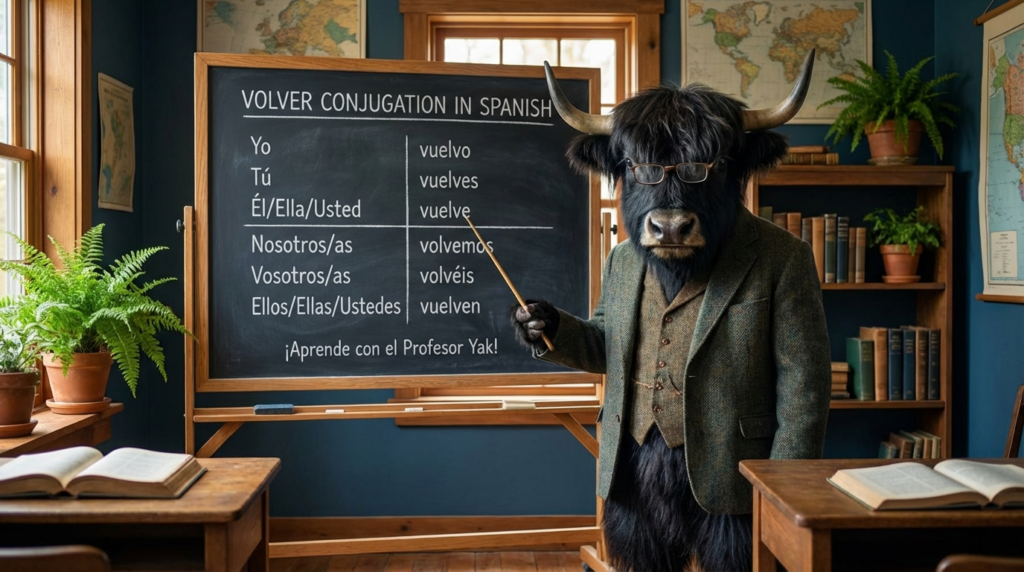
Spanish Volver Conjugation Made Easy
Charts, rules, real-life examples, and the sneaky difference between volver, volver a, and volverse.
A question like ¿A qué hora vuelves? sounds tiny, but it does a lot of heavy lifting in Spanish. You hear it when someone leaves work, runs out for tacos, or swears they will be back in “just five minutes,” which is sometimes less a fact and more a personality trait. That is why volver matters so much: adults use it constantly.
The good news is that volver is not chaos in verb form. It has two main plot twists: the o changes to ue in stressed forms, and the past participle is the irregular vuelto. Learn those, add the ultra-useful pattern volver a + infinitive, and this verb suddenly gets a lot less dramatic.
Fast Fact 1
Volver usually means to return or to come back.
Example: Vuelvo mañana. = I’m coming back tomorrow.
Fast Fact 2
It is a stem-changing verb: o → ue when the syllable is stressed.
Example: yo vuelvo, but nosotros volvemos.
Fast Fact 3
The past participle is vuelto, not volvido.
Example: He vuelto. = I have returned / I’m back.
Yak Box: The 10-Second Rule
- Volver = to return / to come back.
- Volver a + infinitive = to do something again.
- Volverse = to become / to turn.
- In the present and present subjunctive, yo, tú, él/ella/usted, ustedes, ellos/ellas use ue, but nosotros keeps o.
- In Mexican Spanish, you will usually hear ustedes instead of vosotros. Nice and practical.
What Volver Means In Spanish
Most of the time, volver means to return or to come back. It can also appear in two very common patterns that beginners should learn early: volver a + infinitive for repetition, and volverse for becoming something different.
| Form | English Meaning | Example Sentence |
|---|---|---|
| volver | to return / to come back | Mis amigos vuelven el domingo. My friends are coming back on Sunday. |
| volver a + infinitive | to do something again | Voy a volver a llamar. I’m going to call again. |
| volverse | to become / to turn | Se volvió muy serio. He became very serious. |
Present Tense Conjugation Of Volver
This is the form you will use all the time for daily plans, routines, and the classic “I’ll be back soon” promise. The pattern is simple: when the syllable is stressed, the o changes to ue.
If the o is stressed, it usually flips to ue. If it is not stressed, it behaves.
| Subject | Conjugation | English Meaning | Example Sentence |
|---|---|---|---|
| yo | vuelvo | I return / I come back | Vuelvo en media hora. I’ll be back in half an hour. |
| tú | vuelves | you return / you come back | Tú vuelves muy tarde. You come back very late. |
| él / ella / usted | vuelve | he, she, you return(s) | Ella vuelve mañana. She comes back tomorrow. |
| nosotros / nosotras | volvemos | we return / we come back | Volvemos a casa después del trabajo. We go back home after work. |
| ustedes | vuelven | you all return / come back | ¿Ustedes vuelven hoy? Are you all coming back today? |
| ellos / ellas | vuelven | they return / come back | Ellos vuelven el lunes. They come back on Monday. |
Spain Spanish Note
In Spain, you may also see and hear vosotros volvéis. In Mexican Spanish, ustedes vuelven is the everyday plural form.
Preterite Vs Imperfect: The Past Tense Difference That Actually Matters
This is where many learners trip. Not because the forms are impossible, but because the choice depends on how you see the action.
- Preterite = one completed return in the past.
- Imperfect = repeated, habitual, or background return in the past.
| Subject | Preterite | Imperfect | Example Contrast |
|---|---|---|---|
| yo | volví | volvía | Ayer volví temprano. = I came back early yesterday. De niño, volvía caminando. = As a child, I used to walk back. |
| tú | volviste | volvías | Volviste muy tarde. = You came back very late. Siempre volvías tarde. = You always came back late. |
| él / ella / usted | volvió | volvía | Mi jefe volvió ayer. = My boss came back yesterday. Mi jefe volvía cada mes. = My boss used to come back every month. |
| nosotros | volvimos | volvíamos | Volvimos a la oficina. = We returned to the office. Volvíamos juntos. = We used to come back together. |
| ustedes | volvieron | volvían | Ustedes volvieron anoche. = You all came back last night. Ustedes volvían los viernes. = You all used to come back on Fridays. |
| ellos / ellas | volvieron | volvían | Ellas volvieron temprano. = They came back early. Ellas volvían después de cenar. = They used to come back after dinner. |
Quick Memory Trick: volví points to a finished event. volvía paints a background or habit. One is a photo. The other is the whole messy movie.
Future And Conditional Forms
Good news: the future and conditional are regular-looking here. No stem change, no tiny ambush.
| Subject | Future | Conditional | Example Sentence |
|---|---|---|---|
| yo | volveré | volvería | Volveré mañana. = I will come back tomorrow. Volvería, pero no tengo tiempo. = I would come back, but I don’t have time. |
| tú | volverás | volverías | Volverás pronto. = You will come back soon. Volverías si pudieras. = You would come back if you could. |
| él / ella / usted | volverá | volvería | Ella volverá el lunes. = She will come back on Monday. Usted volvería más tarde. = You would return later. |
| nosotros | volveremos | volveríamos | Volveremos después de comer. = We will come back after lunch. Volveríamos encantados. = We would gladly come back. |
| ustedes | volverán | volverían | Ustedes volverán mañana. = You all will return tomorrow. Ustedes volverían sin problema. = You all would come back without a problem. |
| ellos / ellas | volverán | volverían | Ellos volverán pronto. = They will come back soon. Ellos volverían con gusto. = They would come back gladly. |
Present Subjunctive And Commands
The present subjunctive shows up after expressions of doubt, emotion, hope, advice, and requests. Commands use some of those same forms, so this section pulls double duty. Efficient, unlike some meetings.
| Subject | Present Subjunctive | English Meaning | Example Sentence |
|---|---|---|---|
| yo | vuelva | that I return | Dudo que vuelva hoy. I doubt that I’ll come back today. |
| tú | vuelvas | that you return | Espero que vuelvas pronto. I hope you come back soon. |
| él / ella / usted | vuelva | that he, she, you return | Es posible que ella vuelva mañana. It’s possible that she’ll come back tomorrow. |
| nosotros | volvamos | that we return | Quieren que volvamos temprano. They want us to come back early. |
| ustedes | vuelvan | that you all return | Ojalá vuelvan pronto. I hope you all come back soon. |
| ellos / ellas | vuelvan | that they return | Me alegra que ellos vuelvan. I’m glad they are coming back. |
| Command Type | Spanish Form | English Meaning | Example Sentence |
|---|---|---|---|
| tú affirmative | vuelve | come back / return | Vuelve temprano. Come back early. |
| tú negative | no vuelvas | don’t come back / don’t return | No vuelvas tan tarde. Don’t come back so late. |
| usted affirmative | vuelva | come back | Vuelva mañana, por favor. Come back tomorrow, please. |
| usted negative | no vuelva | don’t come back | No vuelva sin llamar. Don’t come back without calling. |
| nosotros affirmative | volvamos | let’s come back / let’s return | Volvamos al tema. Let’s get back to the topic. |
| nosotros negative | no volvamos | let’s not come back | No volvamos a discutir eso. Let’s not argue about that again. |
| ustedes affirmative | vuelvan | come back | Vuelvan en una hora. Come back in an hour. |
| ustedes negative | no vuelvan | don’t come back | No vuelvan tan tarde. Don’t come back so late. |
Non-Personal And Perfect Forms
These are the forms that make your Spanish sound more complete very quickly. The most important one to memorize is vuelto.
| Form | English Meaning | Example Sentence |
|---|---|---|
| volver | to return / to come back | Quiero volver pronto. I want to come back soon. |
| volviendo | returning / coming back | Estoy volviendo a casa. I am going back home. |
| vuelto | returned / come back | Ya he vuelto. I have already returned / I’m already back. |
| he vuelto | I have returned / I’m back | He vuelto al gimnasio. I have gone back to the gym. |
| había vuelto | I had returned | Cuando llamaste, ya había vuelto. When you called, I had already returned. |
| habré vuelto | I will have returned | Para las seis, habré vuelto. By six, I will have returned. |
How To Use Volver A + Infinitive
This pattern is wildly useful because it means to do something again. Once you learn it, you will start noticing it everywhere in Spanish.
Pattern: volver + a + infinitive
| Phrase | English Meaning | Example Sentence |
|---|---|---|
| volver a empezar | to start again | Si quieres, podemos volver a empezar. If you want, we can start again. |
| volver a llamar | to call again | Voy a volver a llamar mañana. I’m going to call again tomorrow. |
| volver a ver | to see again | Quiero volver a ver esa película. I want to see that movie again. |
| volver a leer | to read again | Necesito volver a leer el correo. I need to read the email again. |
| volver a intentar | to try again | Vamos a volver a intentar. We’re going to try again. |
Volver Vs Regresar Vs Volverse
These are close, but not interchangeable in every situation.
| Verb | English Meaning | Best Use | Example Sentence |
|---|---|---|---|
| volver | to return / to come back | general everyday use | Mi hermana vuelve mañana. My sister is coming back tomorrow. |
| regresar | to return / to go back | also common, often slightly more formal or neutral depending on region | Voy a regresar temprano. I’m going to return early. |
| volverse | to become / to turn | change in condition, attitude, or character | Se volvió muy paciente. She became very patient. |
Useful Real-Life Distinction: Vuelvo mañana means “I’m coming back tomorrow.”
Vuelvo a llamar mañana means “I’m calling again tomorrow.”
Se volvió impaciente means “He became impatient.” Same family, very different job.
Useful Phrases And Real-Life Sentences With Volver
| Spanish Phrase | English Meaning | Example Sentence |
|---|---|---|
| volver a casa | to go back home | Después del trabajo, vuelvo a casa. After work, I go back home. |
| volver temprano | to come back early | Hoy voy a volver temprano. Today I’m going to come back early. |
| volver tarde | to come back late | No me gusta volver tarde. I don’t like coming back late. |
| volver del trabajo | to come back from work | Mi papá vuelve del trabajo a las siete. My dad comes back from work at seven. |
| volver del viaje | to return from the trip | Volvemos del viaje el domingo. We return from the trip on Sunday. |
| volver a intentarlo | to try it again | Si falla, podemos volver a intentarlo. If it fails, we can try it again. |
| volver a empezar | to start again | No pasa nada, vamos a volver a empezar. It’s fine, we’re going to start again. |
| volver a ver a alguien | to see someone again | Espero volver a verte pronto. I hope to see you again soon. |
| volver a trabajar | to go back to work | Ella vuelve a trabajar en abril. She goes back to work in April. |
| volver loco a alguien | to drive someone crazy | Ese ruido me vuelve loco. That noise drives me crazy. |
Common Mistakes And Fast Fixes
- Mistake: yo volvo
Fix: yo vuelvo
The stem changes in stressed forms. - Mistake: he volvido
Fix: he vuelto
The participle is irregular. - Mistake: using volví when you mean a habit
Fix: use volvía for repeated past actions.
Cuando estudiaba, volvía tarde. = When I was studying, I used to come back late. - Mistake: no vuelve for “don’t come back”
Fix: use the command form no vuelvas. - Mistake: mixing up volver and volverse
Fix: volver = return; volverse = become.
Practice Section
Fill in the blank with the correct form of volver.
- Yo ______ mañana por la tarde.
- Cuando era estudiante, siempre ______ tarde a casa.
- Ojalá tú ______ pronto.
- No ______ tan tarde, por favor. (tú, negative command)
- Nosotros ______ a empezar desde cero.
- Ayer ellos ______ del viaje muy cansados.
- Ya he ______ a la oficina. (past participle)
- Si tuviera tiempo, yo ______ a ese restaurante.
Now translate these into Spanish.
- We are going to call again.
- She came back early yesterday.
- They hope you all return tomorrow.
Answers
- vuelvo
- volvía
- vuelvas
- no vuelvas
- volvamos
- volvieron
- vuelto
- volvería
- Vamos a volver a llamar.
- Ella volvió temprano ayer.
- Esperan que ustedes vuelvan mañana.
Quick Reference Summary
| Item | What To Remember |
|---|---|
| Main meaning | volver = to return / to come back |
| Stem change | o → ue in stressed forms: vuelvo, vuelves, vuelve, vuelven |
| No stem change | nosotros volvemos |
| Past participle | vuelto |
| Repetition pattern | volver a + infinitive = to do again |
| Reflexive meaning | volverse = to become / to turn |
| Best past tense for one completed return | volví, volvió, volvieron |
| Best past tense for repeated past returns | volvía, volvíamos, volvían |
FAQ
Is volver irregular?
Yes. It is a stem-changing verb in several forms, and its past participle is irregular: vuelto.
Why Is It Volvemos And Not Vuelvemos?
Because the stem change happens when the syllable is stressed. In volvemos, the stressed syllable is not the one with the original o, so the verb keeps the plain vowel.
What Does Volver A Mean?
It means to do something again. Volver a leer = to read again. Volver a intentarlo = to try it again.
Do I Need Vosotros For Mexican Spanish?
Not really. In Mexico, ustedes is the normal plural form in everyday speech.
Final Yak
If you remember only three things, make them these: vuelvo, volví, and vuelto. Those three forms unlock a huge amount of real Spanish. Add volver a + infinitive, and suddenly you can talk about returning, coming back, and doing things again without sounding like you memorized a chart and immediately forgot why.