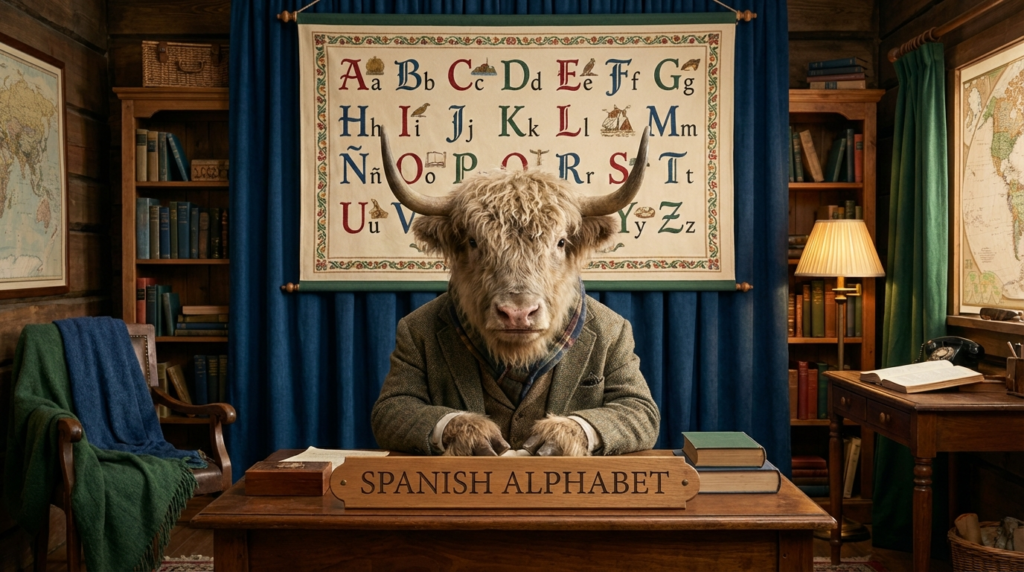
Spanish Alphabet For Beginners
Learn the 27 Spanish letters, the tricky sounds that actually matter, and the spelling phrases that save you from awkward blank stares.
The first time I had to spell my surname at a hotel check-in in Oaxaca, I said the letters the English way and got the politest confused look of my life. We were both staring at the same passport, but my alphabet and his alphabet were not doing teamwork. The moment I switched to hache, eme, and eñe, the problem vanished.
That is why the Spanish alphabet matters early. It is not just classroom wallpaper. It helps you spell your name, read menus, understand place names, pronounce new words, and stop treating every written word like a tiny ambush. The good news: Spanish spelling is usually far more logical than English spelling, which, frankly, enjoys chaos a little too much.
Yak Tip
In modern Spanish, the alphabet has 27 letters. The old classroom version with 29 or 30 usually includes ch and ll as if they were separate letters. They still matter in real Spanish, but today they are treated as digraphs, not official alphabet letters.
Spanish Alphabet At A Glance
El Alfabeto
English meaning: the alphabet
Example: El alfabeto español tiene 27 letras. (The Spanish alphabet has 27 letters.)
El Abecedario
English meaning: the alphabet / the ABCs
Example: Estoy repasando el abecedario. (I’m reviewing the alphabet.)
La Letra
English meaning: letter
Example: La letra ñ cambia la palabra. (The letter ñ changes the word.)
La Vocal
English meaning: vowel
Example: A, e, i, o y u son vocales. (A, e, i, o and u are vowels.)
La Consonante
English meaning: consonant
Example: La r es una consonante. (R is a consonant.)
La Mayúscula
English meaning: uppercase letter
Example: México lleva M mayúscula. (México takes a capital M.)
La Minúscula
English meaning: lowercase letter
Example: Escribe tu nombre en minúscula. (Write your name in lowercase.)
La Tilde
English meaning: written accent mark
Example: Teléfono lleva tilde. (Teléfono has an accent mark.)
The Modern Spanish Alphabet: 27 Letters
Spanish uses the same basic Latin alphabet as English, plus one extra letter: ñ. That gives Spanish 27 official letters. In modern usage, ch and ll still appear all the time, but they are treated as letter combinations, not separate alphabet letters.
For Mexican Spanish, one pronunciation note matters right away: z and c before e or i usually sound like s. So cena sounds like “SEH-nah,” not like “THEH-nah.” Spain often does that differently. Welcome to Spanish: consistent, useful, and only mildly dramatic.
Once you learn the letter rules, Spanish stops feeling like a code and starts feeling readable. Lovely concept, honestly.
Spanish Alphabet Chart: A Through I
| Spanish | English Meaning | Example 1 | Example 2 | Example 3 |
|---|---|---|---|---|
| A — a | letter A | A de Ana. (A as in Ana.) | Ana abre la ventana. (Ana opens the window.) | Casa tiene dos aes. (Casa has two a’s.) |
| B — be | letter B | B de barco. (B as in boat.) | Bruno bebe agua. (Bruno drinks water.) | Bebé lleva dos bes. (Bebé has two b’s.) |
| C — ce | letter C | C de casa. (C as in house.) | Cine empieza con ce. (Cine starts with c.) | La c cambia con e o i. (C changes with e or i.) |
| D — de | letter D | D de dedo. (D as in finger.) | Daniel duerme poco. (Daniel sleeps little.) | Madrid termina con de. (Madrid ends with d.) |
| E — e | letter E | E de elefante. (E as in elephant.) | Elena escribe emails. (Elena writes emails.) | Verde tiene dos es. (Verde has two e’s.) |
| F — efe | letter F | F de foto. (F as in photo.) | Felipe firma aquí. (Felipe signs here.) | Café frío lleva efe. (The phrase café frío has f.) |
| G — ge | letter G | G de gato. (G as in cat.) | Gente empieza con ge. (Gente starts with g.) | Guitarra lleva ge y u muda. (Guitarra has g and a silent u.) |
| H — hache | letter H | H de hola. (H as in hello.) | Hola lleva h muda. (Hola has a silent h.) | Ahora también empieza con h. (Ahora also starts with h.) |
| I — i | letter I | I de isla. (I as in island.) | Inés invita a Irma. (Inés invites Irma.) | Mi apellido tiene una i. (My last name has an i.) |
Spanish Alphabet Chart: J Through R
| Spanish | English Meaning | Example 1 | Example 2 | Example 3 |
|---|---|---|---|---|
| J — jota | letter J | J de jamón. (J as in ham.) | Julia juega hoy. (Julia plays today.) | Jirafa y gente comparten sonido. (Jirafa and gente share the sound.) |
| K — ka | letter K | K de kilo. (K as in kilo.) | Kioto empieza con ka. (Kioto starts with k.) | La k es poco común. (K is not very common.) |
| L — ele | letter L | L de leche. (L as in milk.) | Lola lee lento. (Lola reads slowly.) | Calle lleva doble ele. (Calle has double l.) |
| M — eme | letter M | M de mano. (M as in hand.) | Marta manda mensajes. (Marta sends messages.) | Mi nombre empieza con eme. (My name starts with m.) |
| N — ene | letter N | N de nube. (N as in cloud.) | Nico nada bien. (Nico swims well.) | Noche empieza con ene. (Noche starts with n.) |
| Ñ — eñe | letter Ñ | Ñ de niño. (Ñ as in niño.) | Mañana lleva eñe. (Mañana has ñ.) | Año no es lo mismo que ano. (Año is not the same as ano.) |
| O — o | letter O | O de oso. (O as in bear.) | Olga oye otro audio. (Olga hears another audio.) | Ocho empieza con o. (Ocho starts with o.) |
| P — pe | letter P | P de pan. (P as in bread.) | Pablo pide papas. (Pablo asks for potatoes.) | Papel lleva dos pes. (Papel has two p’s.) |
| Q — cu | letter Q | Q de queso. (Q as in cheese.) | Quiero queso, gracias. (I want cheese, thanks.) | La q casi siempre va con u. (Q almost always goes with u.) |
| R — erre | letter R | R de rojo. (R as in red.) | Pero tiene una r suave. (Pero has a soft r.) | Perro lleva doble erre. (Perro has double rr.) |
Spanish Alphabet Chart: S Through Z
| Spanish | English Meaning | Example 1 | Example 2 | Example 3 |
|---|---|---|---|---|
| S — ese | letter S | S de sopa. (S as in soup.) | Sara sonríe siempre. (Sara always smiles.) | Casa termina con ese. (Casa ends with s.) |
| T — te | letter T | T de taco. (T as in taco.) | Tomás toma té. (Tomás drinks tea.) | Tu teléfono tiene te. (Your phone has t.) |
| U — u | letter U | U de uva. (U as in grape.) | Úrsula usa un uniforme. (Úrsula uses a uniform.) | En queso, la u no suena. (In queso, the u is silent.) |
| V — uve | letter V | V de vaca. (V as in cow.) | Vivo en Veracruz. (I live in Veracruz.) | B y v suelen sonar igual. (B and v usually sound the same.) |
| W — uve doble | letter W | W de whisky. (W as in whisky.) | Walter usa Wi-Fi. (Walter uses Wi-Fi.) | La w aparece mucho en préstamos. (W appears often in loanwords.) |
| X — equis | letter X | X de Ximena. (X as in Ximena.) | México lleva equis. (México has x.) | Examen también lleva equis. (Examen also has x.) |
| Y — ye | letter Y | Y de yate. (Y as in yacht.) | Yo y Ana salimos hoy. (Ana and I are going out today.) | Hoy termina con ye. (Hoy ends with y.) |
| Z — zeta | letter Z | Z de zapato. (Z as in shoe.) | Azul lleva zeta. (Azul has z.) | En México, la z suena como s. (In Mexico, z sounds like s.) |
Important Digraphs You Still Need
These are not separate alphabet letters anymore, but you still need them because they show up constantly in real words. Ignoring them would be like learning traffic signs but skipping the stop sign. Bold choice, bad result.
| Spanish | English Meaning | Example 1 | Example 2 | Example 3 |
|---|---|---|---|---|
| ch | digraph ch | Chocolate empieza con ch. (Chocolate starts with ch.) | Mucho lleva ch. (Mucho has ch.) | Chihuahua también empieza con ch. (Chihuahua also starts with ch.) |
| ll | digraph ll | Lluvia lleva doble ele. (Lluvia has double l.) | Calle lleva doble ele. (Calle has double l.) | Me llamo empieza con ll. (Me llamo starts with ll.) |
| rr | digraph rr | Perro lleva doble erre. (Perro has double rr.) | Arroz lleva doble erre. (Arroz has double rr.) | Ferrocarril tiene doble erre. (Ferrocarril has double rr.) |
| qu | k sound before e or i | Queso lleva qu. (Queso has qu.) | Quince empieza con qu. (Quince starts with qu.) | Aquí también lleva qu. (Aquí also has qu.) |
| gu | g before e or i | Guerra lleva gu. (Guerra has gu.) | Guitarra también lleva gu. (Guitarra also has gu.) | Pingüino sí pronuncia la u. (Pingüino does pronounce the u.) |
The Sound Rules Adults Actually Need
| Pattern | Meaning | Example 1 | Example 2 |
|---|---|---|---|
| c + a, o, u | Usually sounds like k | casa (house) | comida (food) |
| c + e, i | In Mexican Spanish, usually sounds like s | cena (dinner) | cine (movie theater / cinema) |
| g + a, o, u | Hard g sound | gato (cat) | goma (eraser / rubber) |
| g + e, i | Strong throaty sound, like j | gente (people) | girar (to turn) |
| j | Strong throaty sound | jamón (ham) | jugar (to play) |
| h | Usually silent | hola (hello) | hotel (hotel) |
| r / rr | Single tap vs. strong trill | pero (but) | perro (dog) |
| ll / y | In much of Mexico, they sound very similar | llave (key) | ya (already) |
| qu, gue, gui | The u is usually silent | queso (cheese) | guitarra (guitar) |
| güe, güi | The umlaut tells you to pronounce the u | pingüino (penguin) | vergüenza (embarrassment / shame) |
Useful Phrases When You Need To Spell Something
This is the practical part. These phrases help when you are giving your name, spelling an address, checking a reservation, or fixing an email typo before it becomes a personality trait.
| Spanish | English Meaning | Example 1 | Example 2 | Example 3 |
|---|---|---|---|---|
| ¿Cómo se escribe? | How is it spelled? | ¿Cómo se escribe Oaxaca? (How do you spell Oaxaca?) | ¿Cómo se escribe tu apellido? (How do you spell your last name?) | Perdón, ¿cómo se escribe? (Sorry, how is it spelled?) |
| Se escribe… | It is spelled… | Se escribe con h. (It’s spelled with h.) | México se escribe con x. (México is spelled with x.) | Mi nombre se escribe así. (My name is spelled like this.) |
| con | with | Va con ñ. (It goes with ñ.) | Es con mayúscula. (It’s with a capital letter.) | Se escribe con doble ele. (It’s spelled with double l.) |
| sin | without | Es sin h. (It’s without h.) | Va sin tilde. (It goes without an accent mark.) | Se escribe sin u. (It’s spelled without u.) |
| mayúscula | uppercase letter | México va con M mayúscula. (México takes a capital M.) | Mi apellido empieza con mayúscula. (My last name starts with a capital letter.) | Solo la primera letra va con mayúscula. (Only the first letter is uppercase.) |
| minúscula | lowercase letter | Escríbelo en minúscula. (Write it in lowercase.) | Mi correo va en minúscula. (My email is in lowercase.) | La segunda letra va en minúscula. (The second letter is lowercase.) |
| b de bueno | b as in bueno | Mi apellido lleva b de bueno. (My last name has b as in bueno.) | Barco empieza con b de bueno. (Barco starts with b as in bueno.) | Es b de bueno, no uve. (It’s b as in bueno, not v.) |
| uve / v de vaca | letter v / v as in vaca | Veracruz empieza con uve. (Veracruz starts with v.) | Es uve, no be. (It’s v, not b.) | Vaca empieza con v de vaca. (Vaca starts with v as in vaca.) |
| doble ele | double l | Calle lleva doble ele. (Calle has double l.) | Lluvia también lleva doble ele. (Lluvia also has double l.) | Mi apellido tiene doble ele. (My last name has double l.) |
| doble erre | double r | Perro lleva doble erre. (Perro has double rr.) | Ferrocarril también lleva doble erre. (Ferrocarril also has double rr.) | No es una sola r. (It is not a single r.) |
| ¿Lleva tilde? | Does it have an accent mark? | ¿Teléfono lleva tilde? (Does teléfono have an accent mark?) | Sí, música lleva tilde. (Yes, música has an accent mark.) | Café también lleva tilde. (Café also has an accent mark.) |
| Repita, por favor. | Please repeat. | Repita, por favor, más despacio. (Please repeat, more slowly.) | ¿Puede repetirlo, por favor? (Can you repeat it, please?) | Repita la última letra. (Repeat the last letter.) |
| ¿Me lo puede deletrear? | Can you spell it for me? | No entendí; ¿me lo puede deletrear? (I didn’t understand; can you spell it for me?) | Sí, te lo deletreo ahora. (Yes, I’ll spell it for you now.) | El apellido es difícil; ¿me lo puede deletrear? (The last name is hard; can you spell it for me?) |
Practice Section
- Say these aloud and notice the difference: pero, perro, caro, carro.
- Read these words and find the silent letter: hola, hotel, ahora.
- Which words use the Mexican s sound for c or z? cena, cine, zapato.
- Spell your first name out loud using letter names: eme, a, te, and so on.
- Now spell your last name with support phrases: Es con mayúscula, b de bueno, sin h, con tilde.
- Read these carefully: queso, guitarra, guerra, pingüino.
See The Answers And What To Notice
- pero and caro use a soft single r; perro and carro use a strong rolled sound.
- In hola, hotel, and ahora, the h is silent.
- In Mexican Spanish, cena, cine, and zapato all use an s-like sound for that letter.
- In queso, guitarra, and guerra, the u is silent. In pingüino, the dots tell you to pronounce the u.
- If your name has b or v, spell it slowly. Those letters often sound the same in Spanish, so the clarification phrase matters.
Common Mistakes And Fast Fixes
- Mistake: Thinking Spanish has 30 official letters. Fix: Learn the modern 27-letter alphabet, then treat ch, ll, and rr as useful combinations.
- Mistake: Pronouncing every c the same way. Fix: Check the next vowel. ca, co, cu differ from ce, ci.
- Mistake: Saying the h. Fix: Don’t. It is usually silent, just standing there for emotional support.
- Mistake: Ignoring accent marks. Fix: Pay attention to the tilde because it changes stress and sometimes meaning.
- Mistake: Treating b and v like English does. Fix: In Spanish they usually sound alike, so learn the letter names for spelling.
- Mistake: Panicking over the rolled r. Fix: Start with the difference between pero and perro. Even that one contrast helps a lot.
- Mistake: Assuming ll and y must sound different everywhere. Fix: In much of Mexico, they are very similar in everyday speech.
Quick Reference Summary
| Topic | Fast Rule | Example |
|---|---|---|
| Official alphabet | 27 letters | ñ is the extra letter |
| ch and ll | Useful digraphs, not separate letters | chocolate, llave |
| h | Usually silent | hola |
| c + e/i | Usually sounds like s in Mexico | cine, cena |
| z | Usually sounds like s in Mexico | zapato |
| g + e/i and j | Strong throaty sound | gente, jugar |
| qu, gue, gui | u is usually silent | queso, guitarra |
| güe, güi | Pronounce the u | pingüino |
| r vs. rr | Soft tap vs. strong trill | pero / perro |
| Spelling help | Use support phrases | b de bueno, v de vaca |
Final Yak
If you can name the letters, spot the silent h, hear the difference between r and rr, and survive que, qui, gue, and gui, you already have a strong base for Spanish reading and pronunciation. That is a real win. The alphabet is small, but it quietly fixes a ridiculous number of beginner problems.