Spanish girl names are often melodic, classic, and easy to remember. Some are shared across Latin America and Spain, while others feel more regional or old-fashioned. And yes, a lot of them sound lovely even before you know what they mean — that is extremely unfair, but useful.
For the broader learning path, visit our parent guide.
In Spanish, names often carry religious, historical, or nature-based meanings. That means a name can be more than just a label; it can be a little story. If you are learning Spanish, names are also a sneaky way to learn pronunciation, accents, gender endings, and common cultural patterns without staring at a grammar chart like it insulted your family.
This guide gives you popular Spanish girl names, their meanings, pronunciation help, and example sentences in real Spanish. For more name ideas, you can also compare them with Popular Spanish Boy Names.
Why Spanish Names Matter In Real Life
You will hear Spanish names everywhere: in introductions, family conversations, school settings, customer service, and birthday celebrations. If someone says “Mucho gusto, me llamo Valeria”, that is not just a name — it is a tiny doorway into everyday Spanish.
Spanish names also help with pronunciation patterns. For example, ll can sound like “y” in most Latin American Spanish, while j is usually a strong breathy sound like the h in “hello” but rougher. So names are doing double duty: culture lesson and pronunciation practice. Efficient little things.
Popular Spanish Girl Names
Below are widely used Spanish girl names with simple pronunciation help, meanings, and real example sentences. The pronunciation guides are practical, not scary. No one needs a phonetics dissertation just to say María correctly.
| Spanish | Pronunciation | Meaning | Example Sentence | Translation | Learner Note |
|---|---|---|---|---|---|
| María | mah-REE-ah | Mary; a classic biblical name | María vive en Bogotá. | María lives in Bogotá. | Very common across the Spanish-speaking world. The accent mark matters: María, not Maria. |
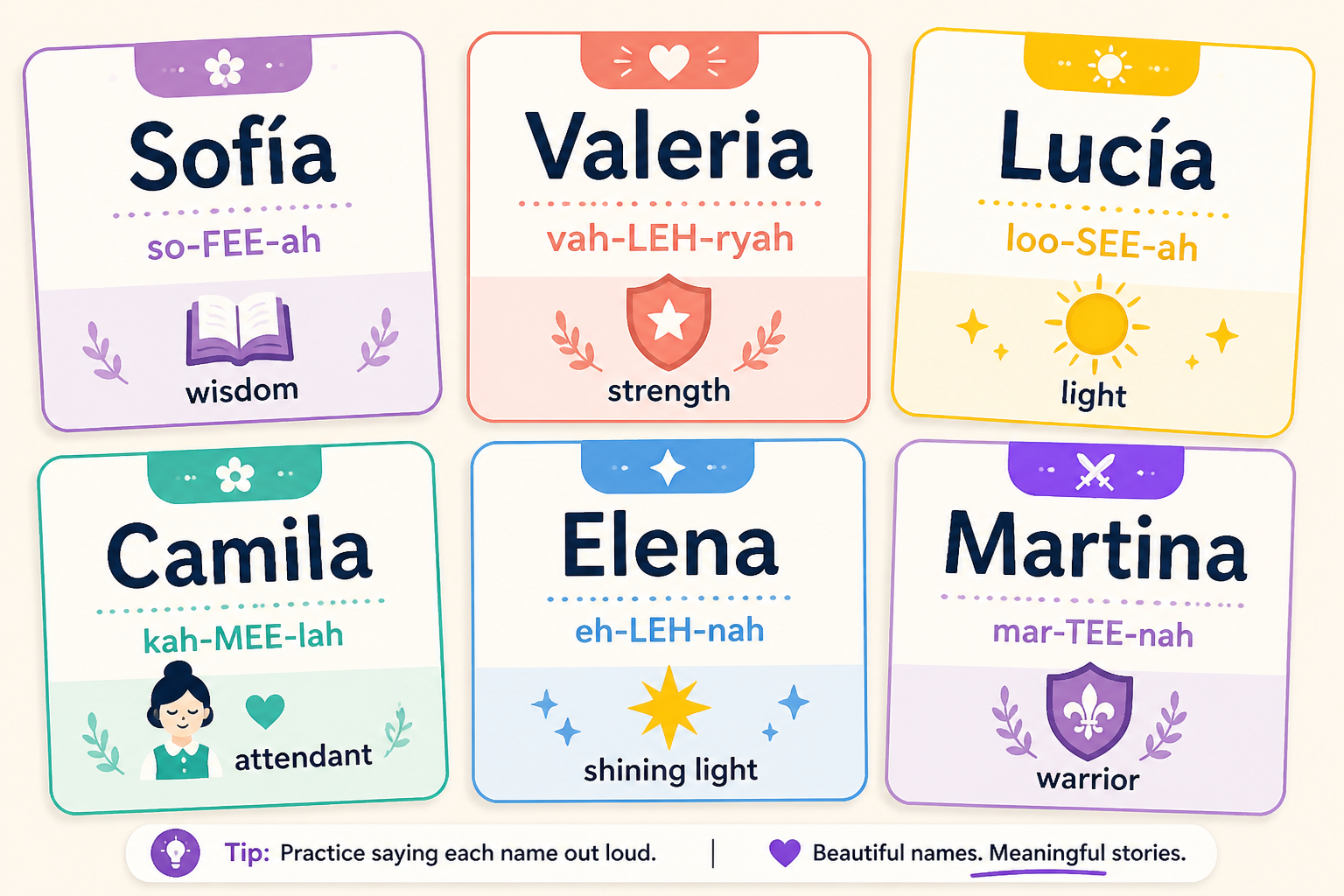
| Lucía | loo-THEE-ah (Spain), loo-SEE-ah (Latin America) | Light | Lucía tiene una sonrisa muy amable. | Lucía has a very kind smile. | One of the most popular names in many Spanish-speaking countries. The c changes by region. |
| Sofía | so-FEE-ah | Wisdom | Sofía estudia medicina. | Sofía studies medicine. | Elegant, modern, and very common. Accent mark needed: Sofía. |
| Martina | mar-TEE-nah | Related to Mars; also linked to strength | Martina juega con su hermano. | Martina plays with her brother. | Popular in Spain and Latin America. Easy to pronounce for English speakers. |
| Valeria | bah-LEH-ree-ah | Strong, healthy | Valeria trabaja en una oficina. | Valeria works in an office. | Soft, elegant sound. The v in Spanish sounds close to b. |
| Emma | EH-mah | Universal; whole; also used internationally | Emma llegó temprano a la fiesta. | Emma arrived early to the party. | International name, very popular in Spanish too. |
| Julia | HOO-lee-ah | Youthful; downy-bearded in Latin roots, but modern meaning is simply the name | Julia vive con su familia. | Julia lives with her family. | The j sound is important. In Spanish it is not like English j. |
| Paula | POW-lah | Small; humble | Paula tiene una cita a las tres. | Paula has an appointment at three. | Simple, classic, and very easy for learners. |
| Daniela | da-nee-EH-lah | God is my judge | Daniela habla español con fluidez. | Daniela speaks Spanish fluently. | Common in many countries. Clear stress on the third-to-last syllable. |
| Alba | AL-bah | Dawn | Alba se levanta muy temprano. | Alba gets up very early. | Common in Spain, also used elsewhere. Nice nature meaning. |
| Carla | CAR-lah | Free woman or strong woman | Carla compra pan en la panadería. | Carla buys bread at the bakery. | Short, strong, very common in everyday Spanish. |
| Elena | eh-LEH-nah | Shining light; torch | Elena estudia en la universidad. | Elena studies at the university. | Classic name with a smooth, calm sound. |
Notice how many names end in -a. That is a big clue that the name is feminine in Spanish, although there are always exceptions. Spanish loves patterns, then immediately enjoys breaking them just enough to keep everyone alert.
More Popular Names You Will Hear Often
These names are also common and useful to recognize. Some feel more traditional, some more modern, and some are popular across several generations. That mix is why Spanish naming can feel familiar but still have a very local flavor.
| Spanish | Pronunciation | Meaning | Example Sentence | Translation | Learner Note |
|---|---|---|---|---|---|
| Carmen | CAR-men | Garden; also linked to Our Lady of Mount Carmel | Carmen trabaja en un hospital. | Carmen works in a hospital. | Very common and traditional. In many countries, it can feel timeless. |
| Ana | AH-nah | Grace | Ana prepara la cena. | Ana prepares dinner. | Short, classic, and easy. The h is not present here, which is nice for your sanity. |
| Natalia | nah-TAH-lee-ah | Christmas Day; born at Christmas | Natalia cumple años en diciembre. | Natalia has her birthday in December. | Natural, elegant, and widely used. |
| Andrea | ahn-DREH-ah | Brave; strong | Andrea estudia derecho. | Andrea studies law. | In Spanish, Andrea is usually a feminine name. In English, it can be different. |
| Clara | KLAH-rah | Clear; bright | Clara entiende la explicación. | Clara understands the explanation. | Very transparent meaning. Yes, Spanish does enjoy a little symbolism. |
| Rocío | roh-THEE-oh (Spain), roh-SEE-oh (Latin America) | Dew | Rocío sale a caminar por la mañana. | Rocío goes out for a walk in the morning. | The accent mark is important: Rocío. The c sound varies by region. |
| Adriana | ah-dree-AH-nah | From Hadria; a place name | Adriana vive cerca del centro. | Adriana lives near downtown. | Very common across Latin America and Spain. |
| Laura | LOW-rah | Laurel tree; victory | Laura habla con su profesora. | Laura speaks with her teacher. | Easy pronunciation for English speakers. Very familiar internationally. |
| Teresa | teh-REH-sah | Possibly “harvester” or a traditional saint name | Teresa cocina muy bien. | Teresa cooks very well. | Classic and respectful. Often shortened to Tere in casual speech. |
| Isabel | ee-sah-BEL | God is my oath | Isabel lee un libro en el parque. | Isabel reads a book in the park. | Formal and elegant. Often shortened to Isa in casual use. |
| Celia | SEH-lee-ah | Heavenly; sky-related in Latin roots | Celia vive en una casa pequeña. | Celia lives in a small house. | Soft sound, common and pleasant to say. |
| Camila | ka-MEE-lah | Possibly “young ceremonial attendant” | Camila va al trabajo en autobús. | Camila goes to work by bus. | Very popular in modern Spanish-speaking countries. |
A small but useful note: many Spanish names are written without an article in normal use. You say “María llega tarde”, not “La María” unless the context is regional, affectionate, or especially familiar. Spanish has plenty of name habits, and some vary by country and family style.
Names With Pretty Meanings And Cultural Flair
Some names are loved not only because they sound nice, but because of what they suggest: light, purity, dawn, strength, and grace. If you want names with a soft or poetic feeling, these are especially common. Also, people often remember names that mean something visual. “Dawn” beats “miscellaneous historical reference” in most conversations.
| Spanish | Pronunciation | Meaning | Example Sentence | Translation | Learner Note |
|---|---|---|---|---|---|
| Alejandra | ah-leh-HAHN-drah | Defender of people | Alejandra ayuda a sus amigos. | Alejandra helps her friends. | Longer name, but very common. Casual nickname: Ale. |
| Gabriela | gah-bree-EH-lah | God is my strength | Gabriela trabaja desde casa. | Gabriela works from home. | Clear and easy once you get used to the stress pattern. |
| Renata | reh-NAH-tah | Reborn | Renata escucha música en español. | Renata listens to music in Spanish. | Modern and stylish in many countries. |
| Jimena | hee-MEH-nah | Listener; one who hears | Jimena estudia por la noche. | Jimena studies at night. | The j sound is soft and throaty in Spanish. Not like English “j.” |
| Inés | ee-NES | Pure; holy | Inés cena con su familia. | Inés has dinner with her family. | The accent mark is needed because stress falls on the final syllable. |
| Paloma | pah-LOH-mah | Dove | Paloma vive cerca de la plaza. | Paloma lives near the square. | Pretty nature name, often seen as gentle and warm. |
| Amalia | ah-MAH-lee-ah | Work; industrious | Amalia llega a tiempo. | Amalia arrives on time. | Old-fashioned in a charming way, depending on the country. |
| Elsa | EHL-sah | A short form of Elisabeth | Elsa habla con su vecina. | Elsa talks with her neighbor. | Popular and simple. Also internationally familiar. |
| Beatriz | beh-ah-TREES | She who brings happiness; blessed | Beatriz organiza la fiesta. | Beatriz organizes the party. | Often shortened to Bea. The final z sounds like s in Latin America. |
| Silvia | SEEL-vyah | Of the forest | Silvia camina por el jardín. | Silvia walks through the garden. | Nature-linked and elegant. |
| Patricia | pah-TREE-thee-ah (Spain), pah-TREE-see-ah (Latin America) | Noble | Patricia trabaja en una escuela. | Patricia works in a school. | Very common and easy to recognize in Spanish-speaking countries. |
| Verónica | veh-ROH-nee-kah | True image | Verónica compra flores para su mamá. | Verónica buys flowers for her mom. | Accent mark matters: Verónica. |
If you want to sound natural, notice which names are common as full names and which are often shortened. Gabriela → Gaby, Isabel → Isa, Beatriz → Bea, Teresa → Tere. Nicknames are a huge part of real Spanish conversation. People do not always keep names fully dressed up for formal occasions. Sometimes they just want the comfy version.
Common Nicknames And Short Forms
Nicknames are extremely useful because they appear in family talk, text messages, and friendly conversation. A name can be formal on paper and shorter in daily life. That is normal in Spanish, and it can make listening comprehension a little tricky if you only learned the full version.
| Full Name | Nickname | Pronunciation | Meaning / Use | Example Sentence | Translation |
|---|---|---|---|---|---|
| María | Ma, Marita, Mari | MAH / mah-REE-tah / MAH-ree | Friendly short forms | Mari va al mercado con su abuela. | Mari goes to the market with her grandmother. |
| Isabel | Isa | EE-sah | Casual and common | Isa está ocupada hoy. | Isa is busy today. |
| Beatriz | Bea | BEH-ah | Very common short form | Bea vive en el centro. | Bea lives downtown. |
| Teresa | Tere | TEH-reh | Friendly, everyday form | Tere cocina sopa. | Tere cooks soup. |
| Gabriela | Gaby | GAH-bee | Casual, modern nickname | Gaby estudia inglés. | Gaby studies English. |
| Alejandra | Ale | AH-leh | Short and flexible | Ale trabaja mañana. | Ale works tomorrow. |
| Camila | Cami | KAH-mee | Very common diminutive | Cami llega en cinco minutos. | Cami arrives in five minutes. |
| Lucía | Lu | LOO | Simple and affectionate | Lu llama por teléfono. | Lu calls on the phone. |
Nicknames are usually optional, not required. If you are unsure, use the full name. That is polite, safe, and far less likely to get you strange looks from someone’s aunt.
Pronunciation Tips For Spanish Girl Names
Spanish pronunciation is usually regular, which is wonderful news for learners who have suffered through English spelling. Still, a few sounds matter a lot in names. Get these right, and your Spanish sounds much more natural immediately.
| Sound | What To Remember | Example Name | Tip |
|---|---|---|---|
| ñ | Sounds like “ny” in “canyon” | Muñoz is a surname, but the sound shows up in Spanish often | Keep the sound soft and separate from plain n. |
| ll | Often sounds like “y” in Latin America | Lucía, Camilla | Do not say it like English “ll.” It is usually closer to a y sound. |
| j | Breathy, rough sound like a strong “h” | Julia, Jimena | Not the English “j” in “jam.” That would sound very non-Spanish. |
| r / rr | Single flap or rolled trill | Rocío, Carla | The rolled rr appears in other words, but a single r still matters in names. |
| v | Very close to b | Valeria, Verónica | Do not make it a harsh English v. |
| h | Usually silent | Isabel, Alba | If a name starts with h, check whether it is silent. Spanish likes to keep you humble. |
For official spelling and accent marks, a reliable reference like the Real Academia Española is useful. That is the boring-but-helpful kind of source learners should absolutely keep around.
Latin American Spanish Vs Spain Spanish
Most popular Spanish girl names are understood everywhere, but pronunciation can change. The biggest difference is often the c