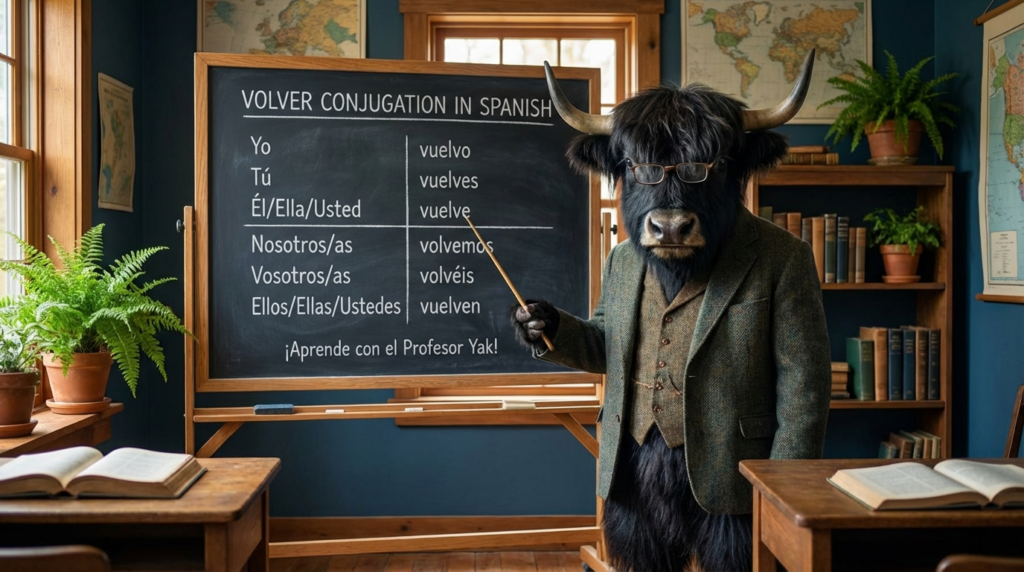
Perdonar Conjugation In Spanish: Easy Charts, Real Examples, And When To Use Each Form
Learn how to conjugate perdonar, use it in real conversations, and stop guessing whether you need perdono, perdoné, or perdóname. Tiny miracle, honestly.
The first time I really noticed perdonar in the wild, it was not in some grand movie speech about redemption. It was at a busy dinner where one person bumped another, someone laughed, somebody said perdóname, and about ten seconds later a totally different person said ya te perdoné. That is the charm of this verb: it can sound dramatic, tender, sarcastic, warm, or just very, very human.
In this guide, you will learn the full perdonar conjugation in Spanish, but also the part most charts skip: when each form actually sounds natural. Because memorizing a giant table is cute and all, but using the verb well is better.
Perdonar is a regular -ar verb, so the endings behave nicely. The emotions around it? Less cooperative.
What Perdonar Means
Perdonar usually means to forgive, and sometimes to pardon or to excuse, depending on context. In everyday Mexican Spanish, you will most often hear it in apology and forgiveness situations:
- ¿Me perdonas? — Will you forgive me?
- Te perdono. — I forgive you.
- Perdóneme. — Forgive me. / Excuse me. (formal)
| Form | Spanish | English Meaning | Example |
|---|---|---|---|
| Infinitive | perdonar | to forgive | Es difícil perdonar después de una traición. — It is hard to forgive after a betrayal. |
| Gerund | perdonando | forgiving | Está perdonando poco a poco. — She is forgiving little by little. |
| Past Participle | perdonado | forgiven | Lo hemos perdonado. — We have forgiven him. |
The Main Perdonar Conjugation Chart
The main table below uses the forms you will actually hear most in Mexico, so you will see ustedes instead of vosotros. I add a note on Spain and vos later, because yes, Spanish likes options.
| Pronoun | Present | Preterite | Imperfect | Future | Conditional |
|---|---|---|---|---|---|
| yo | perdono | perdoné | perdonaba | perdonaré | perdonaría |
| tú | perdonas | perdonaste | perdonabas | perdonarás | perdonarías |
| él / ella / usted | perdona | perdonó | perdonaba | perdonará | perdonaría |
| nosotros / nosotras | perdonamos | perdonamos | perdonábamos | perdonaremos | perdonaríamos |
| ellos / ellas / ustedes | perdonan | perdonaron | perdonaban | perdonarán | perdonarían |
Watch the sneaky one: perdonamos can mean we forgive or we forgave. The sentence tells you which one it is.
- Hoy perdonamos rápido. — Today we forgive quickly. (present)
- Ayer perdonamos demasiado rápido. — Yesterday we forgave too quickly. (preterite)
Yak Box: The Fast Pattern
Because perdonar is regular, you keep the stem perdon- and add normal -ar endings. Once you know that, the verb stops feeling scary and starts feeling merely dramatic.
Subjunctive And Imperative Forms You Will Actually Use
The subjunctive shows up a lot with forgiveness because people hope, doubt, request, and react around apologies all the time.
| Pronoun | Present Subjunctive | Imperfect Subjunctive |
|---|---|---|
| yo | perdone | perdonara / perdonase |
| tú | perdones | perdonaras / perdonases |
| él / ella / usted | perdone | perdonara / perdonase |
| nosotros / nosotras | perdonemos | perdonáramos / perdonásemos |
| ellos / ellas / ustedes | perdonen | perdonaran / perdonasen |
Very common triggers:
- Espero que me perdones. — I hope you forgive me.
- Dudo que la jefa nos perdone. — I doubt the boss will forgive us.
- Quiero que lo perdones. — I want you to forgive him.
| Command Type | Spanish | English Meaning | Example |
|---|---|---|---|
| Tú affirmative | perdona | forgive | Perdona mis nervios. — Forgive my nerves. |
| Tú negative | no perdones | don’t forgive | No perdones una mentira así de fácil. — Don’t forgive a lie like that so easily. |
| Usted affirmative | perdone | forgive / excuse me | Perdone la demora. — Forgive the delay. |
| Nosotros | perdonemos | let’s forgive | Perdonemos y sigamos. — Let’s forgive and move on. |
| Ustedes | perdonen | forgive | Perdonen el desorden. — Forgive the mess. |
The Most Useful Perdonar Forms In Real Life
Perdóname
English meaning: Forgive me.
Example: Perdóname por llegar tan tarde. — Forgive me for arriving so late.
¿Me Perdonas?
English meaning: Will you forgive me?
Example: Sé que me equivoqué; ¿me perdonas? — I know I messed up; will you forgive me?
Te Perdono
English meaning: I forgive you.
Example: Te perdono, pero no quiero repetir esta conversación. — I forgive you, but I do not want to repeat this conversation.
Ya Te Perdoné
English meaning: I already forgave you.
Example: Ya te perdoné, así que deja de disculparte cada cinco minutos. — I already forgave you, so stop apologizing every five minutes.
No Te Puedo Perdonar
English meaning: I can’t forgive you.
Example: No te puedo perdonar esa mentira. — I can’t forgive you for that lie.
Espero Que Me Perdones
English meaning: I hope you forgive me.
Example: Espero que me perdones por cancelar tan tarde. — I hope you forgive me for canceling so late.
Useful Phrases And Real-Life Sentences
| Spanish | English Meaning | Example | Natural Translation |
|---|---|---|---|
| Perdóname por eso. | Forgive me for that. | Perdóname por eso; estaba muy estresado. | Forgive me for that; I was very stressed. |
| ¿Me puedes perdonar? | Can you forgive me? | ¿Me puedes perdonar esta vez? | Can you forgive me this time? |
| Te perdono. | I forgive you. | Te perdono, pero necesito tiempo. | I forgive you, but I need time. |
| No la perdono. | I do not forgive her. | No la perdono por lo que dijo. | I do not forgive her for what she said. |
| Ya lo perdoné. | I already forgave him. | Ya lo perdoné, pero no lo olvido. | I already forgave him, but I do not forget it. |
| Nos perdonamos. | We forgave each other. | Después de hablar, nos perdonamos. | After talking, we forgave each other. |
| Espero que me perdones. | I hope you forgive me. | Espero que me perdones algún día. | I hope you forgive me someday. |
| Dudo que la perdonen. | I doubt they forgive her. | Dudo que la perdonen tan rápido. | I doubt they forgive her so quickly. |
| Perdóneme, por favor. | Forgive me, please. | Perdóneme, por favor, no fue mi intención. | Forgive me, please, it was not my intention. |
| Perdóname, no fue personal. | Forgive me, it was not personal. | Perdóname, no fue personal; reaccioné mal. | Forgive me, it was not personal; I reacted badly. |
How To Use Perdonar Naturally
| Pattern | English Meaning | Example 1 | Example 2 |
|---|---|---|---|
| perdonar a alguien | to forgive someone | No puedo perdonar a mi hermano. — I cannot forgive my brother. | Ella perdonó a su amiga. — She forgave her friend. |
| perdonar algo | to forgive something | No perdono esa traición. — I do not forgive that betrayal. | Perdonó el error. — He forgave the mistake. |
| perdonar por + noun / infinitive | to forgive for something / for doing something | Perdóname por el retraso. — Forgive me for the delay. | Te perdono por decir la verdad. — I forgive you for telling the truth. |
| pedir perdón | to ask for forgiveness / to apologize | Vino a pedir perdón. — He came to ask for forgiveness. | Tiene que pedir perdón. — She has to apologize. |
| perdonarse | to forgive oneself / each other | Todavía no me perdono ese error. — I still do not forgive myself for that mistake. | Con tiempo, se perdonaron. — With time, they forgave each other. |
One useful grammar note: when the person being forgiven is a person, you normally use the personal a.
- Perdono a Carlos. — I forgive Carlos.
- Perdono el error. — I forgive the mistake.
Perdón, Perdóname, And Lo Siento
This is where many learners get tangled up, because Spanish loves giving you three ways to sound sorry and then judging you silently if you pick the odd one.
| Expression | English Meaning | When To Use It | Example |
|---|---|---|---|
| Perdón | sorry / excuse me | quick interruption, bumping into someone, getting attention | Perdón, ¿esta silla está ocupada? — Sorry, is this seat taken? |
| Perdóname | forgive me | more personal apology, emotional situations | Perdóname, hablé sin pensar. — Forgive me, I spoke without thinking. |
| Lo siento | I’m sorry | deeper regret, bad news, sympathy, serious apology | Lo siento mucho. — I’m very sorry. |
Common Mistakes And Easy Fixes
- Mixing up perdón and perdóname.
Perdón is a quick “sorry” or “excuse me.” Perdóname is “forgive me.” One is light; the other has feelings attached. - Forgetting the personal a.
Say Perdono a mi amiga, not just Perdono mi amiga. - Using the indicative after hope or doubt.
Say Espero que me perdones, not Espero que me perdonas. - Using present when a completed past moment is better.
Te perdono = I forgive you now / in general. Te perdoné = I forgave you already. - Ignoring register.
Perdóname is informal. Perdóneme is formal. Your boss and your cousin are not the same audience, usually.
A Few High-Value Compound Forms
| Spanish | English Meaning | Example |
|---|---|---|
| he perdonado | I have forgiven | He perdonado cosas peores. — I have forgiven worse things. |
| había perdonado | I had forgiven | Ya lo había perdonado antes de la reunión. — I had already forgiven him before the meeting. |
| habría perdonado | I would have forgiven | Lo habría perdonado, pero mintió otra vez. — I would have forgiven him, but he lied again. |
| haya perdonado | that I have forgiven | Dudo que ella me haya perdonado. — I doubt that she has forgiven me. |
Practice Section
Try these before peeking at the answers. Yes, I know peeking is tempting.
- Complete the sentence: Espero que me ________.
- Change to the preterite: Te perdono.
- Choose the better option: Perdón or Perdóname in “_____ por cancelar la cita.”
- Translate: “We already forgave her.”
- Translate: “Forgive me, please.” (formal)
- Complete the sentence: No puedo perdonar ___ mi jefe por ese mensaje a medianoche.
Answers
- perdones
- Te perdoné.
- Perdóname
- Ya la perdonamos.
- Perdóneme, por favor.
- a
Quick Reference Summary
- Perdonar is a regular -ar verb.
- Main meaning: to forgive.
- Most useful everyday forms: perdóname, ¿me perdonas?, te perdono, ya te perdoné.
- Use the personal a with people: Perdono a Ana.
- Use the subjunctive after expressions like espero que and dudo que.
- In Mexican Spanish, ustedes is the normal everyday plural “you.”
What About Vosotros And Vos?
If you study Spanish from Spain, you will also see vosotros perdonáis, vosotros perdonasteis, and perdonad. In parts of Latin America that use vos, you may hear forms like vos perdonás, vos perdonés, and perdoná. Useful to recognize, not essential on day one.
Final Yak
If you remember just one thing, make it this: perdonar is grammatically easy and socially powerful. Learn the core forms, notice the difference between te perdono and te perdoné, and keep perdóname ready for real life. Language learning gets a lot smoother once you can apologize, forgive, and move on like an adult who has seen at least one chaotic group chat.