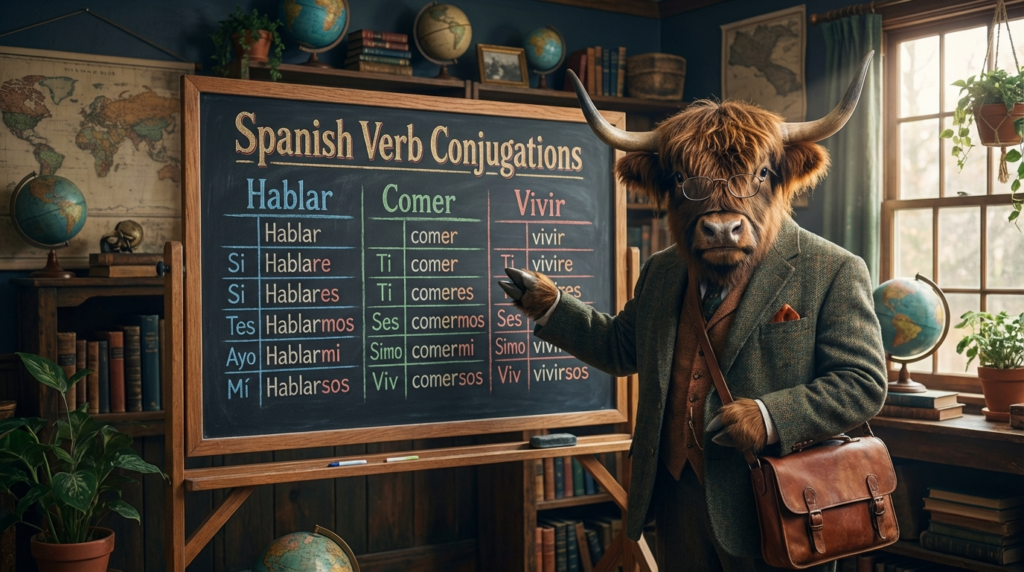

Decir Conjugation In Spanish
How to use digo, dije, dicho, and the rest without staring at the wall like the verb personally offended you.
The first time I spent a few days listening closely to everyday Mexican Spanish, I kept hearing versions of decir every few minutes: ya te dije, dime, me dijo, no digas. That was the moment this verb stopped being a messy chart and started looking like what it really is: one of the little engines that keeps real conversation moving.
This guide gives you the forms you actually need, the patterns that make them easier to remember, and real examples that sound like adult Spanish instead of cardboard textbook dialogue. Because yes, decir is irregular. No, it is not here to ruin your life.
Yak Box: The Fast Memory Trick
Think of decir as four mini-verbs: digo for now, dije for then, diré for later, and dicho for done.
What Decir Means And How It Works
Decir usually means to say or to tell. Spanish uses the same verb for both ideas, so the pattern around the verb matters a lot.
| Pattern | English Meaning | Example |
|---|---|---|
| decir algo | to say something | Dijo la verdad. = He said the truth. |
| decir que… | to say that… | Ella dice que llega tarde. = She says that she is arriving late. |
| decirle algo a alguien | to tell someone something | Le dije mi nombre a Laura. = I told Laura my name. |
| querer decir | to mean | Eso no quiere decir lo mismo. = That does not mean the same thing. |
One very useful adult-level detail: when you are telling someone something, Spanish often uses an indirect object pronoun like me, te, or le. So Me dijo la verdad means He told me the truth, not just He said the truth.
The Core Forms You Will Hear All The Time
digo
English: I say / I tell
Example: Yo digo la verdad en la reunión. = I tell the truth in the meeting.
dices
English: you say / you tell
Example: Tú dices eso cada semana. = You say that every week.
dije
English: I said / I told
Example: Yo dije eso ayer por mensaje. = I said that yesterday by text.
dijo
English: he / she / you said
Example: Ella dijo que sí. = She said yes.
di
English: say / tell (tú command)
Example: Di la verdad. = Tell the truth.
dicho
English: said / told (past participle)
Example: Lo he dicho antes. = I have said it before.
Present Tense: Digo, Dices, Dice…
In the present tense, decir does two annoying little things. First, the yo form becomes digo. Second, the stem changes from e to i in most forms: dices, dice, dicen. The nosotros form stays normal: decimos.
| Subject | Form | English Meaning | Example |
|---|---|---|---|
| yo | digo | I say / I tell | Yo digo la verdad en el trabajo. |
| tú | dices | you say / you tell | Tú dices eso en cada reunión. |
| él / ella / usted | dice | he / she / you say(s) | Usted dice su nombre al entrar. |
| nosotros / nosotras | decimos | we say / we tell | Nosotros decimos lo mismo por mensaje. |
| ellos / ellas / ustedes | dicen | they / you all say | Ustedes dicen que mañana pueden. |
Mexico note: in Mexican Spanish, you will normally use ustedes for plural “you,” not vosotros. So for everyday use in Mexico, dicen matters much more than decís.
Preterite: Dije, Dijiste, Dijo…
This is the tense for completed past actions: what someone said, told, promised, admitted, denied, or blurted out before coffee. The stem changes hard here: dij-. One classic mistake is writing dijieron. The correct form is dijeron.
| Subject | Form | English Meaning | Example |
|---|---|---|---|
| yo | dije | I said / I told | Yo dije tu nombre en la lista. |
| tú | dijiste | you said / you told | Tú dijiste que no podías ir. |
| él / ella / usted | dijo | he / she / you said | Ella dijo la fecha correcta. |
| nosotros / nosotras | dijimos | we said / we told | Nosotros dijimos todo en la reunión. |
| ellos / ellas / ustedes | dijeron | they / you all said | Ustedes dijeron otra cosa ayer. |
Fast fix: if you are talking about one finished moment in the past, the preterite is usually the one you want: Me dijo la verdad = He told me the truth.
Imperfect: Decía, Decías…
The imperfect is much calmer. It is regular here. Use it for repeated actions, background description, or what someone used to say.
| Subject | Form | English Meaning | Example |
|---|---|---|---|
| yo | decía | I was saying / I used to say | Yo decía eso cuando trabajaba allí. |
| tú | decías | you were saying / used to say | Tú decías lo mismo cada lunes. |
| él / ella / usted | decía | he / she / you was saying | Ella decía que todo iba bien. |
| nosotros / nosotras | decíamos | we were saying / used to say | Nosotros decíamos eso de broma. |
| ellos / ellas / ustedes | decían | they / you all were saying | Ellos decían que venían tarde. |
Quick contrast: dijo = he said once. decía = he was saying / he used to say. Tiny difference, big payoff.
Future: Diré, Dirás…
In the future tense, decir changes to the stem dir-. That stem also shows up in the conditional, which is helpful because this verb finally decides to be useful for once.
| Subject | Form | English Meaning | Example |
|---|---|---|---|
| yo | diré | I will say / I will tell | Yo diré la verdad mañana. |
| tú | dirás | you will say / tell | Tú dirás qué pasó después. |
| él / ella / usted | dirá | he / she / you will say | Ella dirá si acepta la oferta. |
| nosotros / nosotras | diremos | we will say / tell | Nosotros diremos algo al final. |
| ellos / ellas / ustedes | dirán | they / you all will say | Ustedes dirán su decisión luego. |
Conditional: Diría, Dirías…
Use the conditional for “would say,” polite opinions, guesses, and softening your tone. Very handy when you want to sound less blunt and more like a functioning adult.
| Subject | Form | English Meaning | Example |
|---|---|---|---|
| yo | diría | I would say / tell | Yo diría que no conviene. |
| tú | dirías | you would say / tell | Tú dirías eso sin pensarlo. |
| él / ella / usted | diría | he / she / you would say | Usted diría lo mismo con calma. |
| nosotros / nosotras | diríamos | we would say / tell | Nosotros diríamos la verdad. |
| ellos / ellas / ustedes | dirían | they / you all would say | Ellas dirían que sí otra vez. |
Present Subjunctive: Diga, Digas…
You will use the present subjunctive after wishes, doubt, emotion, recommendations, and that lovely moment when one verb starts bossing around another verb.
| Subject | Form | English Meaning | Example |
|---|---|---|---|
| yo | diga | that I say / tell | Es importante que yo diga la verdad. |
| tú | digas | that you say / tell | Quiero que digas lo que piensas. |
| él / ella / usted | diga | that he / she / you say | Dudo que ella diga eso en público. |
| nosotros / nosotras | digamos | that we say / tell | Es mejor que digamos todo ahora. |
| ellos / ellas / ustedes | digan | that they / you all say | Ojalá que ustedes digan la verdad. |
Common trigger: Quiero que me digas la verdad = I want you to tell me the truth. That little que often signals the subjunctive is coming.
Commands: Di, Diga, No Digas…
The command forms are high-frequency because people are constantly asking for information, explanations, names, prices, directions, and the truth. Funny how that keeps happening.
| Command | Form | English Meaning | Example |
|---|---|---|---|
| tú affirmative | di | say / tell | Di la verdad. = Tell the truth. |
| usted affirmative | diga | say / tell | Diga su nombre, por favor. = Say your name, please. |
| nosotros affirmative | digamos | let’s say / let’s tell | Digamos exactamente eso. = Let’s say exactly that. |
| ustedes affirmative | digan | say / tell, you all | Digan lo que saben. = Tell what you know. |
| tú negative | no digas | don’t say / don’t tell | No digas tonterías. = Don’t say nonsense. |
| usted negative | no diga | don’t say / don’t tell | No diga nada todavía. = Don’t say anything yet. |
| nosotros negative | no digamos | let’s not say / tell | No digamos eso en público. = Let’s not say that in public. |
| ustedes negative | no digan | don’t say / tell, you all | No digan mentiras. = Don’t tell lies. |
Important: the tú command is di, not dice. That mistake is incredibly common, so now you get to avoid it and look suspiciously competent.
Non-Finite Forms: Decir, Diciendo, Dicho
| Form | English Meaning | Example |
|---|---|---|
| decir | to say / to tell | Quiero decir algo importante. = I want to say something important. |
| diciendo | saying / telling | Está diciendo la verdad. = He is telling the truth. |
| dicho | said / told | Lo hemos dicho muchas veces. = We have said it many times. |
Dicho is the past participle, so it appears in perfect tenses like he dicho = I have said. Diciendo is the gerund, so it appears in progressive forms like estoy diciendo = I am saying.
Useful Real-Life Phrases With Decir
| Spanish | English Meaning | Example |
|---|---|---|
| dime | tell me / say it | Dime la verdad ahora. = Tell me the truth now. |
| ya te dije | I already told you | Ya te dije que salgo a las ocho. = I already told you I leave at eight. |
| me dijo que… | he / she told me that… | Me dijo que llegaba tarde. = She told me she was arriving late. |
| te digo la verdad | I’m telling you the truth | Te digo la verdad: no entiendo nada. = I’m telling you the truth: I do not understand anything. |
| no me digas | no way / you don’t say | ¡No me digas que renunció! = No way, he quit? |
| quiero decir | I mean | Quiero decir otra cosa. = I mean something else. |
| es decir | that is / in other words | Llegó tarde, es decir, perdió el inicio. = He arrived late, that is, he missed the beginning. |
| mejor dicho | or rather / more precisely | Vive lejos, mejor dicho, lejísimos. = He lives far away, or rather, very far away. |
Why These Phrases Matter
A chart teaches you forms. Phrases teach you how those forms actually live in sentences. Learn both, and decir stops feeling like a grammar problem and starts working like a real tool.
Related Verbs That Behave A Bit Like Decir
Several verbs built from decir keep similar irregular pieces. You do not need to memorize all of them today, but it helps to know the family exists.
| Verb | English Meaning | Example |
|---|---|---|
| predecir | to predict | Los expertos predicen lluvia mañana. = Experts predict rain tomorrow. |
| contradecir | to contradict | No me contradigas enfrente del cliente. = Do not contradict me in front of the client. |
| bendecir | to bless | El abuelo bendijo la comida. = Grandfather blessed the meal. |
| maldecir | to curse | Maldijo el tráfico toda la mañana. = He cursed the traffic all morning. |
Common Mistakes And Fast Fixes
| Mistake | Better Spanish | Why |
|---|---|---|
| Yo deciro… | Yo digo… | The yo form is irregular in the present. |
| Ellos dijieron… | Ellos dijeron… | The preterite third-person plural drops the extra i. |
| Dice la verdad as a tú command | Di la verdad | The affirmative tú command is di. |
| Hablo la verdad | Digo la verdad | Hablar means to speak; decir means to say or tell. |
| Dije ella la verdad | Le dije la verdad a ella | When you tell someone something, Spanish often needs le. |
| Vosotros everywhere in Mexico | ustedes | Mexican Spanish uses ustedes for plural “you.” |
Practice Section
Fill in the blank with the correct form of decir.
- Yo ______ la verdad siempre. (present)
- Ayer ella ______ que sí. (preterite)
- Cuando trabajábamos juntos, nosotros siempre ______ lo mismo. (imperfect)
- Mañana te ______ el plan completo. (future)
- Quiero que me ______ la verdad. (present subjunctive)
- ______ tu nombre, por favor. (usted command)
Show Answers
- digo — Yo digo la verdad siempre. = I always tell the truth.
- dijo — Ayer ella dijo que sí. = Yesterday she said yes.
- decíamos — Cuando trabajábamos juntos, nosotros siempre decíamos lo mismo. = When we worked together, we always said the same thing.
- diré — Mañana te diré el plan completo. = Tomorrow I will tell you the full plan.
- digas — Quiero que me digas la verdad. = I want you to tell me the truth.
- diga — Diga tu nombre, por favor. is wrong; the correct sentence is Diga su nombre, por favor. = Say your name, please.
Quick Reference Summary
- digo = I say / tell
- dije = I said / told
- decía = I was saying / I used to say
- diré = I will say / tell
- diría = I would say / tell
- diga / digas = subjunctive forms after wishes, doubt, emotion, and recommendations
- di = tú command
- diciendo = saying / telling
- dicho = said / told
Final Yak
If you remember only the backbone today, make it this: digo, dije, decía, diré, diría, diga, di, dicho. That tiny set covers an absurd amount of real Spanish, which is rude but also useful.