Spanish grammar for real conversations, not sad little textbook robots.
Spanish Caer Verb: Meaning, Conjugation, and Common Phrases for Beginners
Learn caer in Spanish with the forms, phrases, and real-life uses adults actually hear: caer bien, caerse, se me cayó, and more.
The first time I heard me cae bien at a dinner table in Mexico City, I looked down at my plate like something had fallen. Nothing had. They were just saying someone seemed nice. That is the chaos of caer: sometimes it means “to fall,” and sometimes gravity has left the chat.
That is why this verb trips up beginners. Caer is not just a basic motion verb. It shows up in everyday talk, in weather, in social opinions, in accidental drops, and in a bunch of useful phrases adults actually use. This guide teaches Mexican Spanish, so the examples use ustedes instead of vosotros.
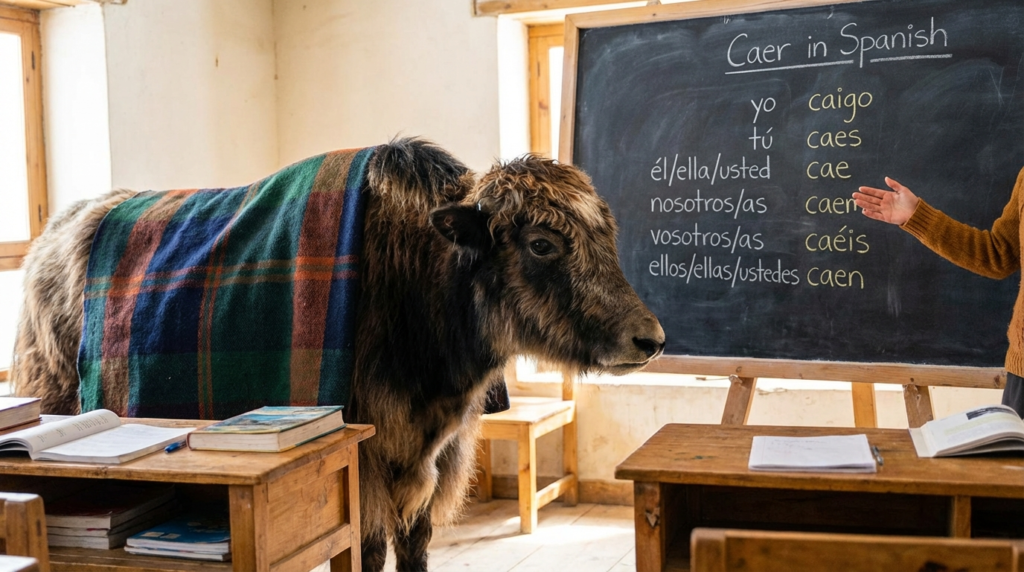
Yak Tip: This Verb Has Two Big Jobs
Job 1: literal falling or coming down. El vaso cae. = “The glass falls.”
Job 2: idiomatic everyday Spanish. Me cae bien. = “I like him / he seems nice to me.” Same verb, very different drama.
What Caer Means In Spanish
At its core, caer means to fall or to come down. But in real Spanish, it also helps you talk about liking people, realizing something, accidentally dropping things, and more. These are the high-value uses to learn first.
caer
English meaning: to fall, to drop, to come down.
Example: El vaso va a caer de la mesa.
The glass is going to fall off the table.
caerse
English meaning: to fall down, to fall accidentally.
Example: Me caí corriendo al metro.
I fell while running to the subway.
caer bien
English meaning: to like someone, to find someone pleasant.
Example: Tu jefa me cae bien.
I like your boss / your boss seems nice to me.
caer mal
English meaning: to dislike someone, to find someone annoying.
Example: Ese comentario me cayó mal.
That comment rubbed me the wrong way.
caer en la cuenta
English meaning: to realize, to notice.
Example: Caí en la cuenta de que era viernes.
I realized it was Friday.
dejar caer
English meaning: to drop, or to casually let something slip.
Example: Dejó caer que ya tiene otra oferta de trabajo.
He casually let slip that he already has another job offer.
Core Forms You Need First
| Form | Spanish | English Meaning | Example |
|---|---|---|---|
| Infinitive | caer | to fall | No quiero caer otra vez. I do not want to fall again. |
| Gerund | cayendo | falling | La lluvia sigue cayendo. The rain keeps falling. |
| Past participle | caído | fallen | He caído en la misma trampa. I have fallen into the same trap. |
| Present, yo | caigo | I fall / I get it | Ah, ahora caigo. Oh, now I get it. |
| Preterite, él/ella | cayó | he/she fell | El precio cayó mucho. The price fell a lot. |
| Present subjunctive, yo | caiga | that I fall | Dudo que caiga nieve. I doubt snow will fall. |
Two spelling traps worth learning early: cayendo is correct, not callendo, and caído keeps the accent mark. Tiny marks, big difference. Annoying, yes. Useful, also yes.
The Most Useful Conjugation Tables
These charts focus on the forms learners use most in Mexican Spanish. Spain also uses vosotros forms like caéis, caísteis, and caigáis, but you do not need those on day one.
Present Tense
| Pronoun | Form |
|---|---|
| yo | caigo |
| tú | caes |
| él / ella / usted | cae |
| nosotros / nosotras | caemos |
| ustedes | caen |
Use the present for habits, facts, and what is happening now. La lluvia cae toda la tarde. = “The rain falls all afternoon / keeps falling all afternoon.” The main irregular form here is yo caigo.
Preterite
| Pronoun | Form |
|---|---|
| yo | caí |
| tú | caíste |
| él / ella / usted | cayó |
| nosotros / nosotras | caímos |
| ustedes | cayeron |
Use the preterite for a completed fall or a sudden event in the past. Se me cayó el teléfono ayer. = “My phone fell / I dropped my phone yesterday.” Notice the y in cayó and cayeron.
Imperfect
| Pronoun | Form |
|---|---|
| yo | caía |
| tú | caías |
| él / ella / usted | caía |
| nosotros / nosotras | caíamos |
| ustedes | caían |
Use the imperfect for ongoing background actions or repeated past situations. La temperatura caía poco a poco. = “The temperature was falling little by little.”
Future, Conditional, And Present Subjunctive
| Tense | yo | tú | él / ella / usted | nosotros | ustedes |
|---|---|---|---|---|---|
| Future | caeré | caerás | caerá | caeremos | caerán |
| Conditional | caería | caerías | caería | caeríamos | caerían |
| Present subjunctive | caiga | caigas | caiga | caigamos | caigan |
Future: Si sigo así, caeré dormido en la reunión. = “If I keep going like this, I will fall asleep in the meeting.”
Conditional: Sin café, caería rendido a las cinco. = “Without coffee, I would collapse by five.”
Present subjunctive: Espero que no caiga granizo. = “I hope hail does not fall.”
Imperative
| Person | Affirmative | Negative |
|---|---|---|
| tú | cae | no caigas |
| usted | caiga | no caiga |
| ustedes | caigan | no caigan |
You will hear this a lot in phrases like No caigas en la trampa = “Don’t fall into the trap.” Very useful. Slightly dramatic. Still useful.
Caer Vs. Caerse
This is one of the most important distinctions. Both forms can talk about falling, but caerse often sounds more personal, accidental, or physical, especially when a person or an object falls down.
| Pattern | English Meaning | Example |
|---|---|---|
| caer | to fall, to come down, neutral or general | Las hojas caen en otoño. Leaves fall in autumn. |
| caerse | to fall down, to fall accidentally | Mi abuelo se cayó en la cocina. My grandfather fell in the kitchen. |
| se me cayó | I dropped it accidentally / it fell from me | Se me cayó la taza. I dropped the mug accidentally. |
That little se me structure is gold in everyday Spanish. It lets you talk about accidents naturally: Se me cayó el café, se me cayeron las llaves, se me cayó el internet. Okay, the last one is not literal, but Spanish gets creative and so do tired adults.
Common Phrases With Caer You Will Actually Hear
| Spanish Phrase | English Meaning | Real-Life Example |
|---|---|---|
| caer bien | to like someone / to find someone pleasant | Tu hermana me cae muy bien. I really like your sister. |
| caer mal | to dislike someone / to rub someone the wrong way | El nuevo jefe me cae mal. I do not like the new boss. |
| caerle bien a alguien | to be liked by someone | Le caí bien a sus amigos. His friends liked me. |
| caerle mal a alguien | to be disliked by someone | Al cliente le cayó mal el comentario. The client did not take the comment well. |
| caer en la cuenta | to realize | Caí en la cuenta de que olvidé el cargador. I realized I forgot the charger. |
| ahora caigo | now I get it | Ah, ahora caigo: tú eras el vecino nuevo. Oh, now I get it: you were the new neighbor. |
| caer en la trampa | to fall into the trap | No caigas en la trampa del descuento falso. Do not fall for the fake discount. |
| dejar caer | to casually let something slip | Dejó caer que piensa mudarse. She casually mentioned that she is thinking of moving. |
| caer rendido | to collapse from exhaustion | Después del turno, caí rendido en el sofá. After the shift, I collapsed on the sofa. |
| caer de pie | to land on your feet | Perdió el trabajo, pero cayó de pie. He lost the job, but landed on his feet. |
| caer gordo (Mexico) | to really get on someone’s nerves | Ese influencer me cae gordo. That influencer really annoys me. |
| caer la noche | for night to fall | Al caer la noche, bajó la temperatura. When night fell, the temperature dropped. |
A Small But Useful Mexico Note
Me cae bien and me cae mal are extremely common in Mexican Spanish. So is me cae gordo, which is stronger and more colloquial. It is not elegant. It is, however, very alive.
Common Mistakes And Fast Fixes
- Wrong: callendo
Right: cayendo
Example: Las hojas siguen cayendo. = “The leaves keep falling.” - Wrong: caido
Right: caído
Example: He caído en el mismo error. = “I have fallen into the same mistake.” - Wrong idea: every present form is irregular
Fix: only yo is weird here: caigo. The others are regular-looking: caes, cae, caemos, caen. - Wrong: forgetting the y in some preterite forms
Fix: remember cayó and cayeron.
Example: Las ventas cayeron en enero. = “Sales fell in January.” - Wrong translation: using caer when you mean “to drop something on purpose”
Fix: use dejar caer or another verb like tirar. For accidents, use se me cayó.
Example: Se me cayó la botella. = “I dropped the bottle accidentally.”
Practice With Caer
- Translate: “My phone fell yesterday.”
- Translate: “I like your sister.”
- Translate: “Now I get it.”
- Translate: “Don’t fall for the trap.”
- Choose the best form: La temperatura _____ toda la noche. (was falling)
- Choose the best form: Espero que no _____ granizo mañana. (fall, subjunctive)
Check Your Answers
1. Se me cayó el teléfono ayer.
2. Me cae bien tu hermana.
3. Ahora caigo.
4. No caigas en la trampa.
5. La temperatura caía toda la noche.
6. Espero que no caiga granizo mañana.
Quick Reference Summary
- caer = to fall, to come down.
- caerse = to fall down, often accidental or personal.
- yo caigo is the present-tense form everybody forgets first.
- cayendo and caído are the spelling forms worth memorizing early.
- caer bien / caer mal / caer en la cuenta are everyday phrases you will hear all the time.
Final Yak
If you remember only three things, make it these: yo caigo, se me cayó, and me cae bien. That little trio covers literal falls, accidental drops, and social opinions, which is honestly a very decent amount of life.
Once caer stops looking like just “to fall,” your Spanish starts sounding much more natural. Slightly less confused, too, which is always nice.