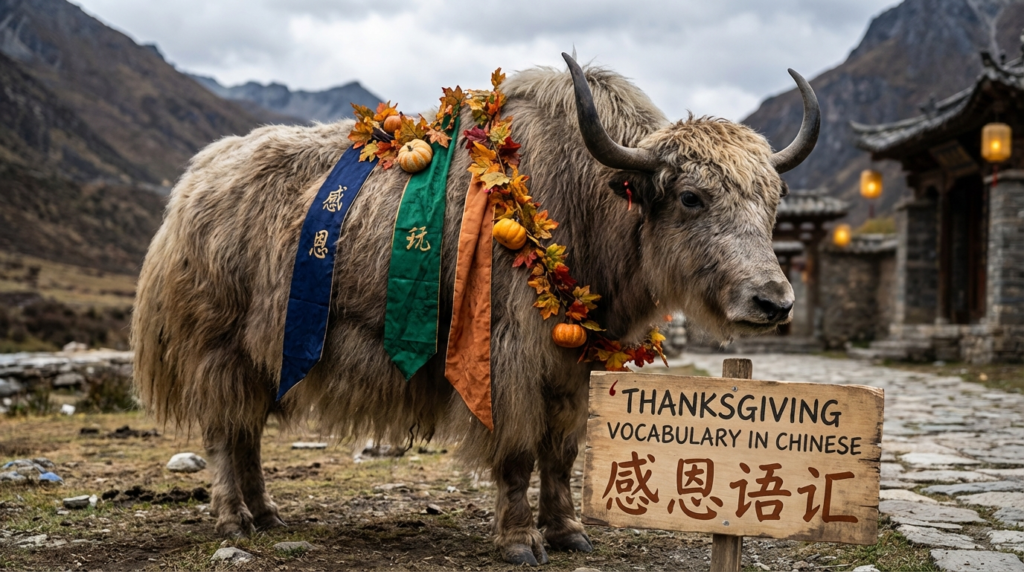
Thanksgiving Vocabulary In Chinese: 54 Easy Words And Phrases For Beginners
Learn 感恩节词汇 gǎn’ēn jié cíhuì for family meals, gratitude, turkey talk, and all the second-helping drama.
Thanksgiving vocabulary in Chinese is mostly about three things: food, family, and saying thank you without sounding like a robot from a textbook. That is excellent news, because those are exactly the kinds of words you can start using right away.
In this guide, every word comes with simplified Chinese, pinyin, English meaning, and a real example sentence. So yes, you can learn how to say 火鸡 huǒjī, but also how to say things like “I’m full,” “Thanks for inviting me,” and “Please pass the gravy.” Useful beats fancy every time.
Start With The Words You Will Actually Use
Thanksgiving Chinese is not just 火鸡 huǒjī and 南瓜派 nánguā pài. You also need words for 团聚 tuánjù, 感谢 gǎnxiè, and 开饭 kāifàn. Because a holiday meal is not only about the food. It is also about the people, the small talk, and pretending you still have room for dessert.
Visual Cards: The Core Thanksgiving Words
感恩节 gǎn’ēn jié
Thanksgiving
火鸡 huǒjī
turkey
南瓜派 nánguā pài
pumpkin pie
团聚 tuánjù
reunion, getting together
感谢 gǎnxiè
thanks, appreciation
祝福 zhùfú
blessing, good wishes
收获 shōuhuò
harvest
开饭 kāifàn
meal time, let’s eat
Useful Phrases For The Dinner Table
祝你感恩节快乐 zhù nǐ gǎn’ēn jié kuàilè — Happy Thanksgiving.
Sentence: 祝你和家人感恩节快乐。
Zhù nǐ hé jiārén gǎn’ēn jié kuàilè.
Happy Thanksgiving to you and your family.
谢谢你邀请我 xièxie nǐ yāoqǐng wǒ — Thanks for inviting me.
Sentence: 谢谢你邀请我来过感恩节。
Xièxie nǐ yāoqǐng wǒ lái guò gǎn’ēn jié.
Thanks for inviting me to celebrate Thanksgiving.
你辛苦了 nǐ xīnkǔ le — You worked hard.
Sentence: 你做了这么多菜,真的辛苦了。
Nǐ zuò le zhème duō cài, zhēnde xīnkǔ le.
You made so many dishes. You really worked hard.
我来帮你 wǒ lái bāng nǐ — I’ll help you.
Sentence: 我来帮你摆桌子。
Wǒ lái bāng nǐ bǎi zhuōzi.
I’ll help you set the table.
这个真好吃 zhège zhēn hǎochī — This is really delicious.
Sentence: 这个南瓜派真好吃。
Zhège nánguā pài zhēn hǎochī.
This pumpkin pie is really delicious.
你再来一点吧 nǐ zài lái yìdiǎn ba — Have a little more.
Sentence: 你再来一点土豆泥吧。
Nǐ zài lái yìdiǎn tǔdòuní ba.
Have a little more mashed potatoes.
请把肉汁递给我 qǐng bǎ ròuzhī dì gěi wǒ — Please pass me the gravy.
Sentence: 请把肉汁递给我,谢谢。
Qǐng bǎ ròuzhī dì gěi wǒ, xièxie.
Please pass me the gravy, thanks.
我吃饱了 wǒ chībǎo le — I’m full.
Sentence: 谢谢,我吃饱了。
Xièxie, wǒ chībǎo le.
Thanks, I’m full.
我很感激 wǒ hěn gǎnjī — I’m very grateful.
Sentence: 我很感激你们的陪伴。
Wǒ hěn gǎnjī nǐmen de péibàn.
I’m very grateful for your company.
大家一起拍照吧 dàjiā yìqǐ pāizhào ba — Let’s take a photo together.
Sentence: 吃饭前,大家一起拍照吧。
Chīfàn qián, dàjiā yìqǐ pāizhào ba.
Let’s take a photo together before eating.
我们开始吃吧 wǒmen kāishǐ chī ba — Let’s start eating.
Sentence: 菜都准备好了,我们开始吃吧。
Cài dōu zhǔnbèi hǎo le, wǒmen kāishǐ chī ba.
The food is ready, let’s start eating.
感谢你做的晚餐 gǎnxiè nǐ zuò de wǎncān — Thank you for making dinner.
Sentence: 真的感谢你做的晚餐。
Zhēnde gǎnxiè nǐ zuò de wǎncān.
Thank you so much for making dinner.
Holiday Basics
| Hanzi | Pinyin | Meaning | Example In Chinese | Example In Pinyin | Translation |
|---|---|---|---|---|---|
| 感恩节 | gǎn’ēn jié | Thanksgiving | 我们在感恩节一起吃晚餐。 | Wǒmen zài gǎn’ēn jié yìqǐ chī wǎncān. | We eat dinner together on Thanksgiving. |
| 节日 | jiérì | holiday | 这是一个温暖的节日。 | Zhè shì yí gè wēnnuǎn de jiérì. | This is a warm holiday. |
| 传统 | chuántǒng | tradition | 和家人吃饭是我们的传统。 | Hé jiārén chīfàn shì wǒmen de chuántǒng. | Eating with family is our tradition. |
| 秋天 | qiūtiān | autumn | 感恩节在秋天。 | Gǎn’ēn jié zài qiūtiān. | Thanksgiving is in autumn. |
| 收获 | shōuhuò | harvest | 农民庆祝今年的收获。 | Nóngmín qìngzhù jīnnián de shōuhuò. | Farmers celebrate this year’s harvest. |
| 家人 | jiārén | family | 今天晚上所有家人都来了。 | Jīntiān wǎnshang suǒyǒu jiārén dōu lái le. | All the family came tonight. |
| 团聚 | tuánjù | reunion | 节日让大家团聚。 | Jiérì ràng dàjiā tuánjù. | The holiday brings everyone together. |
| 客人 | kèrén | guest | 我们家今天有很多客人。 | Wǒmen jiā jīntiān yǒu hěn duō kèrén. | We have many guests at home today. |
| 邀请 | yāoqǐng | to invite; invitation | 我想邀请邻居来吃饭。 | Wǒ xiǎng yāoqǐng línjū lái chīfàn. | I want to invite the neighbors to come eat. |
| 聚会 | jùhuì | gathering, party | 他们正在准备感恩节聚会。 | Tāmen zhèngzài zhǔnbèi gǎn’ēn jié jùhuì. | They are preparing a Thanksgiving gathering. |
| 晚餐 | wǎncān | dinner | 晚餐六点开始。 | Wǎncān liù diǎn kāishǐ. | Dinner starts at six. |
| 祝福 | zhùfú | blessing, good wishes | 她给大家送上祝福。 | Tā gěi dàjiā sòngshàng zhùfú. | She gives everyone her good wishes. |
| 感谢 | gǎnxiè | thanks, appreciation | 我想对你说一声感谢。 | Wǒ xiǎng duì nǐ shuō yì shēng gǎnxiè. | I want to say thank you to you. |
| 照片 | zhàopiàn | photo | 我们先拍一张家庭照片。 | Wǒmen xiān pāi yì zhāng jiātíng zhàopiàn. | Let’s take a family photo first. |
Food And Kitchen Words
| Hanzi | Pinyin | Meaning | Example In Chinese | Example In Pinyin | Translation |
|---|---|---|---|---|---|
| 火鸡 | huǒjī | turkey | 桌子中间有一只大火鸡。 | Zhuōzi zhōngjiān yǒu yì zhī dà huǒjī. | There is a big turkey in the middle of the table. |
| 烤火鸡 | kǎo huǒjī | roast turkey | 爸爸在厨房做烤火鸡。 | Bàba zài chúfáng zuò kǎo huǒjī. | Dad is making roast turkey in the kitchen. |
| 南瓜 | nánguā | pumpkin | 她买了一个大南瓜。 | Tā mǎi le yí gè dà nánguā. | She bought a big pumpkin. |
| 南瓜派 | nánguā pài | pumpkin pie | 我最喜欢南瓜派。 | Wǒ zuì xǐhuan nánguā pài. | Pumpkin pie is my favorite. |
| 苹果派 | píngguǒ pài | apple pie | 奶奶做的苹果派很香。 | Nǎinai zuò de píngguǒ pài hěn xiāng. | Grandma’s apple pie smells wonderful. |
| 甜点 | tiándiǎn | dessert | 晚饭后我们吃甜点。 | Wǎnfàn hòu wǒmen chī tiándiǎn. | We eat dessert after dinner. |
| 馅料 | xiànliào | stuffing, filling | 火鸡里面有很多馅料。 | Huǒjī lǐmiàn yǒu hěn duō xiànliào. | There is a lot of stuffing inside the turkey. |
| 土豆泥 | tǔdòuní | mashed potatoes | 这盘土豆泥很好吃。 | Zhè pán tǔdòuní hěn hǎochī. | This plate of mashed potatoes is delicious. |
| 肉汁 | ròuzhī | gravy | 请给我一点肉汁。 | Qǐng gěi wǒ yìdiǎn ròuzhī. | Please give me a little gravy. |
| 蔓越莓酱 | mànyuèméi jiàng | cranberry sauce | 蔓越莓酱有一点甜,也有一点酸。 | Mànyuèméi jiàng yǒu yìdiǎn tián, yě yǒu yìdiǎn suān. | Cranberry sauce is a little sweet and a little sour. |
| 面包卷 | miànbāojuǎn | dinner roll | 他拿了两个面包卷。 | Tā ná le liǎng gè miànbāojuǎn. | He took two dinner rolls. |
| 玉米 | yùmǐ | corn | 孩子们喜欢吃玉米。 | Háizimen xǐhuan chī yùmǐ. | The kids like eating corn. |
| 四季豆 | sìjìdòu | green beans | 四季豆是常见的配菜。 | Sìjìdòu shì chángjiàn de pèicài. | Green beans are a common side dish. |
| 红薯 | hóngshǔ | sweet potato | 烤红薯很甜。 | Kǎo hóngshǔ hěn tián. | Roasted sweet potatoes are very sweet. |
| 烤箱 | kǎoxiāng | oven | 烤箱里还有一个派。 | Kǎoxiāng lǐ hái yǒu yí gè pài. | There is still a pie in the oven. |
| 菜谱 | càipǔ | recipe | 我照着菜谱做晚餐。 | Wǒ zhàozhe càipǔ zuò wǎncān. | I am making dinner by following the recipe. |
Table Talk And Holiday Activities
| Hanzi | Pinyin | Meaning | Example In Chinese | Example In Pinyin | Translation |
|---|---|---|---|---|---|
| 切火鸡 | qiē huǒjī | to carve the turkey | 爷爷来切火鸡。 | Yéye lái qiē huǒjī. | Grandpa will carve the turkey. |
| 开饭 | kāifàn | meal time, let’s eat | 大家快来,开饭了。 | Dàjiā kuài lái, kāifàn le. | Everyone come quickly, it’s time to eat. |
| 请慢用 | qǐng mànyòng | please enjoy your meal | 菜都上齐了,请慢用。 | Cài dōu shàng qí le, qǐng mànyòng. | The dishes are all served. Please enjoy your meal. |
| 真好吃 | zhēn hǎochī | really delicious | 这个南瓜派真好吃。 | Zhège nánguā pài zhēn hǎochī. | This pumpkin pie is really delicious. |
| 再来一点 | zài lái yìdiǎn | have a little more | 你再来一点土豆泥吧。 | Nǐ zài lái yìdiǎn tǔdòuní ba. | Have a little more mashed potatoes. |
| 我吃饱了 | wǒ chībǎo le | I’m full | 谢谢,我吃饱了。 | Xièxie, wǒ chībǎo le. | Thanks, I’m full. |
| 帮忙摆桌子 | bāngmáng bǎi zhuōzi | help set the table | 请你帮忙摆桌子。 | Qǐng nǐ bāngmáng bǎi zhuōzi. | Please help set the table. |
| 干杯 | gānbēi | cheers | 我们一起干杯吧。 | Wǒmen yìqǐ gānbēi ba. | Let’s make a toast together. |
| 聊天 | liáotiān | to chat | 饭后大家坐在一起聊天。 | Fànhòu dàjiā zuò zài yìqǐ liáotiān. | After the meal, everyone sits together and chats. |
| 休息 | xiūxi | to rest | 吃完饭以后,我们先休息一下。 | Chī wán fàn yǐhòu, wǒmen xiān xiūxi yíxià. | After eating, we will rest for a bit first. |
| 看比赛 | kàn bǐsài | to watch a game | 叔叔想边吃边看比赛。 | Shūshu xiǎng biān chī biān kàn bǐsài. | Uncle wants to watch the game while eating. |
| 看电影 | kàn diànyǐng | to watch a movie | 晚上我们全家一起看电影。 | Wǎnshang wǒmen quánjiā yìqǐ kàn diànyǐng. | At night our whole family watches a movie together. |
Gratitude Words And Greetings
| Hanzi | Pinyin | Meaning | Example In Chinese | Example In Pinyin | Translation |
|---|---|---|---|---|---|
| 感恩 | gǎn’ēn | gratitude; to feel thankful | 我们今天一起感恩。 | Wǒmen jīntiān yìqǐ gǎn’ēn. | Today we give thanks together. |
| 感激 | gǎnjī | to feel grateful | 我真的很感激你的帮助。 | Wǒ zhēnde hěn gǎnjī nǐ de bāngzhù. | I am truly grateful for your help. |
| 幸运 | xìngyùn | lucky, fortunate | 有家人陪着,我觉得很幸运。 | Yǒu jiārén péizhe, wǒ juéde hěn xìngyùn. | I feel very lucky to have family with me. |
| 健康 | jiànkāng | health | 今年我们最感谢健康。 | Jīnnián wǒmen zuì gǎnxiè jiànkāng. | This year we are most thankful for health. |
| 平安 | píng’ān | peace, safety | 我希望你和家人都平安。 | Wǒ xīwàng nǐ hé jiārén dōu píng’ān. | I hope you and your family are safe and well. |
| 快乐 | kuàilè | happy, joyful | 祝大家节日快乐。 | Zhù dàjiā jiérì kuàilè. | Wishing everyone a happy holiday. |
| 支持 | zhīchí | support | 谢谢你的支持。 | Xièxie nǐ de zhīchí. | Thank you for your support. |
| 陪伴 | péibàn | company, companionship | 家人的陪伴最重要。 | Jiārén de péibàn zuì zhòngyào. | The company of family is the most important. |
| 分享 | fēnxiǎng | to share | 感恩节是分享食物的日子。 | Gǎn’ēn jié shì fēnxiǎng shíwù de rìzi. | Thanksgiving is a day for sharing food. |
| 希望 | xīwàng | hope | 我们对明年有很多希望。 | Wǒmen duì míngnián yǒu hěn duō xīwàng. | We have a lot of hope for next year. |
| 珍惜 | zhēnxī | to cherish | 我们要珍惜在一起的时间。 | Wǒmen yào zhēnxī zài yìqǐ de shíjiān. | We should cherish the time we have together. |
| 祝你感恩节快乐 | zhù nǐ gǎn’ēn jié kuàilè | Happy Thanksgiving | 祝你感恩节快乐! | Zhù nǐ gǎn’ēn jié kuàilè! | Happy Thanksgiving! |
Common Mix-Ups
感谢 gǎnxiè and 感恩 gǎn’ēn are close, but not identical. 感谢 gǎnxiè is everyday thanks and appreciation. 感恩 gǎn’ēn feels deeper and more reflective, which makes it perfect for Thanksgiving.
团聚 tuánjù and 聚会 jùhuì also differ a bit. 团聚 tuánjù is about loved ones coming back together. 聚会 jùhuì is a gathering or get-together. Thanksgiving often has both, because one holiday apparently needs both emotion and snacks.
火鸡 huǒjī is the turkey itself, while 烤火鸡 kǎo huǒjī is roast turkey. One is the bird. The other is the reason everyone is standing in the kitchen pretending to help.
Yak Tip
Learn the food words first, sure. But do not stop at 火鸡 huǒjī and 南瓜派 nánguā pài. Thanksgiving gets much smoother when you can also say 谢谢你邀请我 xièxie nǐ yāoqǐng wǒ, 我来帮你 wǒ lái bāng nǐ, and 我吃饱了 wǒ chībǎo le. Vocabulary that saves awkward moments is the good stuff.
FAQ
How Do You Say Thanksgiving In Chinese?
The standard way is 感恩节 gǎn’ēn jié. It literally carries the idea of a gratitude holiday, which fits nicely.
How Do You Say Happy Thanksgiving In Chinese?
You can say 祝你感恩节快乐 zhù nǐ gǎn’ēn jié kuàilè. It means “Happy Thanksgiving.” It is simple, natural, and easy to remember.
What Is The Difference Between 感谢 gǎnxiè And 感恩 gǎn’ēn?
感谢 gǎnxiè is everyday thanks or appreciation. 感恩 gǎn’ēn feels deeper and more reflective. For a holiday speech, 感恩 gǎn’ēn sounds more heartfelt. For thanking someone for dinner, 感谢 gǎnxiè is usually the easier choice.
Which Thanksgiving Words Should Beginners Learn First?
Start with 感恩节 gǎn’ēn jié, 火鸡 huǒjī, 南瓜派 nánguā pài, 谢谢 xièxie, 感谢 gǎnxiè, 开饭 kāifàn, and 我吃饱了 wǒ chībǎo le. That already covers greetings, food, and dinner-table survival.