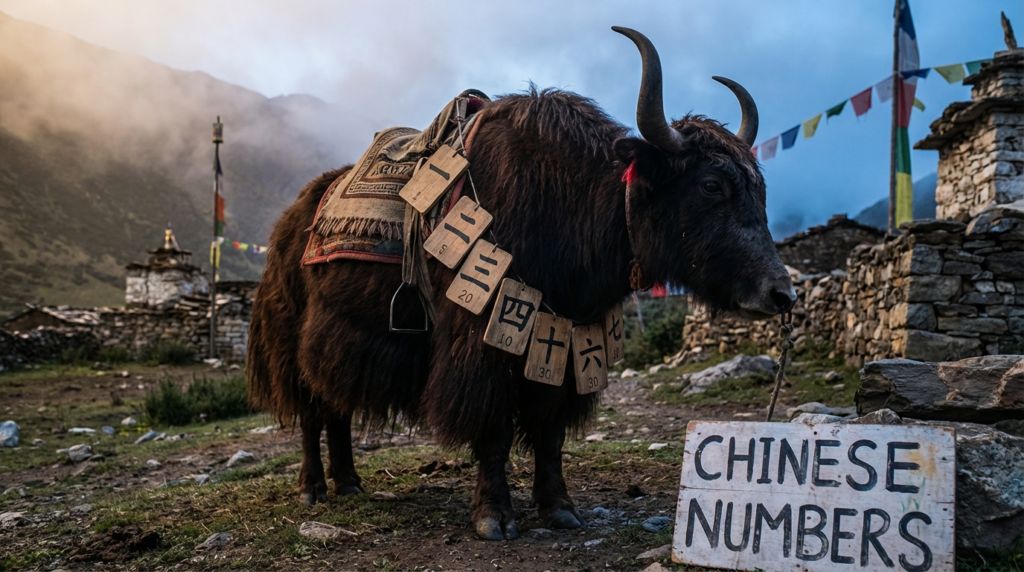
Learn Chinese numbers, or 数字 shùzì, from 0 to huge numbers, plus prices, dates, time, phone numbers, fractions, percentages, and the sneaky little chaos of 二 èr and 两 liǎng.
The first time I tried ordering dumplings in China, I proudly said “二个饺子 èr ge jiǎozi” and got a very polite smile back. The auntie repeated it as “两个饺子 liǎng ge jiǎozi,” handed me my food, and in five seconds taught me more useful Chinese than a stack of flashcards ever had. Chinese numbers looked scary from far away, but up close they were weirdly logical. The only real problem was that nobody had warned me where the traps were hiding.
A lot of beginner guides teach 1 to 10, wave vaguely at 100, and run off into the sunset. That is not enough when somebody tells you the price is 三十八块五 sānshíbā kuài wǔ, asks for your phone number, or says a date like 二零二六年三月十二日 èr líng èr liù nián sān yuè shí’èr rì. This guide does the whole job properly, with pinyin, plain English, and real examples you can actually use.
Yak Snark Box
Chinese numbers are not hard. Your English-speaking brain is hard. It keeps trying to force everything into groups of three digits, while Chinese calmly says “万 wàn is 10,000, deal with it.” Rude, efficient, correct.
The 8 Building Blocks You Need First
零
líng — zero
密码里有一个零。
mìmǎ li yǒu yí ge líng.
There is a zero in the password.
一
yī — one
我有一个问题。
wǒ yǒu yí ge wèntí.
I have one question.
二
èr — two as a number
二加二等于四。
èr jiā èr děngyú sì.
Two plus two equals four.
两
liǎng — two before many measure words
我要两个包子。
wǒ yào liǎng ge bāozi.
I want two buns.
十
shí — ten
我们十点开门。
wǒmen shí diǎn kāimén.
We open at ten.
百
bǎi — hundred
这个包一百元。
zhège bāo yībǎi yuán.
This bag is 100 yuan.
千
qiān — thousand
这台电脑两千元。
zhè tái diànnǎo liǎngqiān yuán.
This computer is 2,000 yuan.
万
wàn — ten thousand
他每天走一万步。
tā měitiān zǒu yíwàn bù.
He walks 10,000 steps every day.
How Chinese Numbers Actually Work
Here is the part that makes Chinese numbers feel refreshingly unfair. Once you know the basic digits and the unit words 十 shí, 百 bǎi, 千 qiān, 万 wàn, and 亿 yì, you can build a huge number of expressions with very little memorizing.
- 11 to 19: just say 十 shí plus the digit. So 11 is 十一 shíyī, 12 is 十二 shí’èr, and 19 is 十九 shíjiǔ.
- 20 to 99: digit + 十 shí + digit. So 21 is 二十一 èrshíyī, and 45 is 四十五 sìshíwǔ.
- Hundreds and thousands: stack the units in order. So 256 is 两百五十六 liǎngbǎi wǔshíliù.
- Zero inside a number: use 零 líng when you need a placeholder, like 101 一百零一 yībǎi líng yī or 3,050 三千零五十 sānqiān líng wǔshí.
One note before the tables: learner materials often write pinyin in a neat dictionary-style way, such as 一百 yībǎi and 一万 yīwàn. In natural speech, the tone of 一 yī often changes depending on what comes next. You will hear that later. First, get the structure solid.
Basic Numbers 0 To 10
| Hanzi | Pinyin | Meaning | ZH | Pinyin Example | EN |
|---|---|---|---|---|---|
| 零 | líng | zero | 房间号是零零七。 | fángjiān hào shì líng líng qī. | The room number is 007. |
| 一 | yī | one | 我有一个苹果。 | wǒ yǒu yí ge píngguǒ. | I have one apple. |
| 二 | èr | two | 二加二等于四。 | èr jiā èr děngyú sì. | Two plus two equals four. |
| 三 | sān | three | 我们三个人。 | wǒmen sān ge rén. | There are three of us. |
| 四 | sì | four | 四点见。 | sì diǎn jiàn. | See you at four. |
| 五 | wǔ | five | 五块钱可以吗? | wǔ kuài qián kěyǐ ma? | Is five yuan okay? |
| 六 | liù | six | 我住六楼。 | wǒ zhù liù lóu. | I live on the sixth floor. |
| 七 | qī | seven | 七月很热。 | qī yuè hěn rè. | July is hot. |
| 八 | bā | eight | 八号桌有人吗? | bā hào zhuō yǒu rén ma? | Is table number 8 occupied? |
| 九 | jiǔ | nine | 这件衣服九十九块。 | zhè jiàn yīfu jiǔshíjiǔ kuài. | This piece of clothing is 99 yuan. |
| 十 | shí | ten | 十分钟以后见。 | shí fēnzhōng yǐhòu jiàn. | See you in ten minutes. |
From 11 To 999 Without Panic
| Hanzi | Pinyin | Meaning | ZH | Pinyin Example | EN |
|---|---|---|---|---|---|
| 十一 | shíyī | eleven | 我们十一点开会。 | wǒmen shíyī diǎn kāihuì. | We have a meeting at 11. |
| 十二 | shí’èr | twelve | 我十二岁开始学钢琴。 | wǒ shí’èr suì kāishǐ xué gāngqín. | I started learning piano at age 12. |
| 二十 | èrshí | twenty | 他二十分钟后到。 | tā èrshí fēnzhōng hòu dào. | He will arrive in 20 minutes. |
| 二十一 | èrshíyī | twenty-one | 我住二十一楼。 | wǒ zhù èrshíyī lóu. | I live on the 21st floor. |
| 三十 | sānshí | thirty | 这本书三十块。 | zhè běn shū sānshí kuài. | This book is 30 yuan. |
| 四十五 | sìshíwǔ | forty-five | 现在九点四十五分。 | xiànzài jiǔ diǎn sìshíwǔ fēn. | It is now 9:45. |
| 九十九 | jiǔshíjiǔ | ninety-nine | 这双鞋九十九元。 | zhè shuāng xié jiǔshíjiǔ yuán. | These shoes are 99 yuan. |
| 一百 | yībǎi | one hundred | 这个包一百元。 | zhège bāo yībǎi yuán. | This bag is 100 yuan. |
| 一百零一 | yībǎi líng yī | one hundred and one | 我住一百零一号房间。 | wǒ zhù yībǎi líng yī hào fángjiān. | I’m staying in room 101. |
| 一百一十 | yībǎi yīshí | one hundred and ten | 他能跑一百一十米。 | tā néng pǎo yībǎi yīshí mǐ. | He can run 110 meters. |
| 两百 | liǎngbǎi | two hundred | 这双鞋两百块。 | zhè shuāng xié liǎngbǎi kuài. | These shoes are 200 yuan. |
| 九百九十九 | jiǔbǎi jiǔshíjiǔ | nine hundred and ninety-nine | 手机九百九十九元。 | shǒujī jiǔbǎi jiǔshíjiǔ yuán. | The phone is 999 yuan. |
The first trap: 11 is 十一 shíyī, not 一十一 yīshíyī. Chinese drops the first “one” there. Nice and efficient.
The second trap: 两 liǎng is very common before measure words and also before 百 bǎi, 千 qiān, and 万 wàn in everyday speech. So 两个人 liǎng ge rén and 两百 liǎngbǎi sound natural. Save 二 èr for counting, math, dates, room numbers, phone digits, and other pure number jobs.
Useful Phrases And Real-Life Sentences
多少钱? duōshao qián? — How much is it?
这个多少钱?
zhège duōshao qián?
How much is this?
多少人? duōshao rén? — How many people?
今天一共多少人?
jīntiān yígòng duōshao rén?
How many people are there in total today?
你几岁? nǐ jǐ suì? — How old are you? (usually for children)
你几岁?我八岁。
nǐ jǐ suì? wǒ bā suì.
How old are you? I’m eight.
你多大? nǐ duō dà? — How old are you? (general spoken question)
你多大?我二十五岁。
nǐ duō dà? wǒ èrshíwǔ suì.
How old are you? I’m 25.
你的电话号码是多少? nǐ de diànhuà hàomǎ shì duōshao? — What is your phone number?
你的电话号码是多少?
nǐ de diànhuà hàomǎ shì duōshao?
What is your phone number?
今天几号? jīntiān jǐ hào? — What date is it today?
今天几号?今天三月十二号。
jīntiān jǐ hào? jīntiān sān yuè shí’èr hào.
What date is it today? Today is March 12.
现在几点? xiànzài jǐ diǎn? — What time is it now?
现在几点?现在两点半。
xiànzài jǐ diǎn? xiànzài liǎng diǎn bàn.
What time is it now? It’s 2:30 now.
一共几个人? yígòng jǐ ge rén? — How many people in total?
我们一共五个人。
wǒmen yígòng wǔ ge rén.
There are five of us in total.
我要两个。 wǒ yào liǎng ge. — I want two.
这个很好吃,我要两个。
zhège hěn hǎochī, wǒ yào liǎng ge.
This is tasty. I want two.
三点半见。 sān diǎn bàn jiàn. — See you at 3:30.
我们三点半见。
wǒmen sān diǎn bàn jiàn.
Let’s meet at 3:30.
二零二六年三月十二日。 èr líng èr liù nián sān yuè shí’èr rì. — March 12, 2026.
今天是二零二六年三月十二日。
jīntiān shì èr líng èr liù nián sān yuè shí’èr rì.
Today is March 12, 2026.
这件衣服打八折。 zhè jiàn yīfu dǎ bā zhé. — This item is 20% off.
今天活动,这件衣服打八折。
jīntiān huódòng, zhè jiàn yīfu dǎ bā zhé.
There’s a sale today, and this piece of clothing is 20% off.
Big Numbers Without Melting Your Brain
The big idea is this: Chinese groups large numbers by four digits, not three. That is why 万 wàn means 10,000 and 亿 yì means 100,000,000. Once that clicks, newspapers, prices, salaries, follower counts, and population figures stop looking like alien math.
| Hanzi | Pinyin | Meaning | ZH | Pinyin Example | EN |
|---|---|---|---|---|---|
| 一千 | yīqiān | one thousand | 这台电脑一千元。 | zhè tái diànnǎo yīqiān yuán. | This computer is 1,000 yuan. |
| 一千零八 | yīqiān líng bā | one thousand and eight | 房间号是一千零八。 | fángjiān hào shì yīqiān líng bā. | The room number is 1008. |
| 一千五百 | yīqiān wǔbǎi | one thousand five hundred | 这部手机一千五百元。 | zhè bù shǒujī yīqiān wǔbǎi yuán. | This phone is 1,500 yuan. |
| 两千 | liǎngqiān | two thousand | 报名费两千元。 | bàomíng fèi liǎngqiān yuán. | The registration fee is 2,000 yuan. |
| 一万 | yīwàn | ten thousand | 他每天走一万步。 | tā měitiān zǒu yīwàn bù. | He walks 10,000 steps every day. |
| 两万 | liǎngwàn | twenty thousand | 这辆自行车两万元。 | zhè liàng zìxíngchē liǎngwàn yuán. | This bicycle is 20,000 yuan. |
| 十万 | shíwàn | one hundred thousand | 这个视频有十万次播放。 | zhège shìpín yǒu shíwàn cì bōfàng. | This video has 100,000 plays. |
| 一百万 | yībǎi wàn | one million | 这个城市有一百万人口。 | zhège chéngshì yǒu yībǎi wàn rénkǒu. | This city has a population of one million. |
| 一千万 | yīqiān wàn | ten million | 这个话题有一千万次搜索。 | zhège huàtí yǒu yīqiān wàn cì sōusuǒ. | This topic has 10 million searches. |
| 一亿 | yīyì | one hundred million | 这部电影票房过一亿了。 | zhè bù diànyǐng piàofáng guò yīyì le. | This movie has passed 100 million at the box office. |
| 三千零五十 | sānqiān líng wǔshí | three thousand and fifty | 这台机器三千零五十元。 | zhè tái jīqì sānqiān líng wǔshí yuán. | This machine is 3,050 yuan. |
| 两千两百二十二 | liǎngqiān liǎngbǎi èrshí’èr | two thousand two hundred and twenty-two | 他的工号是两千两百二十二。 | tā de gōnghào shì liǎngqiān liǎngbǎi èrshí’èr. | His employee number is 2,222. |
| 一万两千三百四十五 | yīwàn liǎngqiān sānbǎi sìshíwǔ | twelve thousand three hundred and forty-five | 这块手表一万两千三百四十五元。 | zhè kuài shǒubiǎo yīwàn liǎngqiān sānbǎi sìshíwǔ yuán. | This watch costs 12,345 yuan. |
Zero rule: say 零 líng when there is a gap inside the number, but do not say it at the end. So 108 is 一百零八 yībǎi líng bā, but 180 is 一百八十 yībǎi bāshí, not 一百八十零 yībǎi bāshí líng. That would be chaos for no reason.
Dates, Time, Money, Phone Numbers, Decimals, Fractions, And More
This is where Chinese numbers stop being a classroom chart and start being actual life. Learn these patterns and suddenly menus, clocks, addresses, birthdays, and shopping apps become much less rude.
| Hanzi | Pinyin | Meaning | ZH | Pinyin Example | EN |
|---|---|---|---|---|---|
| 两 | liǎng | two before many measure words | 我买了两个橘子。 | wǒ mǎi le liǎng ge júzi. | I bought two tangerines. |
| 个 | gè | general measure word | 三个人来了吗? | sān ge rén lái le ma? | Did three people come? |
| 年 | nián | year | 我二零零一年出生。 | wǒ èr líng líng yī nián chūshēng. | I was born in 2001. |
| 月 | yuè | month | 我的生日是六月三号。 | wǒ de shēngrì shì liù yuè sān hào. | My birthday is June 3. |
| 日 / 号 | rì / hào | day / date | 今天是三月十二号。 | jīntiān shì sān yuè shí’èr hào. | Today is March 12. |
| 点 | diǎn | o’clock / decimal point | 现在五点。三点一四也可以说成三点一四。 | xiànzài wǔ diǎn. sān diǎn yī sì yě kěyǐ shuō chéng sān diǎn yī sì. | It is five o’clock now. 3.14 is read as “three point one four.” |
| 分 | fēn | minute | 现在九点二十分。 | xiànzài jiǔ diǎn èrshí fēn. | It is 9:20 now. |
| 半 | bàn | half | 现在两点半。 | xiànzài liǎng diǎn bàn. | It is 2:30 now. |
| 元 | yuán | yuan, formal money word | 一共十五元。 | yígòng shíwǔ yuán. | The total is 15 yuan. |
| 块 | kuài | yuan, spoken money word | 这个十块。 | zhège shí kuài. | This costs 10 yuan. |
| 毛 | máo | 0.1 yuan, spoken | 这个一块五毛。 | zhège yí kuài wǔ máo. | This costs 1.5 yuan. |
| 幺 | yāo | one in phone numbers | 我的号码里有两个幺。 | wǒ de hàomǎ li yǒu liǎng ge yāo. | There are two “ones” in my number. |
| 百分之 | bǎifēnzhī | percent | 电池还有百分之八十。 | diànchí hái yǒu bǎifēnzhī bāshí. | The battery is still at 80%. |
| 分之 | fēnzhī | fraction marker | 四分之三等于零点七五。 | sì fēn zhī sān děngyú líng diǎn qī wǔ. | Three fourths equals 0.75. |
| 第 | dì | ordinal prefix | 我坐在第三排。 | wǒ zuò zài dì sān pái. | I sit in the third row. |
| 折 | zhé | discount rate | 这双鞋打五折。 | zhè shuāng xié dǎ wǔ zhé. | These shoes are half price. |
Three Real-Life Number Patterns Worth Memorizing
Years are read digit by digit.
2026年
èr líng èr liù nián
the year 2026
Phone numbers are read digit by digit too.
13800138000
yāo sān bā líng líng yāo sān bā líng líng líng
13800138000
Fractions flip compared with English.
3/4 = 四分之三
sì fēn zhī sān
literally “out of four parts, three”
Curious Bit That Saves Embarrassment
Discounts in Chinese are upside down compared with English. If something is 打八折 dǎ bā zhé, it means you pay 80% of the original price, so it is 20% off. If something is 打五折 dǎ wǔ zhé, it is half price. That little pattern shows up all over online shopping, so it is worth learning early.
If you want a second round of number practice after this guide, the Chinese Grammar Wiki page on number structure, its date structure guide, and LTL’s Chinese numbers article are useful rabbit holes.
Quick Practice
- How would you read 308 in Chinese?
- How would you say 2:30?
- How would you say 75%?
- How would you say 3/5?
- How would you say room 1208?
Show Answers
308 = 三百零八 sānbǎi líng bā.
2:30 = 两点半 liǎng diǎn bàn.
75% = 百分之七十五 bǎifēnzhī qīshíwǔ.
3/5 = 五分之三 wǔ fēn zhī sān.
Room 1208 = 一二零八号房间 yī èr líng bā hào fángjiān, or just 一二零八 yī èr líng bā when the context is obvious.
Quick Reference Summary
- 11 to 19: 十 shí + digit
- 20 to 99: digit + 十 shí + digit
- 100 / 1000 / 10000: 百 bǎi / 千 qiān / 万 wàn
- Use 零 líng for missing places inside a number
- Use 两 liǎng before many measure words and often before 百 bǎi, 千 qiān, and 万 wàn
- Years and phone numbers: read digits one by one
- Decimals: use 点 diǎn
- Fractions: denominator + 分之 fēnzhī + numerator
- Percentages: 百分之 bǎifēnzhī + number
- Ordinals: 第 dì + number
Final Yak Box
Once you stop treating Chinese numbers like random vocabulary and start treating them like a system, they get dramatically easier. Learn the digits, learn the unit words, get friendly with 零 líng and 两 liǎng, and the rest becomes pattern recognition. Which is much nicer than panic.
FAQ
Is 2 In Chinese 二 èr Or 两 liǎng?
Both exist, and both matter. Use 二 èr for pure numbers, math, dates, phone digits, and counting. Use 两 liǎng before many measure words, as in 两个人 liǎng ge rén, and very often before 百 bǎi, 千 qiān, and 万 wàn in normal speech, as in 两百 liǎngbǎi and 两千 liǎngqiān.
Why Is 10,000 万 wàn Instead Of Just “Ten Thousand”?
Because Chinese organizes big numbers in four-digit chunks. So 万 wàn is 10,000, 十万 shíwàn is 100,000, 一百万 yībǎi wàn is 1,000,000, and 一亿 yīyì is 100,000,000. It feels odd for a minute, then suddenly it feels cleaner than English.
Do I Always Say 1 As 一 yī?
Not quite. The dictionary form is 一 yī, but in real speech its tone often changes depending on the next word. Also, in mainland Chinese phone numbers, 1 is often read as 幺 yāo to avoid confusion with 7, which is 七 qī.
How Do I Say Decimals, Fractions, And Percentages?
Decimals use 点 diǎn, so 3.14 is 三点一四 sān diǎn yī sì. Fractions use 分之 fēnzhī, so 3/4 is 四分之三 sì fēn zhī sān. Percentages use 百分之 bǎifēnzhī, so 80% is 百分之八十 bǎifēnzhī bāshí.