Chinese Nature Vocabulary For Beginners
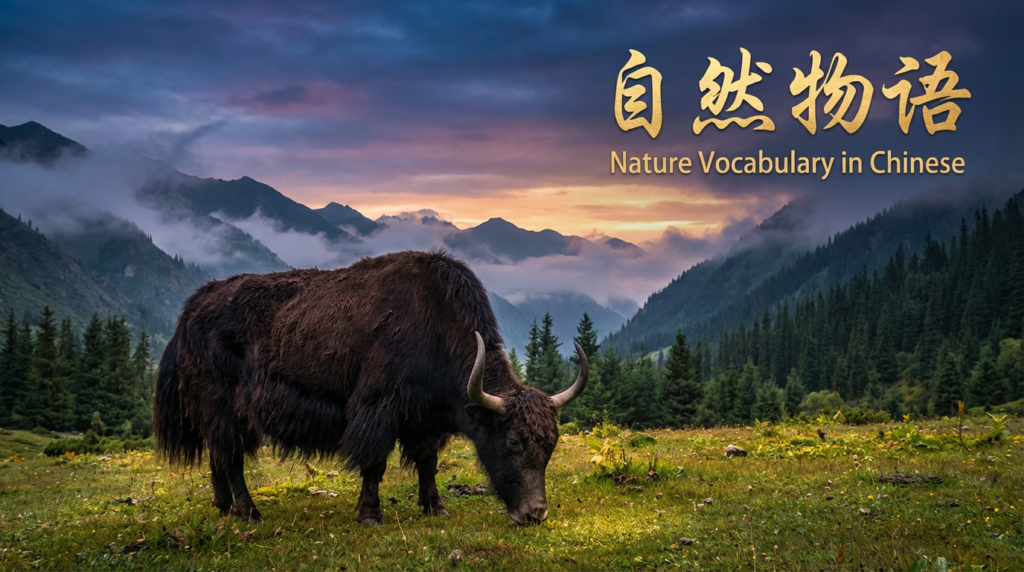
Learn the everyday language of nature in simplified Chinese: 自然词汇 zìrán cíhuì. Mountains, trees, rivers, sunshine, wildflowers, the whole calm-outside package.
Nature words are beginner-friendly because they are easy to point at in real life. You see a tree, you say 树 shù. You see clouds, you say 云 yún. Suddenly vocabulary is less “memorize this random list” and more “use your eyes like a normal human.”
Below you will get high-utility Chinese nature vocabulary with pinyin, plain English meanings, and example sentences that sound natural. Start with the core words, then steal the phrases that make you sound like you have actually been outdoors before.
Nature Words You Will Use Right Away
山
shān — mountain
我喜欢爬山。
Wǒ xǐhuan páshān.
I like hiking in the mountains.
树
shù — tree
这棵树很高。
Zhè kē shù hěn gāo.
This tree is very tall.
花
huā — flower
公园里的花开了。
Gōngyuán lǐ de huā kāi le.
The flowers in the park have bloomed.
河
hé — river
那条河很安静。
Nà tiáo hé hěn ānjìng.
That river is very calm.
云
yún — cloud
今天的云很漂亮。
Jīntiān de yún hěn piàoliang.
The clouds are beautiful today.
风
fēng — wind
外面的风有点大。
Wàimiàn de fēng yǒudiǎn dà.
The wind outside is a bit strong.
鸟
niǎo — bird
早上有很多鸟在叫。
Zǎoshang yǒu hěn duō niǎo zài jiào.
Many birds are singing in the morning.
海
hǎi — sea
我想去看海。
Wǒ xiǎng qù kàn hǎi.
I want to go see the sea.
A Few Nature Words That Love To Confuse Beginners
自然 zìrán usually means natural or naturally, while 大自然 dà zìrán means nature as the outdoor world. Tiny difference, surprisingly useful.
树林 shùlín is a grove or small wooded area. 森林 sēnlín is a full forest. One is a pleasant walk. The other sounds like you should probably stay on the path.
河 hé is a river, 湖 hú is a lake, and 海 hǎi is the sea. Do not casually swap them unless geography is optional in your life.
风 fēng is wind in general, while 微风 wēifēng is a gentle breeze. One sounds poetic. The other can mess up your hair.
Useful Nature Phrases And Real-Life Sentences
大自然 dà zìrán — nature
周末去大自然里走走。
Zhōumò qù dà zìrán lǐ zǒuzou.
Let’s spend some time in nature this weekend.
新鲜空气 xīnxiān kōngqì — fresh air
山上的新鲜空气很好。
Shān shàng de xīnxiān kōngqì hěn hǎo.
The fresh air on the mountain is great.
蓝天白云 lántiān báiyún — blue sky and white clouds
今天是蓝天白云的好天气。
Jīntiān shì lántiān báiyún de hǎo tiānqì.
Today is perfect blue-sky, white-cloud weather.
绿草地 lǜ cǎodì — green grass
孩子们在绿草地上跑。
Háizimen zài lǜ cǎodì shàng pǎo.
The children are running on the green grass.
森林公园 sēnlín gōngyuán — forest park
我们下午去森林公园散步。
Wǒmen xiàwǔ qù sēnlín gōngyuán sànbù.
We’re going for a walk in the forest park this afternoon.
日出 rìchū — sunrise
明天早点起来看日出。
Míngtiān zǎodiǎn qǐlái kàn rìchū.
Get up earlier tomorrow to watch the sunrise.
日落 rìluò — sunset
这里的日落特别美。
Zhèlǐ de rìluò tèbié měi.
The sunset here is especially beautiful.
野花 yěhuā — wildflower
路边开着很多野花。
Lùbiān kāizhe hěn duō yěhuā.
A lot of wildflowers are blooming by the road.
溪水 xīshuǐ — stream water
山里的溪水很凉。
Shān lǐ de xīshuǐ hěn liáng.
The stream water in the mountains is cool.
树林 shùlín — grove, woods
小路穿过一片树林。
Xiǎolù chuānguò yí piàn shùlín.
The path goes through a small wooded area.
草地 cǎodì — grassland, lawn
我们坐在草地上聊天。
Wǒmen zuò zài cǎodì shàng liáotiān.
We sat on the grass and chatted.
露营 lùyíng — camping
他们周末去湖边露营。
Tāmen zhōumò qù húbiān lùyíng.
They’re camping by the lake this weekend.
Land And Sky Words
| Hanzi | Pinyin | Meaning | Example (ZH) | Example (Pinyin) | Translation (EN) |
|---|---|---|---|---|---|
| 太阳 | tàiyáng | sun | 今天的太阳很暖。 | Jīntiān de tàiyáng hěn nuǎn. | The sun feels warm today. |
| 月亮 | yuèliang | moon | 今晚的月亮很圆。 | Jīnwǎn de yuèliang hěn yuán. | The moon is very round tonight. |
| 星星 | xīngxing | star | 山里晚上能看到很多星星。 | Shān lǐ wǎnshang néng kàn dào hěn duō xīngxing. | You can see many stars in the mountains at night. |
| 天空 | tiānkōng | sky | 天空特别蓝。 | Tiānkōng tèbié lán. | The sky is especially blue. |
| 山谷 | shāngǔ | valley | 山谷里很安静。 | Shāngǔ lǐ hěn ānjìng. | The valley is very quiet. |
| 平原 | píngyuán | plain | 这里是一片开阔的平原。 | Zhèlǐ shì yí piàn kāikuò de píngyuán. | This is a wide open plain. |
| 石头 | shítou | stone, rock | 路上有很多石头。 | Lù shàng yǒu hěn duō shítou. | There are many rocks on the path. |
| 风景 | fēngjǐng | scenery | 这个地方的风景真美。 | Zhège dìfang de fēngjǐng zhēn měi. | The scenery here is really beautiful. |
Water And Weather Words
| Hanzi | Pinyin | Meaning | Example (ZH) | Example (Pinyin) | Translation (EN) |
|---|---|---|---|---|---|
| 湖 | hú | lake | 湖边很凉快。 | Húbiān hěn liángkuai. | It is cool by the lake. |
| 瀑布 | pùbù | waterfall | 我们听见了瀑布的声音。 | Wǒmen tīngjiàn le pùbù de shēngyīn. | We heard the sound of the waterfall. |
| 小溪 | xiǎoxī | stream, creek | 小溪的水很清。 | Xiǎoxī de shuǐ hěn qīng. | The stream water is very clear. |
| 波浪 | bōlàng | wave | 今天海边的波浪很大。 | Jīntiān hǎibiān de bōlàng hěn dà. | The waves are big at the seaside today. |
| 雨 | yǔ | rain | 今天下午有雨。 | Jīntiān xiàwǔ yǒu yǔ. | There will be rain this afternoon. |
| 雪 | xuě | snow | 北方冬天常常下雪。 | Běifāng dōngtiān chángcháng xià xuě. | It often snows in the north in winter. |
| 雾 | wù | fog | 早上山上有雾。 | Zǎoshang shān shàng yǒu wù. | There is fog on the mountain in the morning. |
| 阳光 | yángguāng | sunshine | 我喜欢坐在阳光下看书。 | Wǒ xǐhuan zuò zài yángguāng xià kàn shū. | I like sitting in the sunshine and reading. |
Plants And Landscape Words
| Hanzi | Pinyin | Meaning | Example (ZH) | Example (Pinyin) | Translation (EN) |
|---|---|---|---|---|---|
| 森林 | sēnlín | forest | 这片森林很安静。 | Zhè piàn sēnlín hěn ānjìng. | This forest is very quiet. |
| 竹子 | zhúzi | bamboo | 熊猫喜欢吃竹子。 | Xióngmāo xǐhuan chī zhúzi. | Pandas like eating bamboo. |
| 草 | cǎo | grass | 草长得很快。 | Cǎo zhǎng de hěn kuài. | Grass grows quickly. |
| 叶子 | yèzi | leaf | 秋天的叶子会变黄。 | Qiūtiān de yèzi huì biàn huáng. | Leaves turn yellow in autumn. |
| 种子 | zhǒngzi | seed | 这是一颗花的种子。 | Zhè shì yì kē huā de zhǒngzi. | This is a flower seed. |
| 果实 | guǒshí | fruit | 秋天是果实成熟的季节。 | Qiūtiān shì guǒshí chéngshú de jìjié. | Autumn is the season when fruit ripens. |
| 荷花 | héhuā | lotus | 湖里开着很多荷花。 | Hú lǐ kāizhe hěn duō héhuā. | Many lotus flowers are blooming in the lake. |
| 沙滩 | shātān | beach | 孩子们在沙滩上堆沙子。 | Háizimen zài shātān shàng duī shāzi. | The kids are piling sand on the beach. |
Animals And Outdoor Place Words
| Hanzi | Pinyin | Meaning | Example (ZH) | Example (Pinyin) | Translation (EN) |
|---|---|---|---|---|---|
| 蝴蝶 | húdié | butterfly | 花旁边有一只蝴蝶。 | Huā pángbiān yǒu yì zhī húdié. | There is a butterfly beside the flower. |
| 蜜蜂 | mìfēng | bee | 蜜蜂在花间飞来飞去。 | Mìfēng zài huājiān fēi lái fēi qù. | Bees are flying among the flowers. |
| 兔子 | tùzi | rabbit | 那只兔子跑得真快。 | Nà zhī tùzi pǎo de zhēn kuài. | That rabbit runs really fast. |
| 松鼠 | sōngshǔ | squirrel | 公园里常常能看到松鼠。 | Gōngyuán lǐ chángcháng néng kàn dào sōngshǔ. | You can often see squirrels in the park. |
| 青蛙 | qīngwā | frog | 下雨以后能听见青蛙叫。 | Xiàyǔ yǐhòu néng tīngjiàn qīngwā jiào. | After it rains, you can hear frogs croak. |
| 鱼 | yú | fish | 湖里有很多鱼。 | Hú lǐ yǒu hěn duō yú. | There are many fish in the lake. |
| 公园 | gōngyuán | park | 我每天早上去公园散步。 | Wǒ měitiān zǎoshang qù gōngyuán sànbù. | I go for a walk in the park every morning. |
| 花园 | huāyuán | garden | 她在花园里种花。 | Tā zài huāyuán lǐ zhòng huā. | She grows flowers in the garden. |
Useful Variants And Near Matches
| Word Or Pair | Pinyin | Meaning | Example (ZH) | Example (Pinyin) | Translation (EN) |
|---|---|---|---|---|---|
| 山 / 山上 | shān / shān shàng | mountain / on the mountain | 我们明天去山上。 | Wǒmen míngtiān qù shān shàng. | We are going up the mountain tomorrow. |
| 海 / 海边 | hǎi / hǎibiān | sea / seaside | 孩子们在海边玩。 | Háizimen zài hǎibiān wán. | The children are playing by the seaside. |
| 树林 / 森林 | shùlín / sēnlín | woods / forest | 前面有一片树林。 | Qiánmiàn yǒu yí piàn shùlín. | There is a small wooded area ahead. |
| 雨 / 下雨 | yǔ / xiàyǔ | rain / to rain | 外面在下雨。 | Wàimiàn zài xiàyǔ. | It is raining outside. |
| 花 / 花朵 | huā / huāduǒ | flower / blossom | 这朵花很香。 | Zhè duǒ huā hěn xiāng. | This flower smells nice. |
| 日出 / 日落 | rìchū / rìluò | sunrise / sunset | 我更喜欢看日落。 | Wǒ gèng xǐhuan kàn rìluò. | I prefer watching the sunset. |
Quick Yak Tip
Do not stop at single words. Learn little bundles. Not just 山 shān, but 爬山 páshān. Not just 海 hǎi, but 海边 hǎibiān. Not just 日出 rìchū, but 看日出 kàn rìchū. Vocabulary sticks much better when it arrives with a job to do.