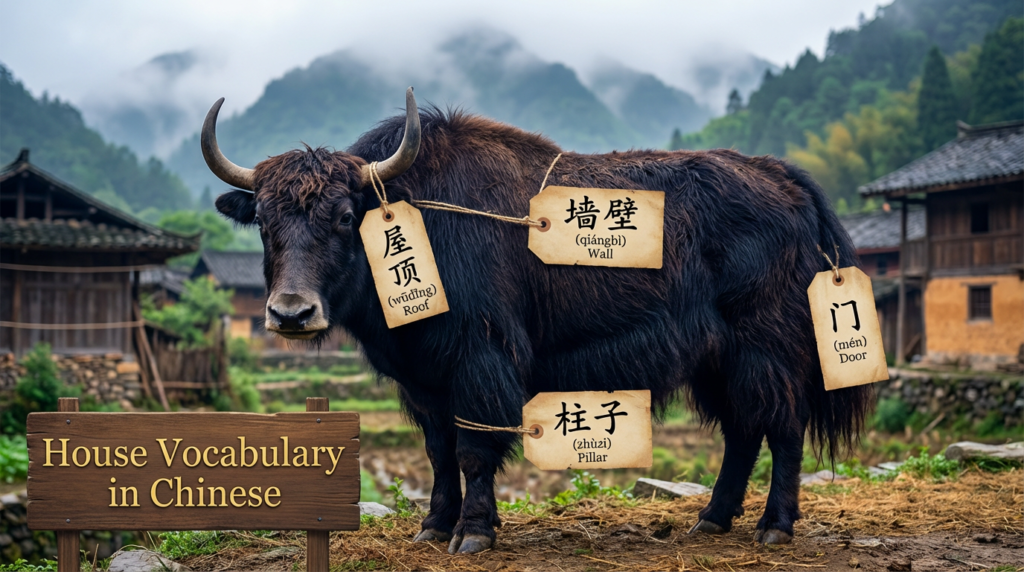
House Vocabulary In Chinese
Learn the words for house and home in simplified Chinese: 房子 fángzi and 家 jiā. From the living room to the laundry basket, this is the practical vocabulary you actually use instead of the weird textbook stuff that nobody says while holding a mop.
When you talk about your home in Chinese, you usually need three things fast: room names, furniture words, and the random objects that keep appearing everywhere like some kind of domestic boss battle. This guide gives you all three.
Every word below includes simplified Chinese, pinyin with tone marks, an English meaning, and a real example sentence. So yes, you can stop staring at 房间 fángjiān and wondering whether it means room, house, or a mysterious portal.
A Fast Tip Before You Start
家 jiā means home or family, while 房子 fángzi means the physical house. So 我回家了 wǒ huí jiā le means “I’m going home,” not “I’m returning to a house like an emotionally unavailable real-estate agent.”
Essential House Words At A Glance
家 jiā
home; family
我家很安静。
wǒ jiā hěn ānjìng.
My home is very quiet.
房子 fángzi
house
这套房子很大。
zhè tào fángzi hěn dà.
This house is very big.
客厅 kètīng
living room
我们在客厅看电视。
wǒmen zài kètīng kàn diànshì.
We watch TV in the living room.
卧室 wòshì
bedroom
我的卧室很小。
wǒ de wòshì hěn xiǎo.
My bedroom is very small.
厨房 chúfáng
kitchen
妈妈在厨房做饭。
māma zài chúfáng zuòfàn.
Mom is cooking in the kitchen.
浴室 yùshì
bathroom
浴室里有热水。
yùshì lǐ yǒu rèshuǐ.
There is hot water in the bathroom.
门 mén
door
请把门关上。
qǐng bǎ mén guān shàng.
Please close the door.
窗户 chuānghu
window
窗户开着呢。
chuānghu kāi zhe ne.
The window is open.
Useful House Phrases And Real-Life Sentences
- 我回家了 wǒ huí jiā le — I’m going home.
我下班以后就回家了。
wǒ xiàbān yǐhòu jiù huí jiā le.
I went home right after work. - 你家有几口人?nǐ jiā yǒu jǐ kǒu rén? — How many people are in your family?
你家有几口人?我家有四口人。
nǐ jiā yǒu jǐ kǒu rén? wǒ jiā yǒu sì kǒu rén.
How many people are in your family? There are four people in my family. - 客厅很宽敞 kètīng hěn kuānchang — The living room is spacious.
这个客厅很宽敞,很适合聊天。
zhège kètīng hěn kuānchang, hěn shìhé liáotiān.
This living room is spacious and great for chatting. - 卧室很安静 wòshì hěn ānjìng — The bedroom is quiet.
我的卧室很安静,我睡得很好。
wǒ de wòshì hěn ānjìng, wǒ shuì de hěn hǎo.
My bedroom is quiet, so I sleep well. - 厨房里有什么?chúfáng lǐ yǒu shénme? — What is in the kitchen?
厨房里有什么?有冰箱和微波炉。
chúfáng lǐ yǒu shénme? yǒu bīngxiāng hé wēibōlú.
What is in the kitchen? There is a fridge and a microwave. - 浴室在那边 yùshì zài nàbiān — The bathroom is over there.
洗手间在哪儿?浴室在那边。
xǐshǒujiān zài nǎr? yùshì zài nàbiān.
Where is the restroom? The bathroom is over there. - 请脱鞋 qǐng tuō xié — Please take off your shoes.
进门以后请脱鞋。
jìn mén yǐhòu qǐng tuō xié.
Please take off your shoes after coming in. - 把灯打开 bǎ dēng dǎkāi — Turn on the light.
房间太暗了,把灯打开吧。
fángjiān tài àn le, bǎ dēng dǎkāi ba.
The room is too dark, so turn on the light. - 把窗户关上 bǎ chuānghu guān shàng — Close the window.
外面很冷,把窗户关上。
wàimiàn hěn lěng, bǎ chuānghu guān shàng.
It’s cold outside, so close the window. - 我在打扫房间 wǒ zài dǎsǎo fángjiān — I’m cleaning the room.
别找我,我在打扫房间。
bié zhǎo wǒ, wǒ zài dǎsǎo fángjiān.
Don’t look for me, I’m cleaning the room. - 沙发上有一只猫 shāfā shàng yǒu yì zhī māo — There is a cat on the sofa.
沙发上有一只猫,已经睡着了。
shāfā shàng yǒu yì zhī māo, yǐjīng shuìzháo le.
There is a cat on the sofa, and it is already asleep. - 我的钥匙在桌子上 wǒ de yàoshi zài zhuōzi shàng — My keys are on the table.
别担心,我的钥匙在桌子上。
bié dānxīn, wǒ de yàoshi zài zhuōzi shàng.
Don’t worry, my keys are on the table.
A Curious Bit That Helps A Lot
房间 fángjiān means room in a general way. 卧室 wòshì is specifically a bedroom. So if you say 我在房间里 wǒ zài fángjiān lǐ, you are in a room. If you say 我在卧室里 wǒ zài wòshì lǐ, you are in the bedroom. Chinese is being precise here. Very rude of it, honestly.
Rooms And Areas
| Hanzi | Pinyin | Meaning | Example (ZH) | Example (Pinyin) | Translation (EN) |
|---|---|---|---|---|---|
| 家 | jiā | home; family | 我家离公司很近。 | wǒ jiā lí gōngsī hěn jìn. | My home is very close to the company. |
| 房子 | fángzi | house | 这套房子有三层。 | zhè tào fángzi yǒu sān céng. | This house has three floors. |
| 公寓 | gōngyù | apartment | 我住在一间小公寓里。 | wǒ zhù zài yì jiān xiǎo gōngyù lǐ. | I live in a small apartment. |
| 房间 | fángjiān | room | 这个房间很亮。 | zhège fángjiān hěn liàng. | This room is bright. |
| 客厅 | kètīng | living room | 孩子们在客厅玩。 | háizimen zài kètīng wán. | The kids are playing in the living room. |
| 卧室 | wòshì | bedroom | 我的卧室有一张大床。 | wǒ de wòshì yǒu yì zhāng dà chuáng. | My bedroom has a big bed. |
| 厨房 | chúfáng | kitchen | 厨房里很香。 | chúfáng lǐ hěn xiāng. | The kitchen smells great. |
| 浴室 | yùshì | bathroom | 浴室需要打扫。 | yùshì xūyào dǎsǎo. | The bathroom needs to be cleaned. |
| 阳台 | yángtái | balcony | 我们在阳台上喝茶。 | wǒmen zài yángtái shàng hē chá. | We drink tea on the balcony. |
| 餐厅 | cāntīng | dining room | 晚饭已经摆在餐厅了。 | wǎnfàn yǐjīng bǎi zài cāntīng le. | Dinner is already set in the dining room. |
| 书房 | shūfáng | study | 爸爸在书房工作。 | bàba zài shūfáng gōngzuò. | Dad is working in the study. |
| 楼梯 | lóutī | stairs | 小心楼梯,很滑。 | xiǎoxīn lóutī, hěn huá. | Be careful on the stairs, they are slippery. |
Doors, Walls, And Basic House Parts
| Hanzi | Pinyin | Meaning | Example (ZH) | Example (Pinyin) | Translation (EN) |
|---|---|---|---|---|---|
| 门 | mén | door | 门没锁。 | mén méi suǒ. | The door is not locked. |
| 窗户 | chuānghu | window | 窗户外面下雨了。 | chuānghu wàimiàn xiàyǔ le. | It is raining outside the window. |
| 墙 | qiáng | wall | 墙上有一幅画。 | qiáng shàng yǒu yì fú huà. | There is a picture on the wall. |
| 地板 | dìbǎn | floor | 地板很干净。 | dìbǎn hěn gānjìng. | The floor is very clean. |
| 天花板 | tiānhuābǎn | ceiling | 天花板有点高。 | tiānhuābǎn yǒudiǎn gāo. | The ceiling is a bit high. |
| 屋顶 | wūdǐng | roof | 屋顶上有雪。 | wūdǐng shàng yǒu xuě. | There is snow on the roof. |
| 钥匙 | yàoshi | key | 我找不到钥匙。 | wǒ zhǎo bú dào yàoshi. | I cannot find the key. |
| 锁 | suǒ | lock | 这个锁坏了。 | zhège suǒ huài le. | This lock is broken. |
| 灯 | dēng | light; lamp | 客厅的灯还开着。 | kètīng de dēng hái kāi zhe. | The living room light is still on. |
| 插座 | chāzuò | electrical outlet | 手机充电器在插座旁边。 | shǒujī chōngdiànqì zài chāzuò pángbiān. | The phone charger is next to the outlet. |
Furniture You Actually Need
| Hanzi | Pinyin | Meaning | Example (ZH) | Example (Pinyin) | Translation (EN) |
|---|---|---|---|---|---|
| 沙发 | shāfā | sofa | 爷爷坐在沙发上看报。 | yéye zuò zài shāfā shàng kàn bào. | Grandpa sits on the sofa reading the newspaper. |
| 桌子 | zhuōzi | table | 杯子在桌子上。 | bēizi zài zhuōzi shàng. | The cup is on the table. |
| 椅子 | yǐzi | chair | 这把椅子很舒服。 | zhè bǎ yǐzi hěn shūfu. | This chair is very comfortable. |
| 床 | chuáng | bed | 宝宝已经上床了。 | bǎobao yǐjīng shàng chuáng le. | The baby has already gone to bed. |
| 衣柜 | yīguì | wardrobe; closet | 冬天的衣服都在衣柜里。 | dōngtiān de yīfu dōu zài yīguì lǐ. | The winter clothes are all in the wardrobe. |
| 书架 | shūjià | bookshelf | 书架上有很多中文书。 | shūjià shàng yǒu hěn duō zhōngwén shū. | There are many Chinese books on the bookshelf. |
| 镜子 | jìngzi | mirror | 镜子在门后面。 | jìngzi zài mén hòumiàn. | The mirror is behind the door. |
| 地毯 | dìtǎn | carpet; rug | 地毯是新的。 | dìtǎn shì xīn de. | The rug is new. |
| 窗帘 | chuānglián | curtain | 请把窗帘拉开。 | qǐng bǎ chuānglián lā kāi. | Please open the curtains. |
| 空调 | kōngtiáo | air conditioner | 夏天没有空调不行。 | xiàtiān méiyǒu kōngtiáo bù xíng. | You really cannot do without air conditioning in summer. |
| 风扇 | fēngshàn | fan | 风扇一直在转。 | fēngshàn yìzhí zài zhuàn. | The fan is spinning continuously. |
| 暖气 | nuǎnqì | heating | 冬天暖气很重要。 | dōngtiān nuǎnqì hěn zhòngyào. | Heating is important in winter. |
Kitchen And Dining Vocabulary
| Hanzi | Pinyin | Meaning | Example (ZH) | Example (Pinyin) | Translation (EN) |
|---|---|---|---|---|---|
| 冰箱 | bīngxiāng | fridge | 牛奶在冰箱里。 | niúnǎi zài bīngxiāng lǐ. | The milk is in the fridge. |
| 微波炉 | wēibōlú | microwave | 我用微波炉热饭。 | wǒ yòng wēibōlú rè fàn. | I use the microwave to heat up food. |
| 炉子 | lúzi | stove | 炉子上有一锅汤。 | lúzi shàng yǒu yì guō tāng. | There is a pot of soup on the stove. |
| 水槽 | shuǐcáo | sink | 盘子在水槽里。 | pánzi zài shuǐcáo lǐ. | The plates are in the sink. |
| 碗 | wǎn | bowl | 请给我一个碗。 | qǐng gěi wǒ yí ge wǎn. | Please give me a bowl. |
| 盘子 | pánzi | plate | 桌上有三个盘子。 | zhuō shàng yǒu sān ge pánzi. | There are three plates on the table. |
| 杯子 | bēizi | cup; glass | 这个杯子是我的。 | zhège bēizi shì wǒ de. | This cup is mine. |
| 筷子 | kuàizi | chopsticks | 你的筷子掉了。 | nǐ de kuàizi diào le. | Your chopsticks fell down. |
| 勺子 | sháozi | spoon | 汤要用勺子喝。 | tāng yào yòng sháozi hē. | You need to use a spoon for soup. |
| 垃圾桶 | lājītǒng | trash can | 垃圾桶满了。 | lājītǒng mǎn le. | The trash can is full. |
Bathroom, Cleaning, And Daily Home Items
| Hanzi | Pinyin | Meaning | Example (ZH) | Example (Pinyin) | Translation (EN) |
|---|---|---|---|---|---|
| 毛巾 | máojīn | towel | 毛巾挂在浴室里。 | máojīn guà zài yùshì lǐ. | The towel is hanging in the bathroom. |
| 肥皂 | féizào | soap | 肥皂快用完了。 | féizào kuài yòng wán le. | The soap is almost used up. |
| 牙刷 | yáshuā | toothbrush | 新牙刷在柜子里。 | xīn yáshuā zài guìzi lǐ. | The new toothbrush is in the cabinet. |
| 洗衣机 | xǐyījī | washing machine | 洗衣机还在洗衣服。 | xǐyījī hái zài xǐ yīfu. | The washing machine is still washing clothes. |
| 衣服 | yīfu | clothes | 衣服已经干了。 | yīfu yǐjīng gān le. | The clothes are already dry. |
| 鞋 | xié | shoes | 鞋在门口。 | xié zài ménkǒu. | The shoes are at the doorway. |
| 扫把 | sàobǎ | broom | 扫把在阳台上。 | sàobǎ zài yángtái shàng. | The broom is on the balcony. |
| 拖把 | tuōbǎ | mop | 地板脏了,去拿拖把。 | dìbǎn zāng le, qù ná tuōbǎ. | The floor is dirty, go get the mop. |
| 纸巾 | zhǐjīn | tissue | 桌子上还有纸巾吗? | zhuōzi shàng hái yǒu zhǐjīn ma? | Are there still tissues on the table? |
| 柜子 | guìzi | cabinet; cupboard | 零食都在柜子里。 | língshí dōu zài guìzi lǐ. | All the snacks are in the cabinet. |
Useful Variants And Easy Mix-Ups
| Word Pair | Pinyin | Difference | Example (ZH) | Example (Pinyin) | Translation (EN) |
|---|---|---|---|---|---|
| 家 / 房子 | jiā / fángzi | home vs. physical house | 我想回家,不是去看房子。 | wǒ xiǎng huí jiā, bú shì qù kàn fángzi. | I want to go home, not go look at a house. |
| 房间 / 卧室 | fángjiān / wòshì | room vs. bedroom | 这个房间不是卧室,是书房。 | zhège fángjiān bú shì wòshì, shì shūfáng. | This room is not a bedroom; it is a study. |
| 浴室 / 洗手间 | yùshì / xǐshǒujiān | bathroom vs. restroom/washroom | 洗手间在外面,浴室在里面。 | xǐshǒujiān zài wàimiàn, yùshì zài lǐmiàn. | The washroom is outside, and the bathroom is inside. |
| 桌子 / 书桌 | zhuōzi / shūzhuō | table vs. desk | 电脑在书桌上,不在饭桌上。 | diànnǎo zài shūzhuō shàng, bú zài fànzhuō shàng. | The computer is on the desk, not on the dining table. |
| 柜子 / 衣柜 | guìzi / yīguì | cabinet vs. wardrobe | 杯子在柜子里,外套在衣柜里。 | bēizi zài guìzi lǐ, wàitào zài yīguì lǐ. | The cups are in the cabinet, and the coats are in the wardrobe. |
| 地板 / 楼梯 | dìbǎn / lóutī | floor vs. stairs | 地板湿了,楼梯也有点滑。 | dìbǎn shī le, lóutī yě yǒudiǎn huá. | The floor is wet, and the stairs are a bit slippery too. |
Quick Practice
- Translate into Chinese: “The keys are on the table.”
钥匙在桌子上。
yàoshi zài zhuōzi shàng. - Translate into Chinese: “The bathroom is very clean.”
浴室很干净。
yùshì hěn gānjìng. - Translate into Chinese: “There is a sofa in the living room.”
客厅里有沙发。
kètīng lǐ yǒu shāfā. - Translate into English: 我的衣服在洗衣机里。
wǒ de yīfu zài xǐyījī lǐ.
My clothes are in the washing machine. - Translate into English: 请把窗帘拉开。
qǐng bǎ chuānglián lā kāi.
Please open the curtains. - Translate into English: 厨房里有一个大冰箱。
chúfáng lǐ yǒu yí ge dà bīngxiāng.
There is a big fridge in the kitchen.
Common Mistakes And Fast Fixes
- Using 家 jiā for every building: 家 means home or family, not every physical house. Use 房子 fángzi for a house.
- Mixing up 房间 fángjiān and 卧室 wòshì: 房间 is any room. 卧室 is the bedroom.
- Forgetting location words like 里 lǐ and 上 shàng: 冰箱里 bīngxiāng lǐ means “in the fridge,” while 桌子上 zhuōzi shàng means “on the table.” Tiny words, huge difference.
- Skipping measure words: Chinese often needs them. 一张床 yì zhāng chuáng is “one bed,” and 一把椅子 yì bǎ yǐzi is “one chair.”
Quick Reference Summary
- Home: 家 jiā
- House: 房子 fángzi
- Room: 房间 fángjiān
- Living room: 客厅 kètīng
- Bedroom: 卧室 wòshì
- Kitchen: 厨房 chúfáng
- Bathroom: 浴室 yùshì
- Door / Window: 门 mén / 窗户 chuānghu
- Table / Chair / Bed: 桌子 zhuōzi / 椅子 yǐzi / 床 chuáng
- Fridge / Washing machine: 冰箱 bīngxiāng / 洗衣机 xǐyījī
Final Yak Box
The smartest way to learn house vocabulary in Chinese is not to memorize a giant dead list and then immediately forget it in the wild. Walk around your home and say the words out loud: 门 mén, 桌子 zhuōzi, 冰箱 bīngxiāng, 洗衣机 xǐyījī. Your house is now your flashcard set. Convenient, slightly chaotic, very effective.
FAQ: House Vocabulary In Chinese
Is 家 jiā the same as 房子 fángzi?
No. 家 jiā means home or family, while 房子 fángzi means the physical house.
What Is The Chinese Word For Room?
The general word is 房间 fángjiān. A bedroom is specifically 卧室 wòshì.
How Do You Say Living Room In Chinese?
Living room in Chinese is 客厅 kètīng.
What Is The Best Way To Memorize These Words?
Label objects in your home, say the words aloud, and make short sentences like 桌子上有杯子 zhuōzi shàng yǒu bēizi, “There is a cup on the table.” Tiny daily reps beat heroic weekend suffering.