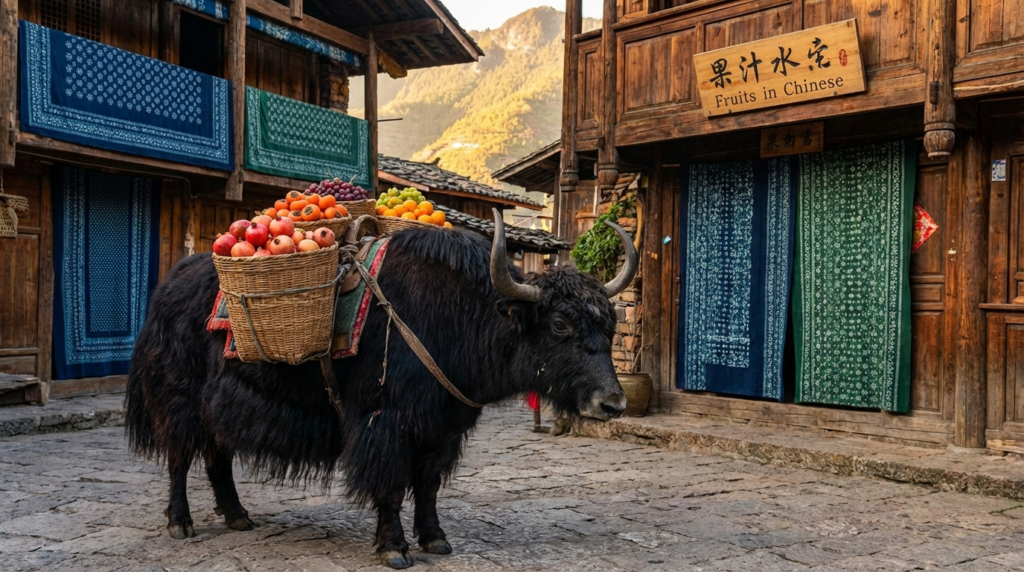
Fruits In Chinese: 50+ Easy Names With Pinyin And Real Examples
Start with 水果 shuǐguǒ, then learn the fruit names people actually use when buying snacks, making juice, or pretending a single apple counts as a healthy life plan.
Fruit vocabulary is wonderfully practical. You will hear it in supermarkets, fruit shops, cafés, lunch boxes, and every family kitchen where somebody insists the mango is “definitely ready” even when it is clearly not.
Below you will get common fruit names in simplified Chinese, full pinyin, plain-English meanings, and real example sentences. No mystery. No fluff. Just useful Mandarin you can actually bite into.
Quick Starter Pack
Learn these first and you can survive most fruit-related small talk: 苹果 píngguǒ apple, 香蕉 xiāngjiāo banana, 西瓜 xīguā watermelon, 草莓 cǎoméi strawberry, 葡萄 pútao grape, 芒果 mángguǒ mango, 橙子 chéngzi orange, and 菠萝 bōluó pineapple.
Visual Fruit Cards
苹果 píngguǒ
Apple. 这个苹果很甜。
Zhège píngguǒ hěn tián.
This apple is sweet.
香蕉 xiāngjiāo
Banana. 我每天早上吃一根香蕉。
Wǒ měitiān zǎoshang chī yì gēn xiāngjiāo.
I eat a banana every morning.
西瓜 xīguā
Watermelon. 我们买了半个西瓜。
Wǒmen mǎi le bàn gè xīguā.
We bought half a watermelon.
草莓 cǎoméi
Strawberry. 她喜欢草莓酸奶。
Tā xǐhuan cǎoméi suānnǎi.
She likes strawberry yogurt.
葡萄 pútao
Grape. 这些葡萄很新鲜。
Zhèxiē pútao hěn xīnxiān.
These grapes are fresh.
芒果 mángguǒ
Mango. 芒果是我最喜欢的水果。
Mángguǒ shì wǒ zuì xǐhuan de shuǐguǒ.
Mango is my favorite fruit.
橙子 chéngzi
Orange. 这个橙子很多汁。
Zhège chéngzi hěn duōzhī.
This orange is juicy.
菠萝 bōluó
Pineapple. 请把菠萝切开。
Qǐng bǎ bōluó qiēkāi.
Please cut the pineapple open.
Useful Phrases For Buying And Eating Fruit
水果 shuǐguǒ — fruit
我喜欢吃水果。
Wǒ xǐhuan chī shuǐguǒ.
I like eating fruit.
新鲜 xīnxiān — fresh
这些水果很新鲜。
Zhèxiē shuǐguǒ hěn xīnxiān.
These fruits are fresh.
甜 tián — sweet
这个芒果很甜。
Zhège mángguǒ hěn tián.
This mango is sweet.
酸 suān — sour
柠檬很酸。
Níngméng hěn suān.
Lemons are sour.
多汁 duōzhī — juicy
这个梨很多汁。
Zhège lí hěn duōzhī.
This pear is juicy.
成熟 chéngshú — ripe
这个桃子已经成熟了。
Zhège táozi yǐjīng chéngshú le.
This peach is already ripe.
没熟 méi shú — not ripe
这个牛油果还没熟。
Zhège niúyóuguǒ hái méi shú.
This avocado is not ripe yet.
剥皮 bāopí — to peel
吃香蕉以前先剥皮。
Chī xiāngjiāo yǐqián xiān bāopí.
Peel the banana before eating it.
切开 qiēkāi — to cut open
把西瓜切开吧。
Bǎ xīguā qiēkāi ba.
Cut the watermelon open.
果汁 guǒzhī — fruit juice
我早餐喝橙子果汁。
Wǒ zǎocān hē chéngzi guǒzhī.
I drink orange juice for breakfast.
水果店 shuǐguǒdiàn — fruit shop
我家楼下有一家水果店。
Wǒ jiā lóuxià yǒu yì jiā shuǐguǒdiàn.
There is a fruit shop downstairs from my home.
一斤 yì jīn — one jin, or 500 grams
我要买一斤葡萄。
Wǒ yào mǎi yì jīn pútao.
I want to buy 500 grams of grapes.
太酸了 tài suān le — too sour
这个李子太酸了。
Zhège lǐzi tài suān le.
This plum is too sour.
我想要…… wǒ xiǎng yào… — I’d like…
我想要两个苹果。
Wǒ xiǎng yào liǎng gè píngguǒ.
I’d like two apples.
A Tiny Pattern That Saves Brain Space
Many fruit names end with 子 zi, like 橙子 chéngzi, 桃子 táozi, and 柿子 shìzi. Plenty of berries use 莓 méi, like 草莓 cǎoméi, 蓝莓 lánméi, and 黑莓 hēiméi. Also, when shopping in China, 一斤 yì jīn means 500 grams. That one matters unless you enjoy accidentally buying enough fruit to feed a sports team.
Everyday Fruit Names
| Hanzi | Pinyin | Meaning | Example (ZH) | Example (Pinyin) | Translation (EN) |
|---|---|---|---|---|---|
| 苹果 | píngguǒ | apple | 这个苹果很甜。 | Zhège píngguǒ hěn tián. | This apple is sweet. |
| 香蕉 | xiāngjiāo | banana | 我每天早上吃一根香蕉。 | Wǒ měitiān zǎoshang chī yì gēn xiāngjiāo. | I eat a banana every morning. |
| 橙子 | chéngzi | orange | 这个橙子很多汁。 | Zhège chéngzi hěn duōzhī. | This orange is juicy. |
| 葡萄 | pútao | grape | 这些葡萄很新鲜。 | Zhèxiē pútao hěn xīnxiān. | These grapes are fresh. |
| 西瓜 | xīguā | watermelon | 我们买了半个西瓜。 | Wǒmen mǎi le bàn gè xīguā. | We bought half a watermelon. |
| 草莓 | cǎoméi | strawberry | 她喜欢草莓酸奶。 | Tā xǐhuan cǎoméi suānnǎi. | She likes strawberry yogurt. |
| 梨 | lí | pear | 这个梨很多汁。 | Zhège lí hěn duōzhī. | This pear is juicy. |
| 桃子 | táozi | peach | 那个桃子熟了。 | Nàge táozi shú le. | That peach is ripe. |
| 樱桃 | yīngtáo | cherry | 我把樱桃放在蛋糕上。 | Wǒ bǎ yīngtáo fàng zài dàngāo shàng. | I put cherries on the cake. |
| 柠檬 | níngméng | lemon | 柠檬有点酸。 | Níngméng yǒudiǎn suān. | Lemon is a little sour. |
Berries, Melons, And Easy Add-Ons
| Hanzi | Pinyin | Meaning | Example (ZH) | Example (Pinyin) | Translation (EN) |
|---|---|---|---|---|---|
| 蓝莓 | lánméi | blueberry | 蓝莓很小,但是很甜。 | Lánméi hěn xiǎo, dànshì hěn tián. | Blueberries are small but sweet. |
| 覆盆子 | fùpénzi | raspberry | 这里的覆盆子不常见。 | Zhèlǐ de fùpénzi bù chángjiàn. | Raspberries are not common here. |
| 黑莓 | hēiméi | blackberry | 黑莓是深紫色的。 | Hēiméi shì shēn zǐsè de. | Blackberries are dark purple. |
| 桑葚 | sāngshèn | mulberry | 桑葚容易把手弄紫。 | Sāngshèn róngyì bǎ shǒu nòng zǐ. | Mulberries easily stain your hands purple. |
| 哈密瓜 | hāmìguā | Hami melon | 哈密瓜很甜。 | Hāmìguā hěn tián. | Hami melon is sweet. |
| 香瓜 | xiāngguā | muskmelon | 这个香瓜很香。 | Zhège xiāngguā hěn xiāng. | This melon smells great. |
| 猕猴桃 | míhóutáo | kiwi fruit | 猕猴桃里面是绿色的。 | Míhóutáo lǐmiàn shì lǜsè de. | Kiwi is green inside. |
| 石榴 | shíliu | pomegranate | 石榴有很多籽。 | Shíliu yǒu hěn duō zǐ. | Pomegranates have many seeds. |
| 李子 | lǐzi | plum | 这个李子有一点酸。 | Zhège lǐzi yǒu yìdiǎn suān. | This plum is a little sour. |
| 杏 | xìng | apricot | 杏熟了以后很软。 | Xìng shú le yǐhòu hěn ruǎn. | Apricots are soft when ripe. |
Tropical Fruit Names
| Hanzi | Pinyin | Meaning | Example (ZH) | Example (Pinyin) | Translation (EN) |
|---|---|---|---|---|---|
| 芒果 | mángguǒ | mango | 芒果是我最喜欢的水果。 | Mángguǒ shì wǒ zuì xǐhuan de shuǐguǒ. | Mango is my favorite fruit. |
| 菠萝 | bōluó | pineapple | 请把菠萝切开。 | Qǐng bǎ bōluó qiēkāi. | Please cut the pineapple open. |
| 柚子 | yòuzi | pomelo | 这个柚子很大。 | Zhège yòuzi hěn dà. | This pomelo is big. |
| 荔枝 | lìzhī | lychee | 荔枝吃起来很甜。 | Lìzhī chī qǐlái hěn tián. | Lychees taste sweet. |
| 龙眼 | lóngyǎn | longan | 夏天很多人吃龙眼。 | Xiàtiān hěn duō rén chī lóngyǎn. | Many people eat longan in summer. |
| 火龙果 | huǒlóngguǒ | dragon fruit | 火龙果有黑色的籽。 | Huǒlóngguǒ yǒu hēisè de zǐ. | Dragon fruit has black seeds. |
| 木瓜 | mùguā | papaya | 木瓜闻起来很香。 | Mùguā wén qǐlái hěn xiāng. | Papaya smells nice. |
| 椰子 | yēzi | coconut | 我们喝了椰子水。 | Wǒmen hē le yēzi shuǐ. | We drank coconut water. |
| 百香果 | bǎixiāngguǒ | passion fruit | 百香果汁很好喝。 | Bǎixiāngguǒ zhī hěn hǎohē. | Passion fruit juice is delicious. |
| 番石榴 | fānshíliú | guava | 番石榴吃起来有点脆。 | Fānshíliú chī qǐlái yǒudiǎn cuì. | Guava tastes a little crisp. |
Fancy, Seasonal, And Slightly Chaotic Fruit Names
| Hanzi | Pinyin | Meaning | Example (ZH) | Example (Pinyin) | Translation (EN) |
|---|---|---|---|---|---|
| 山竹 | shānzhú | mangosteen | 今天山竹有点贵。 | Jīntiān shānzhú yǒudiǎn guì. | Mangosteen is a little expensive today. |
| 榴莲 | liúlián | durian | 榴莲的味道很重。 | Liúlián de wèidao hěn zhòng. | Durian has a strong smell. |
| 牛油果 | niúyóuguǒ | avocado | 牛油果放在沙拉里很好吃。 | Niúyóuguǒ fàng zài shālā lǐ hěn hǎochī. | Avocado is tasty in salad. |
| 甘蔗 | gānzhè | sugarcane | 甘蔗汁很甜。 | Gānzhè zhī hěn tián. | Sugarcane juice is sweet. |
| 枣 | zǎo | jujube, date | 新鲜的枣很脆。 | Xīnxiān de zǎo hěn cuì. | Fresh jujubes are crisp. |
| 杨梅 | yángméi | Chinese bayberry | 初夏的时候杨梅很多。 | Chūxià de shíhou yángméi hěn duō. | There are lots of bayberries in early summer. |
| 枇杷 | pípá | loquat | 枇杷又黄又甜。 | Pípá yòu huáng yòu tián. | Loquats are yellow and sweet. |
| 无花果 | wúhuāguǒ | fig | 无花果里面有很多小籽。 | Wúhuāguǒ lǐmiàn yǒu hěn duō xiǎo zǐ. | Figs have lots of tiny seeds inside. |
| 油桃 | yóutáo | nectarine | 油桃像没有毛的桃子。 | Yóutáo xiàng méiyǒu máo de táozi. | Nectarines are like peaches without fuzz. |
| 柿子 | shìzi | persimmon | 柿子熟了以后很甜。 | Shìzi shú le yǐhòu hěn tián. | Persimmons are very sweet when ripe. |
Useful Variants And Fast Notes
| Item | Pinyin | Meaning | Quick Note |
|---|---|---|---|
| 水果 | shuǐguǒ | fruit | The general word for fruit. |
| 果汁 | guǒzhī | fruit juice | Used in cafés, convenience stores, and breakfast talk. |
| 水果店 | shuǐguǒdiàn | fruit shop | A very useful place and a very useful word. |
| 一斤 | yì jīn | 500 grams | The common market weight in China. |
| 甜 | tián | sweet | Probably the adjective you will use the most. |
| 酸 | suān | sour | Especially handy for lemons, plums, and surprise purchases. |
Yak Box: The Practical Way To Remember Fruit Words
Do not try to memorize forty fruit names in one heroic sitting. That is how vocabulary goes directly into the void. Learn five at a time, say them out loud, and use tiny real sentences like 我想要两个苹果。Wǒ xiǎng yào liǎng gè píngguǒ. and 这个西瓜很甜。Zhège xīguā hěn tián. Real usage beats fake perfection every single time.
Fruit In Chinese FAQ
How Do You Say “Fruit” In Chinese?
You say 水果 shuǐguǒ. A simple sentence is 我喜欢吃水果。Wǒ xǐhuan chī shuǐguǒ. It means “I like eating fruit.”
Why Do So Many Fruit Names End With 子 zi?
Because Chinese loves patterns, and fruit names often keep older noun endings. You will see it in 橙子 chéngzi, 桃子 táozi, and 柿子 shìzi. The full word is what matters most, so learn the fruit name as one chunk.
What Does 一斤 yì jīn Mean At A Fruit Shop?
一斤 yì jīn means 500 grams. So 我要买一斤葡萄。Wǒ yào mǎi yì jīn pútao. means “I want to buy 500 grams of grapes.” Very useful, unless buying “just a little fruit” was supposed to remain believable.