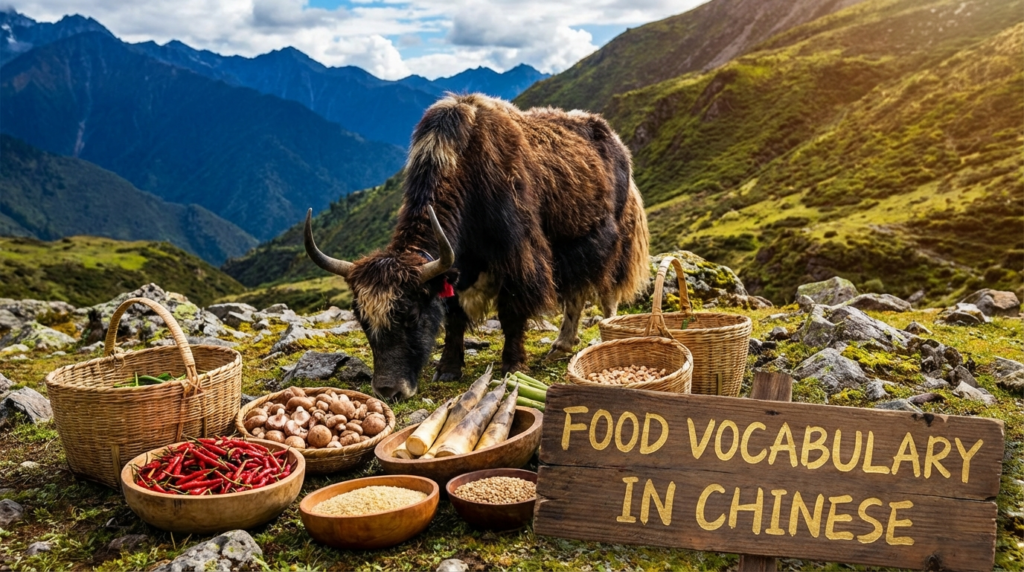
Chinese Food Vocabulary For Beginners
Start with 食物 (shíwù), then learn the words you actually need when you are hungry, shopping, cooking, or staring at a menu like it personally offended you.
Food words are some of the easiest Chinese words to remember because, conveniently, you can use them every single day. You do not need fancy restaurant vocabulary first. You need rice, noodles, tea, fruit, and a polite way to say, “Yes, I would absolutely like dumplings.”
Below, you will get high-frequency food vocabulary in Simplified Chinese, each with pinyin, a clear English meaning, and real example sentences. Read them out loud. Your stomach is now part of your study plan.
Quick Food Words You Will Use All The Time
米饭
mǐfàn
cooked rice
面条
miàntiáo
noodles
饺子
jiǎozi
dumplings
包子
bāozi
stuffed bun
鸡肉
jīròu
chicken
青菜
qīngcài
green vegetables
水果
shuǐguǒ
fruit
好吃
hǎochī
delicious; tasty
Useful Phrases And Real-Life Sentences
- 我饿了 (wǒ è le) — I’m hungry.
In a sentence: 我饿了,我们去吃饭吧。 (Wǒ è le, wǒmen qù chīfàn ba.) — I’m hungry, let’s go eat. - 我想吃…… (wǒ xiǎng chī…) — I want to eat…
In a sentence: 我想吃饺子。 (Wǒ xiǎng chī jiǎozi.) — I want to eat dumplings. - 我想喝…… (wǒ xiǎng hē…) — I want to drink…
In a sentence: 我想喝茶。 (Wǒ xiǎng hē chá.) — I want to drink tea. - 这个好吃 (zhège hǎochī) — This is tasty.
In a sentence: 这个包子很好吃。 (Zhège bāozi hěn hǎochī.) — This bun is very tasty. - 这个太辣了 (zhège tài là le) — This is too spicy.
In a sentence: 这个火锅太辣了。 (Zhège huǒguō tài là le.) — This hot pot is too spicy. - 不要香菜 (bú yào xiāngcài) — No cilantro, please.
In a sentence: 我的面条不要香菜。 (Wǒ de miàntiáo bú yào xiāngcài.) — I don’t want cilantro in my noodles. - 少一点盐 (shǎo yìdiǎn yán) — A little less salt.
In a sentence: 这个汤少一点盐更好。 (Zhège tāng shǎo yìdiǎn yán gèng hǎo.) — This soup would be better with a little less salt. - 来一碗米饭 (lái yì wǎn mǐfàn) — One bowl of rice, please.
In a sentence: 我还要来一碗米饭。 (Wǒ hái yào lái yì wǎn mǐfàn.) — I’d like another bowl of rice. - 我不吃肉 (wǒ bù chī ròu) — I don’t eat meat.
In a sentence: 我不吃肉,我想要豆腐。 (Wǒ bù chī ròu, wǒ xiǎng yào dòufu.) — I don’t eat meat. I want tofu. - 你要点什么? (nǐ yào diǎn shénme?) — What do you want to order?
In a sentence: 你要点什么?我想点炒饭。 (Nǐ yào diǎn shénme? Wǒ xiǎng diǎn chǎofàn.) — What do you want to order? I want to order fried rice. - 买点水果 (mǎi diǎn shuǐguǒ) — Buy some fruit.
In a sentence: 回家前我们买点水果吧。 (Huí jiā qián wǒmen mǎi diǎn shuǐguǒ ba.) — Let’s buy some fruit before going home. - 我请你吃饭 (wǒ qǐng nǐ chīfàn) — I’ll treat you to a meal.
In a sentence: 今天我请你吃饭。 (Jīntiān wǒ qǐng nǐ chīfàn.) — I’m treating you to a meal today.
A Sneaky But Useful Note
One small trap: 饭 (fàn) can mean cooked rice, but in daily speech it can also point to a meal. That is why 吃饭 (chīfàn) usually means “eat” or “have a meal,” not “spend the afternoon chewing rice.” Also, 菜 (cài) can mean vegetables or dishes, depending on context. Chinese keeps things efficient. Your brain will catch up.
Core Food Vocabulary Tables
Staple Foods And Meals
| Word | Meaning | Example | Translation |
|---|---|---|---|
| 食物 shíwù | food | 我喜欢中国食物。 Wǒ xǐhuan Zhōngguó shíwù. | I like Chinese food. |
| 吃饭 chīfàn | to eat; to have a meal | 我们六点吃饭。 Wǒmen liù diǎn chīfàn. | We eat at six. |
| 米饭 mǐfàn | cooked rice | 我要一碗米饭。 Wǒ yào yì wǎn mǐfàn. | I want a bowl of rice. |
| 面条 miàntiáo | noodles | 他中午吃面条。 Tā zhōngwǔ chī miàntiáo. | He eats noodles at noon. |
| 馒头 mántou | plain steamed bun | 早餐我吃两个馒头。 Zǎocān wǒ chī liǎng gè mántou. | I eat two steamed buns for breakfast. |
| 包子 bāozi | stuffed bun | 这个包子很香。 Zhège bāozi hěn xiāng. | This bun smells delicious. |
| 饺子 jiǎozi | dumplings | 我最喜欢吃饺子。 Wǒ zuì xǐhuan chī jiǎozi. | Dumplings are my favorite. |
| 粥 zhōu | porridge; congee | 生病的时候我喝粥。 Shēngbìng de shíhou wǒ hē zhōu. | I drink porridge when I’m sick. |
| 早餐 zǎocān | breakfast | 你今天吃早餐了吗? Nǐ jīntiān chī zǎocān le ma? | Did you eat breakfast today? |
| 晚饭 wǎnfàn | dinner | 晚饭我们吃鱼。 Wǎnfàn wǒmen chī yú. | We’re eating fish for dinner. |
Proteins And Popular Dishes
| Word | Meaning | Example | Translation |
|---|---|---|---|
| 鸡肉 jīròu | chicken | 我想吃鸡肉。 Wǒ xiǎng chī jīròu. | I want to eat chicken. |
| 牛肉 niúròu | beef | 这家店的牛肉很好吃。 Zhè jiā diàn de niúròu hěn hǎochī. | The beef at this place is tasty. |
| 猪肉 zhūròu | pork | 她不吃猪肉。 Tā bù chī zhūròu. | She doesn’t eat pork. |
| 鱼 yú | fish | 这条鱼很新鲜。 Zhè tiáo yú hěn xīnxiān. | This fish is very fresh. |
| 鸡蛋 jīdàn | egg | 我早餐常常吃鸡蛋。 Wǒ zǎocān chángcháng chī jīdàn. | I often eat eggs for breakfast. |
| 豆腐 dòufu | tofu | 我喜欢吃麻婆豆腐。 Wǒ xǐhuan chī Mápó dòufu. | I like mapo tofu. |
| 汤 tāng | soup | 天冷的时候喝汤很舒服。 Tiān lěng de shíhou hē tāng hěn shūfu. | Soup feels great when it’s cold. |
| 火锅 huǒguō | hot pot | 冬天吃火锅特别开心。 Dōngtiān chī huǒguō tèbié kāixīn. | Hot pot is especially nice in winter. |
| 炒饭 chǎofàn | fried rice | 他点了一份炒饭。 Tā diǎn le yí fèn chǎofàn. | He ordered a portion of fried rice. |
| 炒面 chǎomiàn | fried noodles | 我妹妹喜欢炒面,不喜欢米饭。 Wǒ mèimei xǐhuan chǎomiàn, bù xǐhuan mǐfàn. | My younger sister likes fried noodles, not rice. |
Vegetables You Will See Everywhere
| Word | Meaning | Example | Translation |
|---|---|---|---|
| 青菜 qīngcài | green vegetables | 多吃青菜很不错。 Duō chī qīngcài hěn búcuò. | Eating more greens is a good idea. |
| 白菜 báicài | Chinese cabbage; napa cabbage | 今天的白菜很便宜。 Jīntiān de báicài hěn piányi. | The cabbage is cheap today. |
| 西红柿 xīhóngshì | tomato | 西红柿炒鸡蛋很下饭。 Xīhóngshì chǎo jīdàn hěn xiàfàn. | Tomato with eggs goes really well with rice. |
| 土豆 tǔdòu | potato | 我想买两个土豆。 Wǒ xiǎng mǎi liǎng gè tǔdòu. | I want to buy two potatoes. |
| 黄瓜 huángguā | cucumber | 夏天吃黄瓜很清爽。 Xiàtiān chī huángguā hěn qīngshuǎng. | Cucumber is refreshing in summer. |
| 洋葱 yángcōng | onion | 洋葱有一点辣。 Yángcōng yǒu yìdiǎn là. | Onion has a little sharp bite. |
| 胡萝卜 húluóbo | carrot | 胡萝卜汤很甜。 Húluóbo tāng hěn tián. | Carrot soup is sweet. |
| 茄子 qiézi | eggplant | 这道茄子很好吃。 Zhè dào qiézi hěn hǎochī. | This eggplant dish is delicious. |
| 蘑菇 mógu | mushroom | 我想在面条里加蘑菇。 Wǒ xiǎng zài miàntiáo lǐ jiā mógu. | I want to add mushrooms to the noodles. |
| 辣椒 làjiāo | chili pepper | 他不要辣椒。 Tā bú yào làjiāo. | He doesn’t want chili peppers. |
Fruits, Snacks, And Drinks
| Word | Meaning | Example | Translation |
|---|---|---|---|
| 水果 shuǐguǒ | fruit | 超市里的水果很多。 Chāoshì lǐ de shuǐguǒ hěn duō. | There is a lot of fruit in the supermarket. |
| 苹果 píngguǒ | apple | 我每天吃一个苹果。 Wǒ měitiān chī yí gè píngguǒ. | I eat an apple every day. |
| 香蕉 xiāngjiāo | banana | 这根香蕉很甜。 Zhè gēn xiāngjiāo hěn tián. | This banana is sweet. |
| 西瓜 xīguā | watermelon | 夏天我最想吃西瓜。 Xiàtiān wǒ zuì xiǎng chī xīguā. | Watermelon is what I want most in summer. |
| 葡萄 pútao | grape | 这些葡萄很新鲜。 Zhèxiē pútao hěn xīnxiān. | These grapes are fresh. |
| 橙子 chéngzi | orange | 你要橙子还是苹果? Nǐ yào chéngzi háishi píngguǒ? | Do you want an orange or an apple? |
| 零食 língshí | snacks | 我看电影的时候爱吃零食。 Wǒ kàn diànyǐng de shíhou ài chī língshí. | I like eating snacks when I watch movies. |
| 饼干 bǐnggān | cookie; biscuit | 桌子上有一包饼干。 Zhuōzi shàng yǒu yì bāo bǐnggān. | There is a pack of cookies on the table. |
| 蛋糕 dàngāo | cake | 生日的时候我们吃蛋糕。 Shēngrì de shíhou wǒmen chī dàngāo. | We eat cake on birthdays. |
| 茶 chá | tea | 爸爸早上先喝茶。 Bàba zǎoshang xiān hē chá. | Dad drinks tea first in the morning. |
| 咖啡 kāfēi | coffee | 我下午想喝咖啡。 Wǒ xiàwǔ xiǎng hē kāfēi. | I want coffee in the afternoon. |
Flavors And Eating Words
| Word | Meaning | Example | Translation |
|---|---|---|---|
| 好吃 hǎochī | tasty; delicious | 这个真的好吃。 Zhège zhēnde hǎochī. | This is really tasty. |
| 甜 tián | sweet | 这个蛋糕太甜了。 Zhège dàngāo tài tián le. | This cake is too sweet. |
| 咸 xián | salty | 汤有一点咸。 Tāng yǒu yìdiǎn xián. | The soup is a little salty. |
| 辣 là | spicy | 四川菜很辣。 Sìchuān cài hěn là. | Sichuan food is spicy. |
| 酸 suān | sour | 这个汤有点酸。 Zhège tāng yǒudiǎn suān. | This soup is a bit sour. |
| 香 xiāng | fragrant; smells good | 刚做好的包子很香。 Gāng zuòhǎo de bāozi hěn xiāng. | Freshly made buns smell great. |
| 新鲜 xīnxiān | fresh | 这里的水果很新鲜。 Zhèlǐ de shuǐguǒ hěn xīnxiān. | The fruit here is fresh. |
| 吃 chī | to eat | 你吃了吗? Nǐ chī le ma? | Have you eaten? |
| 喝 hē | to drink | 天热的时候多喝水。 Tiān rè de shíhou duō hē shuǐ. | Drink more water when it’s hot. |
| 点菜 diǎncài | to order dishes | 你先点菜,我看一下菜单。 Nǐ xiān diǎncài, wǒ kàn yíxià càidān. | Order first; I’ll check the menu. |
Useful Food Measure Words
| Measure Word | Meaning | Example | Translation |
|---|---|---|---|
| 一碗 yì wǎn | one bowl | 我要一碗面条。 Wǒ yào yì wǎn miàntiáo. | I want one bowl of noodles. |
| 一盘 yì pán | one plate | 我们点一盘饺子。 Wǒmen diǎn yì pán jiǎozi. | Let’s order one plate of dumplings. |
| 一杯 yì bēi | one cup | 我想喝一杯茶。 Wǒ xiǎng hē yì bēi chá. | I want to drink a cup of tea. |
| 一份 yí fèn | one portion | 请给我一份炒饭。 Qǐng gěi wǒ yí fèn chǎofàn. | Please give me one portion of fried rice. |
Final Yak Box
You do not need 500 rare ingredients to survive your first Chinese menu. Start with 米饭 (mǐfàn), 面条 (miàntiáo), 鸡肉 (jīròu), 青菜 (qīngcài), 好吃 (hǎochī), and 我想吃…… (wǒ xiǎng chī…). That tiny set already gets you through a very respectable amount of real life.