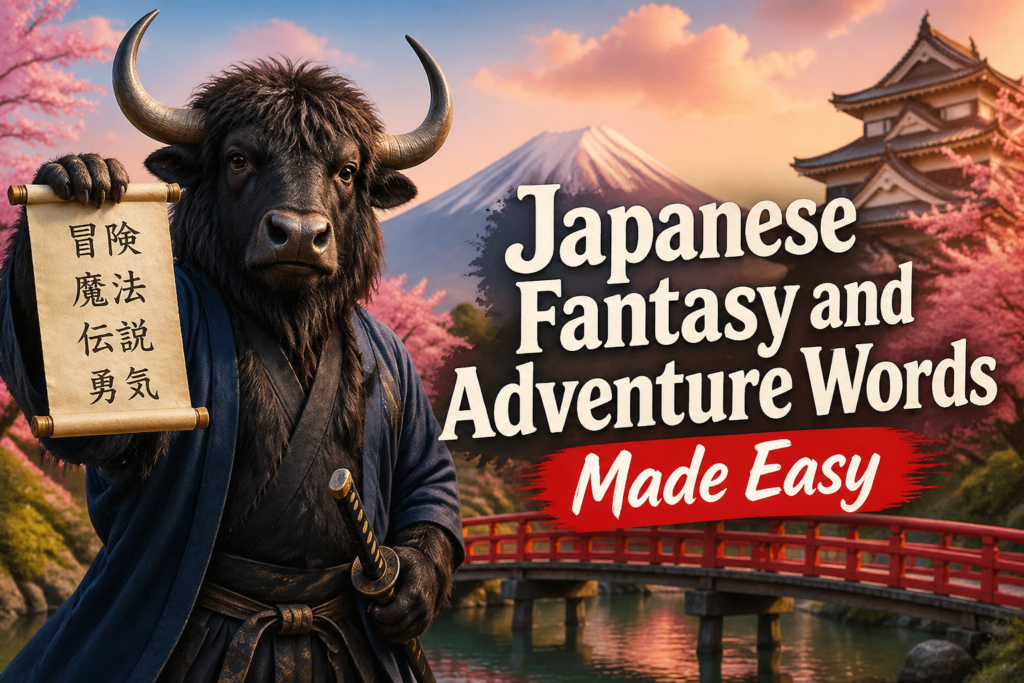
Fantasy stories in Japanese can sound wonderfully dramatic. One minute you are reading about a 剣 (ken) and a brave hero, and the next minute a mysterious 魔法 (mahou) spell shows up and suddenly everything is much more exciting. Honestly, Japanese is very good at making adventure feel cinematic. A little unfair, really.
This guide will help you learn common fantasy and adventure words in Japanese, with Kanji, Rōmaji, English meanings, and example sentences. It also includes useful phrases you can actually use when reading manga, playing games, or talking about fictional worlds. For a bigger related lesson, you can also check Fantasy Adventure Vocab in Japanese.
If you like quests, monsters, castles, and magical items, you are in the right place. If you do not like them yet, well, you may after this article. That is the sneaky power of vocabulary.
Useful Fantasy And Adventure Words
| Kanji | Rōmaji | English Meaning | Example Sentence | Rōmaji | English Translation |
|---|---|---|---|---|---|
| 冒険 | bouken | adventure | 彼は冒険に出た。 | Kare wa bouken ni deta. | He went on an adventure. |
| 魔法 | mahou | magic, spell | 魔法を使った。 | Mahou o tsukatta. | I used magic. |
| 勇者 | yuusha | hero, brave person | 勇者が村を守った。 | Yuusha ga mura o mamotta. | The hero protected the village. |
| 王国 | oukoku | kingdom | その王国は広い。 | Sono oukoku wa hiroi. | That kingdom is large. |
| 城 | shiro | castle | 城の中に入った。 | Shiro no naka ni haitta. | We entered the castle. |
| 剣 | ken | sword | 剣を持っている。 | Ken o motte iru. | I have a sword. |
| 盾 | tate | shield | 盾で攻撃を防いだ。 | Tate de kougeki o fuidda. | I blocked the attack with a shield. |
| 竜 | ryuu | dragon | 竜が空を飛んでいる。 | Ryuu ga sora o tond e iru. | A dragon is flying in the sky. |
| 妖精 | yousei | fairy | 妖精が花の近くにいた。 | Yousei ga hana no chikaku ni ita. | A fairy was near the flowers. |
| 怪物 | kaibutsu | monster | 森の中に怪物がいた。 | Mori no naka ni kaibutsu ga ita. | There was a monster in the forest. |
| 森 | mori | forest | 森を歩いた。 | Mori o aruita. | We walked through the forest. |
| 洞窟 | doukutsu | cave | 洞窟の奥は暗い。 | Doukutsu no oku wa kurai. | The back of the cave is dark. |
| 地図 | chizu | map | 地図を見ながら進んだ。 | Chizu o minagara susunda. | We moved forward while looking at the map. |
| 旅 | tabi | journey, trip | 長い旅だった。 | Nagai tabi datta. | It was a long journey. |
| 仲間 | nakama | companion, ally | 仲間と一緒に戦った。 | Nakama to issho ni tatakatta. | I fought together with my companions. |
| 伝説 | densetsu | legend | その話は伝説になった。 | Sono hanashi wa densetsu ni natta. | That story became a legend. |
| 古代 | kodai | ancient | 古代の宝を見つけた。 | Kodai no takara o mitsuketa. | We found an ancient treasure. |
| 宝 | takara | treasure | 宝を守るドラゴンがいた。 | Takara o mamoru doragon ga ita. | There was a dragon guarding the treasure. |
| 王 | ou | king | 王が国を治めた。 | Ou ga kuni o osameta. | The king ruled the country. |
| 姫 | hime | princess | 姫は城に住んでいる。 | Hime wa shiro ni sunde iru. | The princess lives in the castle. |
Useful Phrases For Fantasy Stories
| Kanji | Rōmaji | English Meaning | Example Sentence | Rōmaji | English Translation |
|---|---|---|---|---|---|
| さあ、行こう | Saa, ikou | Come on, let’s go | さあ、行こう。 | Saa, ikou. | Come on, let’s go. |
| 準備はいい? | Junbi wa ii? | Are you ready? | 準備はいい? | Junbi wa ii? | Are you ready? |
| 危ない! | Abunai! | Dangerous! / Watch out! | 危ない! 逃げて! | Abunai! Nigete! | Watch out! Run! |
| 助けて! | Tasukete! | Help! | 助けて! 怪物だ! | Tasukete! Kaibutsu da! | Help! It’s a monster! |
| こっちだ | Kocchi da | This way | こっちだ、急いで! | Kocchi da, isoi de! | This way, hurry! |
| 見つけた! | Mitsuketa! | I found it! | 見つけた! 宝だ! | Mitsuketa! Takara da! | I found it! It’s treasure! |
| 信じられない | Shinjirarenai | I can’t believe it | 信じられない、本当にある。 | Shinjirarenai, hontou ni aru. | I can’t believe it, it really exists. |
| ここはどこ? | Koko wa doko? | Where am I? | ここはどこ? 森の中だ。 | Koko wa doko? Mori no naka da. | Where am I? You’re in the forest. |
| 危険な森 | Kiken na mori | dangerous forest | 危険な森に入らないで。 | Kiken na mori ni hairanaide. | Don’t enter the dangerous forest. |
| 魔法の剣 | Mahou no ken | magic sword | 魔法の剣を手に入れた。 | Mahou no ken o te ni ireta. | I got a magic sword. |
| 運命の旅 | Unmei no tabi | journey of destiny | 運命の旅が始まる。 | Unmei no tabi ga hajimaru. | The journey of destiny begins. |
| 最後の戦い | Saigo no tatakai | the final battle | 最後の戦いが近い。 | Saigo no tatakai ga chikai. | The final battle is near. |
Words That Show Up In Quests And Battles
| Kanji | Rōmaji | Meaning | Example Sentence | Rōmaji | English Translation |
|---|---|---|---|---|---|
| 戦う | tatakau | to fight | 勇者は敵と戦う。 | Yuusha wa teki to tatakau. | The hero fights the enemy. |
| 敵 | teki | enemy | 敵が近づいてきた。 | Teki ga chikazuite kita. | The enemy came closer. |
| 味方 | mikata | ally, friend on your side | 味方が増えた。 | Mikata ga fueta. | We gained allies. |
| 攻撃 | kougeki | attack | 攻撃を受けた。 | Kougeki o uketa. | I received an attack. |
| 防ぐ | fusegu | to block, prevent | 盾で攻撃を防いだ。 | Tate de kougeki o fuidda. | I blocked the attack with a shield. |
| 勝つ | katsu | to win | 最後に勝った。 | Saigo ni katta. | I won in the end. |
| 負ける | makeru | to lose | 戦いで負けた。 | Tatakai de maketa. | I lost the battle. |
| 救う | sukuu | to save | 村を救った。 | Mura o suutta. | I saved the village. |
| 探す | sagasu | to search for | 宝を探している。 | Takara o sagashite iru. | I am searching for treasure. |
| 隠す | kakusu | to hide | 地図を隠した。 | Chizu o kakushita. | I hid the map. |
| 開く | hiraku | to open | 古い門が開いた。 | Furui mon ga hiraita. | The old gate opened. |
| 閉じる | tojiru | to close | 本を閉じた。 | Hon o tojita. | I closed the book. |
Creature And Character Words
| Kanji | Rōmaji | Meaning | Example Sentence | Rōmaji | English Translation |
|---|---|---|---|---|---|
| 魔女 | majo | witch | 魔女が森に住んでいる。 | Majo ga mori ni sunde iru. | The witch lives in the forest. |
| 魔王 | maou | demon king, dark lord | 魔王が世界を支配する。 | Maou ga sekai o shihai suru. | The demon king rules the world. |
| 騎士 | kishi | knight | 騎士は姫を守った。 | Kishi wa hime o mamotta. | The knight protected the princess. |
| 狩人 | karyuudō / kariudo | hunter | 狩人が獣を追った。 | Kariudo ga kemono o otta. | The hunter chased the beast. |
| 獣 | kemono | beast | 大きな獣が現れた。 | Ookina kemono ga arawareta. | A huge beast appeared. |
| 精霊 | seirei | spirit | 精霊が山を守っている。 | Seirei ga yama o mamotte iru. | A spirit protects the mountain. |
| 巨人 | kyojin | giant | 巨人が橋をまたいだ。 | Kyojin ga hashi o mataida. | The giant straddled the bridge. |
| 小人 | kobito | dwarf, little person | 小人が鍛冶場にいた。 | Kobito ga kajiba ni ita. | A dwarf was in the forge. |
| 妖怪 | youkai | monster, supernatural creature | 妖怪の話を聞いた。 | Youkai no hanashi o kiita. | I heard a story about a supernatural creature. |
| 亡霊 | bourei | ghost, spirit of the dead | 亡霊が夜に現れる。 | Bourei ga yoru ni arawareru. | A ghost appears at night. |
Curious Bit: Why Some Words Feel More “Epic”
Japanese fantasy writing often uses words that feel compact but powerful. For example, 冒険 (bouken) is just one word, but it already suggests movement, danger, and discovery. English may need several words to do the same dramatic job. Rude of language, really.
Also, some words overlap with real life. 王国 (oukoku) means “kingdom,” but in games and manga it can also sound like the setting of a grand story. And 伝説 (densetsu) can mean “legend,” but it often feels bigger than plain history. It carries that “people will tell this story forever” energy.
魔法 (mahou) and 冒険 (bouken) are everywhere in fantasy Japanese, because they instantly signal a story world. Tiny words. Big drama.
Simple Patterns You Will See A Lot
| Pattern | Meaning | Example | Rōmaji | English |
|---|---|---|---|---|
| ~の~ | “X of Y” / descriptive link | 魔法の剣 | Mahou no ken | magic sword |
| ~がいる | there is a living thing | 森に怪物がいる | Mori ni kaibutsu ga iru | There is a monster in the forest |
| ~を探す | to search for something | 宝を探す | Takara o sagasu | to search for treasure |
| ~を守る | to protect something | 村を守る | Mura o mamoru | to protect the village |
| ~に出る | to set out, go out on | 冒険に出る | Bouken ni deru | to set out on an adventure |
| ~が始まる | something begins | 旅が始まる | Tabi ga hajimaru | The journey begins |
Quick Practice
- Translate this: 魔法の城 (mahou no shiro) — magic castle
- Translate this: 勇者が来た (yuusha ga kita) — the hero came
- Translate this: 宝を探す (takara o sagasu) — to search for treasure
- Translate this: 森の怪物 (mori no kaibutsu) — monster of the forest / forest monster
- Choose the best word: a “final battle” is 最後の戦い (saigo no tatakai)
- Choose the best word: a “demon king” is 魔王 (maou)
Try making your own fantasy sentence with 魔法 (mahou), 森 (mori), and 勇者 (yuusha). If it sounds like the opening of a game trailer, you are doing fine.
Common Mistakes And Fixes
| Common Mistake | Better Choice | Why |
|---|---|---|
| Using 魔法 for every “mystery” thing | Use 魔法 only for magic or spells | It means actual magic, not just something strange |
| Mixing up 勇者 and 騎士 | 勇者 = hero, 騎士 = knight | They are related, but not the same |
| Using 怪物 when you mean a specific creature | Use the specific creature word if you know it | 怪物 is a general word for monster |
| Forgetting the particle in 宝を探す | Keep を | It marks the thing you search for |
| Thinking 伝説 only means “old story” | Remember it means “legend” | It usually carries a grand, famous feeling |
Quick Reference Summary
- 冒険 (bouken) = adventure
- 魔法 (mahou) = magic
- 勇者 (yuusha) = hero
- 王国 (oukoku) = kingdom
- 城 (shiro) = castle
- 剣 (ken) = sword
- 竜 (ryuu) = dragon
- 森 (mori) = forest
- 洞窟 (doukutsu) = cave
- 伝説 (densetsu) = legend
For more related Japanese study, visit the main learning hub at Learn Japanese or jump to the extra lesson on fantasy vocabulary with this related guide. Because one adventure word is nice, but a whole pile of them is much more useful.
That is the real trick with fantasy Japanese: learn the core words first, then stack them into bigger phrases. Once you know 魔法 (mahou), 剣 (ken), 森 (mori), and 勇者 (yuusha), the story world starts to open up fast. And yes, it does feel a little like finding a secret map.