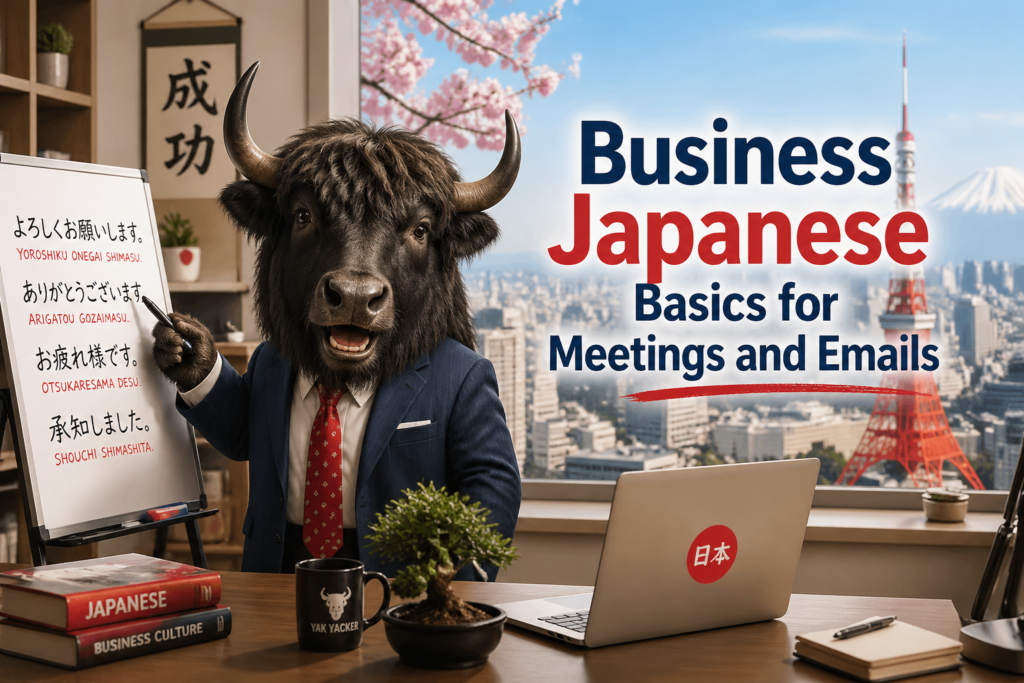
If you have ever looked at a Japanese email and thought, “Why does this sound like a formal apology wrapped around a calendar request?” you are not alone. Workplace Japanese loves politeness, soft phrasing, and tiny verbal cushions. That sounds scary at first, but the good news is that a lot of business communication runs on repeatable patterns.
This guide gives you the core phrases for meetings, emails, and everyday office conversation, without turning it into a giant grammar swamp. If you want a broader start with the language, the Japanese learning hub is a solid next stop, and for more phrase practice you can also check this related Japanese lesson.
One quick truth before we start: in business Japanese, sounding a little too polite is usually safer than sounding too casual. Nobody gets in trouble for being respectful. The reverse? Ah, that can get spicy.
Useful Phrases For Meetings, Emails, And Workplace Conversation
| Kanji | Rōmaji | Meaning | Example (JP) | Example (Rōmaji) | Translation (EN) |
|---|---|---|---|---|---|
| お世話になっております | Osewa ni natte orimasu | Thank you for your continued support / a standard business greeting | いつもお世話になっております。 | Itsumo osewa ni natte orimasu. | Thank you as always for your continued support. |
| よろしくお願いいたします | Yoroshiku onegai itashimasu | Please treat this favorably / thank you in advance | ご確認のほど、よろしくお願いいたします。 | Gokakunin no hodo, yoroshiku onegai itashimasu. | Thank you in advance for checking. |
| 承知しました | Shōchi shimashita | Understood | 内容、承知しました。 | Naiyō, shōchi shimashita. | I understood the details. |
| かしこまりました | Kashikomarimashita | Certainly / understood very politely | では、そのように手配いたします。かしこまりました。 | Dewa, sono yō ni tehai itashimasu. Kashikomarimashita. | Certainly. I will arrange it that way. |
| 確認します | Kakunin shimasu | I will confirm / check | スケジュールを確認します。 | Sukedyūru o kakunin shimasu. | I will check the schedule. |
These are your survival phrases. You will hear them in emails, meetings, phone calls, and probably floating through the office air like background music.
| Kanji | Rōmaji | Meaning | Example (JP) | Example (Rōmaji) | Translation (EN) |
|---|---|---|---|---|---|
| 会議 | Kaigi | Meeting | 午後三時から会議があります。 | Gogo san-ji kara kaigi ga arimasu. | There is a meeting from 3 p.m. |
| 打ち合わせ | Uchiawase | Business meeting / discussion / coordination meeting | 明日の打ち合わせはオンラインです。 | Ashita no uchiawase wa onrain desu. | Tomorrow’s meeting is online. |
| 資料 | Shiryō | Materials / documents | 会議の資料を送ります。 | Kaigi no shiryō o okurimasu. | I will send the meeting materials. |
| 議題 | Gidai | Agenda / topic for discussion | 今日の議題は予算についてです。 | Kyō no gidai wa yosan ni tsuite desu. | Today’s agenda is about the budget. |
| 参加します | Sanka shimasu | Participate / attend | 私も会議に参加します。 | Watashi mo kaigi ni sanka shimasu. | I will also attend the meeting. |
会議
Kaigi
Meeting
打ち合わせ
Uchiawase
This often feels a bit less formal than a big official meeting. It can mean a planning discussion, coordination chat, or business check-in.
Yak wisdom: if you are not sure whether something is a giant formal meeting or a smaller planning discussion, 打ち合わせ is often a safe and useful word.
Core Email Phrases You Will See Constantly
| Kanji | Rōmaji | Meaning | Example (JP) | Example (Rōmaji) | Translation (EN) |
|---|---|---|---|---|---|
| メール | Mēru | メールを確認しました。 | Mēru o kakunin shimashita. | I checked the email. | |
| 添付 | Tenpu | Attachment | 資料を添付しました。 | Shiryō o tenpu shimashita. | I attached the document. |
| ご確認ください | Gokakunin kudasai | Please check | 添付ファイルをご確認ください。 | Tenpu fairu o gokakunin kudasai. | Please check the attached file. |
| ご連絡ありがとうございます | Gorenraku arigatō gozaimasu | Thank you for your message/contact | ご連絡ありがとうございます。内容を確認します。 | Gorenraku arigatō gozaimasu. Naiyō o kakunin shimasu. | Thank you for your message. I will check the contents. |
| 返信 | Henshin | Reply / response | 後ほど返信いたします。 | Nochihodo henshin itashimasu. | I will reply later. |
Business emails in Japanese often start soft, stay polite, and avoid sounding too direct. Even simple messages get little upgrades. “Check this” becomes ご確認ください. “I got it” becomes 承知しました. Tiny changes, much more polished feeling.
添付
Tenpu
Attachment
Example: 添付の資料をご確認ください。
Tenpu no shiryō o gokakunin kudasai.
Please check the attached document.
返信
Henshin
Reply / response
Example: 本日中に返信します。
Honjitsuchū ni henshin shimasu.
I will reply by the end of today.
Useful Workplace Conversation Words
| Kanji | Rōmaji | Meaning | Example (JP) | Example (Rōmaji) | Translation (EN) |
|---|---|---|---|---|---|
| 上司 | Jōshi | Boss / supervisor | 上司に相談します。 | Jōshi ni sōdan shimasu. | I will consult my supervisor. |
| 同僚 | Dōryō | Colleague / coworker | 同僚と資料を作成しました。 | Dōryō to shiryō o sakusei shimashita. | I prepared the materials with a coworker. |
| 取引先 | Torihikisaki | Client / business partner / customer company | 取引先にメールを送りました。 | Torihikisaki ni mēru o okurimashita. | I sent an email to the client. |
| 担当者 | Tantōsha | Person in charge | 担当者に確認してください。 | Tantōsha ni kakunin shite kudasai. | Please confirm with the person in charge. |
| 相談 | Sōdan | Consultation / discuss | この件について相談したいです。 | Kono ken ni tsuite sōdan shitai desu. | I would like to discuss this matter. |
取引先
Torihikisaki
This is a very useful business word. It usually means a company you do business with: client, customer, or partner depending on context.
Example: 取引先との会議は来週です。
Torihikisaki to no kaigi wa raishū desu.
The meeting with the client is next week.
Phrases For Speaking Up In Meetings
| Kanji | Rōmaji | Meaning | Example (JP) | Example (Rōmaji) | Translation (EN) |
|---|---|---|---|---|---|
| 質問があります | Shitsumon ga arimasu | I have a question | 一点、質問があります。 | Itten, shitsumon ga arimasu. | I have one question. |
| 意見 | Iken | Opinion | 私の意見を申し上げます。 | Watashi no iken o mōshiagemasu. | I would like to state my opinion. |
| 賛成です | Sansei desu | I agree | その案に賛成です。 | Sono an ni sansei desu. | I agree with that proposal. |
| 反対です | Hantai desu | I disagree / am opposed | その点には少し反対です。 | Sono ten ni wa sukoshi hantai desu. | I am a little opposed on that point. |
| もう一度お願いします | Mō ichido onegaishimasu | Please say that one more time | すみません、もう一度お願いします。 | Sumimasen, mō ichido onegaishimasu. | Sorry, please say that one more time. |
Here is the nice thing: you do not need dramatic, advanced Japanese to function in a meeting. Simple phrases used politely go a long way.
質問があります
Shitsumon ga arimasu
I have a question
Example: このスケジュールについて質問があります。
Kono sukedyūru ni tsuite shitsumon ga arimasu.
I have a question about this schedule.
賛成です
Sansei desu
I agree
Example: 私もその考えに賛成です。
Watashi mo sono kangae ni sansei desu.
I agree with that idea too.
Handy Phrases For Requests And Scheduling
| Kanji | Rōmaji | Meaning | Example (JP) | Example (Rōmaji) | Translation (EN) |
|---|---|---|---|---|---|
| お願いします | Onegaishimasu | Please | 資料の共有をお願いします。 | Shiryō no kyōyū o onegaishimasu. | Please share the materials. |
| 予定 | Yotei | Schedule / plan | 来週の予定を教えてください。 | Raishū no yotei o oshiete kudasai. | Please tell me next week’s schedule. |
| 変更 | Henkō | Change / revision | 会議の時間に変更があります。 | Kaigi no jikan ni henkō ga arimasu. | There is a change to the meeting time. |
| 延期 | Enki | Postponement | 会議は来週に延期になりました。 | Kaigi wa raishū ni enki ni narimashita. | The meeting was postponed until next week. |
| 調整します | Chōsei shimasu | I will coordinate / adjust | 日程を調整します。 | Nittei o chōsei shimasu. | I will coordinate the schedule. |
調整します
Chōsei shimasu
I will coordinate / adjust
Example: 参加者の予定を調整します。
Sankasha no yotei o chōsei shimasu.
I will coordinate the participants’ schedules.
In office Japanese, 調整 is everywhere. Schedules, expectations, plans, timings, moods… okay, maybe not moods officially, but you get the idea.
Mini Email Templates You Can Actually Use
お世話になっております。
Osewa ni natte orimasu.
Thank you for your continued support.
会議資料を添付いたしましたので、ご確認ください。
Kaigi shiryō o tenpu itashimashita node, gokakunin kudasai.
I have attached the meeting materials, so please check them.
ご不明点がございましたら、お知らせください。
Gofumeiten ga gozaimashitara, oshirase kudasai.
If anything is unclear, please let me know.
よろしくお願いいたします。
Yoroshiku onegai itashimasu.
Thank you in advance.
This basic structure works because it is polite, clear, and not weirdly dramatic. Business email should not read like a wedding speech.
Common Confusions And Nuance
- 承知しました
Shōchi shimashita
Understood. Very common in business. Professional and safe. - わかりました
Wakarimashita
I understand. Correct, but a little more everyday and less formal. - かしこまりました
Kashikomarimashita
Certainly. Even more polite. Great in customer service or very formal situations. - すみません
Sumimasen
Excuse me / sorry. Useful everywhere. - 申し訳ありません
Mōshiwake arimasen
I am very sorry. Stronger and more formal than すみません.
Another common pair is 会議 and 打ち合わせ. Both can translate as “meeting,” but 会議 feels more official, while 打ち合わせ often sounds like planning, coordination, or a prep discussion.
Variants And Politeness Choices
| Basic | Politer Business Version | Meaning | Example (JP) | Rōmaji | Translation |
|---|---|---|---|---|---|
| わかりました | 承知しました | I understand | スケジュールの件、承知しました。 | Sukedyūru no ken, shōchi shimashita. | I understood the matter regarding the schedule. |
| 見ました | 確認しました | I checked it | メールを確認しました。 | Mēru o kakunin shimashita. | I checked the email. |
| 送ります | 送付いたします | I will send it | 資料を送付いたします。 | Shiryō o sōfu itashimasu. | I will send the materials. |
| 言います | 申し上げます | I say / state | 私の意見を申し上げます。 | Watashi no iken o mōshiagemasu. | I would like to state my opinion. |
| してください | お願いいたします | Please do | ご対応のほど、お願いいたします。 | Gotaiō no hodo, onegai itashimasu. | Thank you in advance for your handling of this. |
Quick Practice Sentences
- 会議は何時からですか。
Kaigi wa nan-ji kara desu ka.
What time does the meeting start? - 資料を先に送っていただけますか。
Shiryō o saki ni okutte itadakemasu ka.
Could you send the materials in advance? - この点について上司に相談します。
Kono ten ni tsuite jōshi ni sōdan shimasu.
I will consult my supervisor about this point. - 本日の打ち合わせに参加します。
Honjitsu no uchiawase ni sanka shimasu.
I will attend today’s meeting. - 返信が遅くなり、申し訳ありません。
Henshin ga osoku nari, mōshiwake arimasen.
I am sorry for the late reply. - 予定に変更がありましたら、ご連絡ください。
Yotei ni henkō ga arimashitara, gorenraku kudasai.
Please contact me if there are any changes to the schedule.
Quick Reference Summary
- お世話になっております
Osewa ni natte orimasu
Standard opening greeting in business emails - 承知しました
Shōchi shimashita
Professional “understood” - 会議
Kaigi
Formal meeting - 打ち合わせ
Uchiawase
Planning or coordination meeting - 資料
Shiryō
Materials, documents - 添付
Tenpu
Attachment - ご確認ください
Gokakunin kudasai
Please check - 相談します
Sōdan shimasu
I will discuss / consult - 調整します
Chōsei shimasu
I will coordinate / adjust - よろしくお願いいたします
Yoroshiku onegai itashimasu
Thank you in advance / best regards
Business Japanese is not really about sounding fancy. It is about sounding clear, respectful, and smooth enough that nobody has to pause and wonder why your email sounds like a text message sent while running for a train. Learn the high-frequency phrases first, reuse them often, and your meetings and emails will start sounding much more natural. That is the real win.