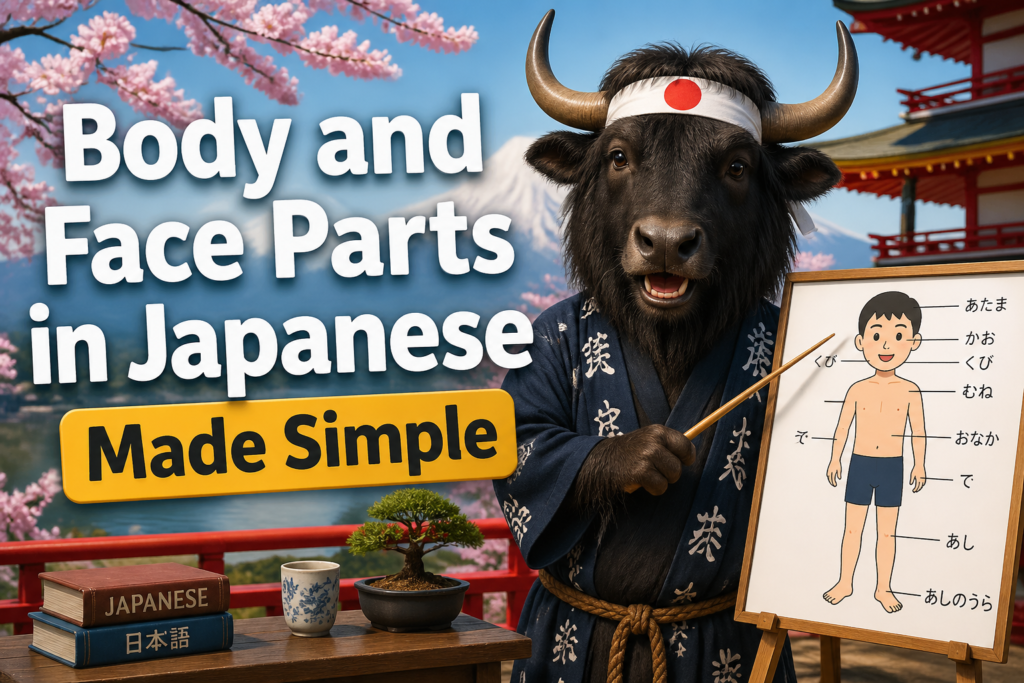
Body and Face Parts in Japanese can look like a lot at first, but the good news is this: many of the words are short, useful, and show up everywhere. If you know basic body vocabulary, suddenly a doctor visit, a shopping conversation, or a “my neck hurts because I slept weird” complaint becomes way easier to understand. Which, honestly, is a pretty decent upgrade for a few minutes of study.
Japanese body words also help you learn everyday grammar patterns. You will see possessive phrases like わたしの手 (watashi no te, my hand), location phrases like 頭がいたい (atama ga itai, my head hurts), and useful expressions in daily life. The language likes to keep things practical. Rude, really, how efficient it is.
If you want a broader word list later, the related guide on senses vocabulary and phrases in Japanese fits nicely with this topic. And for more Japanese learning practice overall, the main learn Japanese page is a handy place to keep exploring.
Core Body Parts You Will Use All The Time
Here are the high-frequency body and face words. These are the ones worth learning first, because they show up in simple sentences, health situations, and descriptions of people. You do not need to memorize every possible organ on day one. That would be a very ambitious way to ruin your afternoon.
| Kanji | Rōmaji | English Meaning | Example |
|---|---|---|---|
| 体 | karada | body | 体がつかれた。 Karada ga tsukareta. My body is tired. |
| 頭 | atama | head | 頭がいたい。 Atama ga itai. My head hurts. |
| 顔 | kao | face | 顔があかい。 Kao ga akai. The face is red. |
| 目 | me | eye | 目がつかれた。 Me ga tsukareta. My eyes are tired. |
| 耳 | mimi | ear | 耳がいたい。 Mimi ga itai. My ear hurts. |
| 口 | kuchi | mouth | 口をあけて。 Kuchi o akete. Open your mouth. |
| 鼻 | hana | nose | 鼻がたかい。 Hana ga takai. Someone has a high nose. |
| 歯 | ha | tooth / teeth | 歯をみがく。 Ha o migaku. Brush your teeth. |
| 首 | kubi | neck | 首がこる。 Kubi ga koru. My neck is stiff. |
| 肩 | kata | shoulder | 肩がいたい。 Kata ga itai. My shoulder hurts. |
More Body Parts That Show Up In Everyday Japanese
Once the basics feel familiar, add these next. They are useful for describing pain, sports, clothing, and everyday movement. Japanese often uses these words in very normal, practical phrases. Nothing fancy. Just useful. Imagine that.
| Kanji | Rōmaji | English Meaning | Example |
|---|---|---|---|
| 腕 | ude | arm | 腕がつよい。 Ude ga tsuyoi. He has strong arms. |
| 手 | te | hand | 手をあらう。 Te o arau. Wash your hands. |
| 指 | yubi | finger | 指をきる。 Yubi o kiru. Cut a finger. |
| 足 | ashi | leg / foot | 足がながい。 Ashi ga nagai. The legs are long. |
| 膝 | hiza | knee | 膝をまげる。 Hiza o mageru. Bend the knee. |
| 腰 | koshi | lower back / waist | 腰がいたい。 Koshi ga itai. My lower back hurts. |
| 背中 | senaka | back | 背中がかゆい。 Senaka ga kayui. My back is itchy. |
| 胸 | mune | chest / breast | 胸がどきどきする。 Mune ga dokidoki suru. My chest is pounding. |
| おなか | onaka | stomach / belly | おなかがすいた。 Onaka ga suita. I’m hungry. |
| おしり | oshiri | buttocks | おしりがいたい。 Oshiri ga itai. My butt hurts. |
Useful Face Parts In Japanese
Face words are especially helpful because they appear in descriptions, beauty products, medical visits, and lots of simple expressions. Some are polite, some are casual, and some are the kind of word you hear when someone is trying to explain where the problem is. Very scientific. Very dramatic.
| Kanji | Rōmaji | English Meaning | Example |
|---|---|---|---|
| 目 | me | eye | 目がきれいだ。 Me ga kirei da. Her eyes are beautiful. |
| まつげ | matsuge | eyelash | まつげがながい。 Matsuge ga nagai. The eyelashes are long. |
| まゆげ | mayuge | eyebrow | まゆげがこい。 Mayuge ga koi. The eyebrows are thick. |
| 鼻 | hana | nose | 鼻がつまる。 Hana ga tsumaru. My nose is congested. |
| 口 | kuchi | mouth | 口がかわいた。 Kuchi ga kawaita. My mouth is dry. |
| 歯 | ha | tooth / teeth | 歯がしみる。 Ha ga shimiru. My teeth are sensitive. |
| あご | ago | chin / jaw | あごをあげる。 Ago o ageru. Lift your chin. |
| ほお | hoo | cheek | ほおがあつい。 Hoo ga atsui. My cheeks are hot. |
| 耳 | mimi | ear | 耳にちかい。 Mimi ni chikai. It is close to the ear. |
| ひたい | hitai | forehead | ひたいに汗がある。 Hitai ni ase ga aru. There is sweat on the forehead. |
Simple Phrases For Body Parts
These phrases are the real life stuff. You can use them when talking about pain, describing someone, or following simple instructions. Notice how many of them use が (ga) to mark the body part that feels a certain way. Japanese likes to keep the focus on the body part itself.
| Kanji | Rōmaji | English Meaning | Example |
|---|---|---|---|
| 頭がいたい | atama ga itai | my head hurts | 頭がいたいです。 Atama ga itai desu. My head hurts. |
| 目がかゆい | me ga kayui | my eyes are itchy | 目がかゆいです。 Me ga kayui desu. My eyes are itchy. |
| 耳がいたい | mimi ga itai | my ear hurts | 耳がいたいです。 Mimi ga itai desu. My ear hurts. |
| 歯がいたい | ha ga itai | my tooth hurts | 歯がいたいです。 Ha ga itai desu. My tooth hurts. |
| 首がこる | kubi ga koru | my neck is stiff | 首がこるんです。 Kubi ga koru n desu. My neck is stiff. |
| 肩がこる | kata ga koru | my shoulders are stiff | 肩がこる人が多い。 Kata ga koru hito ga ooi. Many people get stiff shoulders. |
| おなかがいたい | onaka ga itai | my stomach hurts | おなかがいたいです。 Onaka ga itai desu. My stomach hurts. |
| 足がつる | ashi ga tsuru | my leg cramps | 足がつった。 Ashi ga tsutta. My leg cramped. |
| 手をあらう | te o arau | wash hands | 手をあらってください。 Te o aratte kudasai. Please wash your hands. |
| 口をあける | kuchi o akeru | open the mouth | 口をあけてください。 Kuchi o akete kudasai. Please open your mouth. |
Useful Describing Words For Body And Face
Body vocabulary gets more useful when you can describe size, shape, or condition. These adjectives help you say whether something is long, short, thin, thick, or painful. In other words, they are the words that make your sentence less like a grocery list.
| Kanji | Rōmaji | Meaning | Example |
|---|---|---|---|
| 長い | nagai | long | 髪が長い。 Kami ga nagai. The hair is long. |
| 短い | mijikai | short | 指が短い。 Yubi ga mijikai. The fingers are short. |
| 太い | futoi | thick | 腕が太い。 Ude ga futoi. The arms are thick. |
| 細い | hosoi | thin | 首が細い。 Kubi ga hosoi. The neck is thin. |
| 丸い | marui | round | 顔が丸い。 Kao ga marui. The face is round. |
| 赤い | akai | red | ほおが赤い。 Hoo ga akai. The cheeks are red. |
| 黒い | kuroi | black | 髪が黒い。 Kami ga kuroi. The hair is black. |
| 白い | shiroi | white | 歯が白い。 Ha ga shiroi. The teeth are white. |
Common Sentence Patterns You Should Notice
Japanese body-part sentences often follow a few easy patterns. Learn the pattern, and you can swap in new words without starting from zero every time. Very convenient. Almost suspiciously so.
- Body part + が + adjective
頭がいたい。
Atama ga itai.
My head hurts. - Body part + を + verb
手をあらう。
Te o arau.
Wash your hands. - Body part + に + location / thing
顔にきずがある。
Kao ni kizu ga aru.
There is a cut on the face. - Body part + の + body part
目の下。
Me no shita.
Under the eyes. - Possession with の
わたしの手。
Watashi no te.
My hand.
One tiny but useful point: in Japanese, 足 (ashi) can mean leg or foot, depending on context. The language is comfortable leaving a little room for interpretation. Efficient, but occasionally annoying if you want absolute clarity. Context usually does the job.
Also, 手 (te) is hand, while 腕 (ude) is arm. And 首 (kubi) is neck, even though it also appears in some compound words with broader meanings. Japanese body words are friendly, but they do not always match English exactly. Sneaky little differences. They keep things interesting.
Practice With Swaps
Try changing the body part or adjective in each sentence. The goal is not perfection. The goal is to stop freezing when you see the pattern. That is already a win.
- 頭がいたい。
Atama ga itai.
My head hurts.
Swap 頭 for おなか.
おなかがいたい。
Onaka ga itai.
My stomach hurts. - 目がかゆい。
Me ga kayui.
My eyes are itchy.
Swap 目 for 鼻.
鼻がかゆい。
Hana ga kayui.
My nose is itchy. - 手をあらう。
Te o arau.
Wash hands.
Swap 手 for 口.
口をあける。
Kuchi o akeru.
Open the mouth. - 髪が長い。
Kami ga nagai.
The hair is long.
Swap 長い for 短い.
髪が短い。
Kami ga mijikai.
The hair is short.
Common Mistakes And Easy Fixes
| Mistake | Better Choice | Why |
|---|---|---|
| Using 足 for only “foot” every time | Check the context first | 足 can mean leg or foot. |
| Mixing 手 and 腕 | 手 = hand, 腕 = arm | They are different body parts in Japanese. |
| Forgetting が in pain sentences | 頭がいたい | が helps mark the part that hurts. |
| Using English body layout directly | Learn Japanese phrase chunks | Japanese body phrases often work in their own neat way. |
| Thinking all face words are formal | Use the word that fits the situation | Some words are casual, some are neutral, some are medical. |
Quick Reference Summary
- 体 (karada) = body
- 頭 (atama) = head
- 顔 (kao) = face
- 目 (me) = eye
- 耳 (mimi) = ear
- 口 (kuchi) = mouth
- 鼻 (hana) = nose
- 歯 (ha) = tooth / teeth
- 首 (kubi) = neck
- 肩 (kata) = shoulder
- 手 (te) = hand
- 腕 (ude) = arm
- 指 (yubi) = finger
- 足 (ashi) = leg / foot
- 膝 (hiza) = knee
- 腰 (koshi) = lower back / waist
- 背中 (senaka) = back
- おなか (onaka) = stomach / belly
- 髪 (kami) = hair
- まゆげ (mayuge) = eyebrow
頭がいたい (Atama ga itai) is one of the first real Japanese phrases many learners use. That is because body words are not just vocabulary. They are survival words. Extremely glamorous? No. Extremely useful? Absolutely.
Once you can name the body and face parts in Japanese, you will start spotting them everywhere: in descriptions, health advice, daily conversation, and simple instructions. The trick is not learning everything at once. Start with the common words, lock in the basic sentence patterns, and let the rest grow naturally. Japanese likes steady progress, not heroic suffering.
Keep going with the related vocabulary topics, and these words will start feeling less like a list and more like part of real Japanese. That is when the learning gets fun — and a lot less like staring at flashcards while bargaining with your own brain.