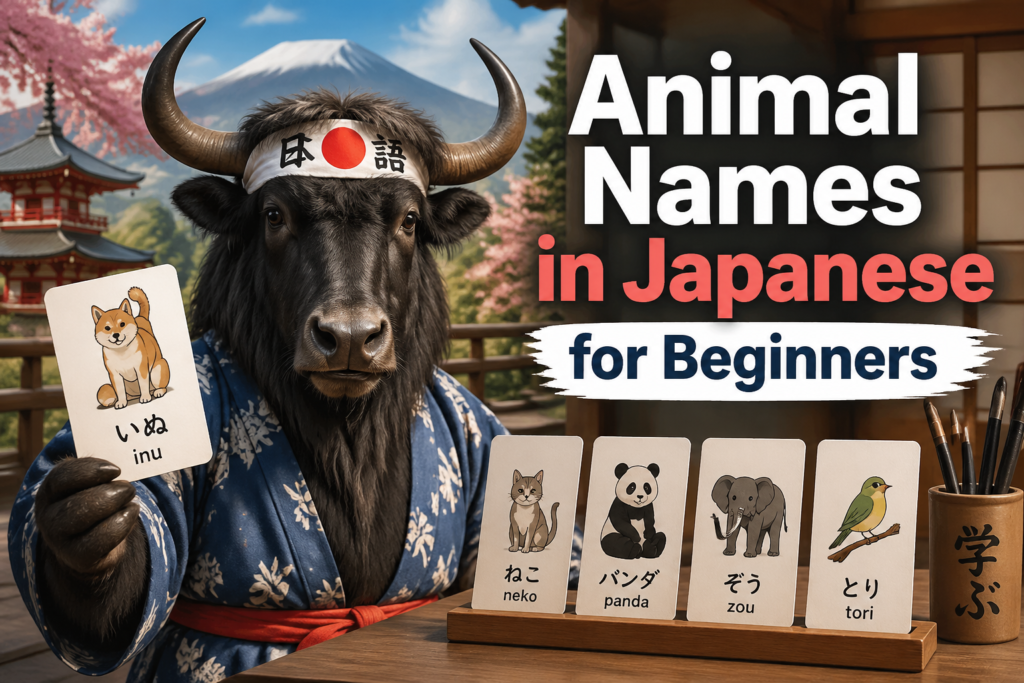
Learning animal names in Japanese is one of those beginner wins that feels small at first, then suddenly becomes useful everywhere. You see a cute cat on a sign, hear someone talk about a dog at the park, and boom — you’re not guessing anymore.
Japanese animal words are also very friendly for beginners because many are short, simple, and easy to repeat. Nature shows up a lot in Japanese life, language, and even names. So yes, learning 猫 Neko means “cat,” but it also means you get to stop pretending every fluffy thing is just “that animal.”
If you want a broad beginner guide, the main Learn Japanese page is a useful starting point. For a quick pronunciation refresh, this Japanese pronunciation guide can help too.
Common Animal Names You’ll See First
Start with the everyday animals. These are the words you’ll meet in books, conversations, school materials, and random internet cuteness. Very serious research, obviously.
| Kanji | Rōmaji | English Meaning | Example Sentence |
|---|---|---|---|
| 犬 | inu | dog | 犬が好きです。 Inu ga suki desu. I like dogs. |
| 猫 | neko | cat | 猫は静かです。 Neko wa shizuka desu. Cats are quiet. |
| 鳥 | tori | bird | 鳥が空を飛びます。 Tori ga sora o tobi masu. Birds fly in the sky. |
| 魚 | sakana | fish | 魚を食べます。 Sakana o tabemasu. I eat fish. |
| 馬 | uma | horse | 馬は速いです。 Uma wa hayai desu. Horses are fast. |
| 牛 | ushi | cow | 牛が牧場にいます。 Ushi ga bokujō ni imasu. The cow is on the farm. |
| 羊 | hitsuji | sheep | 羊は白いです。 Hitsuji wa shiroi desu. Sheep are white. |
| 豚 | buta | pig | 豚はかわいいです。 Buta wa kawaii desu. Pigs are cute. |
| 猿 | saru | monkey | 猿が木にいます。 Saru ga ki ni imasu. The monkey is in the tree. |
| 熊 | kuma | bear | 熊に注意してください。 Kuma ni chūi shite kudasai. Please be careful of bears. |
More Useful Animal Words
Once you know the basics, it’s easy to add more animals. Japanese has a nice habit of being simple when it feels like it, which is a relief for everyone.
| Kanji | Rōmaji | English Meaning | Example Sentence |
|---|---|---|---|
| 牛 | ushi | cow | 牛乳は牛から作られます。 Gyūnyū wa ushi kara tsukuraremasu. Milk is made from cows. |
| 鹿 | shika | deer | 鹿が公園にいます。 Shika ga kōen ni imasu. There are deer in the park. |
| 狼 | ōkami | wolf | 狼は昔の物語によく出ます。 Ōkami wa mukashi no monogatari ni yoku demasu. Wolves often appear in old stories. |
| 兎 | usagi | rabbit | 兎は耳が長いです。 Usagi wa mimi ga nagai desu. Rabbits have long ears. |
| 馬 | uma | horse | 馬に乗りたいです。 Uma ni noritai desu. I want to ride a horse. |
| 亀 | kame | turtle | 亀はゆっくり歩きます。 Kame wa yukkuri arukimasu. Turtles walk slowly. |
| 蛙 | kaeru | frog | 蛙が池の近くにいます。 Kaeru ga ike no chikaku ni imasu. The frog is near the pond. |
| 虫 | mushi | insect / bug | 虫が多い季節です。 Mushi ga ooi kisetsu desu. It is a season with many insects. |
| 蜂 | hachi | bee | 蜂は花の近くにいます。 Hachi wa hana no chikaku ni imasu. Bees are near the flowers. |
| 蟻 | ari | ant | 蟻が砂糖に集まります。 Ari ga satō ni atsumarimasu. Ants gather around sugar. |
Pets, Farm Animals, And Wild Animals
Grouping animals by type makes vocabulary easier to remember. Your brain likes categories. It pretends not to, but it does.
| Category | Kanji | Rōmaji | Meaning | Example |
|---|---|---|---|---|
| Pet | 犬 | inu | dog | 犬を飼っています。 Inu o katte imasu. I have a dog. |
| Pet | 猫 | neko | cat | 猫を飼っています。 Neko o katte imasu. I have a cat. |
| Farm | 牛 | ushi | cow | 牛は農場にいます。 Ushi wa nōjō ni imasu. Cows are on the farm. |
| Farm | 豚 | buta | pig | 豚はよく育ちます。 Buta wa yoku sodachimasu. Pigs grow well. |
| Wild | 熊 | kuma | bear | 熊は山に住んでいます。 Kuma wa yama ni sunde imasu. Bears live in the mountains. |
| Wild | 猿 | saru | monkey | 猿が果物を食べます。 Saru ga kudamono o tabemasu. Monkeys eat fruit. |
| Wild | 鹿 | shika | deer | 鹿は森にいます。 Shika wa mori ni imasu. Deer are in the forest. |
| Wild | 狼 | ōkami | wolf | 狼は群れで動きます。 Ōkami wa mure de ugokimasu. Wolves move in packs. |
Handy Phrases For Talking About Animals
These phrases are practical and beginner-friendly. They let you describe what you see, what you like, and what is wandering around doing its own thing.
| Kanji | Rōmaji | English Meaning | Example Sentence |
|---|---|---|---|
| この犬は大きいです。 | Kono inu wa ōkii desu. | This dog is big. | この犬は大きいです。 Kono inu wa ōkii desu. This dog is big. |
| あの猫はかわいいです。 | Ano neko wa kawaii desu. | That cat is cute. | あの猫はかわいいです。 Ano neko wa kawaii desu. That cat is cute. |
| 鳥が鳴いています。 | Tori ga naite imasu. | The bird is singing/chirping. | 鳥が鳴いています。 Tori ga naite imasu. The bird is singing/chirping. |
| 魚を見ました。 | Sakana o mimashita. | I saw a fish. | 魚を見ました。 Sakana o mimashita. I saw a fish. |
| 猫が好きです。 | Neko ga suki desu. | I like cats. | 猫が好きです。 Neko ga suki desu. I like cats. |
| 犬がこわいです。 | Inu ga kowai desu. | I am scared of dogs. | 犬がこわいです。 Inu ga kowai desu. I am scared of dogs. |
| 動物園に行きます。 | Dōbutsuen ni ikimasu. | I go to the zoo. | 動物園に行きます。 Dōbutsuen ni ikimasu. I go to the zoo. |
| 動物がたくさんいます。 | Dōbutsu ga takusan imasu. | There are many animals. | 動物がたくさんいます。 Dōbutsu ga takusan imasu. There are many animals. |
| 小さい猫ですね。 | Chiisai neko desu ne. | That’s a small cat, isn’t it? | 小さい猫ですね。 Chiisai neko desu ne. That’s a small cat, isn’t it? |
| あそこに熊がいます。 | Asoko ni kuma ga imasu. | There is a bear over there. | あそこに熊がいます。 Asoko ni kuma ga imasu. There is a bear over there. |
| 私は兎が好きです。 | Watashi wa usagi ga suki desu. | I like rabbits. | 私は兎が好きです。 Watashi wa usagi ga suki desu. I like rabbits. |
How To Say “Animal” In Japanese
The general word for “animal” is 動物 dōbutsu. You’ll see it in zoo signs, science topics, and general conversation. If you need the broad category, this is the word to remember.
動物 dōbutsu means “animal.”
| Kanji | Rōmaji | Meaning | Example Sentence |
|---|---|---|---|
| 動物 | dōbutsu | animal | 動物が好きです。 Dōbutsu ga suki desu. I like animals. |
| 動物園 | dōbutsuen | zoo | 動物園に行きたいです。 Dōbutsuen ni ikitai desu. I want to go to the zoo. |
| 野生動物 | yasei dōbutsu | wild animal | 野生動物は自然の中で生きています。 Yasei dōbutsu wa shizen no naka de ikite imasu. Wild animals live in nature. |
Common Confusions
A few animal words can trip learners up because the English category is broader or narrower than the Japanese one. Annoying? A little. Normal? Very.
- 魚 sakana means “fish” as food or the animal in general.
- 鳥 tori means “bird,” but it can also show up in words connected to birds and poultry.
- 虫 mushi is a broad word for insects and bugs, not just one tiny creepy thing with too many legs.
- 犬 inu and 猫 neko are the most common pet words, so learn those early.
- 動物 dōbutsu is the general word for “animal,” while specific animals like 熊 kuma or 鹿 shika name one kind of animal.
If you want to check general word usage in a very plain way, a dictionary entry on animal can also help with the basic concept, though the Japanese words here are what matter most for speaking.
Grammar Pattern: “X Ga Suki Desu”
This pattern is easy and useful:
| Pattern | Meaning | Example | Rōmaji | English |
|---|---|---|---|---|
| X が好きです。 | I like X. | 猫が好きです。 | Neko ga suki desu. | I like cats. |
| X がこわいです。 | I am afraid of X. | 犬がこわいです。 | Inu ga kowai desu. | I am scared of dogs. |
| X がいます。 | There is a living thing X. | 鳥がいます。 | Tori ga imasu. | There is a bird. |
Notice the tiny but important detail: います imasu is used for living things. So animals fit here nicely. Japanese loves little rules like this. Very considerate. Very picky.
Practice
Try replacing the animal word in each sentence. Say it out loud if possible. That is how it sticks better than just staring at the page and hoping for magic.
| Practice | Answer Example | English |
|---|---|---|
| __が好きです。 Say “I like cats.” | 猫が好きです。 Neko ga suki desu. | I like cats. |
| __がいます。 Say “There is a dog.” | 犬がいます。 Inu ga imasu. | There is a dog. |
| __はかわいいです。 Say “The rabbit is cute.” | 兎はかわいいです。 Usagi wa kawaii desu. | The rabbit is cute. |
| __は速いです。 Say “The horse is fast.” | 馬は速いです。 Uma wa hayai desu. | The horse is fast. |
| __を見ました。 Say “I saw a deer.” | 鹿を見ました。 Shika o mimashita. | I saw a deer. |
Yak tip: The fastest way to remember animal names is to pair the word with a picture or a real animal memory. A cat, a zoo trip, a bird outside the window — your brain loves a scene more than a lonely word list.
Quick Reference Summary
- 動物 dōbutsu = animal
- 動物園 dōbutsuen = zoo
- 犬 inu = dog
- 猫 neko = cat
- 鳥 tori = bird
- 魚 sakana = fish
- 馬 uma = horse
- 牛 ushi = cow
- 羊 hitsuji = sheep
- 豚 buta = pig
- 猿 saru = monkey
- 熊 kuma = bear
- 鹿 shika = deer
- 兎 usagi = rabbit
- 亀 kame = turtle
- 蛙 kaeru = frog
- 虫 mushi = insect / bug
- 蜂 hachi = bee
- 蟻 ari = ant
Animal names are a great place to build beginner confidence because they are concrete, memorable, and easy to practice in real life. Start with the common ones, repeat them in simple sentences, and keep going. Little by little, Japanese stops looking mysterious and starts looking like something you can actually use.
For more beginner vocabulary, the pages on popular boy names in Japanese and popular girl names in Japanese are handy next steps if you want to keep learning with clear, simple examples.