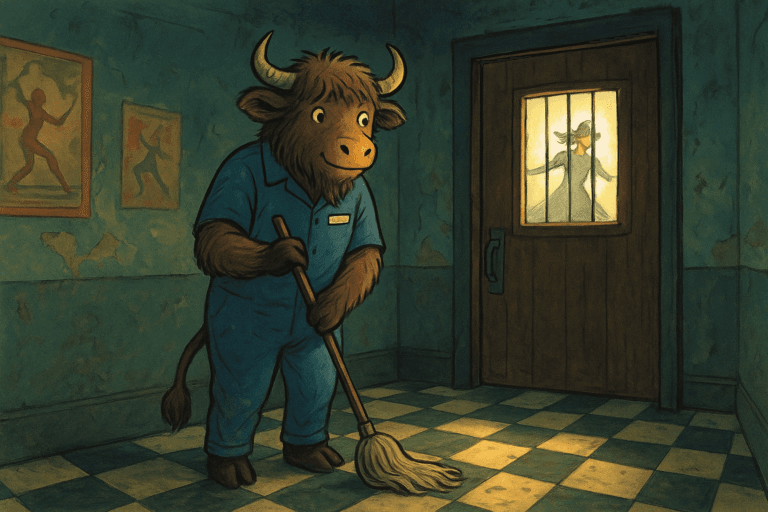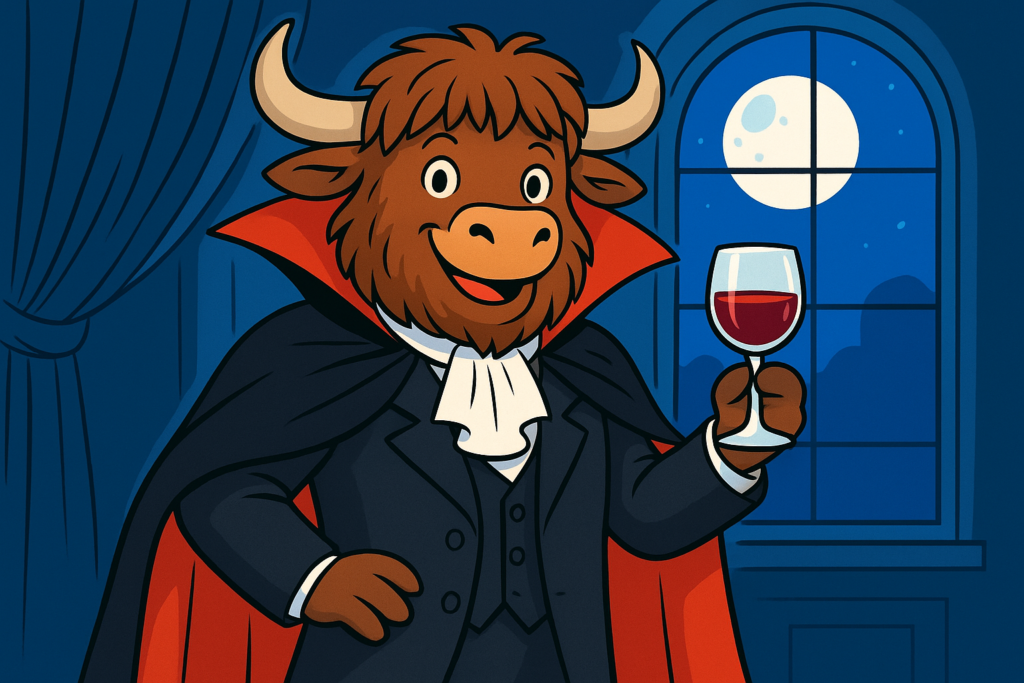
This B1 Intermediate retelling of The Vampyre keeps the plot clear for learners while still giving the story some atmosphere and momentum. Aubrey was a young English gentleman. One night, at a ball in London, he noticed a pale stranger.
This version is written for English-speaking learners and includes clickable word help inside the story, full story audio, and lesson notes after the reading. It is free to use on Yak Yacker and is designed to feel natural, readable, and manageable in English.
Aubrey was a . He loved and . One night, at a in London, he noticed a . The man stood alone, with .
'Who is that?' Aubrey asked his friend. 'That is ,' his friend whispered. 'He is very rich, but no one knows much about him.' Aubrey felt a . He walked over to .
'Good evening,' Aubrey said. 'You seem to enjoy .' Lord Ruthven smiled, but his smile did not reach his eyes. 'Dancing can be… . But I prefer the . The moon is so tonight.' Aubrey felt a , but he was .
After that night, they became friends. Lord Ruthven was and . Soon, he invited Aubrey to across Europe. Aubrey agreed . But before they left, an old man stopped Aubrey. 'Be careful with Lord Ruthven,' he said. 'There are about him.'
Aubrey laughed. 'Stories? What kind of stories?' The old man looked . 'They say he drinks more than wine. They say he never dies.' Aubrey shook his head. '! I don't believe that.' But the old man's words stayed in his .
In Rome, Aubrey noticed that Lord Ruthven never . He never came out during the day. And every time they visited a village, someone became and weak. 'Are you sick, my lord?' Aubrey asked. 'It is nothing. I have a ,' Ruthven replied. 'The sun is bad for me.'
They traveled to Greece. There, Aubrey met a beautiful girl named Ianthe. She had long black hair and a . 'Have you heard of the ?' she asked him one evening. 'They are . They and live forever. They look like handsome men, but their eyes are cold.'
Aubrey remembered Ruthven's cold eyes. 'Do you know someone like that?' Ianthe asked . Before Aubrey could answer, Ruthven appeared. 'What are you talking about, so ?' he said with a . Ianthe shivered and said nothing.
The next morning, Ianthe was found dead. There were two small on her neck. Aubrey was shocked and . He saw Ruthven in the garden, looking at the sky. 'Did you hear about Ianthe?' Aubrey asked. 'Yes,' Ruthven said . 'A terrible accident.' But his eyes were too .
Aubrey decided to leave. But that night, robbers attacked them on the road. Lord Ruthven fought but was badly . He lay dying under the moonlight. 'Swear to me,' he whispered to Aubrey. 'Do not tell anyone about my death for one year.' Aubrey, full of , swore the . Ruthven died in his arms.
Aubrey buried his friend and returned to London. But one evening, he saw a familiar figure at a theatre. It was Lord Ruthven, alive and well. Aubrey could not believe his . 'You're dead!' he cried. Ruthven smiled. 'No, I am quite well. And I am going to marry your sister, dear Aubrey.'
Aubrey's heart froze. His sweet sister, Miss Aubrey, was to this monster. He could not break his oath, but he had to save her. He tried to , but the oath stopped his words. He became ill with the . His sister saw him suffering. 'Brother, what is wrong? You look so pale!'
On the day before the wedding, Aubrey could hold it no longer. He broke his oath. 'Listen to me!' he shouted. 'Lord Ruthven is a ! He killed Ianthe, and he wants to kill you!' Everyone was shocked. Lord Ruthven laughed, but then the came through the window. He .
Miss Aubrey cried, but she was safe. Aubrey fell to the ground, free from the . He was weak for many days, but he . Now he knew that some stories are true. And he never again laughed at old tales.
In mysterious stories like 'The Vampyre', the author uses specific adjectives and phrases to build tension and put you on edge. Below are some key words from the text that help paint a picture of Lord Ruthven, a character who seems charming but dangerous.
Notice how a single word can change the mood. When you read or tell a story, choosing the right descriptive language makes everything more vivid for your listener.
- pale - very light skin, often suggesting illness or fear (e.g. 'a pale stranger')
- cold eyes - eyes that show no emotion or kindness (e.g. 'watching everyone with cold eyes')
- charming - pleasant and attractive, but sometimes hiding a different character (e.g. 'Lord Ruthven was charming and clever')
- shiver - to shake slightly because of cold or fear (e.g. 'Ianthe shivered and said nothing')
- fascinated - extremely interested by something unusual or mysterious (e.g. 'Aubrey was fascinated')
- thin smile - a weak, often insincere smile (e.g. 'Ruthven said with a thin smile')
- a chill - a sudden feeling of cold fear (e.g. 'Aubrey felt a chill')
This story introduces a classic monster: the vampire. Even if you're not a believer, the words connected to these old tales are useful for discussing myths, horror movies, or making dramatic promises.
Let's look at some of the vocabulary that brings the supernatural world to life and the serious promises that drive the story's conflict.
- vampire / vampyre - a dead person who drinks the blood of the living and never ages (e.g. 'Lord Ruthven is a vampire!')
- undead - not alive but not completely dead, often used for supernatural beings
- immortal - living forever, never dying (e.g. vampires are often immortal)
- swear (an oath) - to make a very serious, formal promise (e.g. 'Swear to me that you will not tell anyone.')
- break an oath - to fail to keep a serious promise (e.g. 'He broke his oath to save his sister.')
- burden - a heavy weight, often an emotional one (e.g. 'He fell to the ground, free from the burden.')
- superstition - a belief in things that are not based on reason or science (e.g. 'Superstition! I don't believe that.')
When you tell a story in English, you usually use past tenses. 'The Vampyre' is a great example because it mixes the past simple, past continuous, and past perfect to create a clear sequence of events and a rich background.
Understanding when to use each tense helps your story feel natural. The past simple carries the main action forward, while the others add context and depth.
- Past Simple for main events - 'He noticed a pale stranger.' / 'Aubrey felt a chill.' (one action after another)
- Past Continuous for background scenes - 'The man stood alone, watching everyone...' / 'She was weak for many days.' (ongoing actions or settings)
- Past Perfect for earlier actions - 'Before they left, an old man had stopped him with a warning.' (something that happened before the main event)
- Reporting verbs in the past - 'his friend whispered', 'Aubrey asked softly', 'Ruthven replied' (different ways to show how someone spoke)
Reading stories is one of the best ways to absorb new language. Next time you pick up a mystery or a classic tale, look out for the descriptive words and the tenses the writer uses to control the pace.
Why not try a little creative twist of your own? Even a few sentences can help new vocabulary stick.
- Describe a person you once met who seemed a bit mysterious or hard to read - try using 'pale', 'charming' or 'cold eyes'.
- Write three or four sentences telling a mini-story in the past, using at least one past continuous and one past perfect sentence.
- Explore another classic monster story (like Frankenstein or Dracula) and collect five new words to share with a friend.
The Vampyre comes from the English / John Polidori tradition and is best known as a gothic vampire story. This Yak Yacker article is an original learner retelling based on John Polidori, 1819; public domain, so the wording here is simplified for modern learners rather than copied from one old edition.
Older printings, translations, and retellings of this story can vary quite a bit. The original audience was usually adult/general, but this version is adapted for B1 Intermediate learners studying English. Early vampire fiction.
If you want to look into the source tradition, start with Project Gutenberg.
If you want to keep going, browse more in our English section and review the B1 English Vocabulary List. After that, try English Adjectives and Adverbs for another useful next step.