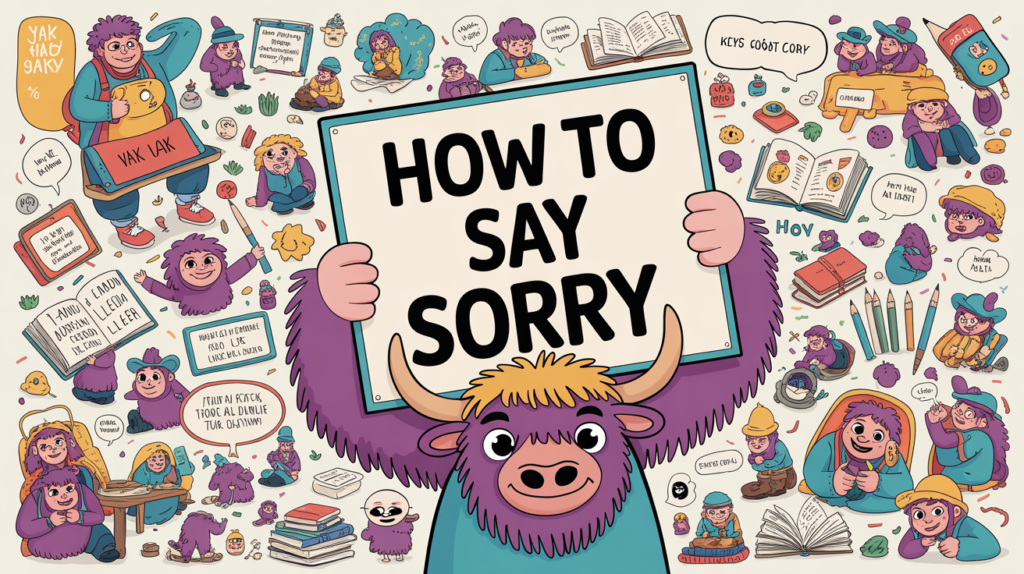
Saying sorry in English isn’t always as simple as using one word. There are levels of apology, different tones, and cultural expectations about sincerity and politeness. Whether you accidentally bump into someone, miss a meeting, arrive late, or need to apologize in a more serious situation, knowing how to say sorry in English helps you communicate respectfully and naturally.
This guide walks you through every type of apology — from quick, casual “my bad” moments to thoughtful, heartfelt apologies — all with examples you can use right away.
Why Apologizing Matters In English
Apologies play a huge role in English-speaking communication. They show:
• Respect
• Empathy
• Responsibility
• Awareness of social norms
In English culture, even small things often get a quick “sorry!” — not necessarily because someone is deeply guilty, but because it keeps interactions smooth and polite. A well-phrased apology shows emotional intelligence and helps you build trust in conversations, friendships, workplace environments, and international communication.
The Basic Ways To Say Sorry In English
English has several everyday apology phrases. Some are casual, some more serious. Here are the most common:
“Sorry”
This is the classic and simplest form.
Use it for:
• Bumping into someone
• Asking someone to repeat something
• Small inconveniences
• Light mistakes
Examples:
“Sorry, could you say that again?”
“Sorry, I didn’t see you there.”
“I’m Sorry”
A little more personal and emotional.
Use it for:
• Minor mistakes
• Small misunderstandings
• When you actually feel bad
Examples:
“I’m sorry I forgot to call you.”
“I’m sorry for the confusion.”
“I’m So Sorry” / “I’m Really Sorry”
This shows stronger emotion and deeper regret.
Use it for:
• When someone was hurt by your actions
• More serious mistakes
• When you want to sound sincere
Examples:
“I’m really sorry I was late to the meeting.”
“I’m so sorry about earlier — that wasn’t my intention.”
Polite Ways To Apologize (More Formal)
Use these in workplaces, with clients, teachers, or anyone you don’t know well.
“I Apologize”
A formal, professional phrase.
Examples:
“I apologize for the delay in my response.”
“I apologize if my message was unclear.”
“Please Accept My Apologies”
A slightly more formal, respectful version.
Examples:
“Please accept my apologies for the mistake.”
“Please accept my apologies for any inconvenience caused.”
“I’d Like To Apologize For…”
Useful in meetings, presentations, or official communication.
Examples:
“I’d like to apologize for the misunderstanding earlier.”
“I’d like to apologize for the late delivery.”
Casual, Friendly Apologies
These work with friends, coworkers you know well, or casual social settings.
“My Bad”
Very informal and very common.
Examples:
“My bad — I thought the meeting was tomorrow.”
“Oh, sorry! My bad.”
“Oops, Sorry About That”
Light, friendly, almost playful.
Examples:
“Oops, sorry about that — I didn’t mean to interrupt.”
“Oops, sorry! Wrong chat.”
“Sorry, My Mistake!”
Useful when you made an error but it’s not serious.
Example:
“Sorry, my mistake — the file is actually in the other folder.”
Apologies With Explanations (Be Careful!)
Sometimes you want to explain what happened — but explanations should not sound like excuses.
Good Example (balanced):
“I’m sorry I’m late. There was heavy traffic.”
Bad Example (sounds defensive):
“I’m sorry, but it wasn’t my fault…”
If you use “but” after an apology, the apology disappears. English speakers notice this quickly. A safer option is to use “because,” “there was,” or “I misunderstood” instead of “but.”
Examples:
“I’m really sorry — I misunderstood the instructions.”
“I’m sorry I didn’t reply sooner because I was traveling.”
How To Apologize For Bigger Mistakes
Sometimes you need something stronger and more emotional.
“I’m Truly Sorry”
Very sincere, deeper emotional tone.
“I Take Full Responsibility”
Shows maturity and accountability.
“I Know I Hurt You, And I’m Sorry”
Clear acknowledgment + apology.
“I Shouldn’t Have Done That”
Direct ownership of the mistake.
“I Understand Why You’re Upset”
Validates the other person’s feelings.
Examples:
“I take full responsibility for what happened, and I’m truly sorry.”
“I understand why you’re upset. I should have handled it differently.”
Ways To Soften An Apology (Empathy Words)
These phrases help show awareness and care:
• “I didn’t mean to…”
• “I feel bad about…”
• “It wasn’t my intention to…”
• “I realize now that…”
Example:
“I didn’t mean to interrupt — I’m sorry.”
“I realize now that my comment was insensitive. I’m sorry.”
How To Accept Responsibility Clearly
English speakers appreciate directness. These patterns work well:
• “That was my fault.”
• “I messed up.”
• “I should have checked first.”
• “I made a mistake, and I’m sorry.”
Example:
“That was my fault — I should have double-checked the schedule.”
How To Offer A Solution After Saying Sorry
A good apology isn’t only words — it also includes action.
Use these phrases:
• “Let me fix it.”
• “I’ll take care of it.”
• “Here’s what I can do…”
• “I’ll make sure it doesn’t happen again.”
Examples:
“I’m sorry for the delay. Let me fix it right now.”
“I’m really sorry about the mistake. Here’s what I can do to resolve it.”
Apologizing In Work Emails (Useful Patterns)
Here are professional lines you can use immediately:
• “I apologize for the late reply.”
• “I’m sorry for the confusion earlier.”
• “I’m sorry for any inconvenience this caused.”
• “Thank you for your patience — I appreciate it.”
Examples:
“I apologize for the confusion in my previous email. Please see the corrected information below.”
“Sorry for the delay — thank you for waiting.”
Cultural Note: English Speakers Say “Sorry” A Lot
You may notice that English-speaking cultures (especially British, Canadian, and Australian) apologize:
• When they bump into someone
• When someone bumps into them
• When asking someone to repeat something
• When interrupting
• Even when they did nothing wrong
It’s often more of a social politeness marker than a deep apology.
Example:
“Sorry, could you move a little?”
“Sorry — after you!”
“Oh sorry!” (when someone else bumps into them)
Understanding this helps you sound natural — and understand when others aren’t actually feeling guilty.
Common Mistakes Learners Make
Here are pitfalls to avoid:
• Overusing “I’m sorry” in professional settings
• Adding “but…” after the apology
• Using “my bad” in serious situations
• Sounding too direct without softening phrases
• Apologizing too little or too much
Tip: Choose the phrase based on the situation and relationship.
Practice Exercises
Exercise A: Upgrade The Apology
Original:
“sorry i was late.”
Rewrite it to sound more complete and polite in English.
Exercise B: Match The Apology
Which phrase fits best?
- You spilled a drink on your friend’s bag.
- You sent a work file with mistakes.
- You walked into someone on the street.
Choose from:
“I apologize for that.” / “Sorry!” / “I’m so sorry — let me fix it.”
Exercise C: Write Your Own
Scenario: You need to apologize to your colleague for missing a meeting because you mixed up the time. Write a short but sincere apology.
Yak’s Final Chewables
Knowing how to say sorry in English is more than memorizing one word — it’s learning when to be casual, when to be formal, and when to show deeper responsibility. With the right phrase and tone, apologies become easier, smoother, and more natural in every situation.
And remember: even a Yak steps on someone’s hoof sometimes. What matters most is how you say sorry afterward.