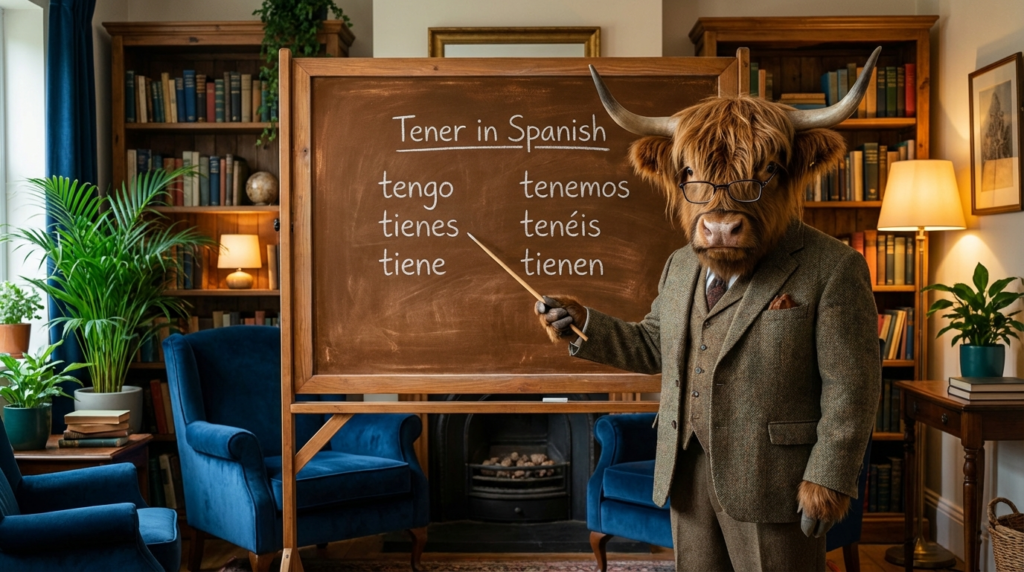
Tener In Spanish: The Verb You Need For Age, Feelings, And Way More
Learn tener in Spanish without turning it into a dramatic mess. You will use it for possession, age, physical states, obligation, desire, and dozens of everyday phrases.
The first time I heard ¿Cuántos años tienes?, my brain sprinted straight into English and I answered with soy treinta. The other person understood me, smiled politely, and gave me that gentle correction every Spanish learner collects sooner or later: for age, Spanish uses tener, not ser. Tiny verb. Huge attitude.
That is why tener matters so much. It usually means to have, but in real Spanish it also helps you say things like I’m hungry, I have to work, I feel like tacos, and my sister has green eyes. Once you get the pattern, a lot of beginner Spanish suddenly stops feeling random.
Yak Box: The Rule That Saves Beginners Fast
When English says to be, Spanish often says tener + noun.
Tengo hambre = I am hungry
Tengo sed = I am thirsty
Tengo sueño = I am sleepy
Do not translate word by word and hope for mercy. Tengo hambre is normal. Estoy hambre is not.
What Does Tener Mean In Spanish?
Tener usually means to have or to possess.
- tengo — I have
Tengo un libro nuevo. — I have a new book. - tiene — he/she/it has
Mi hermano tiene un carro viejo. — My brother has an old car. - tenemos — we have
Tenemos una mesa grande. — We have a big table.
But that is only the beginning. In Spanish, tener also shows age, physical sensations, some emotions, obligation, desire, and common fixed expressions you will hear all the time.
Present Tense Conjugation Of Tener
Tener is irregular in the present tense. The good news is that the pattern becomes familiar fast.
| Subject | Form | English Meaning | Example |
|---|---|---|---|
| yo | tengo | I have | Tengo dos perros. — I have two dogs. |
| tú | tienes | you have | Tú tienes mucha energía. — You have a lot of energy. |
| él / ella / usted | tiene | he / she / you have | Ella tiene una cita hoy. — She has an appointment today. |
| nosotros / nosotras | tenemos | we have | Tenemos hambre. — We are hungry. |
| vosotros / vosotras | tenéis | you all have | Vosotros tenéis suerte. — You all are lucky. |
| ellos / ellas / ustedes | tienen | they / you all have | Ustedes tienen razón. — You all are right. |
Pattern to notice: tengo has a -go form, and tienes / tiene / tienen change from e → ie. Tenemos stays plain, because Spanish likes to keep you humble.
Mexican Spanish note: in Mexico, you will mostly use tú, usted, ustedes. The form vosotros tenéis is correct, but it is mostly used in Spain.
The Most Useful Ways To Use Tener
Possession
tener — to have / to own
Tengo una laptop nueva. — I have a new laptop.
This is the most literal use. It works a lot like English.
Age
tener años — to be ___ years old
Tengo treinta años. — I am thirty years old.
Spanish says you have years. English says you are years old. Different logic, same birthday.
Physical States
tener hambre / sed / frío — to be hungry / thirsty / cold
Tenemos sed. — We are thirsty.
Spanish often uses tener + noun where English uses to be + adjective.
Description
tener ojos / pelo / barba — to have eyes / hair / beard
Mi prima tiene ojos verdes. — My cousin has green eyes.
This is common when describing physical traits.
Obligation
tener que + infinitive — to have to
Tengo que trabajar mañana. — I have to work tomorrow.
This is one of the most useful patterns in beginner Spanish.
Desire
tener ganas de + infinitive / noun — to feel like / to be in the mood for
Tengo ganas de dormir. — I feel like sleeping.
Very common, very natural, very useful when life requires coffee or tacos.
How To Use Tener In Real Spanish
Use 1: To Show Possession
This is the clean, obvious version.
- tengo un diccionario — I have a dictionary
Tengo un diccionario en mi mochila. — I have a dictionary in my backpack. - tiene tiempo — he/she has time
Ella no tiene tiempo hoy. — She does not have time today. - tenemos una casa — we have a house
Tenemos una casa pequeña. — We have a small house.
Use 2: To Talk About Age
Spanish does not use ser for age here.
- tener años — to be ___ years old
Mi abuelo tiene ochenta y dos años. — My grandfather is eighty-two years old. - ¿Cuántos años tienes? — How old are you?
¿Cuántos años tienes? — How old are you? - tener un mes / dos semanas — to be one month / two weeks old
El bebé tiene dos meses. — The baby is two months old.
Use 3: To Talk About Physical States And Feelings
This is where learners usually notice that Spanish is doing its own thing.
- tener hambre — to be hungry
Tengo hambre desde las once. — I have been hungry since eleven. - tener sed — to be thirsty
Después del gimnasio, siempre tengo sed. — After the gym, I am always thirsty. - tener frío — to be cold
Mi mamá tiene frío en el cine. — My mom gets cold at the movies. - tener calor — to be hot
Tenemos calor. Vamos a abrir la ventana. — We are hot. Let’s open the window. - tener sueño — to be sleepy
Los niños tienen sueño. — The kids are sleepy. - tener miedo — to be afraid
No tengo miedo del examen. — I am not afraid of the test.
Use 4: To Describe People
Spanish often uses tener for physical features.
- tener ojos azules — to have blue eyes
Ella tiene ojos azules. — She has blue eyes. - tener el pelo corto — to have short hair
Mi hermano tiene el pelo corto. — My brother has short hair. - tener barba — to have a beard
El profesor tiene barba. — The teacher has a beard.
Use 5: Tener Que For Obligation
The formula is simple: tener + que + infinitive.
- tengo que estudiar — I have to study
Tengo que estudiar esta noche. — I have to study tonight. - tenemos que salir — we have to leave
Tenemos que salir en cinco minutos. — We have to leave in five minutes. - tiene que llamar — he/she has to call
Mi jefe tiene que llamar al cliente. — My boss has to call the client.
Mini tip: if you forget the que, the sentence falls apart. Tengo estudiar is wrong. Tengo que estudiar is correct.
Use 6: Tener Ganas De For Desire
This pattern means to feel like or to be in the mood for.
- tener ganas de comer — to feel like eating
Tengo ganas de comer birria. — I feel like eating birria. - tener ganas de salir — to feel like going out
Hoy no tengo ganas de salir. — Today I do not feel like going out. - tener ganas de café — to be craving coffee
Tenemos ganas de café. — We feel like having coffee.
After ganas de, Spanish uses the infinitive, not the English-style -ing form.
Use 7: To Talk About Plans, Classes, Meetings, And Appointments
This use is common in everyday conversation and gets skipped too often in beginner lessons.
- tener clase — to have class
Tengo clase de español a las ocho. — I have Spanish class at eight. - tener una reunión — to have a meeting
Mañana tenemos una reunión importante. — Tomorrow we have an important meeting. - tener una cita — to have an appointment / date
Tiene una cita con el dentista. — She has a dentist appointment.
Common Tener Expressions You Will Hear All The Time
| Spanish Phrase | English Meaning | Example |
|---|---|---|
| tener hambre | to be hungry | Tenemos hambre después del viaje. — We are hungry after the trip. |
| tener sed | to be thirsty | Siempre tengo sed cuando hace calor. — I am always thirsty when it is hot. |
| tener sueño | to be sleepy | Mi hijo tiene sueño temprano. — My son gets sleepy early. |
| tener frío | to be cold | ¿Tienes frío? — Are you cold? |
| tener calor | to be hot | Tengo calor en esta oficina. — I am hot in this office. |
| tener miedo | to be afraid | No tiene miedo de hablar en público. — She is not afraid of speaking in public. |
| tener prisa | to be in a hurry | Perdón, tengo prisa. — Sorry, I am in a hurry. |
| tener razón | to be right | Tienes razón. — You are right. |
| tener suerte | to be lucky | Hoy tuvimos suerte. — Today we were lucky. |
| tener cuidado | to be careful | Ten cuidado con el piso mojado. — Be careful with the wet floor. |
| tener tiempo | to have time | No tengo tiempo ahora. — I do not have time right now. |
| tener ganas de | to feel like | Tengo ganas de ver una película. — I feel like watching a movie. |
| tener la culpa | to be at fault | Nadie quiere tener la culpa. — Nobody wants to be at fault. |
| tener éxito | to be successful | Tuvo éxito en su nuevo trabajo. — He was successful in his new job. |
| tener en cuenta | to take into account | Hay que tener en cuenta el presupuesto. — You have to take the budget into account. |
| tener lugar | to take place | La reunión tiene lugar mañana. — The meeting takes place tomorrow. |
| tener dolor de cabeza | to have a headache | Tengo dolor de cabeza. — I have a headache. |
Tener Vs Haber: The Confusion That Shows Up Early
Both verbs can connect to the English idea of have, but they do different jobs.
- tener — to have / to possess / to experience
Tengo un carro. — I have a car. - haber as an auxiliary — to have in compound tenses
He comido. — I have eaten. - haber as hay — there is / there are
Hay café en la cocina. — There is coffee in the kitchen.
So: tengo un libro is correct, but he un libro is nonsense. Absolute nonsense. Creative nonsense, but still nonsense.
Other Tener Forms You Actually Need
You do not need every tense on day one, but these forms show up early and often.
| Form | English Meaning | Why It Matters | Example |
|---|---|---|---|
| tenía | I/he/she used to have, had | Imperfect; background or repeated past | Cuando era niño, tenía un perro. — When I was a kid, I had a dog. |
| tuve | I had, I got | Preterite; completed past event | Tuve una idea brillante. — I had a brilliant idea. |
| tendrá / tendré | will have | Future uses the stem tendr- | Mañana tendré tiempo. — Tomorrow I will have time. |
| tendría | would have | Conditional uses the same stem tendr- | Tendría más paciencia con café. — I would have more patience with coffee. |
| tenga | that I/he/she have | Subjunctive form you will hear often | Espero que tengas suerte. — I hope you have luck. |
| ten | have, take | Informal command | Ten cuidado. — Be careful. |
| tenido | had | Past participle | He tenido un día largo. — I have had a long day. |
Three stems to remember: teng- in some present and subjunctive forms, tuv- in the preterite, and tendr- in the future and conditional. Once you spot those, tener stops looking chaotic and starts looking patterned.
Common Mistakes And Fast Fixes
- Wrong: Soy 25 años.
Right: Tengo 25 años.
Use tener for age. - Wrong: Estoy hambre.
Right: Tengo hambre.
Use tener + noun for many physical states. - Wrong: Tengo estudiar.
Right: Tengo que estudiar.
You need que before the second verb. - Wrong: Tengo ganas de yendo.
Right: Tengo ganas de ir.
Use the infinitive, not the English-style -ing idea. - Wrong: He un problema.
Right: Tengo un problema.
Use tener, not haber, for possession. - Dangerously Wrong: Soy caliente.
Right: Tengo calor.
Soy caliente does not mean you are warm from the weather. It means something very different. Congratulations, you have met one of Spanish class’s most famous traps.
Practice With Tener
Try these before peeking at the answers.
- Say: I am thirsty.
- Say: We have to leave now.
- Ask: How old are you?
- Say: My sister has green eyes.
- Say: I feel like sleeping.
- Say: They are lucky.
- Say: Tomorrow I will have time.
- Say: Be careful.
Check The Answers
- Tengo sed.
- Tenemos que salir ahora.
- ¿Cuántos años tienes?
- Mi hermana tiene ojos verdes.
- Tengo ganas de dormir.
- Tienen suerte.
- Mañana tendré tiempo.
- Ten cuidado.
Quick Reference Summary
- tener usually means to have.
- Use it for possession: Tengo un carro. — I have a car.
- Use it for age: Tengo veinte años. — I am twenty years old.
- Use it for many physical states and feelings: Tengo hambre. — I am hungry.
- Use tener que + infinitive for obligation: Tengo que trabajar. — I have to work.
- Use tener ganas de + infinitive / noun for desire: Tengo ganas de salir. — I feel like going out.
- Remember the big irregular forms: tengo, tuve, tendré, tenga.
Final Yak
If you master tengo, tienes, tiene, tenemos, tienen and the patterns tener que and tener ganas de, your Spanish gets useful fast. Then add the high-frequency expressions like tener hambre, tener sed, and tener razón, and suddenly this one verb is doing half your daily conversation for you. Lazy? Maybe. Efficient? Absolutely.