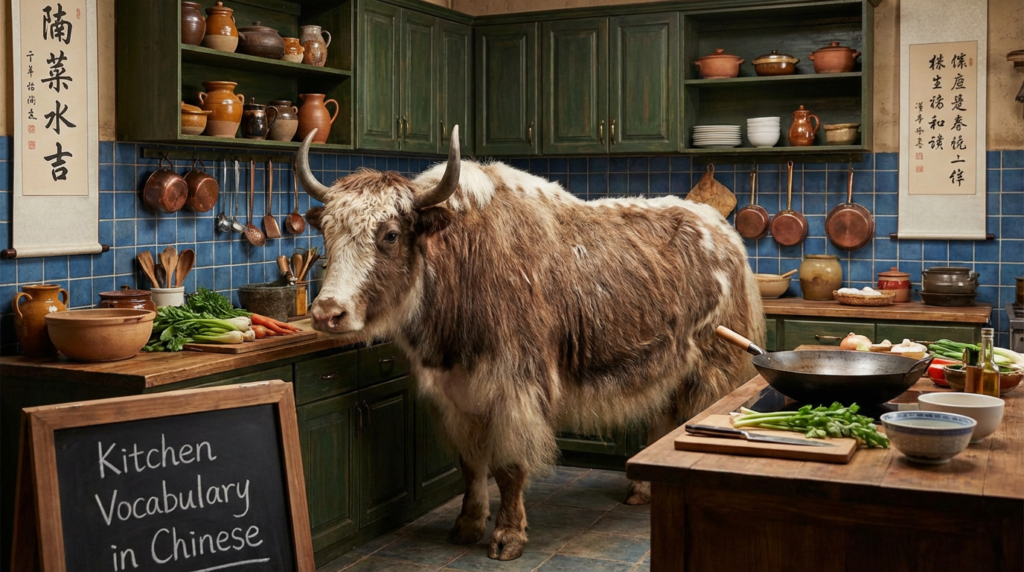
Kitchen Vocabulary In Chinese
Learn the everyday words for kitchen 厨房 chúfáng, from the fridge to the frying pan, without sounding like you only cook instant noodles.
A kitchen is one of the best places to learn practical Chinese because the words show up every single day. You open the fridge, wash vegetables, chop garlic, and try not to burn dinner. That is already a vocabulary lesson hiding in plain sight.
Below you will get useful kitchen words in simplified Chinese, each with pinyin, an English meaning, and a real example sentence. Nice and usable. No dusty textbook kitchen where nobody actually cooks.
厨房 chúfáng
kitchen
厨房很小,但是很干净。
Chúfáng hěn xiǎo, dànshì hěn gānjìng.
The kitchen is small, but very clean.
冰箱 bīngxiāng
fridge
牛奶在冰箱里。
Niúnǎi zài bīngxiāng lǐ.
The milk is in the fridge.
水槽 shuǐcáo
sink
碗在水槽里,还没洗。
Wǎn zài shuǐcáo lǐ, hái méi xǐ.
The bowls are in the sink and have not been washed yet.
锅 guō
pot / pan
锅里有热汤,小心一点。
Guō lǐ yǒu rètāng, xiǎoxīn yìdiǎn.
There is hot soup in the pot, so be careful.
刀 dāo
knife
这把刀很锋利。
Zhè bǎ dāo hěn fēnglì.
This knife is very sharp.
菜板 càibǎn
cutting board
请把西红柿放在菜板上。
Qǐng bǎ xīhóngshì fàng zài càibǎn shàng.
Please put the tomatoes on the cutting board.
炉子 lúzi
stove
炉子上有一口锅。
Lúzi shàng yǒu yì kǒu guō.
There is a pot on the stove.
微波炉 wēibōlú
microwave
我用微波炉热饭。
Wǒ yòng wēibōlú rè fàn.
I use the microwave to heat up rice.
Useful Kitchen Phrases
- 我在厨房做饭。
Wǒ zài chúfáng zuòfàn.
I am cooking in the kitchen. - 请把盘子放进洗碗机。
Qǐng bǎ pánzi fàng jìn xǐwǎnjī.
Please put the plates into the dishwasher. - 冰箱里还有鸡蛋吗?
Bīngxiāng lǐ hái yǒu jīdàn ma?
Are there still eggs in the fridge? - 先洗菜,再切菜。
Xiān xǐ cài, zài qiē cài.
Wash the vegetables first, then cut them. - 水开了,可以下面了。
Shuǐ kāi le, kěyǐ xià miàn le.
The water is boiling, so you can add the noodles now. - 这个锅太小了。
Zhège guō tài xiǎo le.
This pot is too small. - 请帮我把火关小一点。
Qǐng bāng wǒ bǎ huǒ guān xiǎo yìdiǎn.
Please help me turn the heat down a little. - 别忘了加一点盐。
Bié wàng le jiā yìdiǎn yán.
Don’t forget to add a little salt. - 晚饭以后我来洗碗。
Wǎnfàn yǐhòu wǒ lái xǐ wǎn.
I will wash the dishes after dinner. - 烤箱里的面包快好了。
Kǎoxiāng lǐ de miànbāo kuài hǎo le.
The bread in the oven is almost ready. - 桌子上有三双筷子。
Zhuōzi shàng yǒu sān shuāng kuàizi.
There are three pairs of chopsticks on the table. - 这把菜刀不太好用。
Zhè bǎ càidāo bú tài hǎo yòng.
This kitchen knife is not very easy to use.
Appliances And Fixtures
| Hanzi | Pinyin | Meaning | Example (ZH) | Example (Pinyin) | Translation (EN) |
|---|---|---|---|---|---|
| 厨房 | chúfáng | kitchen | 厨房里很香。 | Chúfáng lǐ hěn xiāng. | The kitchen smells great. |
| 冰箱 | bīngxiāng | fridge | 冰箱里有水果。 | Bīngxiāng lǐ yǒu shuǐguǒ. | There is fruit in the fridge. |
| 冷冻室 | lěngdòngshì | freezer | 冰淇淋在冷冻室里。 | Bīngqílín zài lěngdòngshì lǐ. | The ice cream is in the freezer. |
| 炉子 | lúzi | stove | 炉子还很热。 | Lúzi hái hěn rè. | The stove is still hot. |
| 烤箱 | kǎoxiāng | oven | 我用烤箱烤鸡翅。 | Wǒ yòng kǎoxiāng kǎo jīchì. | I use the oven to bake chicken wings. |
| 微波炉 | wēibōlú | microwave | 请用微波炉热一下。 | Qǐng yòng wēibōlú rè y&í;xià. | Please heat it up in the microwave. |
| 洗碗机 | xǐwǎnjī | dishwasher | 洗碗机今天坏了。 | Xǐwǎnjī jīntiān huài le. | The dishwasher is broken today. |
| 水槽 | shuǐcáo | sink | 杯子在水槽旁边。 | Bēizi zài shuǐcáo pángbiān. | The cup is beside the sink. |
| 水龙头 | shuǐlóngtóu | faucet / tap | 请把水龙头关上。 | Qǐng bǎ shuǐlóngtóu guān shàng. | Please turn off the faucet. |
| 抽油烟机 | chōuyóuyānjī | range hood | 炒菜的时候要开抽油烟机。 | Chǎocài de shíhou yào kāi chōuyóuyānjī. | Turn on the range hood when stir-frying. |
| 橱柜 | chúguì | cabinet | 盘子在橱柜里面。 | Pánzi zài chúguì lǐmiàn. | The plates are inside the cabinet. |
| 台面 | táimiàn | countertop | 请把菜放在台面上。 | Qǐng bǎ cài fàng zài táimiàn shàng. | Please put the vegetables on the countertop. |
Cookware And Tools
| Hanzi | Pinyin | Meaning | Example (ZH) | Example (Pinyin) | Translation (EN) |
|---|---|---|---|---|---|
| 锅 | guō | pot / pan | 锅里有面条。 | Guō lǐ yǒu miàntiáo. | There are noodles in the pot. |
| 平底锅 | píngdǐguō | frying pan | 鸡蛋在平底锅里。 | Jīdàn zài píngdǐguō lǐ. | The egg is in the frying pan. |
| 炒锅 | chǎoguō | wok | 妈妈用炒锅做炒饭。 | Māma yòng chǎoguō zuò chǎofàn. | Mom uses a wok to make fried rice. |
| 锅盖 | guōgài | pot lid | 把锅盖盖上吧。 | Bǎ guōgài gài shàng ba. | Put the lid on. |
| 刀 | dāo | knife | 这把刀很新。 | Zhè bǎ dāo hěn xīn. | This knife is very new. |
| 菜刀 | càidāo | kitchen knife | 我用菜刀切肉。 | Wǒ yòng càidāo qiē ròu. | I use a kitchen knife to cut meat. |
| 菜板 | càibǎn | cutting board | 面包在菜板上。 | Miànbāo zài càibǎn shàng. | The bread is on the cutting board. |
| 勺子 | sháozi | spoon | 汤匙和勺子都在抽屉里。 | Tāngchí hé sháozi dōu zài chōuti lǐ. | The soup spoon and spoon are both in the drawer. |
| 筷子 | kuàizi | chopsticks | 这双筷子是木头的。 | Zhè shuāng kuàizi shì mùtou de. | This pair of chopsticks is wooden. |
| 叉子 | chāzi | fork | 沙拉旁边有一把叉子。 | Shālā pángbiān yǒu yì bǎ chāzi. | There is a fork next to the salad. |
| 盘子 | pánzi | plate | 盘子里有鱼。 | Pánzi lǐ yǒu yú. | There is fish on the plate. |
| 碗 | wǎn | bowl | 饭在碗里。 | Fàn zài wǎn lǐ. | The rice is in the bowl. |
| 杯子 | bēizi | cup / glass | 杯子里是热水。 | Bēizi lǐ shì rèshuǐ. | There is hot water in the cup. |
| 保鲜盒 | bǎoxiānhé | food container | 剩饭在保鲜盒里。 | Shèngfàn zài bǎoxiānhé lǐ. | The leftover rice is in the food container. |
| 围裙 | wéiqún | apron | 做饭前我先穿围裙。 | Zuòfàn qián wǒ xiān chuān wéiqún. | I put on an apron before cooking. |
| 烤盘 | kǎopán | baking tray | 饼干在烤盘上。 | Bǐnggān zài kǎopán shàng. | The cookies are on the baking tray. |
| 夹子 | jiāzi | tongs / clip | 请用夹子夹牛排。 | Qǐng yòng jiāzi jiā niúpái. | Please use tongs to pick up the steak. |
| 抹布 | mābù | dishcloth | 用抹布擦一下桌子。 | Yòng mābù cā y&í;xià zhuōzi. | Wipe the table with the dishcloth. |
Ingredients, Storage, And Daily Basics
| Hanzi | Pinyin | Meaning | Example (ZH) | Example (Pinyin) | Translation (EN) |
|---|---|---|---|---|---|
| 米饭 | mǐfàn | cooked rice | 今天的米饭很好吃。 | Jīntiān de mǐfàn hěn hǎochī. | Today’s rice is delicious. |
| 面条 | miàntiáo | noodles | 我晚饭想吃面条。 | Wǒ wǎnfàn xiǎng chī miàntiáo. | I want to eat noodles for dinner. |
| 鸡蛋 | jīdàn | egg | 冰箱里还有两个鸡蛋。 | Bīngxiāng lǐ hái yǒu liǎng gè jīdàn. | There are still two eggs in the fridge. |
| 蔬菜 | shūcài | vegetables | 多吃蔬菜比较健康。 | Duō chī shūcài bǐjiào jiànkāng. | Eating more vegetables is healthier. |
| 肉 | ròu | meat | 这块肉太大了。 | Zhè kuài ròu tài dà le. | This piece of meat is too big. |
| 盐 | yán | salt | 汤里要加一点盐。 | Tāng lǐ yào jiā yìdiǎn yán. | You need to add a little salt to the soup. |
| 糖 | táng | sugar | 咖啡里不要放糖。 | Kāfēi lǐ búyào fàng táng. | Do not put sugar in the coffee. |
| 酱油 | jiàngyóu | soy sauce | 饺子可以蘸酱油吃。 | Jiǎozi kěyǐ zhàn jiàngyóu chī. | You can dip dumplings in soy sauce. |
| 食用油 | shíyòngyóu | cooking oil | 锅里先放一点食用油。 | Guō lǐ xiān fàng yìdiǎn shíyòngyóu. | Put a little cooking oil in the pan first. |
| 蒜 | suàn | garlic | 这个菜里有很多蒜。 | Zhège cài lǐ yǒu hěn duō suàn. | There is a lot of garlic in this dish. |
| 姜 | jiāng | ginger | 鱼汤里放一点姜更好。 | Yútāng lǐ fàng yìdiǎn jiāng gèng hǎo. | A little ginger makes the fish soup better. |
| 剩菜 | shèngcài | leftovers | 剩菜别扔,还能吃。 | Shèngcài bié rēng, hái néng chī. | Do not throw away the leftovers; they are still edible. |
Kitchen Actions And Descriptions
| Hanzi | Pinyin | Meaning | Example (ZH) | Example (Pinyin) | Translation (EN) |
|---|---|---|---|---|---|
| 做饭 | zuòfàn | to cook | 我爸爸每天做饭。 | Wǒ bàba měitiān zuòfàn. | My dad cooks every day. |
| 洗 | xǐ | to wash | 先洗手,再做饭。 | Xiān xǐ shǒu, zài zuòfàn. | Wash your hands first, then cook. |
| 切 | qiē | to cut | 我来切洋葱。 | Wǒ lái qiē yángcōng. | I will cut the onion. |
| 炒 | chǎo | to stir-fry | 他正在炒青菜。 | Tā zhèngzài chǎo qīngcài. | He is stir-frying green vegetables. |
| 煮 | zhǔ | to boil / cook | 锅里在煮汤。 | Guō lǐ zài zhǔ tāng. | The soup is boiling in the pot. |
| 烤 | kǎo | to bake / roast | 我们晚上烤土豆。 | Wǒmen wǎnshang kǎo tǔdòu. | We are roasting potatoes tonight. |
| 蒸 | zhēng | to steam | 鱼蒸十分钟就可以了。 | Yú zhēng shí fēnzhōng jiù kěyǐ le. | The fish only needs to steam for ten minutes. |
| 加 | jiā | to add | 请加一点辣椒。 | Qǐng jiā yìdiǎn làjiāo. | Please add a little chili. |
| 尝 | cháng | to taste | 你先尝一下这个汤。 | Nǐ xiān cháng y&í;xià zhège tāng. | Taste this soup first. |
| 热 | rè | hot / to heat | 这碗面很热。 | Zhè wǎn miàn hěn rè. | This bowl of noodles is hot. |
| 凉 | liáng | cool | 汤凉了再喝。 | Tāng liáng le zài hē. | Drink the soup after it cools down. |
| 干净 | gānjìng | clean | 厨房现在很干净。 | Chúfáng xiànzài hěn gānjìng. | The kitchen is very clean now. |
Common Confusions In The Kitchen
锅 guō is a general word for a pot or pan. When you want to be more specific, use 平底锅 píngdǐguō for a frying pan and 炒锅 chǎoguō for a wok.
做饭 zuòfàn means “to cook” in a general daily-life way. 煮 zhǔ is more like “to boil” or “to cook something by boiling,” while 炒 chǎo is “to stir-fry.” One kitchen, several ways to make dinner dramatically better.
热 rè can mean “hot,” but it also works as a verb in context, as in 热饭 rè fàn, “to heat up rice.” Handy little word. Works hard.
Quick Reference Summary
- Place words: 厨房 chúfáng, 水槽 shuǐcáo, 橱柜 chúguì, 台面 táimiàn
- Appliances: 冰箱 bīngxiāng, 烤箱 kǎoxiāng, 微波炉 wēibōlú, 洗碗机 xǐwǎnjī
- Tools: 菜刀 càidāo, 菜板 càibǎn, 筷子 kuàizi, 碗 wǎn, 盘子 pánzi
- Food basics: 米饭 mǐfàn, 面条 miàntiáo, 鸡蛋 jīdàn, 盐 yán, 酱油 jiàngyóu
- Actions: 洗 xǐ, 切 qiē, 炒 chǎo, 煮 zhǔ, 烤 kǎo, 蒸 zhēng
Yak Tip
The fastest way to remember kitchen Chinese is to label your real kitchen. Put a note on the 冰箱 bīngxiāng, the 菜板 càibǎn, and the 水龙头 shuǐlóngtóu. Then say the action out loud: 洗 xǐ, 切 qiē, 炒 chǎo. Suddenly vocabulary study becomes dinner prep. Much less boring.