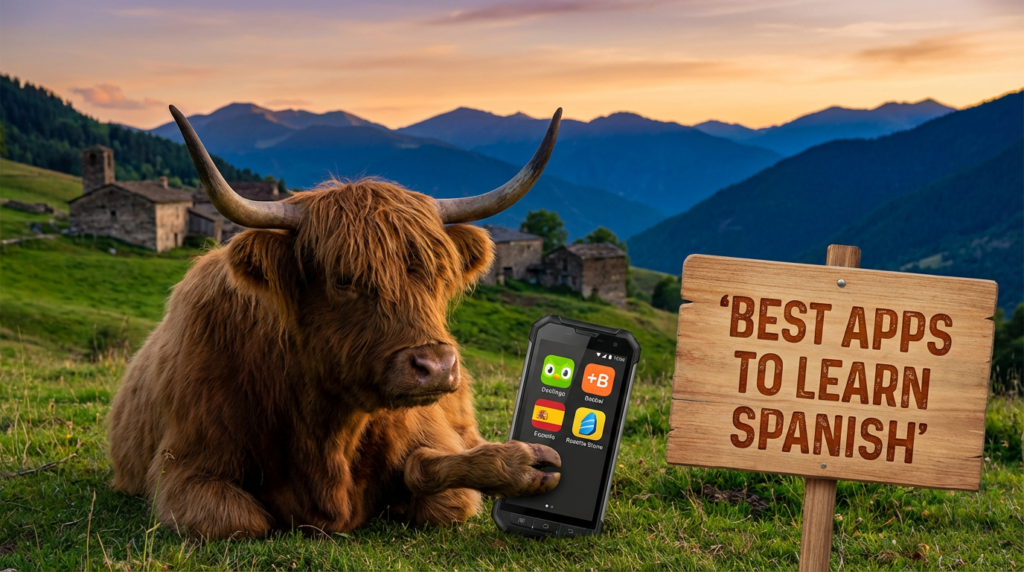
Best Apps To Learn Spanish (And How To Use Them So You Actually Improve)
Here’s the secret nobody wants to hear: the “best” Spanish app doesn’t exist. The best combo does. One app for structure, one for speaking, one for vocab/review. That’s the whole magic trick—no suffering required.
Below are 12 solid picks that cover speaking, listening, reading, writing, grammar, and vocab (Mexican Spanish-friendly tips included). I’ve also added contextual links to hands-on reviews so you can sanity-check before you subscribe to yet another app you’ll “totally use every day.”
Pick A Stack, Not A Single App
If you only use one app, you usually get one strong skill and four “kinda-sorta” skills. Use a stack and you get actual progress.
Busy Beginner (15 Min/Day)
- Structure: Babbel or Busuu
- Speaking: Pimsleur (audio) or a weekly tutor (Preply)
- Vocab/Reference: SpanishDict
Goal: stop guessing and start building sentences you can reuse.
Traveler (Speak Fast)
- Speaking drills: Pimsleur
- Real chat: HelloTalk
- Quick vocab: Drops
Goal: survival Spanish you can say without freezing.
Serious Learner (Get Past “Beginner”)
- Core course: Busuu or Babbel
- Reading/listening: LingQ
- Review: Anki
Goal: lots of understandable input + ruthless review.
Mexican Spanish tip: when an app offers “Latin American Spanish,” pick it. If it doesn’t, no panic—just be ready for vosotros (Spain) to show up sometimes. In Mexico you’ll usually use ustedes instead.
The 12 Best Apps To Learn Spanish (Well-Rounded Picks)
These aren’t in “best to worst” order. They’re in “best at a specific job” order—because that’s how you actually build Spanish.
Duolingo
Best for: building the daily habit (and warming up your brain).
- Use it like this: 5–10 minutes as a warm-up, then do something “real” (speaking, reading, tutoring).
- Watch out for: thinking streaks = fluency. (Cute lie. Still a lie.)
Hands-on takes: TechRadar’s Duolingo review and The Verge’s guide to learning with apps.
Spanish you’ll use today: Hoy voy a practicar 10 minutos. (Today I’m going to practice 10 minutes.)
Babbel
Best for: structured lessons that feel closer to “real sentences” than mini-games.
- Use it like this: finish one lesson, then record yourself saying the dialogue out loud (yes, really).
- Nice bonus: it’s been pushing more speaking/AI conversation-style practice in newer features.
Deep dives: Wired’s best language apps roundup and Tom’s Guide on Babbel’s AI speaking experience.
Spanish you’ll use today: ¿Puedes repetirlo, por favor? (Can you repeat it, please?)
Busuu
Best for: a course-like path plus feedback from other humans.
- Use it like this: do writing prompts, then ask for corrections and save the fixed version.
- Why it’s different: you’re not only tapping answers—you’re producing Spanish.
Good context: Android Authority on Duolingo alternatives and TechRadar’s best language learning apps list.
Spanish you’ll use today: ¿Me corriges, por favor? (Can you correct me, please?)
Memrise
Best for: vocabulary + hearing real people (great for accent exposure).
- Use it like this: do a small set, then immediately say each phrase out loud without looking.
- Good fit if: you’re bored by “textbook voice” Spanish.
Context: Android Authority’s alternatives roundup and TechRadar’s best apps list.
Spanish you’ll use today: Otra vez, más despacio. (Again, slower.)
Pimsleur
Best for: speaking and pronunciation by repeating full sentences (audio-first).
- Use it like this: do lessons while walking/commuting, and answer out loud even if you feel silly.
- Perfect for: “I can understand, but I freeze when I speak.”
See where it’s usually ranked: TechRadar’s roundup and The Verge’s app-based learning guide.
Spanish you’ll use today: ¿Dónde está el baño? (Where is the bathroom?)
Language Transfer (Complete Spanish)
Best for: understanding how Spanish works (without drowning in grammar jargon).
- Use it like this: pause, think, answer out loud. Don’t just listen like it’s a podcast.
- Huge win: it’s free and surprisingly effective if you actually participate.
Start here: Language Transfer: Complete Spanish.
Spanish you’ll use today: Déjame pensar. (Let me think.)
SpanishDict
Best for: the “I need this word now” moments (dictionary, conjugations, example sentences).
- Use it like this: look up a verb, copy 3 example sentences, then say them out loud.
- Power move: learn accent marks early—SpanishDict will nudge you to stop ignoring them.
Reviews: SmarterLanguage’s SpanishDict review and FluentU’s SpanishDict review.
Spanish you’ll use today: ¿Cómo se dice “schedule” en español? (How do you say “schedule” in Spanish?)
Anki
Best for: spaced repetition (keeping words in your brain longer than 36 seconds).
- Use it like this: add cards from your real life: texts, shows, work phrases, travel needs.
- Rule: cards should be short, clear, and based on sentences—not lonely words.
One review angle: Anki review (language learning).
Spanish you’ll use today: Tengo que repasar mis tarjetas. (I have to review my cards.)
Drops
Best for: quick vocabulary when your attention span is… delicate.
- Use it like this: learn a set, then write 5 sentences using those words (SpanishDict helps).
- Don’t do: vocab-only forever. Vocabulary needs sentences to become usable.
Often included in roundups like TechRadar’s best apps list.
Spanish you’ll use today: Estoy aprendiendo palabras nuevas. (I’m learning new words.)
Mondly
Best for: beginner-friendly lessons when you want something lighter than a full course.
- Use it like this: keep it short, then do one “output” task (voice message, tutor, or a mini journal).
- Pair with: HelloTalk or Preply to get actual speaking time.
Usually listed in roundups like TechRadar’s best apps list.
Spanish you’ll use today: Estoy empezando desde cero. (I’m starting from zero.)
HelloTalk
Best for: real conversations with real humans (the scary part that makes you better).
- Use it like this: send short voice messages and ask for corrections.
- Safety tip: keep it language-first; use boundaries like a grown-up.
Good overview: The Verge’s guide.
Spanish you’ll use today: Busco a alguien para practicar español. (I’m looking for someone to practice Spanish.)
Preply
Best for: 1-on-1 speaking with feedback (aka the fastest way to notice your patterns).
- Use it like this: choose a tutor from Mexico if you want Mexican Spanish, and ask for “more speaking, less English.”
- Pro tip: bring a topic list so you don’t spend 20 minutes discussing… the weather.
If you want another “real world interaction beats app-only” perspective, The Verge’s guide makes that point clearly.
Spanish you’ll use today: ¿Podemos hacer una videollamada? (Can we do a video call?)
LingQ
Best for: reading and listening to a lot of Spanish (the “input” that builds intuition).
- Use it like this: pick content you can mostly understand, save unknown words, review later.
- Great for: getting comfortable with natural speed Spanish.
One detailed review: All Language Resources: LingQ review.
Spanish you’ll use today: Quiero entender sin traducir todo. (I want to understand without translating everything.)
Clozemaster
Best for: practicing lots of sentences quickly (especially when you’re beyond absolute beginner).
- Use it like this: focus on typing/recall modes and say the full sentence out loud.
- Good for: leveling up vocabulary in context.
Review: Fluent Language: Clozemaster review.
Spanish you’ll use today: Me falta vocabulario. (I’m missing vocabulary.)
Bonus: Keep An Eye On Google Translate “Practice”
Best for: quick speaking drills if you already use Google Translate a lot.
This is a newer direction Google has been testing for language practice inside Translate. If you’re curious, here’s the write-up: The Verge on Google building language learning into Translate.
Spanish you’ll use today: Quiero practicar para un viaje. (I want to practice for a trip.)
A Simple 15-Minute Daily Routine That Doesn’t Fall Apart
- 5 min — course lesson (Babbel/Busuu)
- 5 min — speaking (Pimsleur or 2 voice messages on HelloTalk)
- 5 min — review (Anki or SpanishDict saved words)
One rule that changes everything: if an app gives you a sentence, say it out loud twice with your eyes closed. If you can’t say it, you don’t “know” it yet. (Sorry. It’s true.)
Useful Spanish Phrases For App Learning (Say These All The Time)
- Estoy aprendiendo español. — I’m learning Spanish.
Estoy aprendiendo español para mi trabajo. (I’m learning Spanish for my job.) - Hoy voy a practicar. — Today I’m going to practice.
Hoy voy a practicar quince minutos. (Today I’m going to practice 15 minutes.) - No entiendo. — I don’t understand.
No entiendo esta frase. (I don’t understand this sentence.) - Entiendo un poco. — I understand a little.
Entiendo un poco, pero necesito más práctica. (I understand a little, but I need more practice.) - ¿Cómo se dice ___ en español? — How do you say ___ in Spanish?
¿Cómo se dice “appointment” en español? (How do you say “appointment” in Spanish?) - ¿Qué significa ___? — What does ___ mean?
¿Qué significa “racha”? (What does “streak” mean?) - ¿Puedes repetirlo, por favor? — Can you repeat it, please?
¿Puedes repetirlo más despacio? (Can you repeat it more slowly?) - Más despacio, por favor. — Slower, please.
Más despacio, por favor. Estoy aprendiendo. (Slower, please. I’m learning.) - ¿Me corriges, por favor? — Can you correct me, please?
¿Me corriges la pronunciación? (Can you correct my pronunciation?) - Me da pena hablar. — I’m embarrassed to speak. (Common in Mexico.)
Me da pena hablar, pero quiero practicar. (I’m embarrassed to speak, but I want to practice.) - Necesito practicar más. — I need to practice more.
Necesito practicar más con audios. (I need to practice more with audio.) - ¡Órale! — Wow / alright / come on. (Mexico, informal.)
¡Órale! Sí pude decirlo. (Wow! I was able to say it.)
Spanish Study Vocabulary Tables (50+ Words You’ll Actually Use)
These are the words that show up every time you study with apps—so learn them once, and everything gets easier.
Core Study Verbs
| Spanish | English Meaning | Example 1 | Example 2 | Example 3 |
|---|---|---|---|---|
| aprender | to learn | Quiero aprender español. — I want to learn Spanish. | Estoy aprendiendo poco a poco. — I’m learning little by little. | |
| practicar | to practice | Necesito practicar todos los días. — I need to practice every day. | Practico con audios. — I practice with audio. | |
| repasar | to review | Voy a repasar mis notas. — I’m going to review my notes. | Repaso antes de dormir. — I review before sleeping. | |
| memorizar | to memorize | No quiero memorizar listas. — I don’t want to memorize lists. | Memorizo frases cortas. — I memorize short phrases. | |
| entender | to understand | No entiendo. — I don’t understand. | Ya entiendo mejor. — I understand better now. | |
| escuchar | to listen | Me gusta escuchar podcasts. — I like to listen to podcasts. | Escucho y repito. — I listen and repeat. | |
| hablar | to speak | Quiero hablar sin miedo. — I want to speak without fear. | Hablo con mi tutor. — I speak with my tutor. | |
| leer | to read | Leo noticias fáciles. — I read easy news. | Leo en voz alta. — I read out loud. | |
| escribir | to write | Escribo un diario corto. — I write a short journal. | Escribo y luego corrijo. — I write and then correct. | |
| pronunciar | to pronounce | Quiero pronunciar bien. — I want to pronounce well. | Pronuncio despacio. — I pronounce slowly. | |
| repetir | to repeat | Voy a repetir la frase. — I’m going to repeat the sentence. | Repite conmigo. — Repeat with me. | |
| corregir | to correct | ¿Me corriges, por favor? — Can you correct me, please? | Corrijo mis errores. — I correct my mistakes. | |
| mejorar | to improve | Quiero mejorar mi español. — I want to improve my Spanish. | Estoy mejorando mi acento. — I’m improving my accent. | |
| estudiar | to study | Estudio quince minutos. — I study 15 minutes. | Estudio cuando puedo. — I study when I can. | |
| equivocarse | to make a mistake | Me equivoco, pero aprendo. — I make mistakes, but I learn. | No pasa nada si te equivocas. — It’s fine if you mess up. | |
| recordar | to remember | No recuerdo esa palabra. — I don’t remember that word. | Ya la recordé. — I remembered it. | |
| olvidar | to forget | Siempre olvido los acentos. — I always forget accents. | No quiero olvidarlo. — I don’t want to forget it. | |
| explicar | to explain | ¿Puedes explicarlo? — Can you explain it? | Explícalo con un ejemplo. — Explain it with an example. | |
| preguntar | to ask | Quiero preguntar algo. — I want to ask something. | Pregunta sin pena. — Ask without embarrassment. | |
| contestar | to answer | Contesta en español. — Answer in Spanish. | No sé qué contestar. — I don’t know what to answer. |
App Actions And Settings
| Spanish | English Meaning | Example 1 | Example 2 | Example 3 |
|---|---|---|---|---|
| descargar | to download | Voy a descargar la app. — I’m going to download the app. | Descárgalo en tu celular. — Download it on your phone. | |
| actualizar | to update | Tengo que actualizar la app. — I have to update the app. | Actualiza para ver la función nueva. — Update to see the new feature. | |
| registrarse | to sign up | Me voy a registrar. — I’m going to sign up. | Regístrate con tu correo. — Sign up with your email. | |
| iniciar sesión | to log in | No puedo iniciar sesión. — I can’t log in. | Inicia sesión aquí. — Log in here. | |
| cerrar sesión | to log out | Voy a cerrar sesión. — I’m going to log out. | Cierra sesión por seguridad. — Log out for safety. | |
| notificación | notification | Me llegó una notificación. — I got a notification. | Desactiva las notificaciones. — Turn off notifications. | |
| recordatorio | reminder | Pon un recordatorio diario. — Set a daily reminder. | El recordatorio me ayuda. — The reminder helps me. | |
| meta diaria | daily goal | Mi meta diaria es 15 minutos. — My daily goal is 15 minutes. | Hoy cumplí mi meta diaria. — Today I hit my daily goal. | |
| racha | streak | Perdí mi racha. — I lost my streak. | No importa la racha; importa hablar. — Streak doesn’t matter; speaking does. | |
| ejercicio | exercise | Este ejercicio es difícil. — This exercise is hard. | Haz otro ejercicio. — Do another exercise. | |
| prueba | test/quiz | Voy a hacer una prueba. — I’m going to take a quiz. | Saqué buena calificación. — I got a good score. | |
| respuesta | answer | Mi respuesta está mal. — My answer is wrong. | ¿Cuál es la respuesta correcta? — What’s the correct answer? | |
| error | mistake | Cometí un error. — I made a mistake. | Los errores ayudan. — Mistakes help. | |
| pausar | to pause | Voy a pausar el audio. — I’m going to pause the audio. | Pausa y repite. — Pause and repeat. | |
| adelantar | to fast-forward | Voy a adelantar un poco. — I’m going to fast-forward a bit. | No adelantes demasiado. — Don’t fast-forward too much. | |
| retroceder | to rewind | Retrocede diez segundos. — Rewind ten seconds. | Voy a retroceder para escuchar otra vez. — I’m going to rewind to listen again. | |
| activar el micrófono | turn on the microphone | Activa el micrófono. — Turn on the microphone. | No se oye; activa el micrófono. — I can’t hear you; turn on the mic. | |
| subir el volumen | turn up the volume | Sube el volumen, por favor. — Turn up the volume, please. | Voy a subir el volumen. — I’m going to turn it up. | |
| bajar el volumen | turn down the volume | Baja el volumen. — Turn down the volume. | Voy a bajarlo un poco. — I’m going to lower it a bit. | |
| poner subtítulos | turn on subtitles | Voy a poner subtítulos. — I’m going to turn on subtitles. | Pon subtítulos en español. — Put subtitles in Spanish. | |
| quitar subtítulos | turn off subtitles | Voy a quitar los subtítulos. — I’m going to turn off subtitles. | Quítalos para practicar mejor. — Turn them off to practice better. |
Conversation, Grammar, And “Real Life” Words
| Spanish | English Meaning | Example 1 | Example 2 | Example 3 |
|---|---|---|---|---|
| lección | lesson | Hoy tengo una lección. — Today I have a lesson. | Terminé la lección. — I finished the lesson. | |
| unidad | unit | Estoy en la unidad 3. — I’m on unit 3. | Voy a empezar una unidad nueva. — I’m going to start a new unit. | |
| nivel | level | Mi nivel es básico. — My level is beginner. | Quiero subir de nivel. — I want to level up. | |
| conversación | conversation | Quiero tener una conversación real. — I want a real conversation. | La conversación fue corta. — The conversation was short. | |
| mensaje de voz | voice message | Te mando un mensaje de voz. — I’ll send you a voice message. | Escuché tu mensaje de voz. — I listened to your voice message. | |
| videollamada | video call | ¿Hacemos una videollamada? — Shall we do a video call? | La videollamada dura 30 minutos. — The video call lasts 30 minutes. | |
| tutor / tutora | tutor | Mi tutora es de México. — My tutor is from Mexico. | Mi tutor me corrige. — My tutor corrects me. | |
| compañero/a de intercambio | language exchange partner | Busco un compañero de intercambio. — I’m looking for an exchange partner. | Mi compañera habla inglés y español. — My partner speaks English and Spanish. | |
| acento | accent | Me gusta el acento mexicano. — I like the Mexican accent. | Estoy trabajando mi acento. — I’m working on my accent. | |
| pronunciación | pronunciation | Mi pronunciación está mejorando. — My pronunciation is improving. | Necesito práctica de pronunciación. — I need pronunciation practice. | |
| gramática | grammar | La gramática me cuesta. — Grammar is hard for me. | Quiero entender la gramática. — I want to understand grammar. | |
| conjugación | conjugation | La conjugación es importante. — Conjugation is important. | Estoy practicando conjugaciones. — I’m practicing conjugations. | |
| verbo | verb | “Hablar” es un verbo. — “Hablar” is a verb. | Necesito un verbo en pasado. — I need a verb in the past. | |
| sustantivo | noun | “Casa” es un sustantivo. — “Casa” is a noun. | Aprendí sustantivos nuevos. — I learned new nouns. | |
| adjetivo | adjective | “Rápido” es un adjetivo. — “Rápido” is an adjective. | Usa un adjetivo diferente. — Use a different adjective. | |
| expresión | expression | Es una expresión común. — It’s a common expression. | Aprendí una expresión nueva. — I learned a new expression. | |
| sinónimos | synonyms | Busco sinónimos de “bonito”. — I’m looking for synonyms of “bonito.” | Los sinónimos ayudan a variar. — Synonyms help you vary. | |
| ejemplo | example | Dame un ejemplo. — Give me an example. | Aprendo con ejemplos. — I learn with examples. | |
| explicación | explanation | Necesito una explicación. — I need an explanation. | La explicación fue clara. — The explanation was clear. | |
| ¡Órale! | Wow / alright (Mexico, informal) | ¡Órale! Ya entendí. — Wow! I get it now. | ¡Órale, vamos! — Alright, let’s go! |
Quick Practice (5 Minutes, No Excuses)
- Say your plan: Hoy voy a practicar ___ minutos. (Fill in a number.)
- Ask for help: ¿Qué significa ___? (Pick a word from the tables.)
- Speaking drill: record yourself saying 5 lines: Me llamo… / Soy de… / Vivo en… / Trabajo en… / Me gusta…
- Correction request: write 2 sentences and send: ¿Me corriges, por favor?
- Listening drill: play a short audio, then say: Entiendo un poco. + one word you caught.
- Confidence line (Mexico-friendly): Me da pena hablar, pero quiero practicar.
Final Yak
If you want one simple plan that works for most beginners: Babbel or Busuu for structure, Pimsleur or a weekly tutor for speaking, and SpanishDict + Anki for vocab that actually sticks. That stack covers your bases—and keeps you from getting “app-happy” and progress-poor.